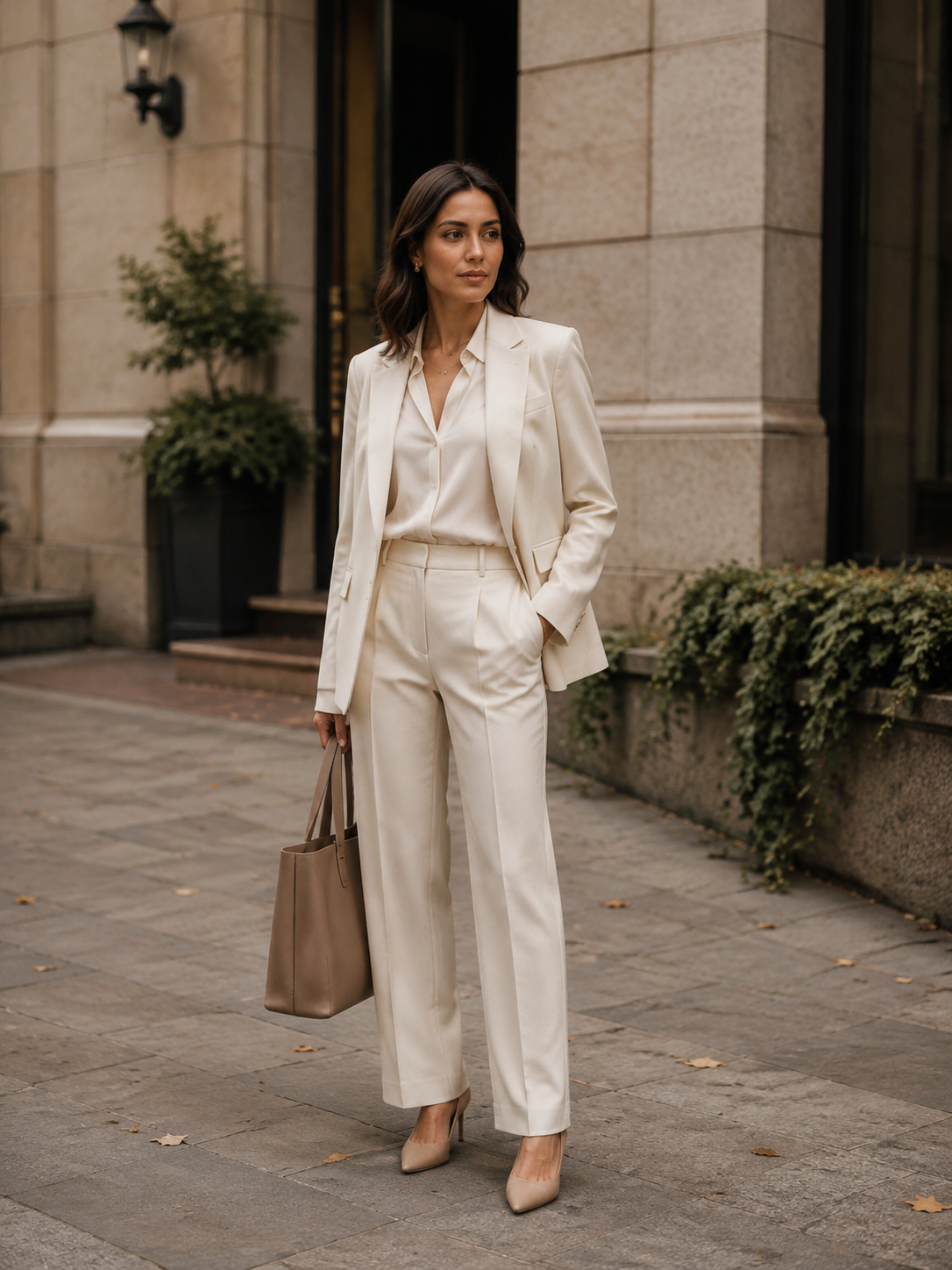
What to wear to work ↗
Solves the daily office problem: what to put together when there is a written code, and what effort looks like when there isn't — plus how to dress a notch up for interviews and presentations.
Occasion guides
Work out what to wear by occasion: read the setting, map the day, build a starting outfit, then route to the guide that handles the fine detail.
Explore the collectionFIND YOUR STARTING POINT
Every occasion sets its own terms. These guides take each setting in turn — the office, a wedding, a restaurant, a journey, a free Saturday — and work through what the day demands of your clothes.
Choosing what to wear by occasion comes down to three checks: the setting and its dress rules, what you will actually do there, and the weather between them. Build the outfit around comfortable shoes and pieces you already own, then adjust. A restaurant dinner, an interview and a long walking day can need different choices even when all three are described as smart casual.
First, separate a written rule from a guess. A written rule sounds like "jackets required" or "garden party attire" on an invitation, a booking confirmation or a company handbook. When it exists, follow it — it removes most of the decision for you.
When there is no rule, everything else is an assumption, usually formed from clues: the venue's own photographs, how the host tends to dress, what the occasion is for. Aim for the middle of what you see in the photos rather than the most dressed-up person in them. An assumption deserves a lighter touch, not a performance.
The same venue can ask different things of an outfit depending on what happens inside it. Before picking garments, list what the day involves:
Once the day is mapped, the shoes usually pick themselves, and the rest of the outfit is built around them. That is the reverse of how most people dress. It works because the hardest constraint to satisfy — comfort across the whole day — is settled first.
A complete outfit needs only three working parts, and there are two common shapes for them. Build the base from what you already own, starting with the part that has the hardest constraint — usually the shoes. The setting decides how refined each part should be, not which parts you need.
Separates route
One-piece route
Whichever route you take, match each part to the shoes' formality. If the shoes are sneakers, the top stays plain and relaxed; if the shoes are leather, the top gets a collar or a finer knit. That matching, piece by piece, is the whole skill.
Two checks finish the base — neither requires buying anything:
The table below gives you a first outfit to try for the five settings this site covers. Treat each one as a base to adjust, not a rule: swap in the closest equivalent you already own. The right-hand column takes you to the guide that handles the fine detail.
| Setting | Starting outfit (one of two routes) | Why these pieces | Detailed guide |
|---|---|---|---|
| Office or interview | Tailored trousers, a neat shirt or fine knit, leather loafers or low heels; add a blazer if the office dresses up | Structured fabrics and covered shoes signal effort without a full suit; the blazer is the dial you turn up or down | Work guide |
| Wedding or celebration | A midi dress or shirt dress with a wrap or cardigan, or trousers with a dressy top, plus dressier shoes | Celebration fabrics (a step above weekday cotton) and a warm layer for ceremonies in cool venues | Weddings guide |
| Dinner out | Dark jeans or trousers, a shirt or knit, clean leather shoes or smart trainers the venue allows | Darker, neater versions of weekend pieces read as effort after dark without over-dressing a casual restaurant | Dinner guide |
| Travel day | Stretchy or broken-in trousers, a t-shirt with a zip-up or knit on top, cushioned trainers, plus a scarf or light jacket | The layer comes off and on through temperature changes; trainers carry luggage, terminals and delays | Travel guide |
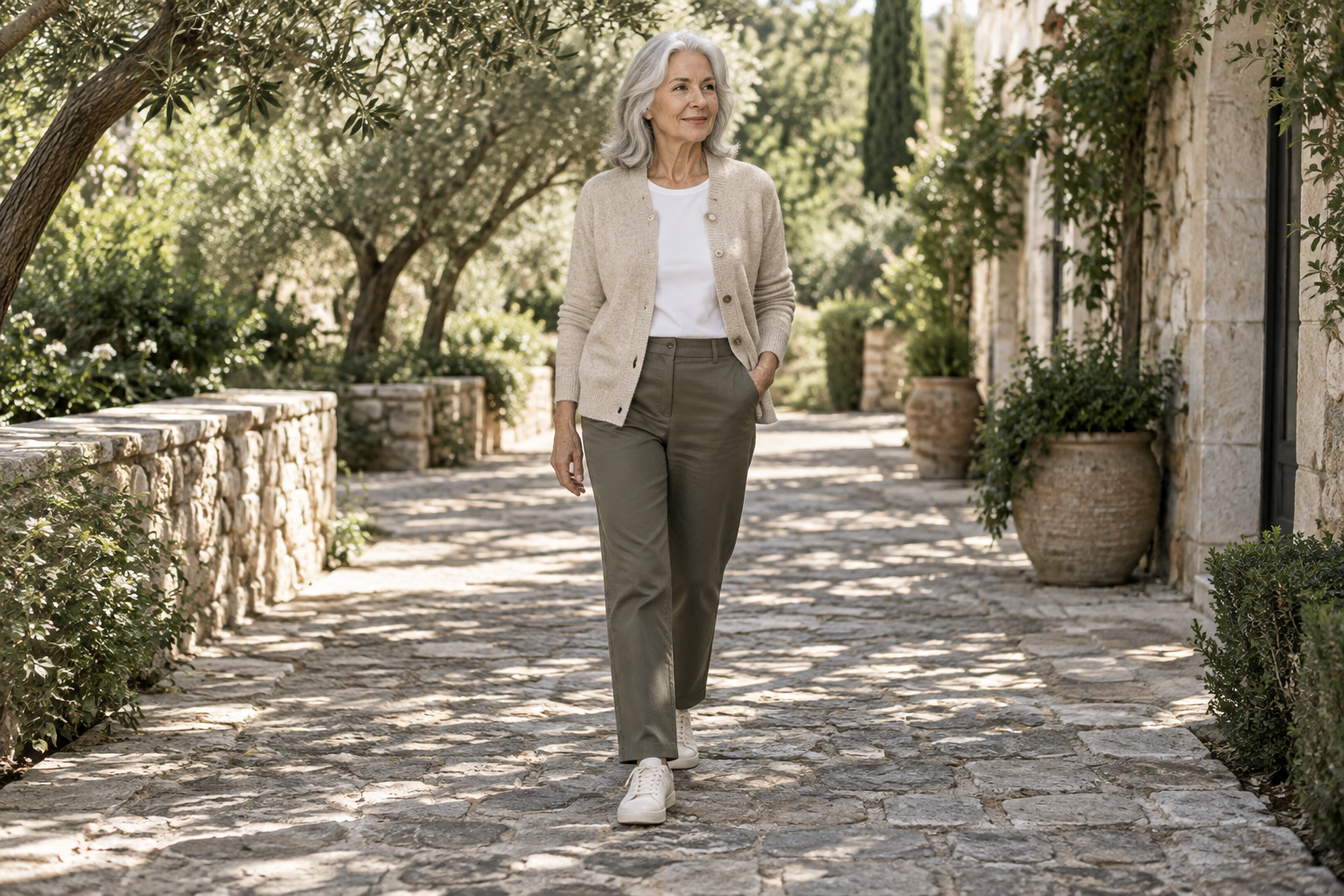
| Weekend and everyday | Straight jeans or relaxed trousers, a plain tee or jumper, clean sneakers; a cardigan or jacket on top | Relaxed fits stay comfortable for errands and walks while plain colours keep the outfit from looking careless | Weekend guide |
Each occasion has one right outfit you must find.
There is no single right outfit — there is a base that fits the setting, plus one constraint that changed. Start from the base, then adjust the piece that serves whatever is different about your day: the shoes for walking, the layer for weather, the jacket for formality.
Example one: dinner on Saturday at a restaurant you have not visited. The check — no written rule, but the photos show white tablecloths and diners in jackets. The activity is mostly sitting, with a short walk from parking.
Base: dark tailored trousers, a knit or button-through shirt, leather loafers. Why: the tablecloth clue says the room runs slightly formal, so denim stays home; the short walk means you do not need trainers; sitting all evening means a soft waistband beats a stiff one. Add a jacket only if you want the extra notch.
Example two: the same base outfit, but the plan changes to a full afternoon walking the city before dinner. The constraint that changed is walking, so the shoes change first — clean sneakers instead of loafers. The knit stays if it breathes; the tailored trousers can stay if they move freely, otherwise swap to relaxed chinos.
Nothing else about the evening got more casual: dinner is still dinner. That is the general pattern. When the activity changes, change the piece that serves that activity, and leave the formality level alone unless the setting changed too.
Weather changes fabric and layers before it changes the outfit's shape. Heat: keep the same silhouette in lighter cloth — linen or cotton instead of wool — and let shoes go more open where the venue allows it. Cold: add layers at the edges, a coat, a scarf, a finer knit underneath, rather than replacing everything with one heavy piece.
Rain: the shoes and the outer layer change; the rest usually survives. If a forecast forces a rethink, change one piece at a time and re-check the whole outfit. A single swap (boots for sneakers) can shift the formality of everything around it.
Formality moves the same way, one notch at a time. Up one notch means better fabric, a jacket or dressier shoes — not all three at once. Down one notch means removing the most formal single piece, usually the jacket or the heeled shoe.
Each guide below answers one concrete question. Use the table above to get dressed today; use the guide to get the details right and see more outfit variations for that setting.
Solves the daily office problem: what to put together when there is a written code, and what effort looks like when there isn't — plus how to dress a notch up for interviews and presentations.
Solves the invitation problem: translating wording like 'cocktail attire' into an actual outfit that suits the venue and season, and lasts from ceremony to last dance.
Solves the unknown-venue problem: reading a restaurant before you arrive, matching its level, and turning a daytime outfit into an evening one with a change or two.
Solves the long-journey problem: clothes that stay comfortable through hours in transit, look presentable on arrival, and repeat across a trip without overpacking.
Solves the anything-goes problem: relaxed combinations for errands, walks and meeting friends that stay comfortable without tipping into careless.
OUR APPROACH
Good style starts with understanding what works for you.
A LITTLE FURTHER READING
Work & Dress Codes
A plain definition of smart casual: tidy, considered clothing a step below business dress, with complete example outfits, non-examples, and how the setting shifts the balance.
Work & Dress Codes
Smart casual vs business casual: the two codes overlap, and context decides which one applies. Compare jackets, shirts, shoes, denim and knitwear, and learn what actually settles the choice.