A packing plan for city trips that combine daytime walking with smart casual dinner reservations: map the itinerary first, build a counted inventory, and decide the shoe tradeoff honestly.
For a city trip with smart casual dinners, plan around your actual daytime activities and each restaurant's guidance. Choose a small set of clothes that combine easily, but allow a shoe change if walking comfort and dinner requirements differ. Check the forecast and bag allowance before finalizing the list.
Map the days and the reservations first
List what each day actually involves — museums, transit, markets, long pavements — and then list every dinner reservation beside it. Each restaurant sets its own expectation, so check its website, booking confirmation, or a recent review for dress guidance rather than assuming one city-wide rule.
Two dinners at the same smart casual level need no separate wardrobe; one stricter reservation among relaxed ones changes the plan. Mark any reservation that asks for more than the rest, because that single evening decides whether a second pair of shoes or a dressier layer earns its space.
Build a counted inventory and reconcile every outfit to it
A three-day example keeps the arithmetic visible. Every dinner outfit must be assembled from the pieces below — if an outfit needs something not counted, either the inventory or the outfit changes.
A counted three-day inventory. Each outfit draws only on pieces already in the list, so the dinners never demand extra luggage.
Piece
Count
Where it appears
Dark tailored trousers or dark non-distressed jeans
1 pair
Every dinner; alternate daytime pair carries the other days
Relaxed daytime trousers or jeans
1 pair
Walking days; joins a shirt for a casual dinner if the room allows
Collared shirts and fine knits in one palette
3
One per day, one of them reserved fresh for the strictest reservation
Unstructured blazer or fine cardigan
1
The evening layer over any top; also covers cool daytime hours
Compact rain layer
1
Wet weather; layers under the blazer without bulk
Walking shoes, plus optional dinner shoes
1 + 0–1
Walking shoes daily; dinner shoes only if a reservation requires them
Fabric choice keeps repeat wear plausible. Cotton and merino hold their line through a full day and freshen overnight better than crease-prone linens, so the same trousers read clean at dinner. Keep to one palette — navy, grey and cream, or brown, olive and off-white — so any top meets any bottom.
Return to your accommodation, or go straight to dinner?
The two transition plans make different demands, and most trips mix them. Decide per evening from the itinerary, not from a general preference.
Returning to the room first
A twenty-minute reset: swap the top, add the evening layer, change shoes if needed.
Lets you carry less — nothing has to survive a full day looking dinner-ready.
Works best when the reservation sits close to where you are staying.
Going straight from the day
The day outfit must already pass at the restaurant, so choose the dressier top that morning.
The evening layer has to pack into a day bag without creasing beyond recovery.
Works best at relaxed rooms — a bistro or wine bar, not a tasting menu.
For the strictest reservation, book the return-to-the-room plan if the schedule allows at all. It costs twenty minutes and removes the only genuinely fragile part of a direct transition.
Make the walking-shoe and dinner-shoe tradeoff explicit
Walking shoes come first: a pair you have already walked a comparable day in, with a cushioned or grippy sole. Clean leather or suede versions of derbies, loafers, or flat boots can serve dinner on relaxed evenings — the dressier the shoe, the more honestly you must test its all-day comfort before the trip.
A separate dinner shoe is an optional second pair justified by the reservation list, never a mandatory purchase. If every restaurant on your list accepts clean dark leather, one pair covers the trip. If one evening demands more than your walking pair delivers, pack the second pair and let it serve that night alone.
Plan the wet-weather and spill contingency from the list
The contingency should need nothing new. Rain, spills, and a cold evening are the three predictable disruptions on a city trip with dinners.
Before you travel, confirm you can answer each from the packed items:
Rain: which layer sheds it, and which shoes stay in the room if the forecast turns — pale suede and thin soles are the first to sit out.
Spill at dinner: which top absorbs the accident, and which counted spare replaces it for the next day.
Cold evening: which knit layers under the blazer so a chilly terrace never forces a purchase.
Wet-dry recovery: which pieces air-dry overnight in the room, so one soaked day does not cost the next evening.
Check laundry, carrying space and the actual bag allowance
Three practical checks close the plan, and each one can change the inventory while changing it is still cheap.
Check the laundry options
If the accommodation has a sink and hanging space, hand-rinsed knits extend the trip; if not, the counted tops must genuinely cover every day. Plan from the facilities you actually booked.
Test the carrying plan
Lift the bag fully packed and walk a few minutes, including any stairs on your route. The evening layer and dinner shoes add weight that only shows after a station platform.
Confirm the baggage allowance
Weigh the bag against your carrier's current published size and weight limits before travel day, not at the airport. Shoes are dense — the second pair is usually what pushes a bag over.
The step-by-step for the one structured piece in the bag.
BEFORE YOU CHOOSE
Read the room. And the invitation.
The daytime plan and the dinner list are separate inputs. Museums, transit, and long pavements ask for comfortable shoes and forgiving fabrics, while each restaurant's own guidance — checked from its website or booking confirmation — sets the evening standard.
The transition between day and dinner works by subtraction and addition, not a full change: remove or add a layer, swap the top if you can return to the room, and change shoes only when a reservation genuinely requires it.
The evening layer does the formal work for the whole trip. One unstructured blazer or fine cardigan in a neutral lifts any day outfit to dinner standard, which is why it is packed before any third top.
Surfaces are a real constraint rather than a style fussiness. Old-town streets and stairs reward grippy soles and stable heel shapes, and darker colours shrug off rain and grime across a long day.
A tight palette makes the arithmetic work. Three colours that all combine mean every layer swaps between outfits, and nothing in the bag exists for a single meal.
A useful outfit formula.
Bottoms: one dark tailored pair that serves every dinner, plus one relaxed daytime pair — two is enough for three evenings when the palette is shared.
Tops: three collared shirts or fine knits in cotton or merino, in one palette, with the freshest reserved for the strictest reservation.
Evening layer: one unstructured blazer or fine cardigan that lifts any top to dinner standard and doubles as daytime warmth.
Shoes: walking shoes you have already tested on a comparable day, plus a second, dressier pair only if the reservation list justifies it.
Weather and extras: a compact rain layer, a belt and bag matching the shoe leather, and nothing that pairs with only one outfit.
Two starting points.
A direct day-to-dinner transition
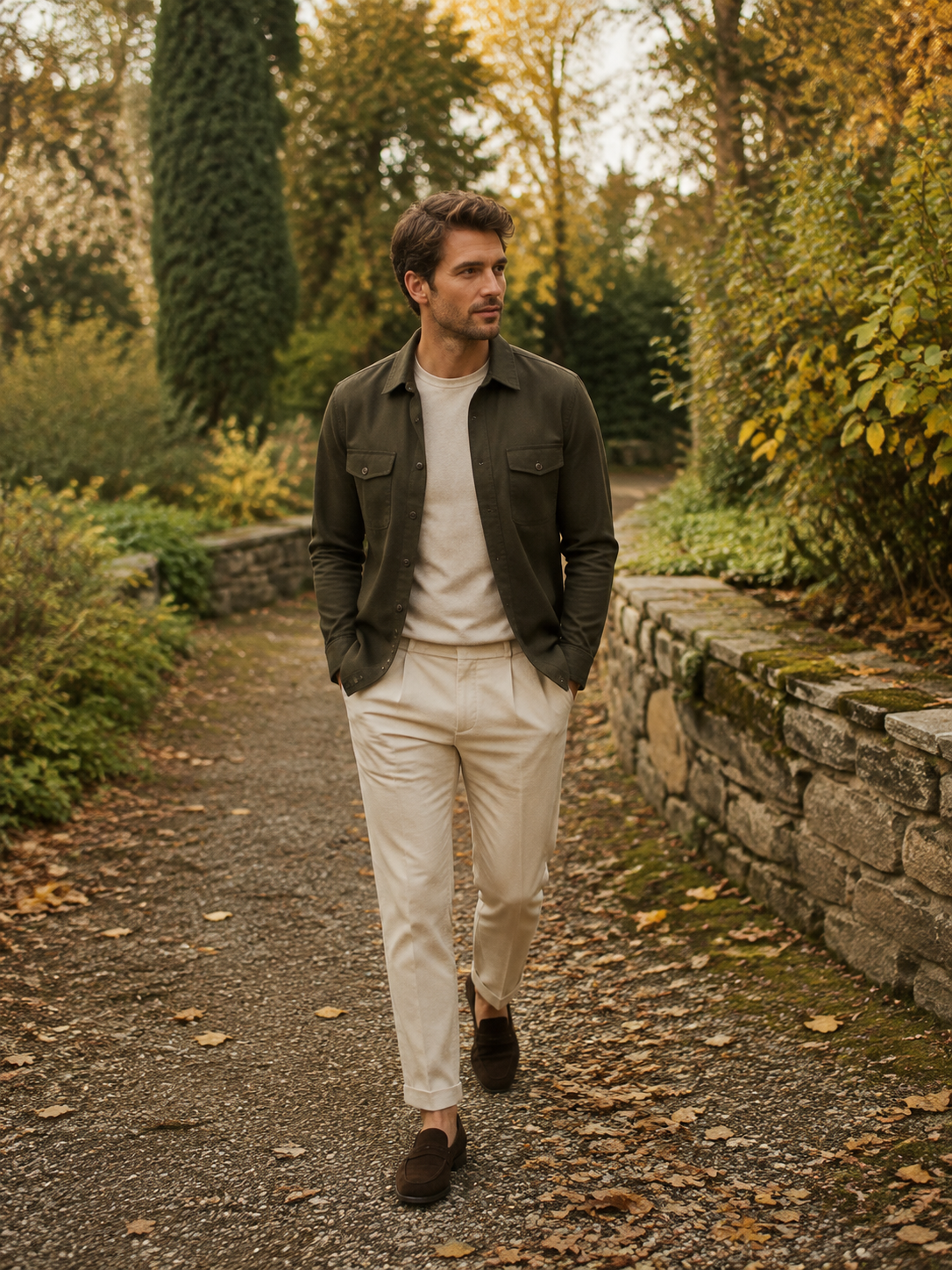
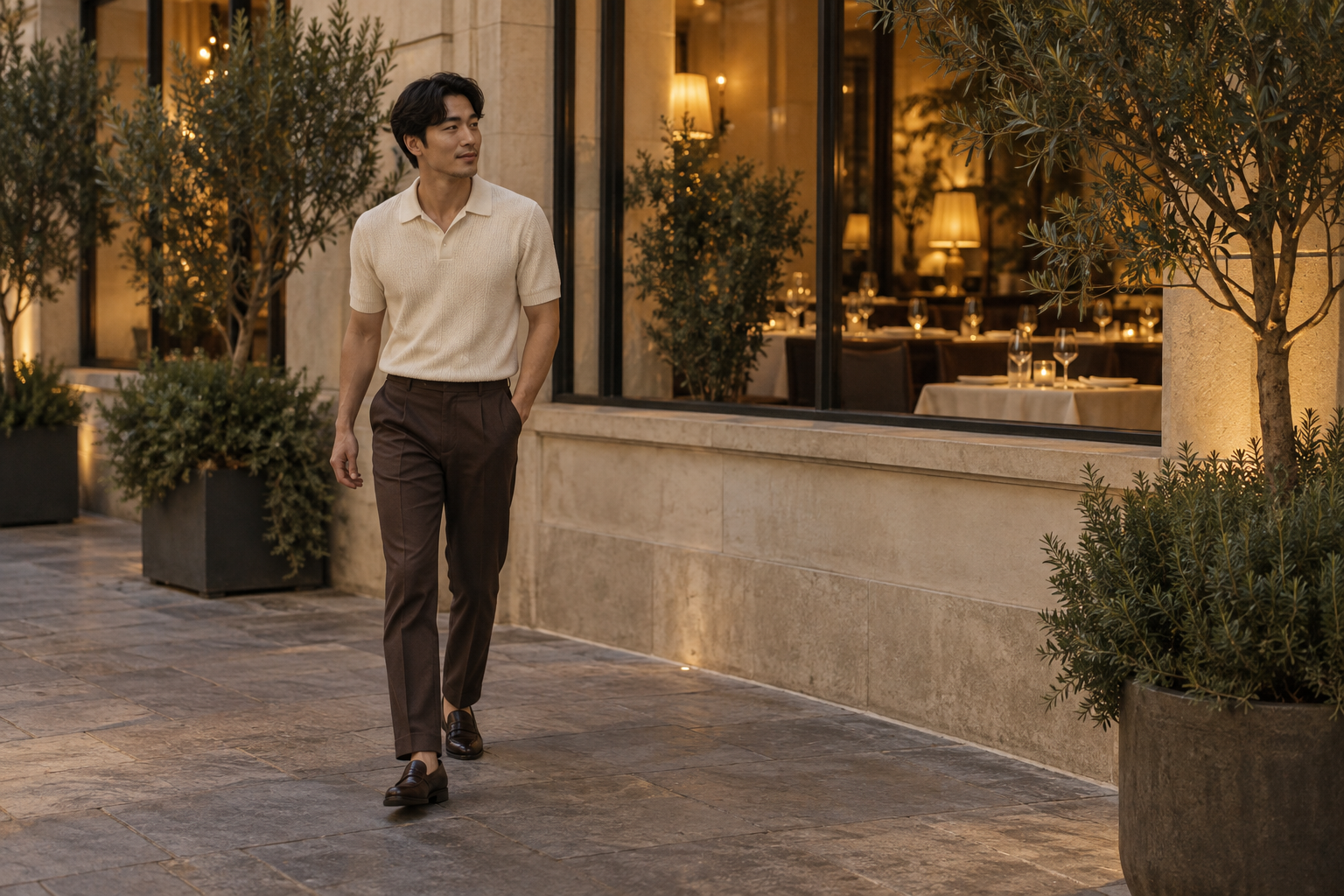
A cream knit polo with dark brown tailored trousers and dark leather shoes survives the whole day and still passes at a smart casual restaurant. Add the unstructured blazer from the bag for a stricter room, or wear it exactly as walked for a bistro. The photograph shows the evening end of that same outfit beside a restaurant.
The counted inventory, packed
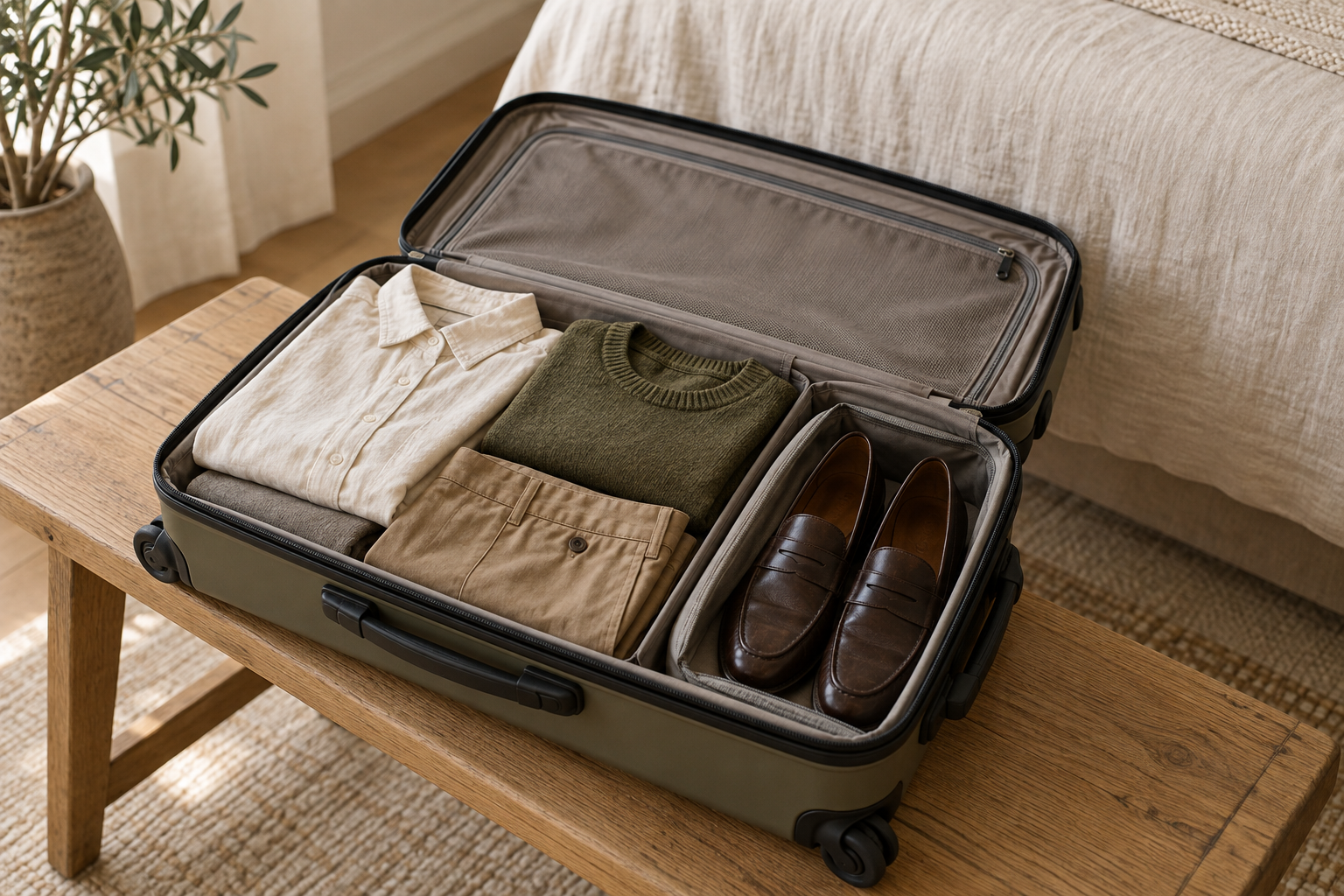
The three-day list folds into one small bag: a cream shirt, an olive sweater, tan trousers, and one pair of brown leather shoes, with the evening layer worn in transit. Every dinner draws on these pieces, so nothing extra is carried for the evenings. The suitcase photograph is an illustrative packing scene, not proof of the exact inventory or of any bag allowance.
Adjust for the day.
One stricter reservation
A tasting menu or hotel restaurant among relaxed dinners changes the plan by one notch, not one outfit. Book the return-to-the-room reset for that night, reserve the freshest shirt and the dressier shoe for it, and let the same trousers return with the evening layer added.
Hot-weather city trips
Heat and dress codes meet at fabric weight rather than skin. A short-sleeve collared shirt in a linen-cotton blend, lightweight tailored trousers, and unlined leather loafers cover both jobs; pack one light knit anyway, since air-conditioned rooms run cold.
Wet-weather itineraries
Rain demotes pale suede and thin soles for the whole trip, not just the wet day. Choose darker leathers treated before you leave, carry a compact umbrella when dinners are dressy, and let the wool-blend knit insulate even when damp.
Very light packers
With daypack-only space, the palette rule does most of the work: one dark bottom, one mid bottom, three tops in the same two colours, the evening layer, and the one tested shoe. Skip the second pair of shoes and pick restaurants to match the walking pair.
Leave these assumptions behind.
Packing thin-soled dress shoes for the evenings and losing the walking days to sore feet. Smart casual accepts cushioned derbies, loafers, and flat boots, so comfort and dressiness are not in conflict — but test the pair on a full day before the trip, not during it.
Bringing a separate dinner outfit for every night. One evening layer and a fixed palette turn the same trousers and shirts into every evening on the list, at half the luggage.
Treating one shoe as mandatory regardless of the reservations. If a stricter restaurant will not take the walking pair, the honest plan is a second packed shoe for that evening — not hoping the maître d' compromises.
Relying on crease-prone fabrics for the pieces that do double duty. The day-to-dinner shirts and trousers should be cotton, merino, or blends that hold their line; delicate fabrics arrive at the table looking like the day they had.
Pack a blazer in a carry-on by protecting the shoulders, choosing a fold suited to the jacket, and keeping it on top of the bag. Some creasing is normal.
How to cover a weekend trip with carry-on luggage: check the allowance first, build a counted inventory that recombines, and choose shoes before clothes.