Skip to content

Find your next good read.

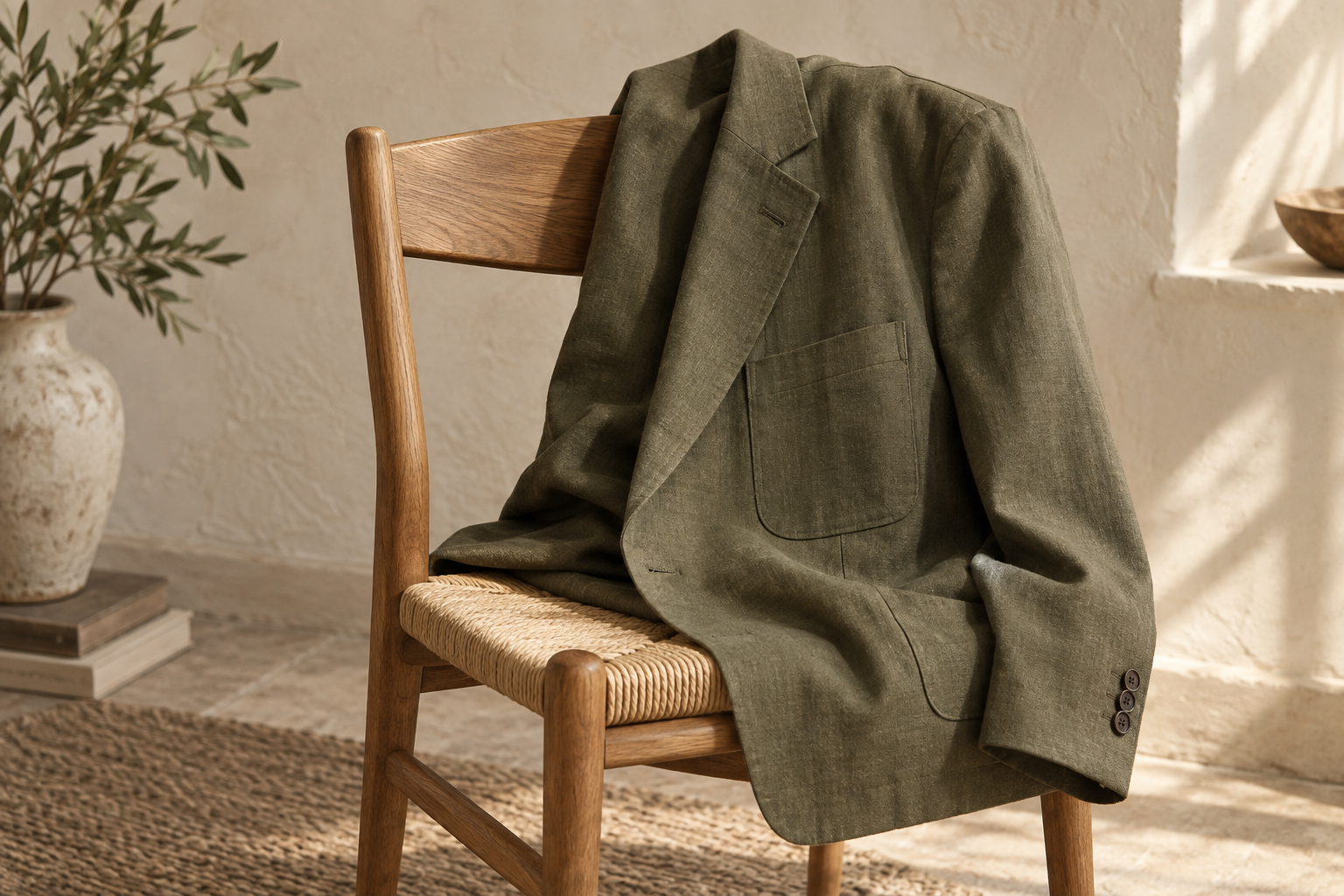
Olive blazer draped over an oak chair with lapel, pockets and sleeve visible.

Step-by-step

Pack a Blazer Without Crushing Its Shape

A fold-first method for packing a blazer in a carry-on, a roll alternative, and how to decide between them before you close the bag.

Begin here

How-to

How to Pack a Blazer in a Carry-On Bag

To pack a blazer in a carry-on, give the shoulders and lapels room instead of pressing them under heavy items. Choose a folding method suited to the jacket, then unpack it promptly. Some creasing is normal; follow the garment's care instructions before using heat, steam or any treatment.

No packing method guarantees a crease-free blazer. What a good method does is decide where the creases form, keep them out of the collar and chest, and limit how long the fabric stays compressed. The steps below are written so you can check each move before making the next one.

Myth

A carefully packed blazer arrives wrinkle-free, and any creases that do appear will release with a quick steam or an overnight hang.

Fact

Creasing depends on the cloth, the construction and the trip. Some jackets show fold lines no matter how they are packed, and recovery varies — care and construction differ between garments, so follow the jacket's own care instructions rather than counting on a universal fix.

Choosing a packing method for the jacket you have
MethodSuitsSpace costMain tradeoff
Shoulder fold, packed flat on topStructured jackets with padded or canvassed shouldersWidest footprint in the bagBest chance of keeping the collar and chest smooth, but needs the most room
Loose rollSoft, unstructured or knitted jacketsMost compactSaves space but presses the cloth into a tighter curve, which can set lines
Garment sleeve, flatAny jacket, where bag dimensions allowAdds a layer, needs a flat spaceReduces friction and handling, but only works if the sleeve lies flat without squeezing

Before you fold anything, confirm:

  • The blazer is dry and has been brushed, so you are not packing debris into a crease.
  • The pockets are empty — a phone or receipt left inside will press its shape into the cloth.
  • You have read the care label and know what the manufacturer says about heat, steam and ironing.
  • You have set aside two or three soft items (t-shirts, a knit, socks) to fill the sleeves and chest.
  • There is clear flat space at the top of the bag for the blazer to occupy last.

What you will finish with.

A blazer that arrives with its collar and chest in decent order, packed so that any creasing is concentrated where the cloth is doubled and padded rather than across the front. You will also know, from the care label, what the jacket can and cannot be put through on arrival — recovery is not guaranteed, and honest expectations are part of the method.

Have these ready.

  • The blazer itself, unpacked and inspected: dry, brushed, pockets empty, and with its care label read before you fold or plan any treatment.
  • A clean flat surface large enough to lay the jacket out fully — a bed or a cleared table.
  • Two or three soft items such as t-shirts, a knit or socks, kept out of the bag to fill the sleeves and chest later.
  • Optional: a dry-cleaner's plastic bag or a thin liner to reduce friction between the blazer and other items, or a garment sleeve if your bag's dimensions allow one to lie flat.

One step at a time.

  1. Read the care label and identify the jacket

    Check what the manufacturer says about heat, steam and ironing before you fold, because it shapes what you can do on arrival. Feel the shoulders: a structured jacket with padded or canvassed shoulders needs a method that keeps them from being pressed flat. Note the cloth — tightly woven cotton and crisp linen show fold lines more readily than soft wool blends.

    Check: You can say what the care label permits, and you have decided whether the shoulders are structured or soft.

  2. Lay the blazer face down on a flat surface

    Smooth the back so there are no wrinkles trapped underneath, and button the front so the closure does not swing open while you work. This sets up the fold with the lining, not the outer face, taking the sharp turns.

    Check: The blazer lies flat with the collar at the top and both sleeves straight down the sides, with no bunching under the body.

  3. Turn one shoulder inside-out and nest the other inside it

    Take the left shoulder and turn it inside-out so the lining faces out, then tuck the right shoulder into the pocket you have created. This shoulder fold moves the main crease to a padded, double-layer area instead of across the front of the jacket. Work gently — the aim is nesting, not a sharp crease at the fold.

    Check: The two shoulders sit nested together, the collar lies flat on top, and no sharp single fold line crosses the chest panel.

  4. Fold the sleeves across the chest

    Lay each sleeve diagonally across the nested chest, following the natural line of the shoulder rather than folding hard at the elbow. The sleeves become padding for the chest area, which is why they should curve rather than crease.

    Check: The sleeves cross the chest without a hard crease at the elbow, and nothing sticks out past the body of the blazer.

  5. Fold in half or roll, based on the table above

    For the flat method, bring the hem up to the collar so the blazer sits as a soft rectangle. For the roll method, roll loosely from the hem toward the collar instead — better for soft, forgiving cloth than for structured wool, because the tighter curve presses lines into fabric. If a garment sleeve fits flat in your bag, that is a third option: jacket in, laid on top, nothing stacked on it.

    Check: The folded rectangle or roll holds its shape on its own, with the collar exposed at one end and no sharp edges.

  6. Bag it last, on top, with soft items around it

    The blazer goes into the carry-on last, ideally inside a dry-cleaner's bag to cut friction. Lay it flat across the widest part of the bag with heavier items beneath it and soft items filling the gaps at the edges. It should be the first thing out when you open the bag, which keeps the compressed time as short as possible.

    Check: Opening the carry-on, the blazer is the top layer with nothing pressing into it from above and the collar area unobstructed.

  7. Unpack promptly and escalate only as the care label allows

    Take the blazer out as soon as you reach your room. Fill the sleeves and chest with a soft item so the shoulders keep their shape, and hang it on the sturdiest hanger available. Give it time and, if the label permits, the humidity of a steamy bathroom while you shower — some light creasing will relax, but deep fold lines may not fully come out without a proper press, and some may not come out at all.

    Check: After an hour hanging, the collar sits clear of the chest and any remaining creases are ones you can accept or address within what the care label allows.

Check your result.

If it is not working yet.

Deep creases after unpacking

Hang the blazer first — time on a hanger is the least invasive step and costs nothing. If the care label permits moisture, a damp clean cloth laid over the crease with gentle palm pressure, then drying on the hanger, is gentler than an iron. If you iron at all, use the lowest suitable setting with a cloth between iron and fabric, and accept that deep fold lines in structured cloth may need a professional press.

Crushed collar or lapels

Roll two soft items, such as socks inside a t-shirt, and place one inside each lapel fold while the blazer hangs, so the rolls push the lapel shape back out. Let the collar recover on the hanger rather than forcing it flat. Collar structure recovers slowly if at all, so set this up as soon as you arrive.

No hanger at your destination

Drape the blazer over the back of a chair with the shoulders shaped as close to a hanger profile as you can manage, or lay it face-down on a bed with the sleeves folded across the chest and the collar arranged flat. Let air reach both sides and rotate it as it dries so a new crease does not set. Improvised hanging still beats leaving the jacket folded.

The jacket came out worse than expected

Cloth and construction vary, and some jackets simply travel badly — tightly woven cotton and crisp linen are the usual culprits. Note which fold or roll you used and how the fabric responded, and choose a different method (or a different jacket) for the return trip. If a press is essential before an event, a local dry cleaner is the reliable option.

Keep exploring.