Carry-on only
Quantity is capped at about three shirts, so fabrics must multitask: a knit polo, a jersey or ponte shirt, and one evening-acceptable textured shirt. Roll or fold around the collar, and re-hang each shirt on arrival.
Occasion guide
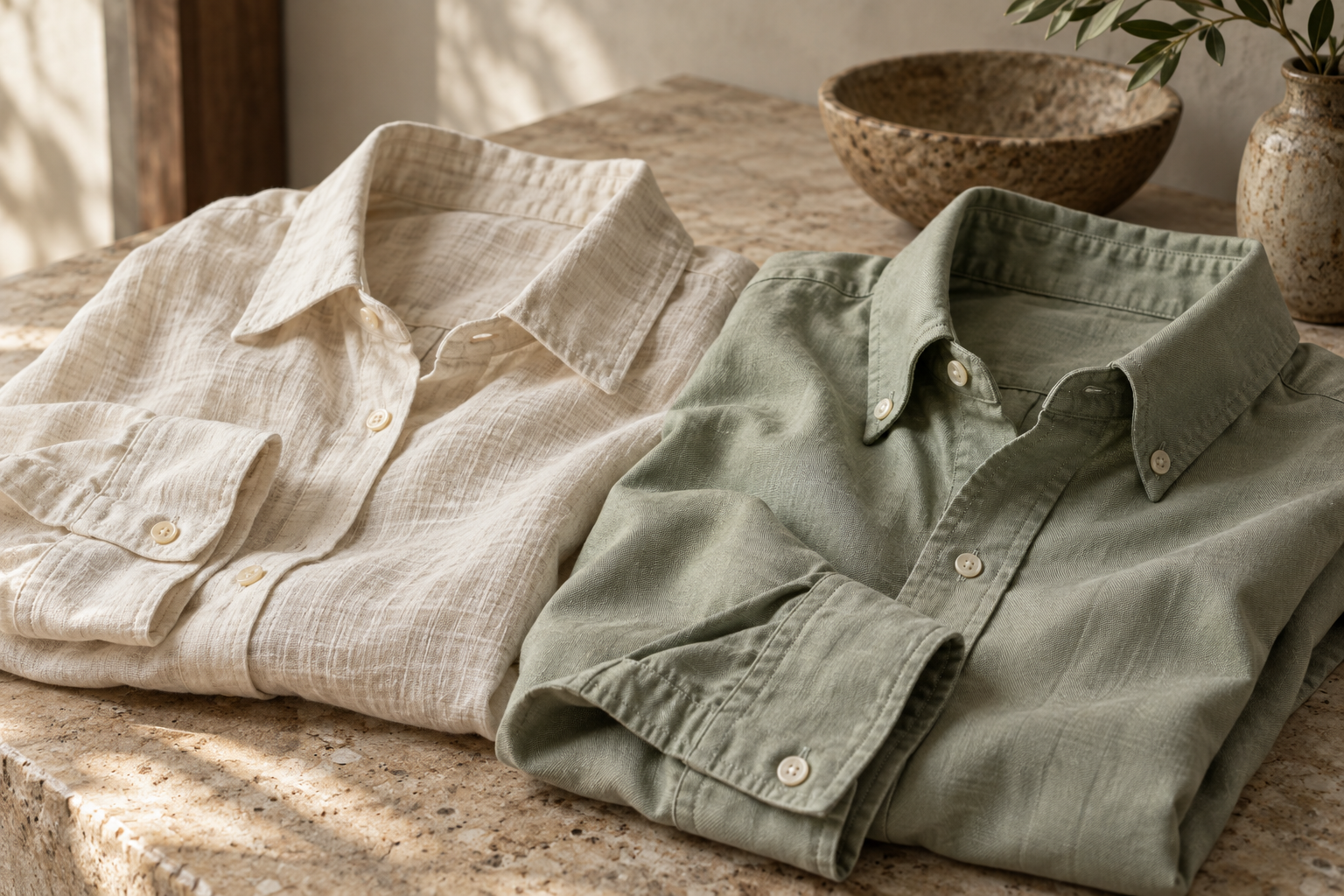
For travel shirts you can wear without ironing, check how the actual garment handles packing and what care you can manage on the trip. A textured knit or easy-care finish may reduce visible creasing, but no label guarantees a smooth shirt after every journey — so try a small packing test at home and plan what you will do if wrinkles remain.
Begin hereOccasion advice
For travel shirts you can wear without ironing, check how the actual garment handles packing and what care you can manage on the trip. A textured knit or an easy-care finish may reduce visible creasing, but no label guarantees a smooth shirt after every journey. Try a small packing test at home before you travel, and plan what you will do if wrinkles remain.
"Presentable without pressing" means the shirt, straight from the case, reads as a deliberate choice — soft creases that look like the fabric, not neglect. "Crease-free" means no visible fold lines at all, and no fabric or finish reliably delivers that after a day in a suitcase.
How much smoothness you need is set by the itinerary, not the catalogue. Deep texture reads as holiday at a beach dinner and as neglect in a smooth business shirt. Name your settings and let them set the standard.
Some fabrics simply don't wrinkle, so a "travel shirt" needs no thought after packing.
Every textile creases under enough pressure and time. Knits and textured weaves tend to show creasing less, and some recover shape when worn or hung — which is a real advantage, but a matter of degree, not a guarantee. The care label and a packing test tell you more than the fabric name.
Construction, not fibre marketing, changes how creases show: knitted fabric is a looped structure that deforms and recovers, while woven fabric bends into lines. Texture and easy-care finishes change how visible those lines are — and each option carries a tradeoff.
| Construction | Why it may crease less visibly | The tradeoff to accept |
|---|---|---|
| Merino or merino-blend knit polos | Knit loops deform rather than fold sharply and tend to recover when hung; merino resists odour between washes. | Higher price; many blends dislike hot washes and tumble drying, so check the label first. |
| Jersey and ponte shirts | Knit structure with enough weight to hold a collar and placket; creases relax as the garment is worn. | Less breathable in real heat; suits city and shoulder-season trips better than tropical ones. |
| Seersucker | The puckered weave holds most of the cloth off the skin, so fold lines sit inside an already textured surface. | A distinctly summery look that can feel out of place on a cool evening or in a formal room. |
| Chambray | Light weight and soft drape make creases read as casual texture rather than hard lines. | Stays a casual shirt — it will not carry a business-formal dinner unaided. |
| Linen and linen-blend shirts | Texture and drape make rumpling read as the fabric's character; blends crease more softly than crisp pure linen. | Real linen wrinkles by design, and a blend looks less crisp than linen at its best. |
| Smooth poplin or oxford | It usually doesn't — a crisp smooth weave folds into hard lines and is the shirt most likely to need pressing. | Only worth packing if your plan includes an iron, steamer or laundry service. |
Hotel facilities vary widely. An iron may be available on request at one property and absent at the next; a travel steamer needs a socket, a flat surface and time between check-in and dinner. Check what your accommodation actually offers.
Then match it against the labels of the shirts you plan to take. A shirt that needs delicate washing and flat drying cannot be maintained in a room with only a sink; a quick-drying knit earns its place where laundry access exists. Pack for the plan: one reliable shirt for a trip with one nice dinner, a rotation for a week of meetings.
A repeatable test beats a product page claim. It takes one day and tells you how your actual shirts behave when folded the way you actually pack.
Fold or roll each candidate shirt exactly the way it will sit in your case, collars and plackets arranged as planned.
Leave it undisturbed for at least 24 hours — roughly a flight plus a transfer. A two-hour test flatters the shirt.
Shake the shirt out, hang it on a proper hanger, and smooth the collar and plackets by hand — the same thing you will do in the hotel.
After an hour, note which shirts recovered to your standard and which kept hard lines. Swap the failures and, if time allows, retest.
A week before departure, confirm the shirt plan against the trip itself.
BEFORE YOU CHOOSE

A navy merino knit polo, a grey jersey shirt and dark slim chinos cover two days and one dinner. Hung on arrival, the knit polo is wearable within the hour; the jersey shirt does evening duty with leather sneakers or loafers.
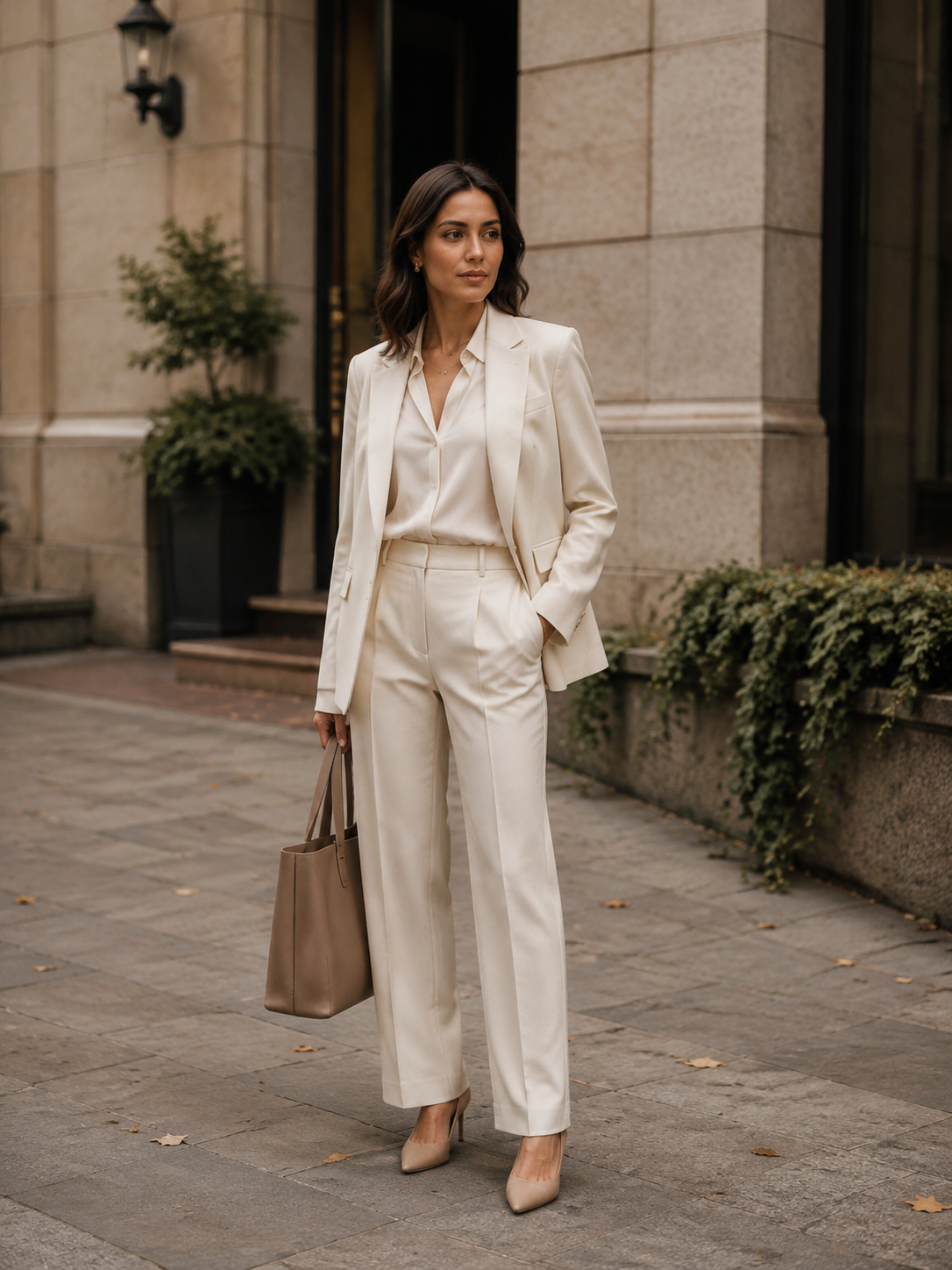
Two chambray or fine-blend shirts in rotation with tailored trousers and an unstructured blazer. The blazer takes the formality pressure off the shirts, so soft-draping fabrics can carry the daily work without a press — verify the venue accepts a softer finish first.

The flight shirt is the wrong shirt for dinner. Pack a textured evening shirt deep in the case and change on arrival, letting the texture read as intentional.
Quantity is capped at about three shirts, so fabrics must multitask: a knit polo, a jersey or ponte shirt, and one evening-acceptable textured shirt. Roll or fold around the collar, and re-hang each shirt on arrival.
Breathability beats crease-resistance: loose linen blends and seersucker become the default. An evening sink wash, rolled in a towel, may mean a shirt is wearable by morning — but only where the care label allows it.
The flight shirt cannot be the meeting shirt. Wear the most disposable layer in transit and keep the meeting shirt in a packing cube, folded flat around its collar, with a fallback packed.
Pack fewer, better shirts and wash midway. Quick-drying knits and blends earn their place again, since a shirt dried overnight on a hanger often smooths under its own weight — often, not always.
Travel & Cruises
Build a smart casual travel wardrobe from two or three color-coordinated layers and one dressier shoe, so every item works in at least two outfits.
Travel & Cruises
How to cover a weekend trip with carry-on luggage: check the allowance first, build a counted inventory that recombines, and choose shoes before clothes.
Travel & Cruises
How to dress smart casual on a cruise: read the line's published guidance, plan for dining venues and port weather, and build a small rotation that covers every evening.