

Skip to content

Find your next good read.

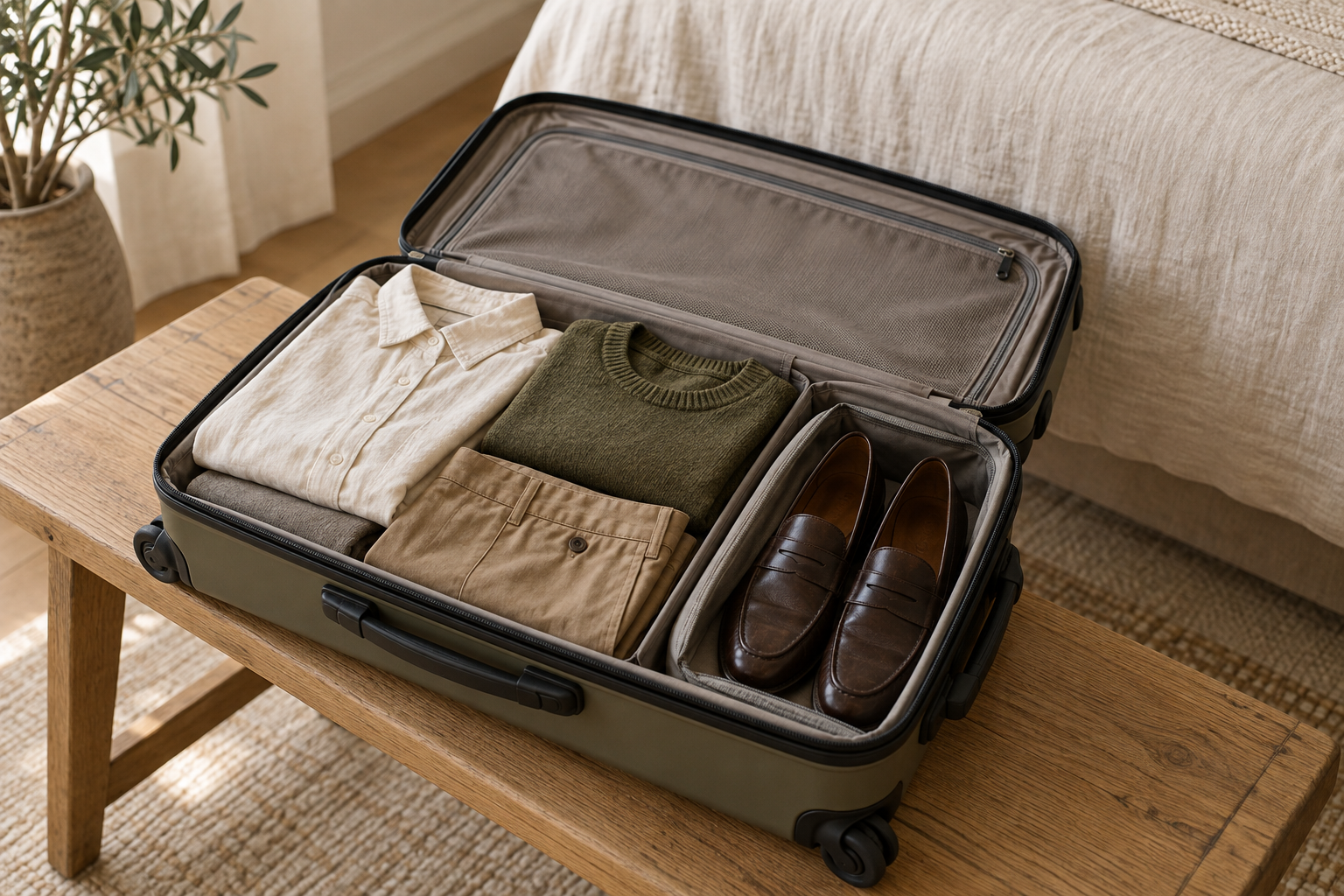
Open suitcase containing a cream shirt, olive sweater, tan trousers and brown loafers on an oak bench.

Occasion guide

Smart Casual Cruise Outfits: Check the Line and Venue

Cruise dress codes are set by the operator and vary by ship, venue and evening, so the smartest packing decision is made before you pack: read your line's current guidance and plan outfits around it.

Begin here

Occasion advice

Check the line, ship and venue before you pack

For smart casual cruise outfits, check the rules for your cruise line, ship and dining venue before packing. Daytime clothes, pool clothing and evening dining may have different requirements. Build a small set of combinations around the activities you booked, and confirm whether any special evening needs something beyond your usual smart casual clothes.

Myth

Every cruise line means the same thing by smart casual, and dressy nights happen on all of them.

Fact

Dress guidance is written per operator, and many lines have changed or dropped formal nights in recent years. Read the current wording for your sailing instead of packing to an older or second-hand standard.

BEFORE YOU CHOOSE

Read the room. And the invitation.

  • Start with the source, not the forums. Your cruise line publishes its own dress guidance, and it differs between operators and between ships — check the line's current published guidance on its site or app before packing anything, since codes and which nights they apply to are set by the operator and do change.
  • Note what you are actually looking at. An embarkation document or your booking confirmation carries more weight than a review or a social media thread; informal advice can be years out of date or apply to a different ship. Record the line, ship, sailing date and venue wording you find.
  • Dining venues differ within the same ship on the same night. The main dining room usually asks for smart casual on standard evenings, buffets and casual venues stay relaxed all day, and speciality restaurants may hold their own standard — the ship's daily program or app lists which venue expects what.
  • Day and evening are genuinely different settings aboard. Shorts, swimwear and tees are daytime currency; once the dining rooms open in the evening, the same pieces are out of place, so the packing question is really two small wardrobes that share a case.
  • Ports and weather shape the day wardrobe more than the ship does. A Mediterranean city day, a beach stop and a cool-weather sea day need different layers from the same bag — check the itinerary's climates, not just its ports.
  • Laundry services exist on most ships, from self-service rooms to full service, which means an evening rotation of three or four outfits can cover a week. Confirm what your ship offers rather than assuming — and if laundry is not available, pack one more evening outfit than the number of dressier dinners.

A useful outfit formula.

  1. Day outfit: tailored shorts or light trousers with a collared shirt or presentable tee, plus comfortable walking shoes — it must survive a shore excursion in the morning and still pass at the casual buffet at lunch.
  2. Pool-to-lunch cover-up rule: swimwear stays at the pool. Keep a dry t-shirt or shirt and shorts or a sundress in the day bag, because most casual venues and all indoor spaces expect a cover-up over swimwear — this single habit prevents most wardrobe friction aboard.
  3. Evening smart casual base: trousers, or a skirt or dress, with a collared shirt, knit or blouse, and closed-toe shoes or smart sandals — the same standard as smart casual anywhere, applied to the main dining room on standard nights.
  4. The sharing layer: a light blazer, cardigan or wrap does double duty, adding formality to an evening outfit and warmth on deck after sunset, which matters on sea days and cooler itineraries.
  5. The rotation: three evening outfits repeating across the week, refreshed by ship laundry or a nightly hang, beats seven outfits squeezed into a case — fabrics that resist creases earn their place twice over here.

Two starting points.

Olive overshirt, cream trousers and brown shoes on an autumn walk

Port day

Light chinos or tailored shorts, a breathable collared shirt, and broken-in walking shoes, with a packed cover-up layer if the day includes a beach or pool stop. Everything is chosen to look acceptable at the buffet the moment you step back aboard.

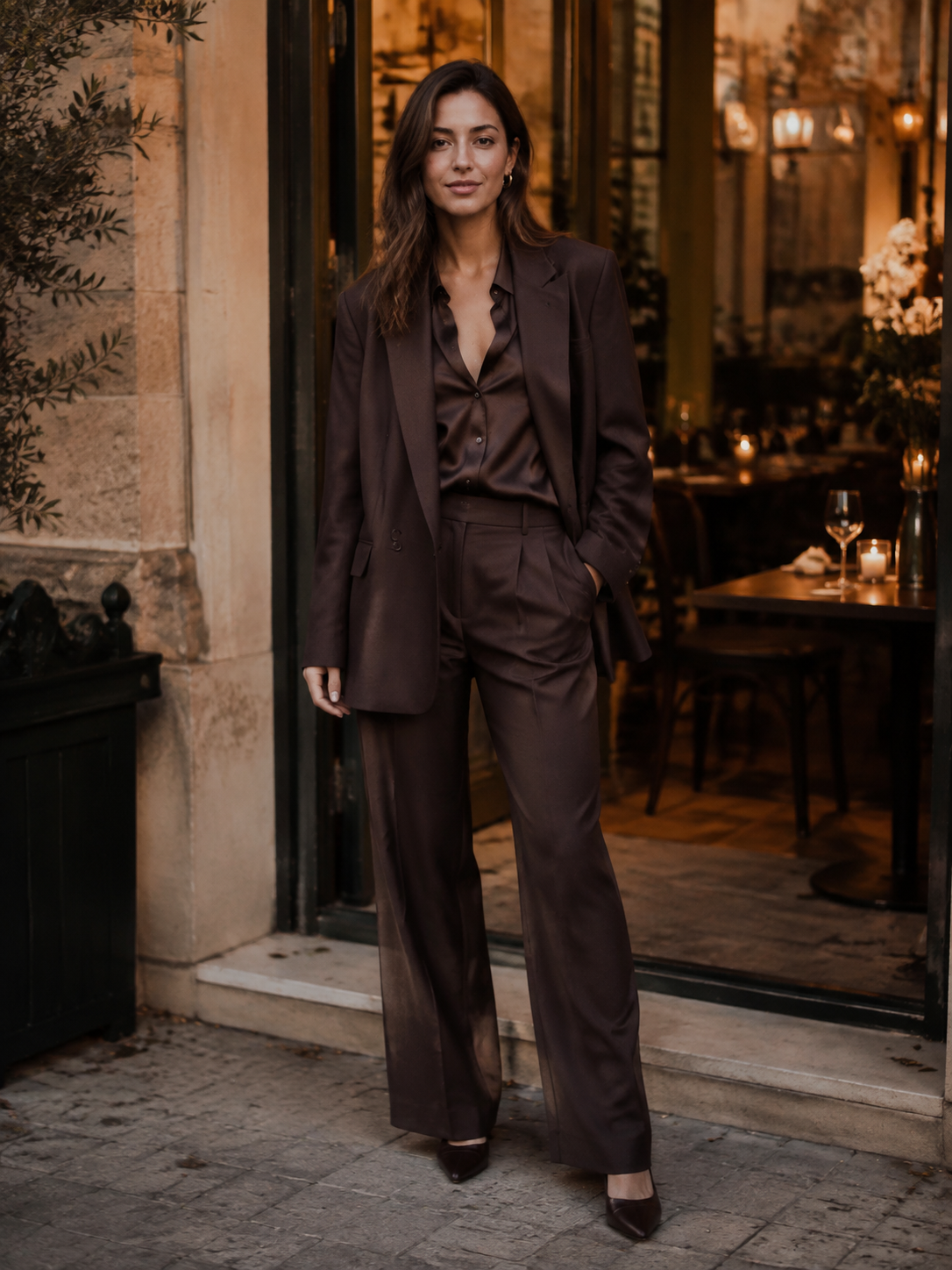
Chocolate brown tailoring and a silk-style shirt in a warmly lit restaurant

Standard evening in the dining room

Dark trousers with a knit polo and loafers, or a knee-length dress with low heels or dressy flats. The outfit is one notch above daytime without touching jacket-and-tie territory, which matches the smart casual wording most lines use for standard evenings — verify yours.

Dark blazer, open-collar white shirt and tailored trousers at a garden celebration

Dressed-up evening

On nights the line marks as dressier, the same base gains a piece rather than changing wholesale: a blazer over the knit, or a dressier dress with better shoes. Check the line's guidance for what those nights mean on your sailing — they vary by operator, and some ships no longer hold them at all.

Adjust for the day.

Lines with optional or no dressier nights

Some operators make dressier nights optional or have dropped them entirely, letting you keep every evening at smart casual. Check your line's current published guidance rather than assuming either way — packing for formal nights that do not happen wastes half a case, and skipping them when they exist means eating in casual venues all week.

Warm Caribbean versus Alaska

Caribbean packing is daytime-heavy: linen blends, swimwear and sun protection, with evenings needing nothing warmer than a light shirt. Alaska inverts it — layers, a proper jacket and warm accessories for deck time, while the evening rotation barely changes. The itinerary decides the day wardrobe, not the cruise.

Active excursions

Days built around hiking, kayaking or boat trips need genuine activewear, and there is no shame in that — plan one shirt per active day that you would not mind washing in the sink. The evening rotation then stays untouched, which is what keeps the case manageable.

Speciality dining

Booked speciality restaurants may hold a standard a step above the main dining room, or may not — it varies by venue and line. If you have booked one, check what the operator publishes for that venue; often your existing smart casual rotation with one added layer already clears it.

Leave these assumptions behind.

  • Guessing the standard from the cruise price. An expensive fare does not mean stricter dress rules and a budget line does not mean laxer ones — only the operator's published guidance tells you, and reading it takes ten minutes.
  • Packing seven evening outfits for a seven-night cruise. Three strong outfits on a rotation, refreshed by laundry or an overnight hang, look better by Friday than seven squeezed shirts and dresses.
  • Wearing swimwear or beachwear beyond the pool deck. Almost every ship expects a cover-up in indoor venues, and the buffet at lunch is where the rule bites hardest.
  • Ignoring port weather because the ship has a climate. A cold, wet excursion day in the wrong layers ruins the morning and the clothes, and deck evenings run cooler than most first-time cruisers expect on any itinerary.
  • Leaving a doubt unresolved. If the wording for a venue or night is unclear, use the line's official contact channels or ask at guest services on embarkation day — an answer from the operator beats any guess.

Keep exploring.