Shirts ↗
Choosing and fitting the shirts that anchor a smart casual wardrobe, from oxford cotton to linen, with notes on collar styles and care.

Garment guides
Judge each piece by what it needs to do. Compare fit, fabric, comfort and care before you buy — then route to the guide that handles that garment in detail.
Explore the collectionFIND YOUR STARTING POINT
Build a smart casual wardrobe by checking what each piece needs to do. Start with the dress rules and the gaps in the clothes you own, then compare fit, fabric, comfort and care. A shirt that looks right on the hanger but pulls when you sit, or shoes you cannot walk in comfortably, will be difficult to use no matter how good the price was. This section covers choosing the clothing itself; pairing pieces into outfits for specific occasions is handled in the what-to-wear guides.
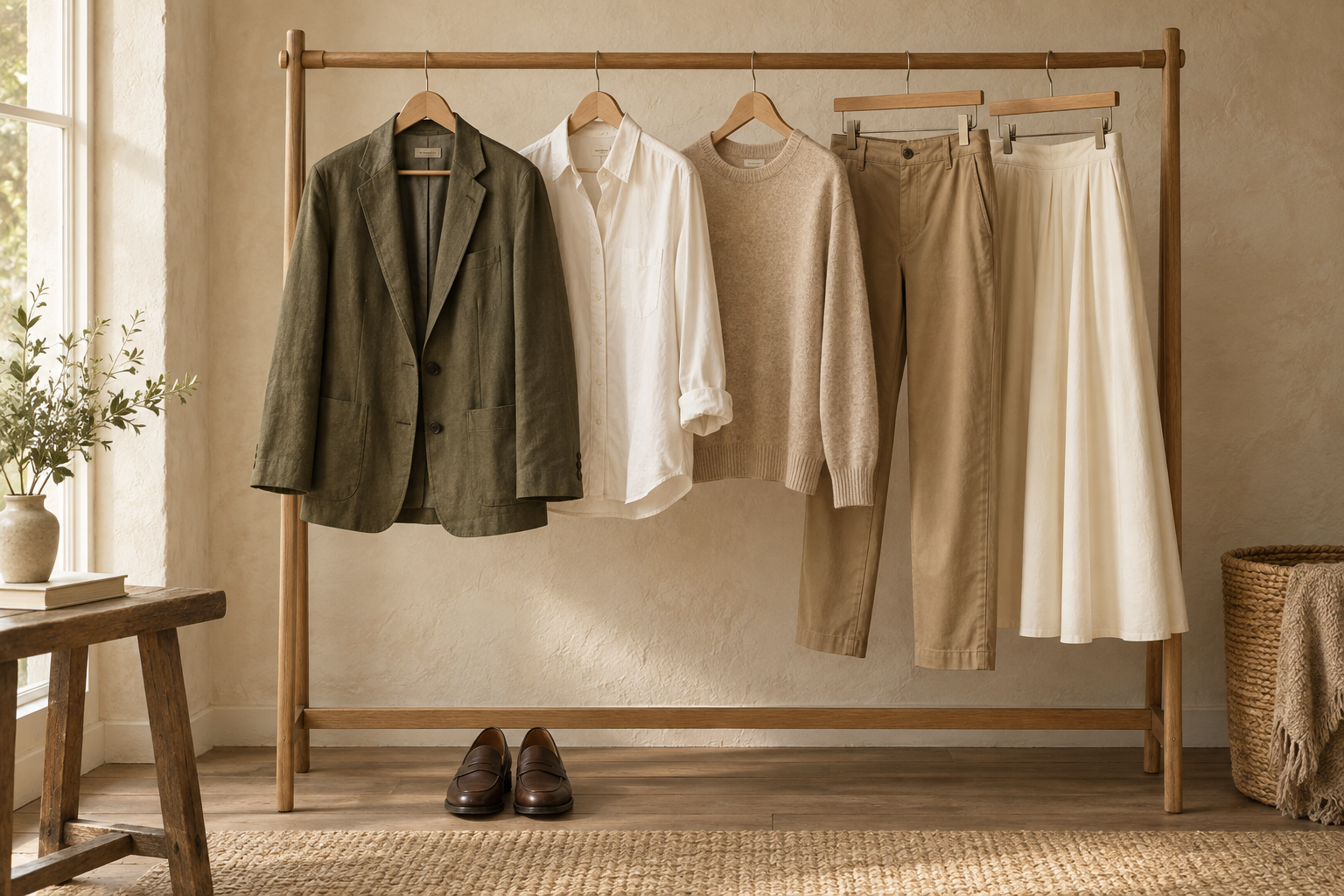
The cheapest way to improve a wardrobe is to stop buying pieces nobody needs. Instead of working from a shopping list, audit two outfits you actually wear in a normal week.
Pick two settings from your own life — a working day and a weekend meal, say — and list every piece each outfit uses.
Ask which single item, if replaced, would lift both outfits at once. That overlap is where a purchase earns its place.
Write what the replacement must do: pair with the other pieces, survive the care you will actually give it, and stay comfortable for the full day.
Judge each option in the shop or online against that description, and be willing to decide not to buy when nothing meets it.
The audit sometimes ends with no purchase at all. If two outfits already work and nothing wears out soon, the honest answer is that the wardrobe is fine for now.
Each family does a different job in an outfit, and each fails in its own way. Use the table as a first pass, then take the family-specific checks from the individual guides.
| Family | Job in an outfit | Check before buying | Common limitation |
|---|---|---|---|
| Shirts & tops | Set the tone: a pressed shirt reads smarter than a t-shirt without changing anything else. | Check collar shape, button gapping across the chest, and whether the hem stays tucked or hangs acceptably untucked. | Fine fabrics need ironing; some weaves turn sheer under office lighting. |
| Trousers | Carry the silhouette and decide how formal the whole outfit reads. | Sit down in them; check the waistband, the seat and where the hem breaks over your actual shoes. | Slim cuts restrict movement; very relaxed cuts can read casual rather than smart. |
| Jackets & blazers | Instantly smarten a simple shirt-and-trouser base. | Check shoulder seam placement, closed-button pull across the chest, and sleeve length over your shirt cuff. | Structured suit jackets can read too formal; unstructured ones offer less shape. |
| Dresses & skirts | One-piece route to smart casual when the fabric and length are right. | Check opacity when seated, ease of movement, and whether the neckline stays put when you lean forward. | Fabrics that cling or crease need more upkeep than the look suggests. |
| Shoes | Anchor the outfit; smart trousers with the wrong shoes still read casual. | Walk the shop in them; check heel height you can manage all day and toe room at the end of a day's swell. | Leather soles and thin dress shoes wear quickly on pavement; comfort features add bulk. |
Each family has its own guide with fabric choices, fit detail and care routines: shirts, trousers, jackets, dresses and skirts, and shoes.
A mirror shows how a piece stands; your day involves none of that. Test every candidate in motion before deciding, because fit problems show up as pulling, riding or gaping exactly when you stop posing.
Buttons should not gape, thighs should not feel bound, and a shirt hem should stay reasonably in place. Note where anything pulls.
A jacket that rides up badly or a back that goes tight will do it in real meetings and real queues, not just in the fitting room.
Ten paces tells you about heel slip, trouser leg catch and underarm rub. Comfort on move one usually stays comfortable; rubbing rarely improves.
If you own a similar garment you wear happily, compare the feel directly rather than trusting the size on the label.
Comfortable room looks like
Warn signs look like
Loose is a style choice, not a fault — wide trousers and oversized shirts are deliberate looks. The test is whether the looseness sits where the design intends and the garment still behaves when you move.
Fabric decides how a piece wears, creases and cleans, so read the label before you read the price. The composition line tells you what the garment will demand; the care symbol tells you what it will cost in upkeep.
Run these five checks on any piece you are close to buying:
Natural fibres are always the better choice, and anything with synthetics is a compromise.
Natural and synthetic fibres trade different strengths. Linen creases beautifully but wrinkles fast; cotton is sturdy but slow to dry; some synthetic and blended weaves hold shape, resist creasing and wash more easily. The better choice depends on the garment's job and the care you will actually give it.
The final check is combination. A piece that only works with one outfit is a specialist; a piece that bridges your two audited outfits is the one worth owning.
Whatever you buy, the care routine starts the day it arrives — and care decisions are easier when you made them part of the purchase. The garment care guide covers washing, storage and small repairs for every family above.
Choosing and fitting the shirts that anchor a smart casual wardrobe, from oxford cotton to linen, with notes on collar styles and care.
How to pick trousers that read polished without being formal: fabrics, rises, breaks, and the fit points worth checking before you buy.
Blazers, chore jackets, and unstructured layers — what separates a smart casual jacket from a suit jacket, and how a good one should fit.
Necklines, hem lengths, and fabrics that sit comfortably in smart casual settings, plus fitting notes that apply across body types.
The footwear that carries a smart casual dress code, how to judge leather quality and fit, and simple routines that extend a shoe's life.
Washing, storage, and small repairs done right. Label-aware advice with no universal guarantees — just habits that keep clothes wearable longer.
OUR APPROACH
Good style starts with understanding what works for you.
A LITTLE FURTHER READING
Work & Dress Codes
A plain definition of smart casual: tidy, considered clothing a step below business dress, with complete example outfits, non-examples, and how the setting shifts the balance.
Trends in Practice
Where linen shirts beat cotton and where they don't: breathability, wrinkles, formality, weight, seasons and care, with scenarios for choosing between them.