Chinos vs dress pants ↗
How to tell which of the two a setting calls for, and where the two genuinely overlap.
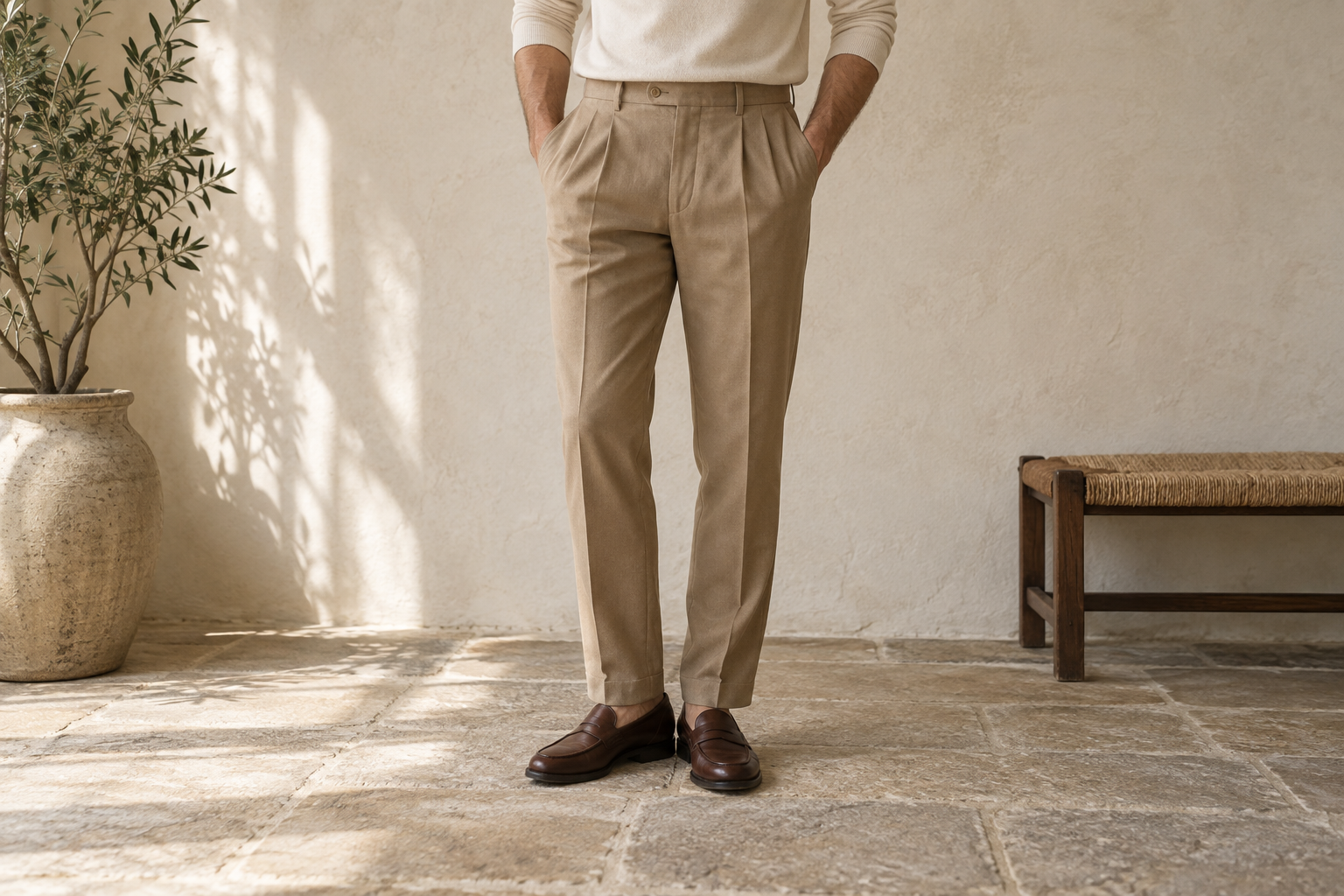
Clothing guide
Type, rise, movement and hem — the four checks that decide whether a pair of trousers works for smart casual, and the specific guides that go deeper.
Explore the collectionFIND YOUR STARTING POINT
Choose smart casual trousers by checking the dress expectations, the room to move and the hem with your intended shoes. Chinos, dress pants and structured knit trousers can serve different needs. The name on the label is only a starting point: sit down, inspect the fabric and check whether the waistband stays comfortable.
The label name is only a starting point — chinos, dress pants and structured knit trousers can each serve a smart casual row of the table below. Work through type, then rise, then how the leg moves when you walk. Finish seated: a waistband that only behaves standing up will not survive lunch.
Three families cover most smart casual trousers: chinos, tailored dress pants and structured knit trousers. Each covers a band of formality and a band of comfort, and the overlap between them is wider than most guides admit. Judge them by the job — the setting, the season and how much you move — rather than by the name.
| Type | Reaches for it when | Watch for |
|---|---|---|
| Chinos | Relaxed offices, weekends and dinners — the default smart casual trouser. | A cut that is either too tight through the seat or too slouchy at the leg opening; both read unintentional. |
| Tailored dress pants | Settings that run close to business dress, or when you want one pair that covers both office and dinner. | Fabric that is too shiny under office lighting, and a waistband that gaps when you sit. |
| Structured knit trousers | Travel days, long seated days and smart casual settings in between — polish with sweatpant-level give. | Thin single knits that cling or go sheer; ponte and heavier double knits hold a trouser line far better. |
The knit-trousers row deserves one clarification: ponte is a fabric, leggings are a cut, and the difference decides whether the garment reads as a trouser at all. The ponte pants vs leggings comparison breaks that down. For the classic pairing decision, the chinos vs dress pants comparison covers which one a given setting calls for.
Wool trousers are only for winter, and chinos are only for summer.
Fabric weight matters more than fibre name. Lightweight wools breathe well in warm weather, and mid-weight cotton chinos work year-round indoors. Check the weight and lining of the specific pair instead of filing a whole fibre under one season.
The rise is the distance from the crotch seam to the top of the waistband, and it decides where the trousers sit on your body. A high rise sits at or near the natural waist, a mid rise a little below it, and a low rise on the hips. Two pairs in the same size can sit in completely different places because the rise differs.
That is why a sizing label cannot settle comfort. The practical test is to put the pair on and sit down: the waistband should stay roughly where you fastened it, without digging in at the front or gaping at the back. If it slides down when you sit, the rise is fighting your body, and no belt fixes a rise that is wrong.
Rise also changes how the rest of the outfit reads. A higher rise tucks a shirt more securely and lengthens the leg line; a lower rise suits a shorter, untucked top. Decide the rise together with how you plan to wear the top half, not in isolation.
Fit problems show up in movement, and the movement test separates two different problems that need two different fixes. Strain — tightness that pulls and folds the fabric when you sit — is a cut or size problem. Excess volume — fabric that drapes loosely everywhere — is also a cut problem, and neither is solved by guessing a different size on the same cut.
The two-minute movement check, worn with real shoes:
Some volume is intentional — wide-leg and pleated styles are cut with extra cloth on purpose, so judge whether the volume is even and deliberate rather than assuming all fullness is a flaw. For chinos specifically, the chino fit guide sets out the waist, thigh and leg-shape checks in detail.
Length is decided at the hem, and the hem is decided by the shoe — which is why you should try trousers with the shoes you plan to wear. A full-length hem usually meets the shoe with a small single break, a slight stack or no break at all, while a cropped hem ends above the ankle on purpose. Both are legitimate smart casual choices; they just read differently.
| Hem outcome | How it reads | Suits |
|---|---|---|
| Slight break | The most traditional read: the hem just kisses the shoe and folds once. | Dress pants and straight-leg chinos with loafers or derbies. |
| No break | Crisper and more contemporary; shows the shoe clearly. | Slimmer cuts and shorter wearers — but go gently, as too short reads accidental. |
| Cropped above the ankle | Deliberate and fashion-leaning; exposes the ankle or sock. | Tapered and relaxed straight fits, with loafers, sneakers or boots. |
| Dragging or pooling | Reads unintentional in every style, and the hems wear out fast. | Nothing — this is the one outcome worth fixing, usually with a tailor. |
Wide-leg pants need their own length logic, because the hem width changes how the break falls and how much shoe shows. The wide-leg pants length guide covers that silhouette specifically.
When a pair looks wrong, the fastest diagnosis is deciding whether the problem is a cut problem or a length problem, because the fixes are different. Cut problems live between the waistband and the knee; length problems live at the hem. A pair can have both, and each needs its own answer.
| What you see | Problem type | The fix to look for |
|---|---|---|
| Waistband digs in or gaps when you sit | Cut (rise or seat) | Different rise or cut; alteration of the waistband, if the rest fits. |
| Whiskers or horizontal folds at the hip or thigh | Cut (too tight) | Size up or choose a cut with more room through the seat and thigh. |
| Fabric folds stacked deep on the shoe | Length | Hem adjustment — cheap and standard for a tailor. |
| Hem floats well above the shoe with no contact | Length (too short) | Only fixable if there is hem allowance; otherwise replace the pair. |
This page gives you the sequence — type, rise, movement, hem — and the diagnostic habit of separating cut from length. Each guide below takes one of those decisions the whole way, from the pairing question to the tailor's scissors.
How to tell which of the two a setting calls for, and where the two genuinely overlap.
Waist, thigh and leg-shape checks for chinos, with the sitting and walking tests that separate cut problems from size problems.
What a tailor can change on chinos, what is not worth altering, and how to check a pair before committing.
How long wide-leg pants should be, why the usual break rules do not transfer, and how to judge the hem with your shoes.
Why ponte is a fabric and leggings are a cut — and how the difference decides whether pants read as real trousers.
Which shirt fabrics, collars and colours sit comfortably with chinos and dress pants without pushing the outfit too formal or too casual.
Loafers, derbies and clean sneakers all work with trousers — the trick is matching the shoe's weight and formality to the fabric.
OUR APPROACH
Good style starts with understanding what works for you.
A LITTLE FURTHER READING