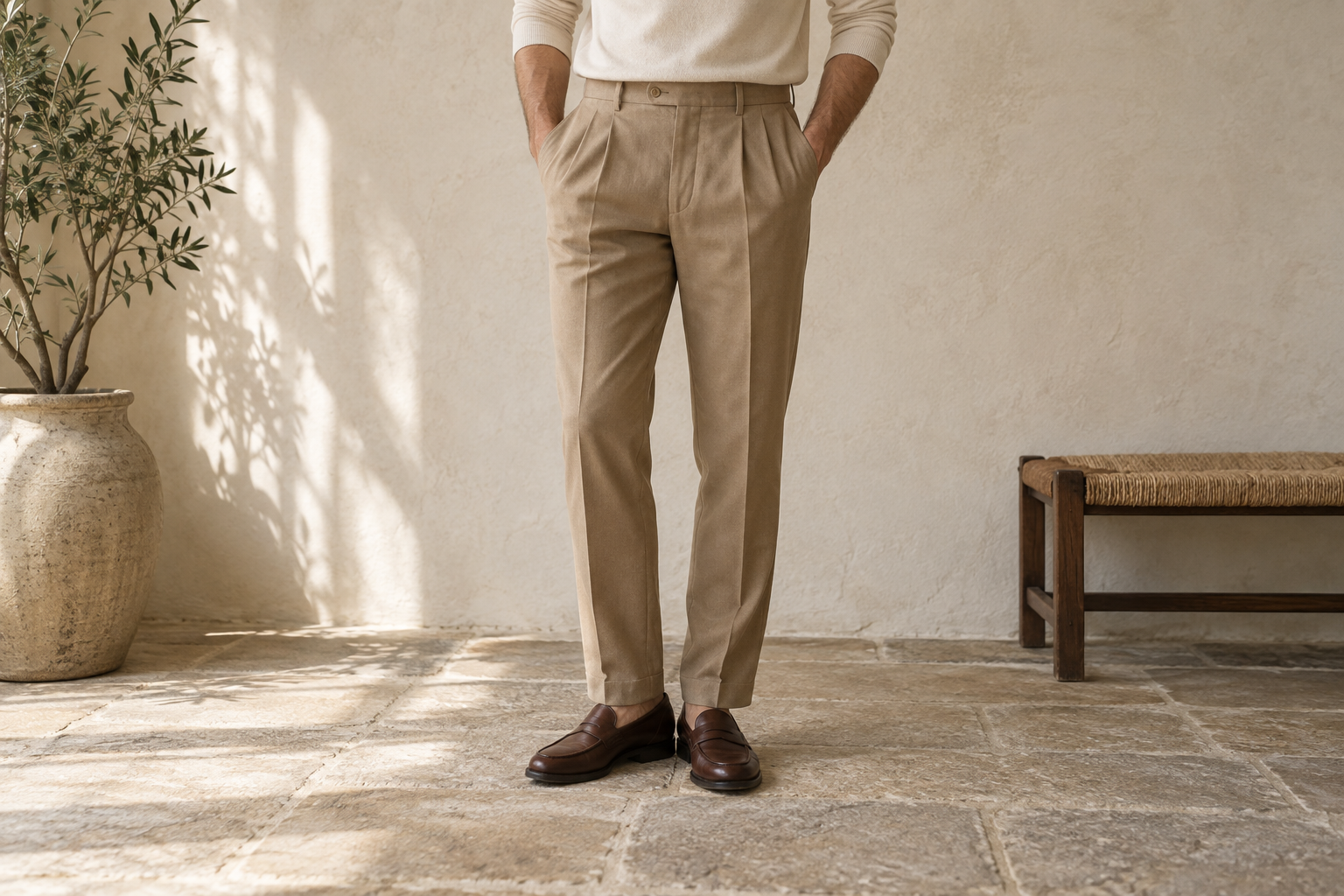
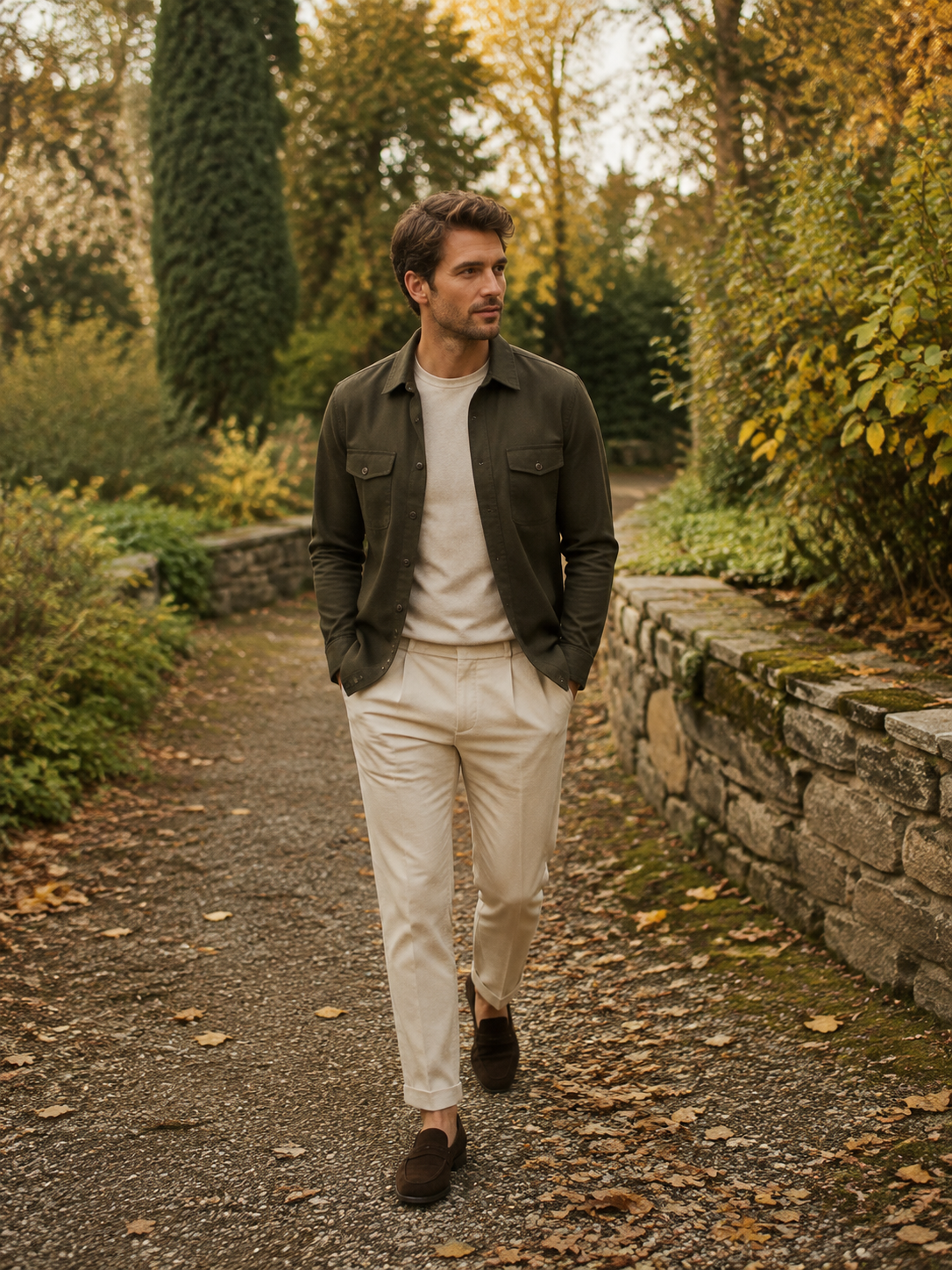
| Typical construction | Usually a mid-weight cotton twill with a visible diagonal weave, though blends and stretch versions are common. | Often worsted wool or a wool-blend suiting cloth, but cotton, polyester and stretch blends are widely sold. Read the label. |
|---|
| Surface and sheen | Tends towards a matte, textured finish; cotton reflects little light even when pressed. | Often a smoother cloth with a subtle sheen that reads as tailoring — though matte cotton dress pants exist. |
|---|
| Crease behaviour | Usually crease-free by design; a pressed centre crease is optional and reads sharper. | Typically worn with a pressed centre crease, and suiting-type cloths generally hold one well between wears. |
|---|
| Pockets and details | Slant or welt pockets, often with visible stitching; sometimes a single rear pocket. | Cleaner welts, back pockets with or without buttons, and minimal visible stitching. |
|---|
| Stretch and drape | Varies: many pairs include a little elastane for movement, others are rigid cotton that softens with washing. | Varies too: some cloths drape fluidly with no give at all, while stretch blends are common at most price points. |
|---|
| Weight and seasons | Depends on the cloth: lighter cottons for warm months, heavier twills for shoulder seasons. | Depends equally on the cloth: open-weave and lightweight versions handle warm rooms, heavier suitings suit cool ones. |
|---|
| Typical pairings | Oxford shirts, polos, tees with a jacket, casual knitwear, clean white trainers or loafers. | Fine-gauge knitwear, dress shirts, blazers, and leather shoes such as derbies or loafers. |
|---|
| Care | Often machine washable, which makes many pairs the low-effort option; check the label, since blends can differ. | Ranges from machine-washable blends to dry-clean-only wools; the care label decides, not the category. |
|---|