Skip to content

Find your next good read.

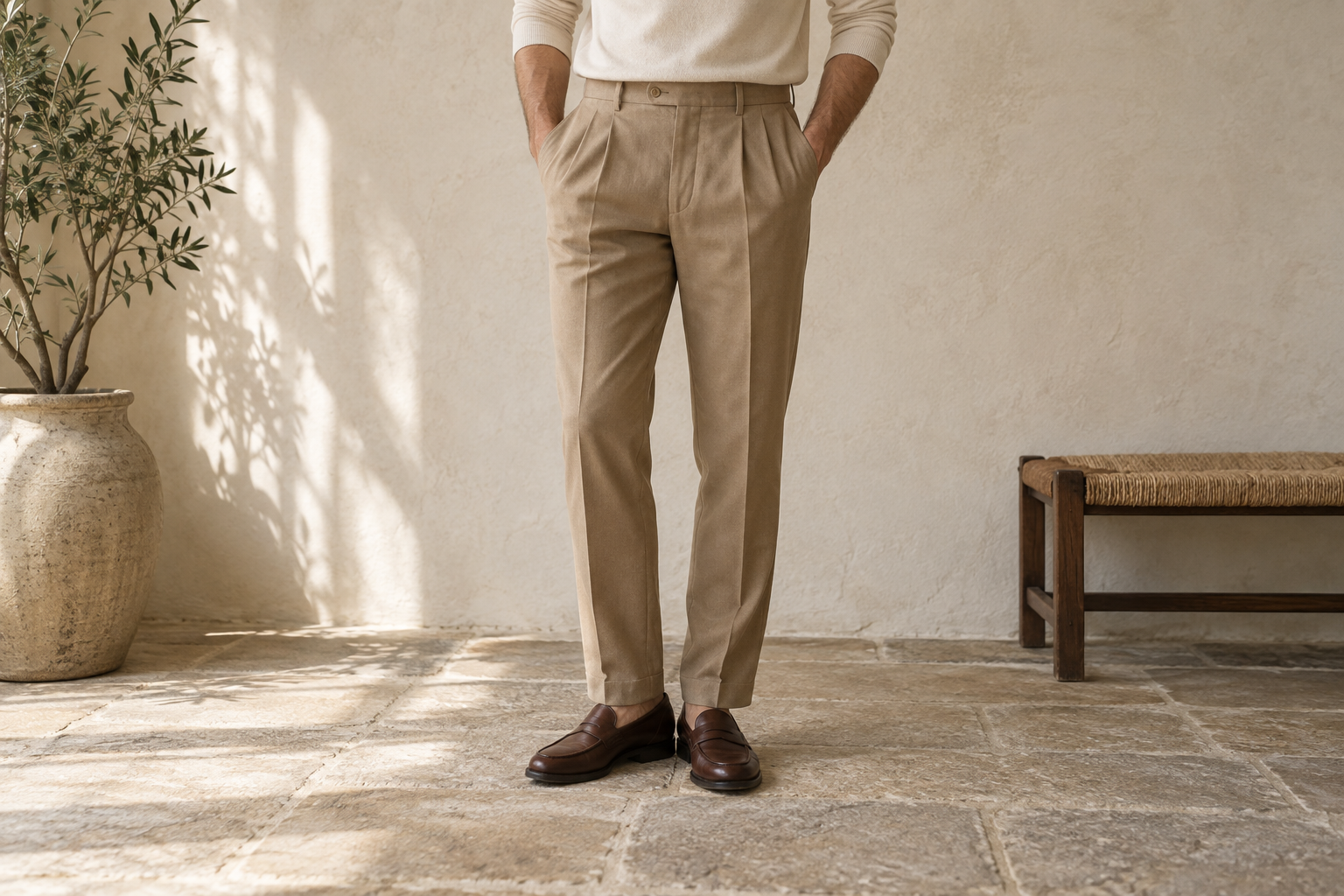
Tan pleated trousers worn with a cream knit top and brown loafers.

Trousers compared

Pleated vs Flat-Front Trousers: Fit and Style Differences

The pleat is not decoration — it changes how a trouser is built, drapes and reads. Here is what actually differs, and how to choose between the fronts on a real try-on.

Begin here

Comparison

Pleated or flat-front: which trouser front and when

Pleated trousers have folds below the waistband; flat-front trousers do not. That changes the front appearance, but it does not tell you the whole fit. Either style can be roomy or close-cut, because the overall pattern — rise, seat and leg width — decides the room, not the pleats alone. Compare how the actual pair sits at your waist and moves through the seat and thighs before choosing by the label.

Myth

Pleats are the fix for muscular thighs or a fuller seat, and flat fronts are always the close-fitting choice.

Fact

The overall pattern decides the room: a pleated pair can be cut slim and a flat front can be cut generous. Pleats offer extra ease at the hip on the same pattern, but no front style repairs a waist or seat that is simply the wrong size — try the actual pair, seated, before trusting either label.

Pleated fronts give you

  • Extra controlled fullness at the hip that opens when you sit, easing pressure at the waistband.
  • A fuller, softer drape down the leg that moves as you walk.
  • A classic tailoring read, strongest with double pleats and structured jackets.

Flat fronts give you

  • A smooth, unbroken panel from waistband to hem and a cleaner, more contemporary line.
  • A simpler front with less fabric to manage or press.
  • A neutral character that suits both smart casual and modern tailoring.

One warning before the details: the two fronts are often marketed as body-type solutions, with pleats assigned to fuller figures and flat fronts to slimmer ones. Those pairings do not survive a fitting room. The cut printed on the pattern matters more than the folds in the fabric, so treat every claim about who each front suits as something to test on your own body.

Run the same five checks on both fronts so the comparison is honest:

  • Fasten each pair without a belt and walk a few metres — note whether either waistband slides or digs.
  • Sit in a chair for a minute in each: does the flat panel strain, and do the pleats open cleanly or stack into a pouch?
  • Look at the hip in a mirror from the side — smooth line, released folds, or X-shaped pulling from the button.
  • Close each front's pockets and see whether the fabric gapes open or stays flat.
  • Judge the whole leg, not the front alone: rise, seat and leg width decide whether the trouser fits, whichever label is on it.

THE SHORT ANSWER

Choose for the day ahead.

If you want a clean, unbroken line through the hip and mostly wear modern jackets, knitwear or shirts, flat-front is the familiar default. If you find flat fronts pulling or straining when you sit, or you lean toward classic tailoring and a fuller drape, pleats are worth trying for the extra ease at the hip. Neither front is the safer universal answer: try both seated and let comfort and appearance on you decide — and if a pair pulls at the waist or seat, the fix is a different size or pattern, not a different front style.

Side by side.

The differences that matter
AspectPleatedFlat-front
Front constructionOne or two folds of fabric stitched at the waistband and released below the hip; double pleats add more fullness than single.A smooth, unbroken panel from waistband to fly, with the shaping taken in at the side seams and darts.
Ease when you sitThe pleats open as you sit, releasing the extra fabric they hold and easing pressure at the hip — on a given pattern.No release fabric at the front, so comfort depends on the cut; a generous flat front can be as easy to sit in as pleats.
Drape behaviourFuller through the leg with a natural fall from the hip; the released folds move as you walk and let the cloth hang.A flatter, straighter line down the leg; less fabric means less movement and a sharper, more static silhouette.
Formal readLeans classic tailoring — double pleats especially carry a traditional, suited character that suits dressier settings.Leans cleaner and more contemporary, which suits both sharp smart casual and modern tailoring equally well.
CreaseUsually pressed with a centre crease that runs from pleat to hem and reinforces the vertical line.Carries a centre crease cleanly when pressed, and the flat panel shows it off sharply; many casual pairs skip the crease entirely.
Common misreadAssumed to be loose or old-fashioned; a slim-cut pleated pair shows neither has to be true.Assumed to fit close by definition; a wide-cut flat front shows the front style and the fit are separate decisions.

What should guide your choice?

  • How does the trouser behave when you sit — does the front pull, split or stay smooth?
  • Do you want a close modern line, or the released fullness at the hip that pleats hold?
  • Which way does the rest of your wardrobe lean: classic tailoring or softer smart casual?
  • Does the front stay smooth at your actual waist size — no pulling is fixable by switching styles alone?
  • Will you wear the pair with jackets and shirts, or mostly with knitwear and polos?

The right choice depends on the setting.

A tailored office with jackets most days

Either front works with a jacket, but double-pleat trousers in a wool cloth match classic tailoring particularly well, while a flat front keeps a softer, more contemporary line under an unstructured blazer. Match the front to the jacket: structured and classic, or relaxed and modern.

Long days that mix sitting and moving

This is where pleats often earn their keep: the released fabric gives when you sit at a desk or in a car, so the front is less likely to strain. A flat front manages it too if the cut is generous through the thigh — which is exactly the point that the pattern, not the pleats, sets the room.

A slim, modern smart casual look

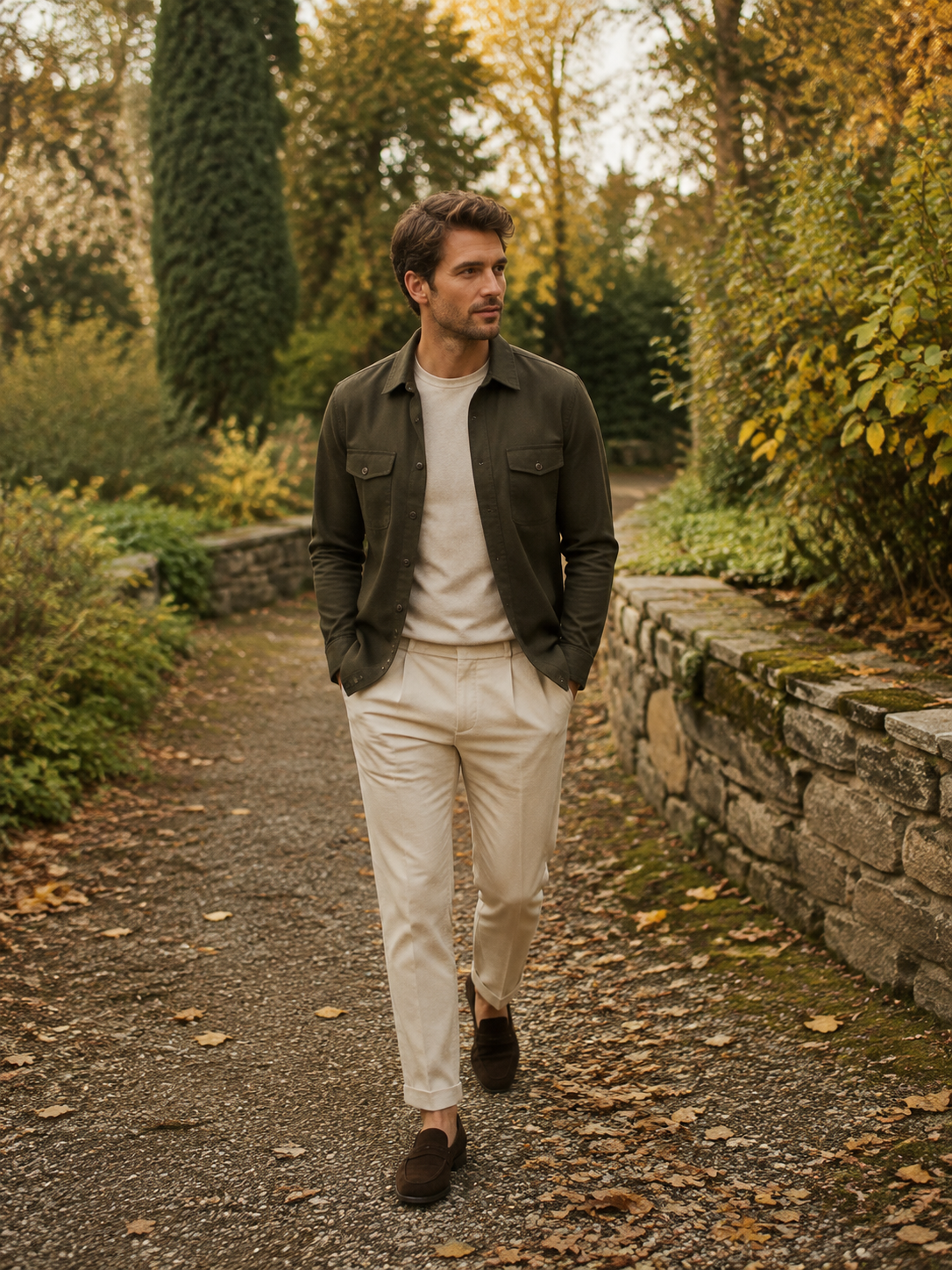
A flat front in a mid-weight cotton or wool blend, worn with a fine knit or an oxford shirt, gives the cleanest hip line and pairs well with loafers or minimal leather shoes. Choose a cut with enough thigh room to keep the smooth front from pulling.

When flat fronts keep pulling when you sit

If flat fronts strain at the hip in your usual size, pleats are a reasonable thing to try, because they add ease at the front without changing the waistband. But treat it as a try-on, not a guarantee: a pleated pair with the same too-small pattern will pull too. Compare both seated, and if neither sits smooth, the size or cut is the problem, not the front.

Keep exploring.

Trousers & Pants

How to Style Cropped Trousers

How to style cropped trousers: choose what shows between hem and shoe — skin, sock or boot shaft — then build work, weekend and dinner outfits around the shorter hem.

Trousers & Pants

How to Style Corduroy Trousers

Six corduroy trouser outfits for autumn weekends, the office and evenings, with wale scale and bulk-balancing explained for each look.