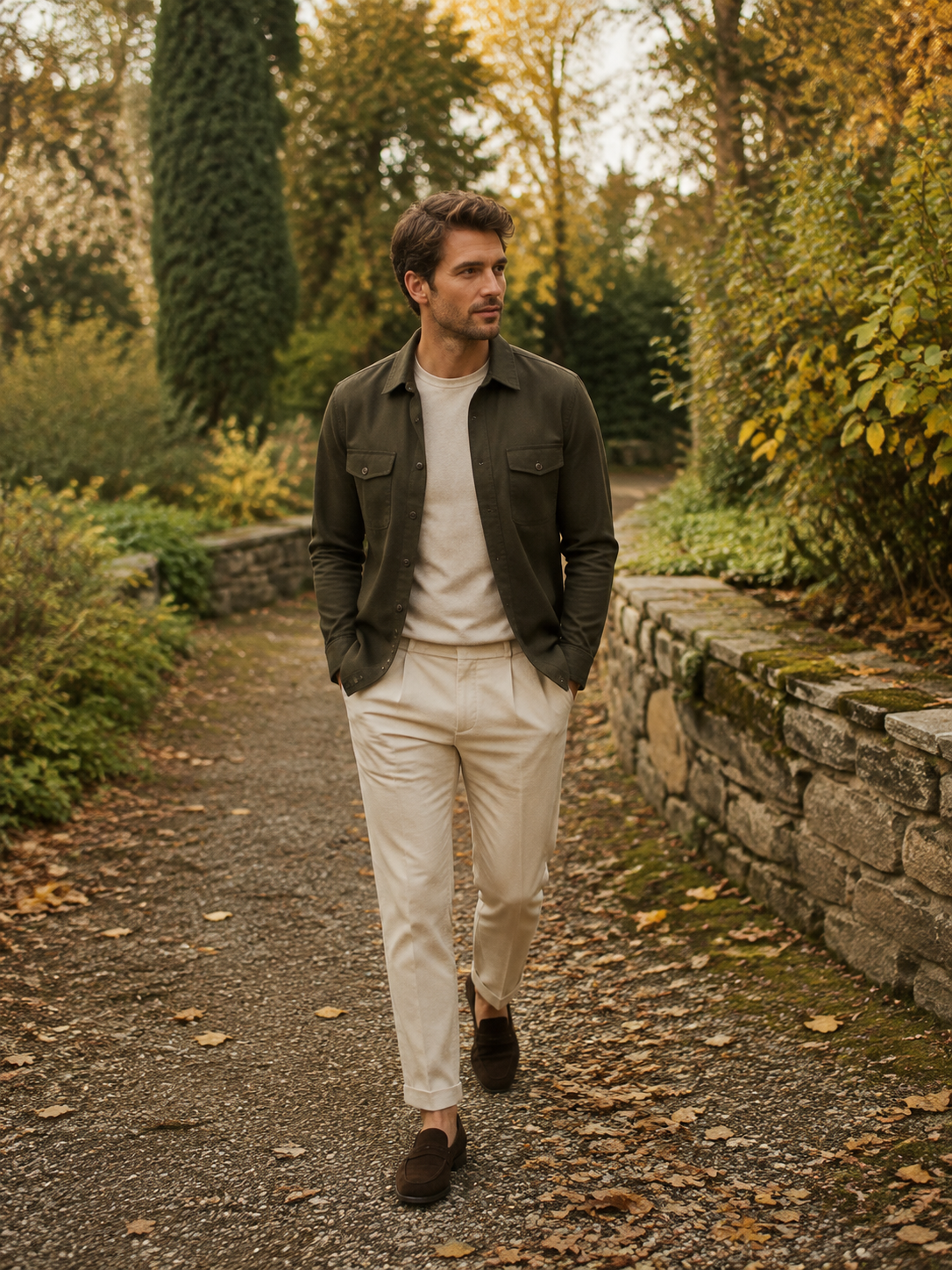
Trousers & Pants
How to Style Corduroy Trousers
Six corduroy trouser outfits for autumn weekends, the office and evenings, with wale scale and bulk-balancing explained for each look.

Outfit inspiration
Style cropped trousers by choosing what appears between the hem and the shoe: skin, a visible sock or a boot shaft. Then try the outfit standing and seated, because the gap changes as you move.
Begin hereInspiration
Style cropped trousers by choosing what appears between the hem and the shoe: skin, a visible sock or a boot shaft. Then try the outfit standing and seated, because the gap changes as you move. A tucked shirt is one option, but a short or loose untucked top can work too when you like the overall shape.
A crop is a hem that stops above the ankle bone while you are standing, showing a strip of leg or sock before the shoe begins. How much strip works depends on three variables on your body: where your ankle bone sits, how high your shoe rises, and how wide the leg opening is. The same hem that looks deliberate over a low loafer can look accidentally short inside a chunky boot, and vice versa.
That is why fixed centimetre rules fail. Two to four centimetres above the ankle bone is a common starting point, but a wider leg opening or a higher shoe can carry more gap, and a slim crop over loafers often looks better with less. Judge the hem with the actual shoes on, standing in front of a mirror at your normal trouser break point.
A cropped hem must be exactly two to four centimetres above the ankle bone, or it is wrong.
The workable gap depends on your ankle, the shoe and the leg opening. Use centimetres as a starting point, then adjust while wearing the shoes you plan to wear — the mirror beats the tape measure.
Every cropped-trouser outfit answers one question: what appears between hem and shoe? None of the three answers is the correct one by default. Each sets a different register and has different practical limits.
| Option | Reads as | Works best with | Watch out for |
|---|---|---|---|
| Bare skin | Relaxed, seasonal, lighter visually | Loafers, sneakers, sandals; warm weather and casual settings | Cold weather, formal offices, and hems set so high the gap dominates the leg line |
| A visible sock | Styled and deliberate, slightly fashion-literate | Loafers or derbies with a sock in a matching or deliberately contrasting colour | The sock must be a choice: a random slip of skin-toned sock reads as an accident, not a look |
| A boot shaft | Tailored and finished — the gap simply disappears | Chelsea boots, desert boots or any boot whose shaft meets or nearly meets the hem | A hem that only just reaches the boot top can gape open when you sit; check it seated |
The navy cropped trousers with a white shirt example illustrates the sock decision well. Worn with loafers and navy socks that show a deliberate two-finger strip, the gap reads styled; worn with no-show socks, the same outfit reads as an intentional bare-ankle look. Both work — what fails is in between, where a half-hidden sock makes it unclear whether the gap was planned.
The six looks below each start from a cropped trouser and build outwards: top, layer, shoes and the gap decision. Treat them as reproducible formulas rather than photographs to copy exactly — swap any single piece and the structure still holds. The images are generated illustrations matched to each formula where possible; they show the type of combination, not evidence of fit, fabric behaviour or a specific crop on your body.
A pressed cropped pair with a tucked cotton shirt and dark leather loafers, gap filled with a matching visible sock or a low boot. A blazer or knit over the top adds structure on stricter days. If your office bans open footwear, the boot-shaft option keeps the crop but closes the gap.
A cropped chino with a plain tee or knit and clean white sneakers over no-show socks. The shorter hem keeps the sneaker visible, which is the point — with full-length trousers the same shoes nearly disappear.
A pleated cropped pair worn high or mid on the waist, a fine knit or camp-collar shirt, and tasselled loafers or derbies with either no-show socks or a dark sock that matches the trouser. Pleats add hip volume, and the cropped hem keeps the silhouette from looking heavy.
Defined waist works when
Untucked works when
The practical test is proportion, not body shape. If an untucked top ends near the crotch line, the cropped hem and the top hem crowd each other and the leg shortens visually. A top that ends clearly above or below that line keeps the crop readable. Nothing here depends on your body type — only on where the two hems fall relative to each other.
Take one cropped pair and style it two ways to see the range before you commit. Version one: loafers with a visible sock in a colour matched to the trouser — the gap is styled, the look stays sharp, and it carries into smarter rooms. Version two: Chelsea boots whose shaft covers the gap entirely — the crop reads as a length choice rather than a display, and the outfit gains weather resistance.
Wear both versions for a few minutes, not just the mirror glance. Walk, climb a step, and sit: the sock version keeps its gap when seated, while the boot version can pull the hem away from the shaft and open a second gap at the calf. If the seated test fails, either lower the hem slightly or switch to the sock treatment for days you know you will sit for hours.
Run these four checks before finalising any cropped-trouser outfit:
Where this decision goes next
If your trousers were meant to be full length and came up short, that is a hemming decision, not a crop.
Most cropped weekend pairs are chinos — this extends the shoe and gap decision to the full chino wardrobe.
Every trouser guide, from fit and fabric to specific pairings.
6 looks to explore

Taupe cropped trousers with a tucked cream cotton shirt, an olive blazer, and brown loafers over a matching visible sock. The blazer carries the office register while the styled sock gap keeps the shortened hem reading deliberate rather than accidentally short. Illustrated example of the combination, not evidence of fit or fabric.
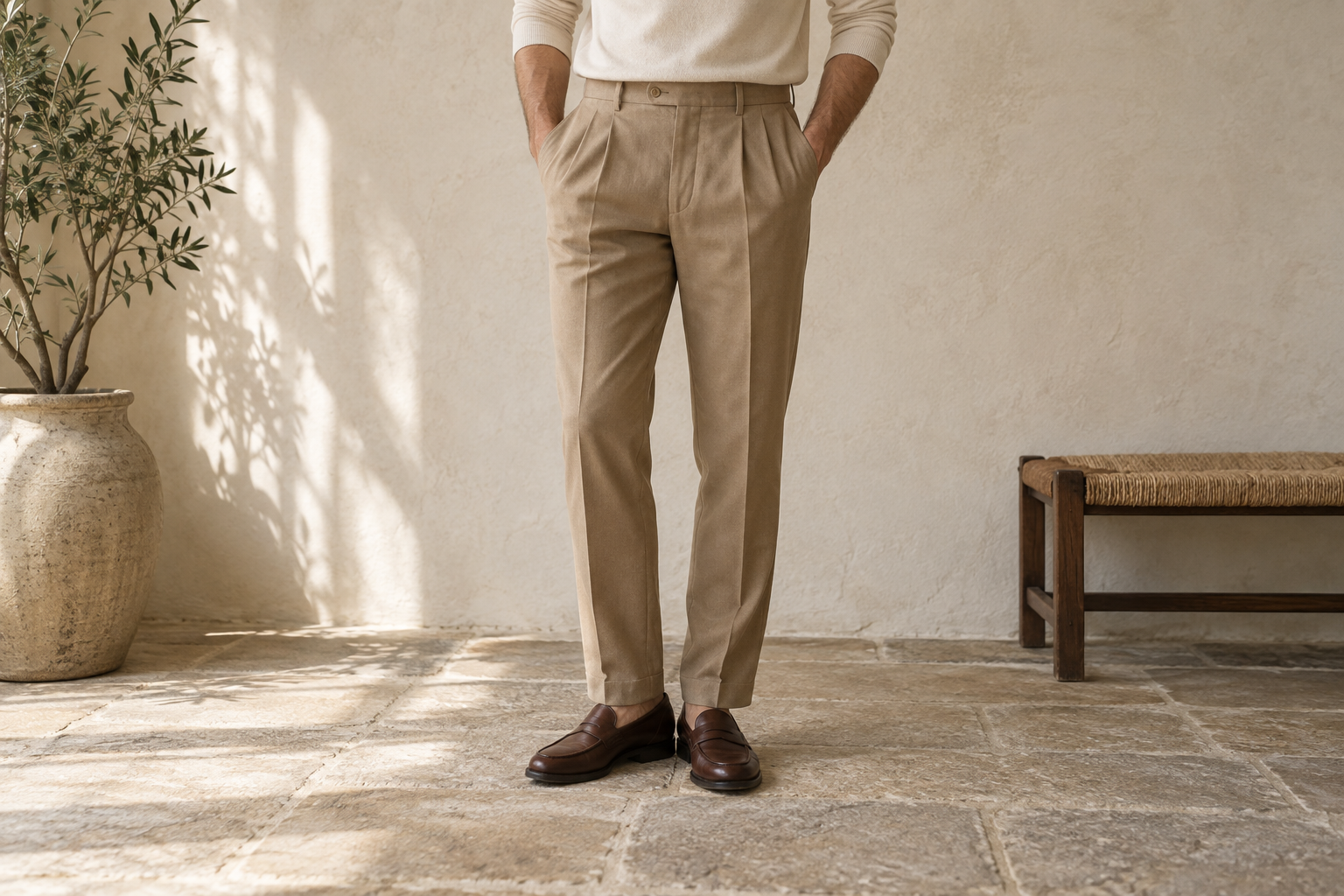
Tan pleated cropped trousers with a fine cream knit top and brown loafers. The pleats give volume at the hip that the cropped hem balances; on warmer days the knit can swap for a shirt, tuck optional. The image is a generated illustration of this pairing, not proof of a particular crop length.
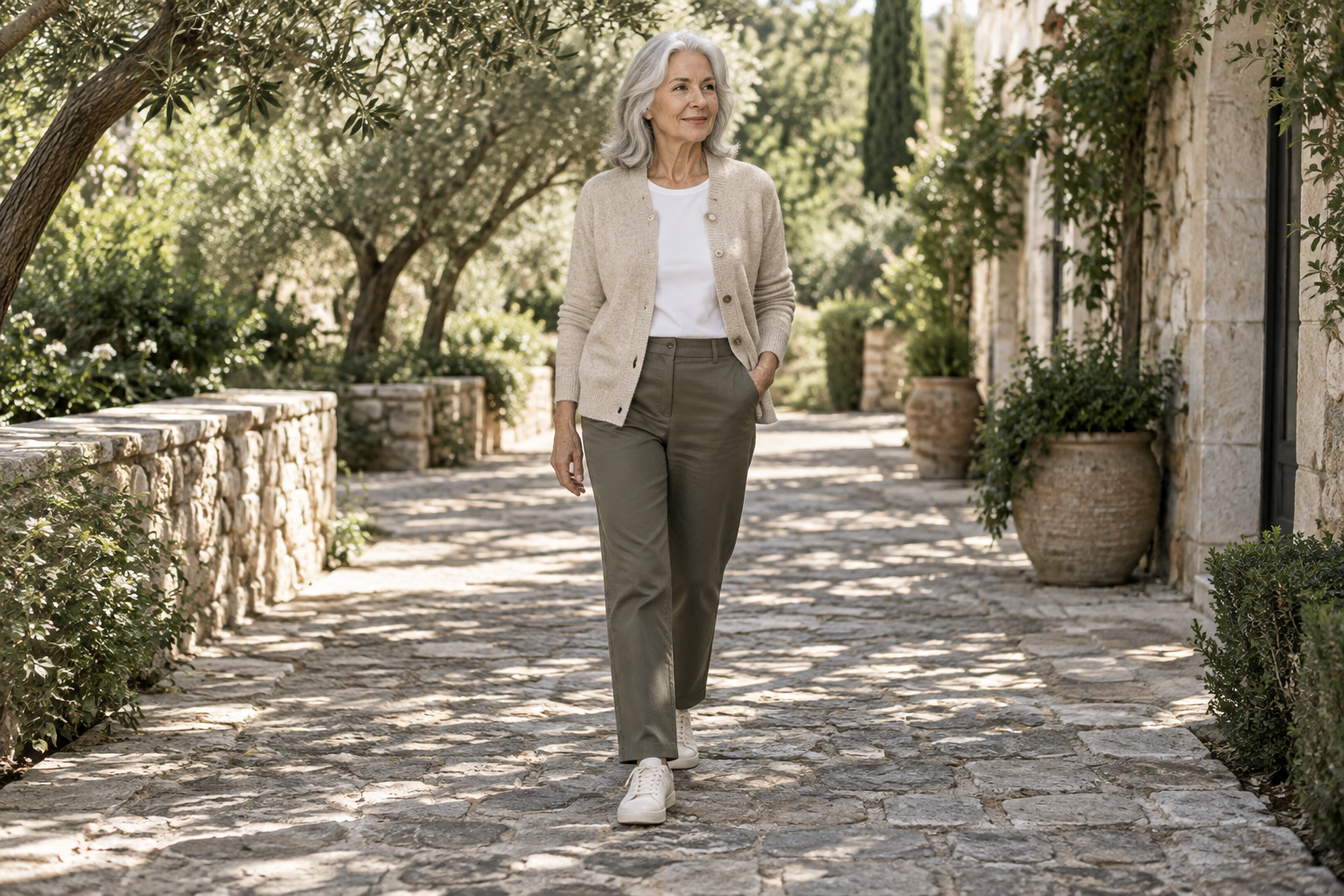
Olive cropped trousers with a plain white tee, an oatmeal cardigan, and cream sneakers over no-show socks. Relaxed on top, but the cropped hem keeps the sneaker visible so the whole thing reads as a choice. Swap the cardigan for a denim jacket when the temperature allows.
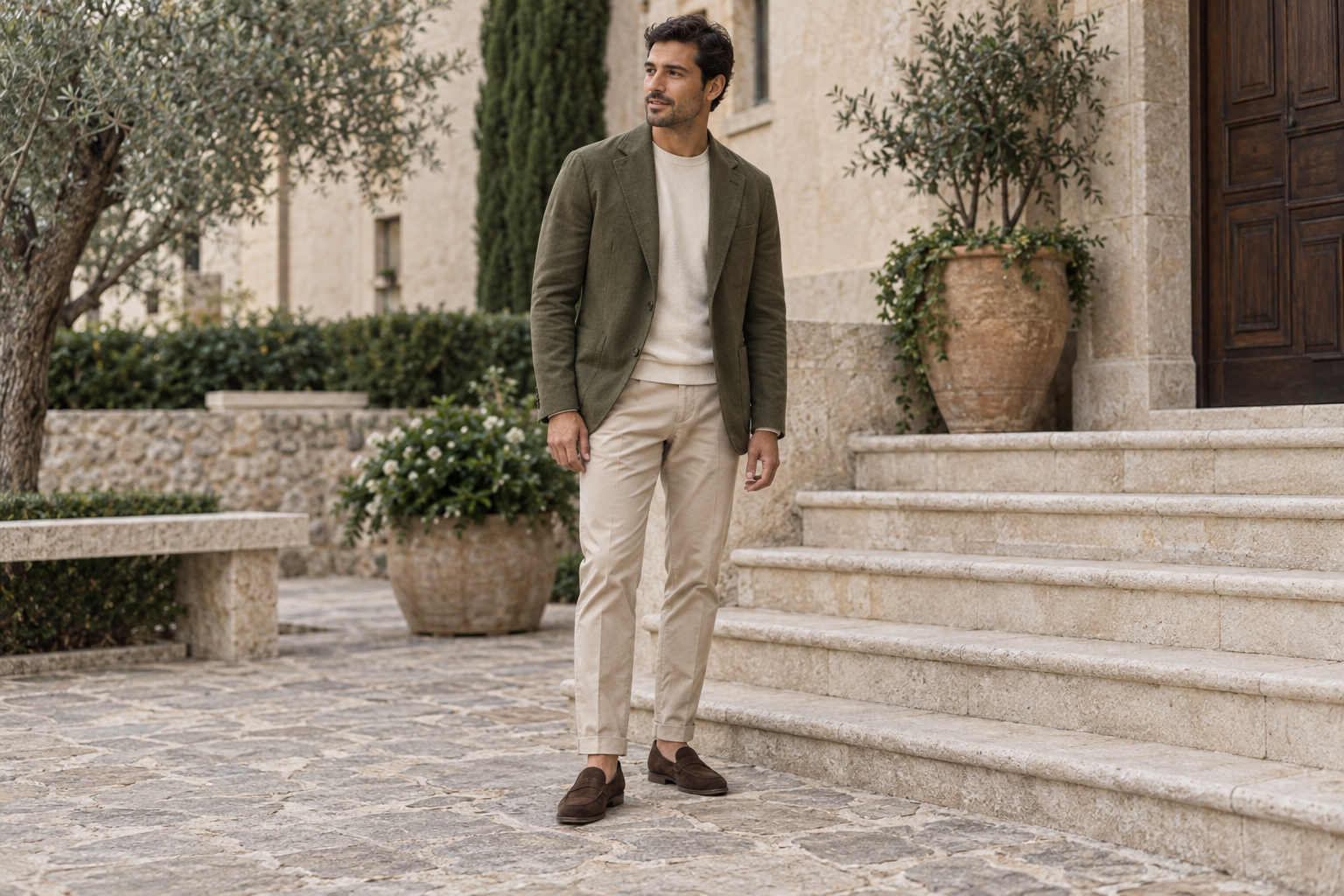
Sand cropped trousers with an ivory knit and an olive unstructured blazer or overshirt, finished with brown loafers. Texture does the work here — soft knit, softer trouser, one structured layer — and the boot or sock decision stays open depending on the day's plan.
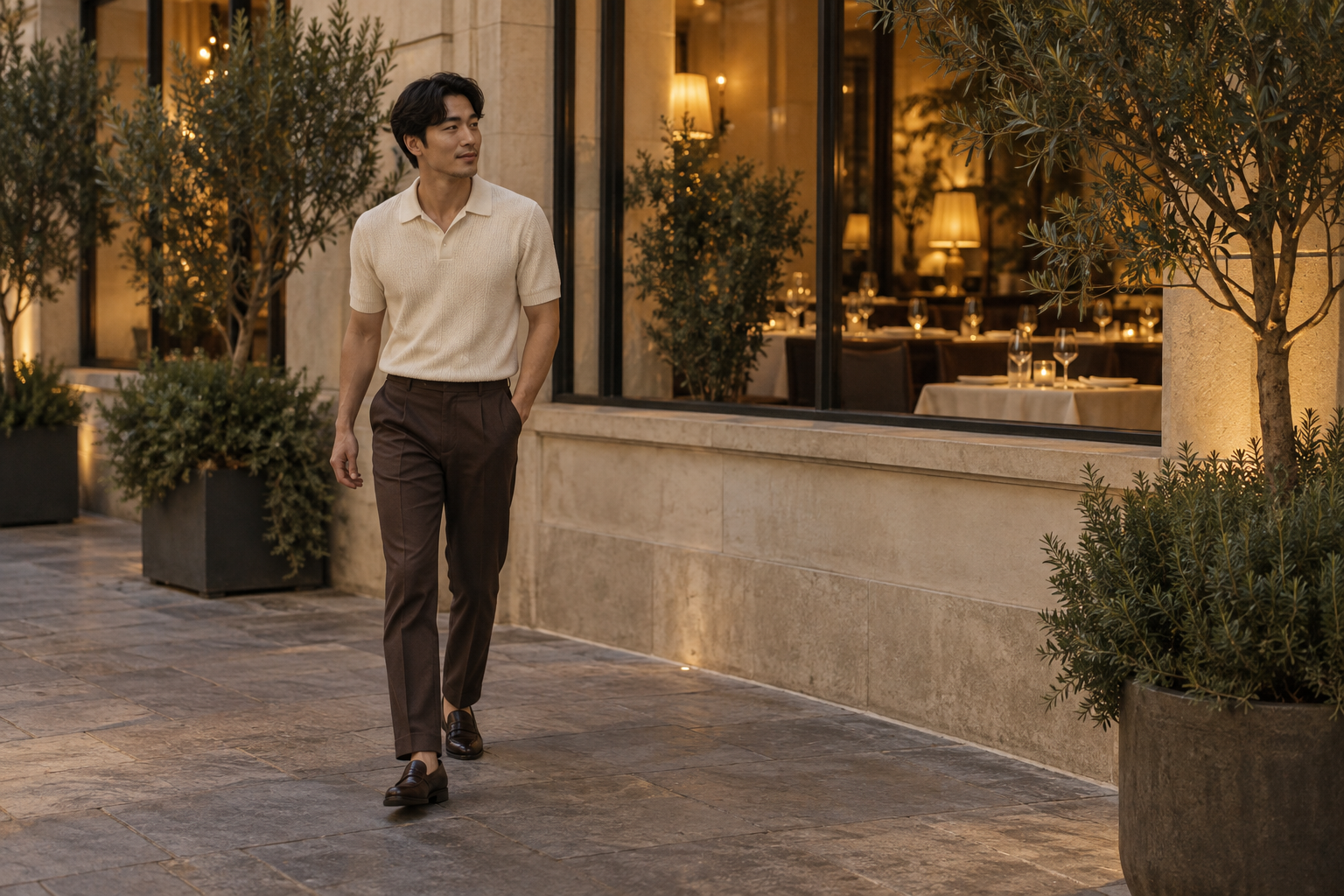
Dark brown cropped trousers with a cream knit polo and dark leather shoes in the evening. No-show socks keep the bare-ankle line clean at a dinner table, where nothing about the shortened hem needs explaining. A fine merino crew swaps in as the weather cools.
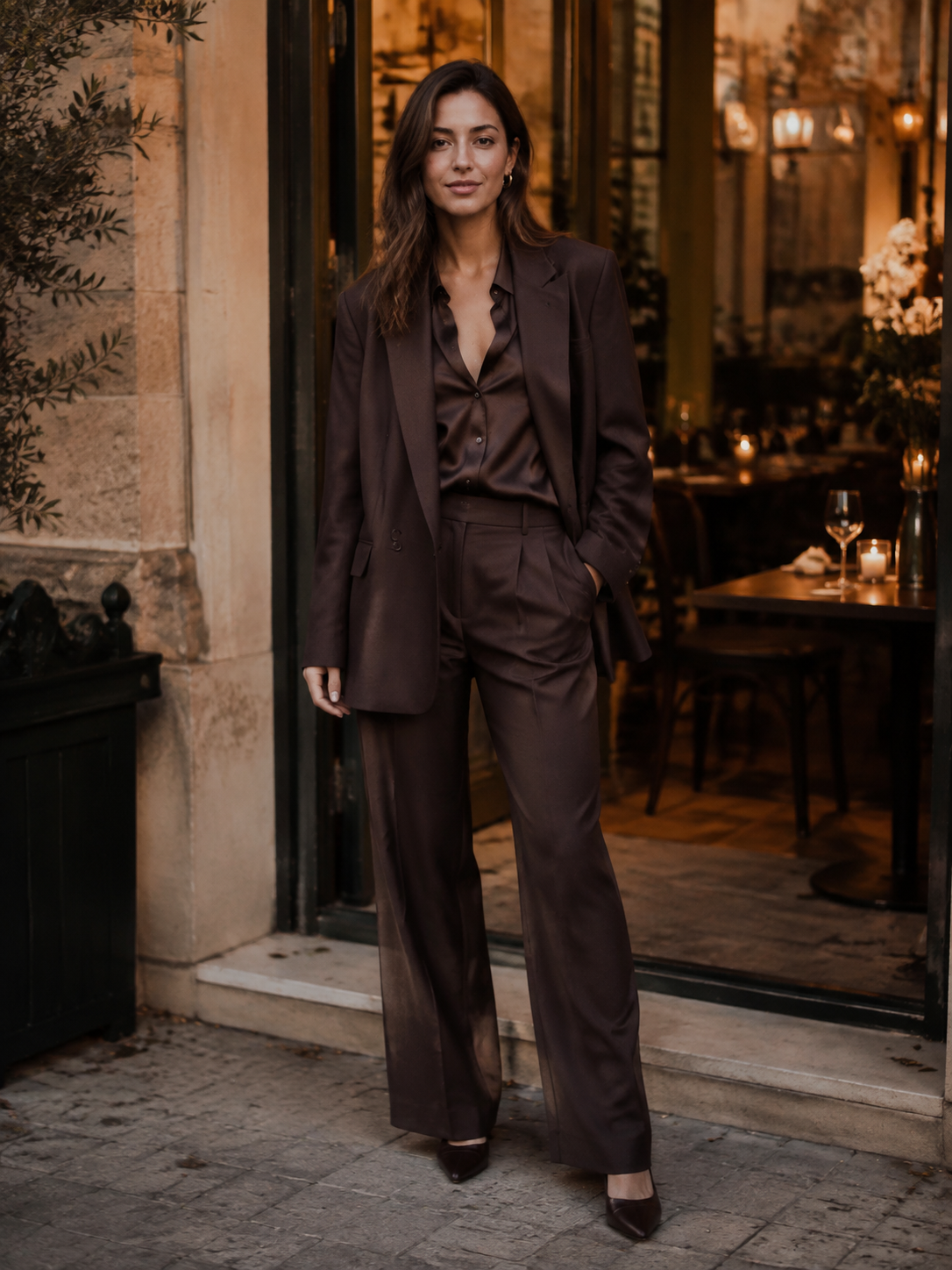
Chocolate brown cropped trousers with a dark shirt worn open-collar and polished leather derbies, in warm evening light. Tonal dressing — brown trouser, dark shirt, dark shoe — keeps the eye moving down the leg so the gap reads as tailoring, not subtraction.
Trousers & Pants
Six corduroy trouser outfits for autumn weekends, the office and evenings, with wale scale and bulk-balancing explained for each look.
Trousers & Pants
How pleated and flat-front trousers differ in construction, drape, room and formality, and how to compare the two fronts on an actual try-on.
Trousers & Pants
Choose shoes for wide-leg pants by checking the hem first: flats, trainers, loafers and heels each work, with the hem-to-shoe proportion explained.