Shirts & Tops
How to Tuck a Blouse into a Skirt or Trousers
How to choose a full, half, or front tuck for your waistband and blouse length, smooth the hips, and make the tuck survive sitting and movement.
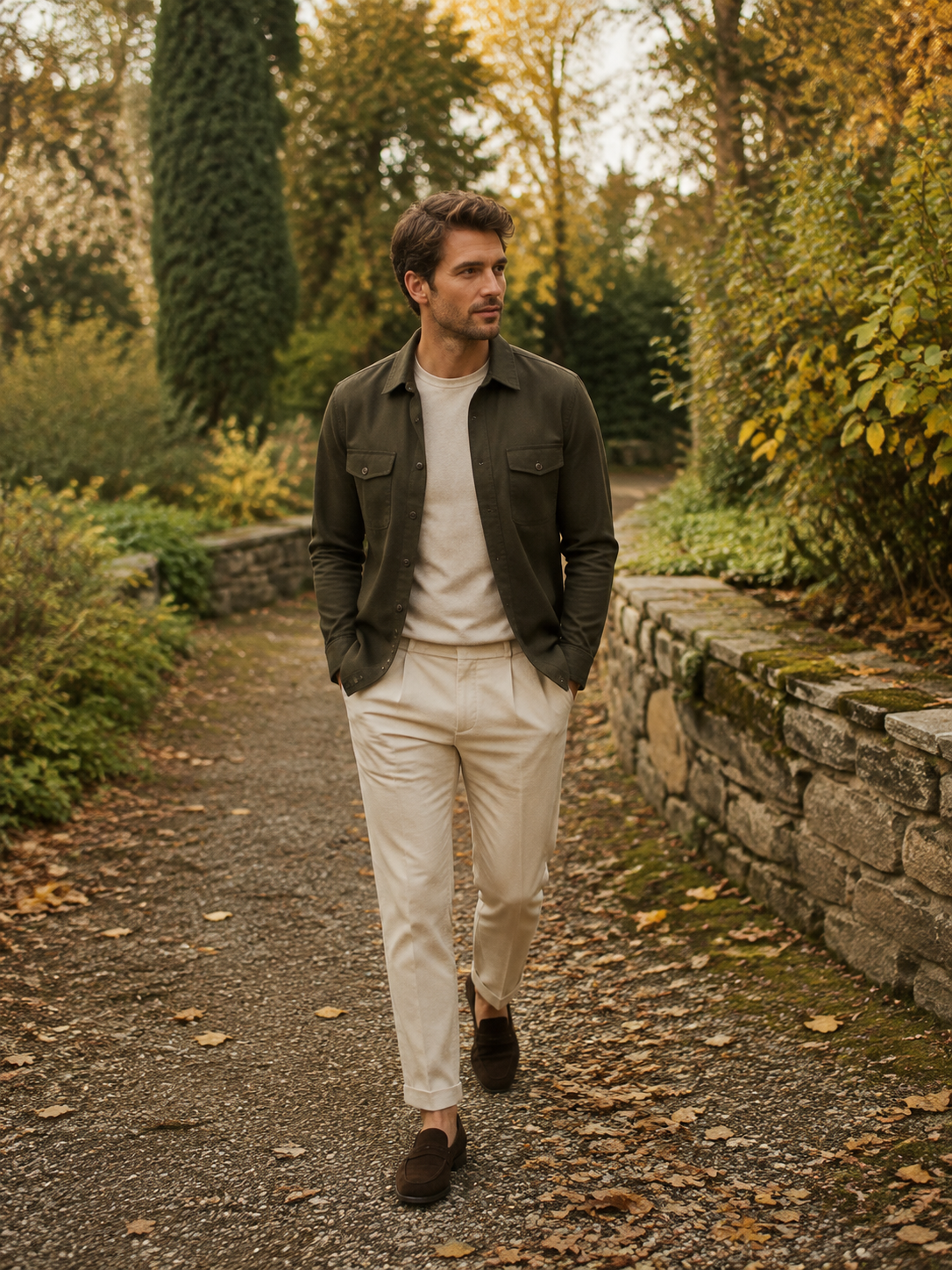
Outfit inspiration
Wearing a blouse untucked is a garment check, not a measurement rule. These looks pair blouses with trousers, skirts and layers, with the hem and movement tests that decide each one.
Begin hereInspiration
To wear a blouse untucked, try its hem with the actual trousers or skirt you plan to use. Check the front, sides and back, then sit and move. Some blouses are designed for this; others may bunch or hang differently. Choose the combination you like rather than chasing one universal hem length.
| Hem shape | Untucked behaviour | Tends to suit |
|---|---|---|
| Straight | Hangs level all round; can flare outward if the body is full | Fluid fabrics with mid-rise bottoms |
| Curved, shirt-style | Falls shorter at the front and longer at the hip | Smart settings — the front stays clear and reads deliberate |
| Side slit | Gives the hem room to move over the hip without catching | Relaxed looks and fuller-cut blouses |
| Asymmetric | Deliberately uneven; reads as a design feature | Simple outfits where the hem is the point of interest |
An untucked blouse only looks intentional if the hem ends within a couple of inches of the widest point of your bottom half.
Fixed body-point measurements ignore how garments actually behave. What matters is construction and movement: whether the hem holds its line when you sit, whether it catches on the rise, and whether the proportion is one you like. A higher rise shortens the visible torso, and you can respond with the blouse, the rise or a tuck — all valid choices.
Left untucked
Partial or full tuck
Wear the blouse with the planned bottom half, then test:
Related reads
Check the blouse on its own before deciding how to wear the hem.
Where the layered look on this page goes in colder months.
3 looks to explore
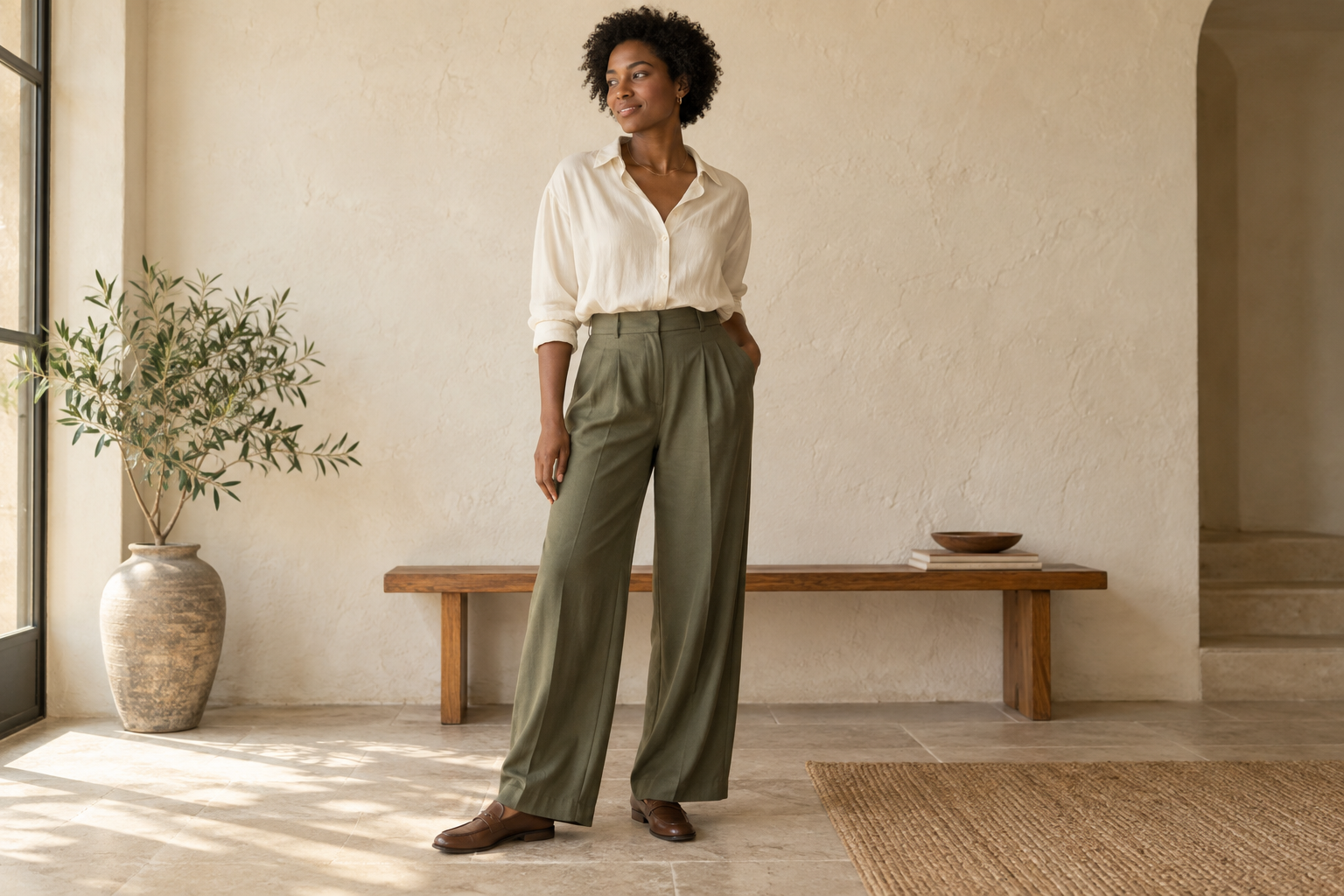
A soft grey blouse in a fluid drape over high-rise wide-leg linen trousers and brown loafers. The photograph shows this blouse-and-trouser pairing — read the garments, not the wear state, and run the hem checks for yourself. A higher rise shortens the visible torso, so decide whether the untucked hem or a small front tuck gives the line you want.
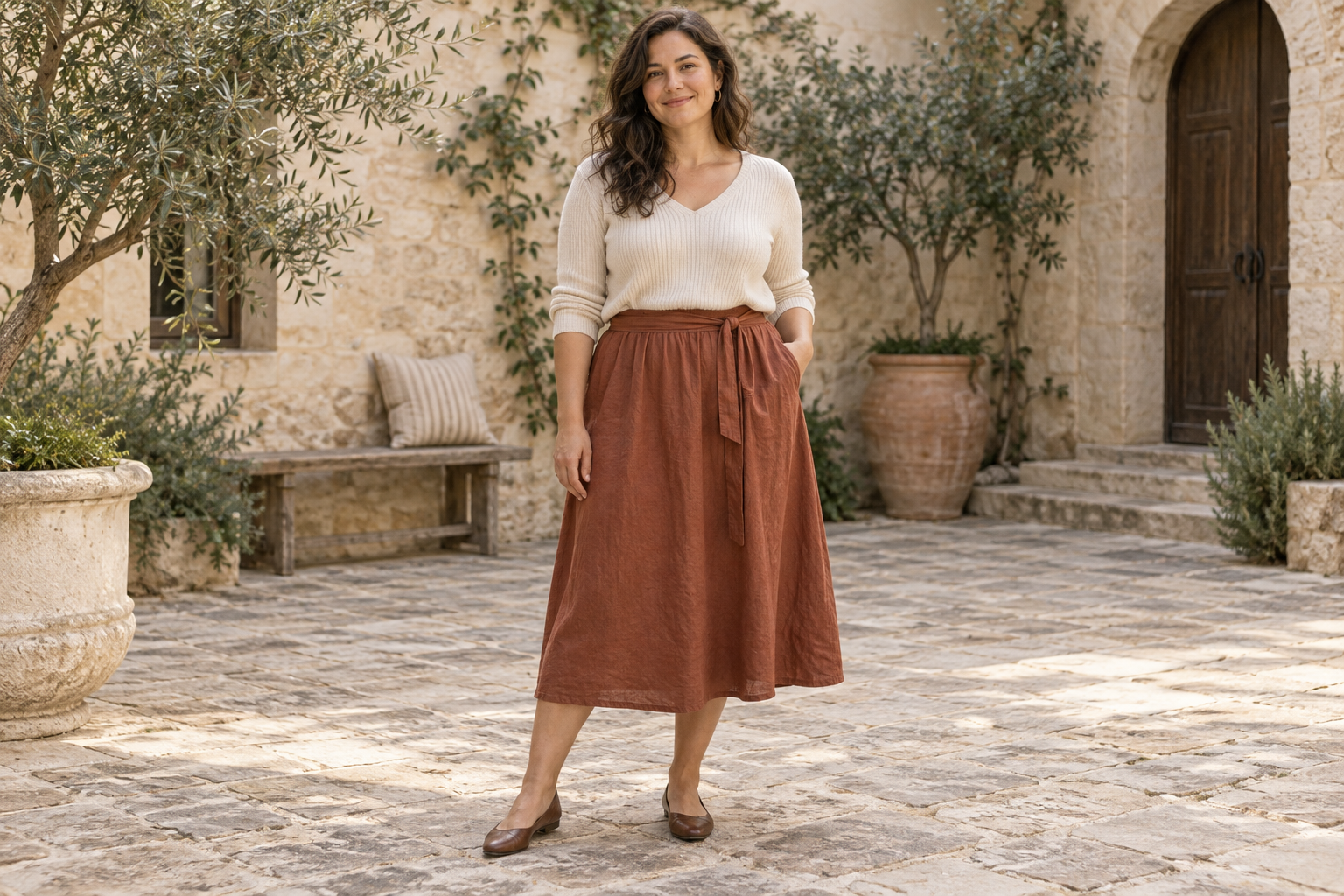
A fluid blouse ending at the hip over a bias-cut midi skirt. The illustration shows a sleeved knit in the same pairing — swap in the blouse and watch where its hem sits against the skirt's drape. If the two layers stack and swing together, take a corner tuck or choose a shorter blouse rather than forcing the length.
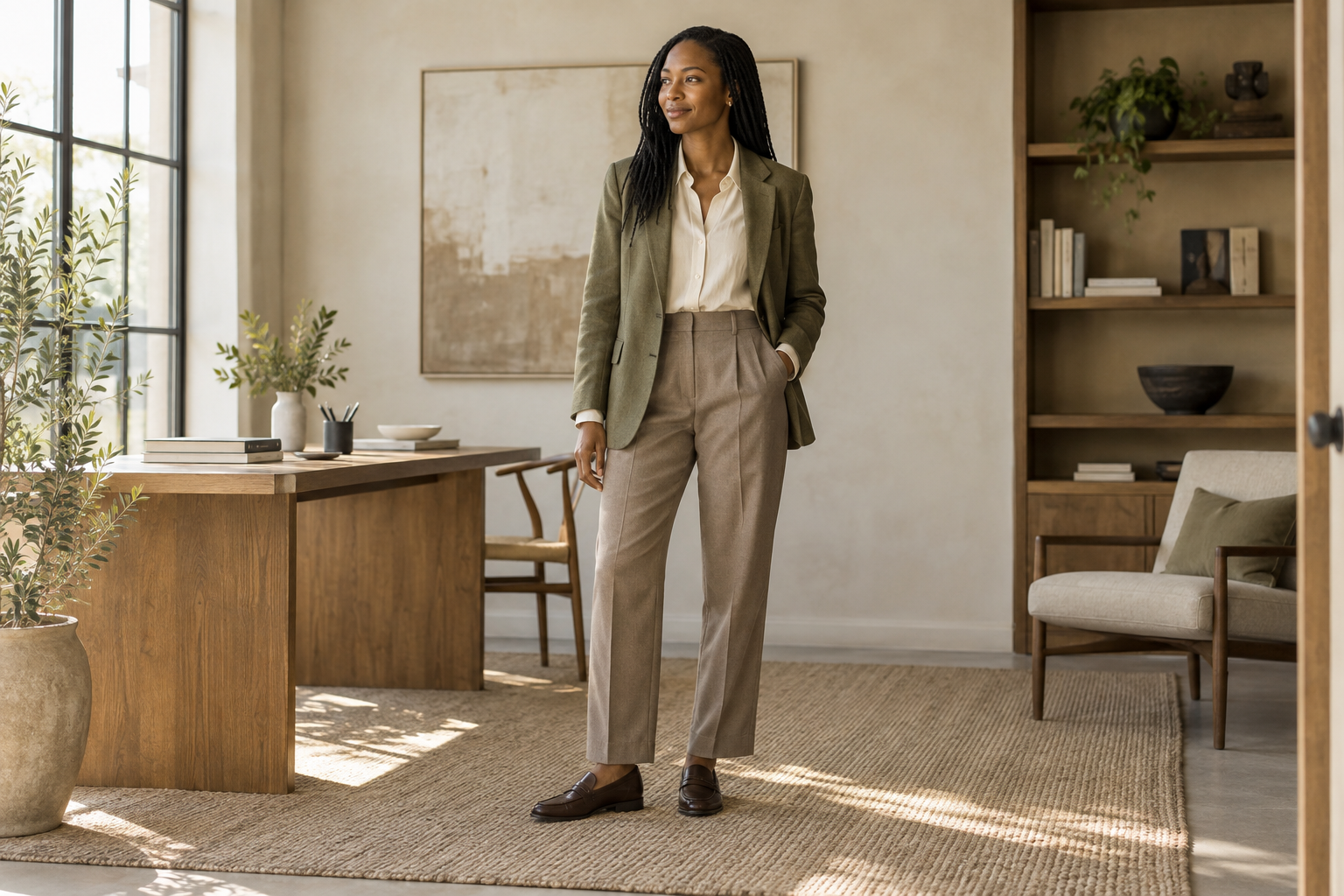
A fine blouse under a cropped boxy jacket, with tapered trousers and brown loafers. Layering sets its own relationship: the outer hem at or above the blouse's hem keeps the column clean underneath. The illustration shows the tailored setting — try both hems seated, where stacked fabric shows first.
Shirts & Tops
How to choose a full, half, or front tuck for your waistband and blouse length, smooth the hips, and make the tuck survive sitting and movement.
Shirts & Tops
A practical fit guide for untucked shirts: hem length, shoulder seam, sleeve length and room to move, with simple checks for each.
Shirts & Tops
Casual Oxford shirt outfits you can recreate: three complete looks with the hem, tuck and shoe decisions explained, plus open-layer versus buttoned wear and season variations.