Shirts & Tops
How to Wear a Linen Shirt Beyond the Beach
How to wear a linen shirt beyond the beach: three complete everyday combinations, tucked versus open wear, honest crease expectations and care-label-led preparation.
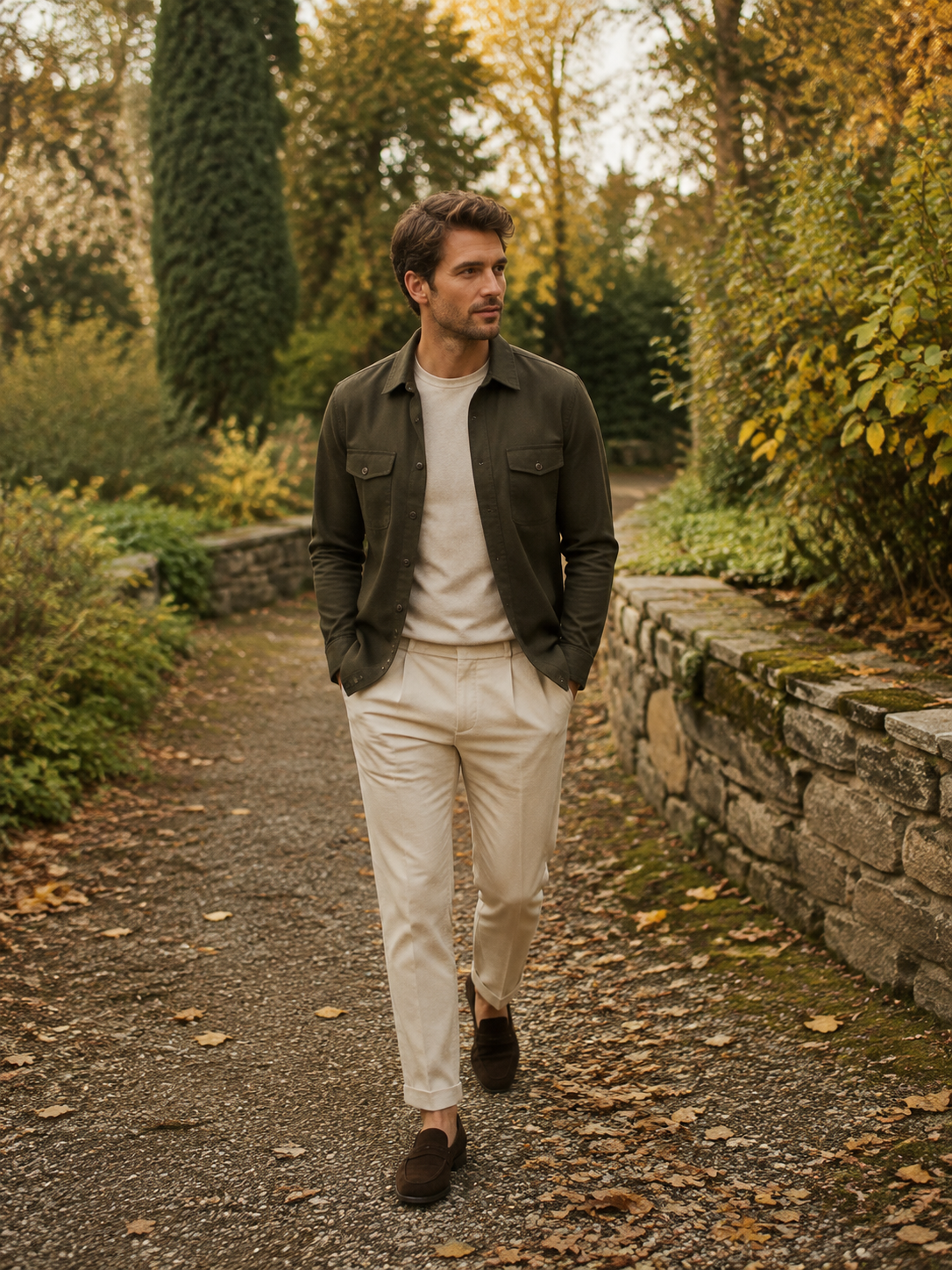
Style inspiration
Three complete casual Oxford shirt outfits with the hem and shoe decisions built in, a quick check for the tuck, and what changes when you wear it open instead of buttoned.
Begin hereInspiration
To style an Oxford shirt casually, choose how you want to wear the hem, then build around the trousers and shoes. Try it untucked with chinos, tucked into tailored trousers or open over a simple top where the setting allows. Check the actual shirt's length and comfort rather than following one rule for every cut.
Oxford describes the weave: a basket construction that gives the fabric its slightly textured, sturdy character. That is genuinely useful to know, because the weave is what lets an Oxford shirt read relaxed with jeans and hold its own under a blazer.
What the word does not tell you is the collar, the length or the weight. Oxfords come with button-down collars, point collars, different placket fronts and hems cut for wearing in or out — so inspect your shirt before following any styling rule below.
An Oxford shirt needs no styling effort — the fabric does the work for you.
The weave gives the shirt a forgiving, textured character, but the hem decision, the trousers and the shoes still decide whether it looks deliberate. The same shirt untucked over gym shorts and tucked into chinos are both 'Oxford outfits' — only one of them works.
Each row is a complete outfit with the hem choice and its reason built in. Pick the row that matches your day and your shirt, not a rule from elsewhere.
| Look | Hem decision and why | Trousers | Shoes | Layer |
|---|---|---|---|---|
| Navy Oxford with stone chinos | Untucked — the relaxed read, and it works when the hem falls around mid-fly and sits evenly all the way round; check that on your shirt and body | Mid-stone chinos, straight or slightly tapered | White leather sneakers | None; sleeves rolled, top button open |
| Pale-blue Oxford with grey tailored trousers | Fully tucked — the cleaner line, and it needs a hem long enough to stay tucked when you sit; if it pulls out, the shirt is too short to tuck | Grey wool or cotton tailored trousers | Dark loafers | Unstructured navy blazer or none |
| White Oxford open over a grey tee | Worn open and loose — the shirt acts as a light overshirt, so the hem hangs free by design | Straight dark denim | Clean leather or canvas sneakers | The Oxford is the layer |
Look at where the front hem falls on you, not on a size chart. A hem around mid-fly usually wears untucked well; a much longer one usually wants a tuck.
An untucked hem that rides up at the back when you sit, or a tucked one that pulls out, has answered the question for you.
A shirt with a deep curved hem is cut with tucking in mind; a straight, even hem usually wears out. Yours may differ from both — the mirror wins.
Worn open over a base layer
Buttoned and worn alone
Roll sleeves in two or three firm folds to just below the elbow rather than pushing them up; pushed-up sleeves fall and bunch within the hour. Leave one fold of the cuff visible if you want the roll to hold attention.
Before you leave, in the mirror:
For warmer days, wear the untucked look with lighter-weight trousers or tailored shorts and keep the sleeves down but loose — the layering comes off, not the structure. For cooler days, the tucked look goes under a crew neck or a merino slipover with the collar out, which is also the easiest route to smart casual.
Neither variation depends on the fabric promising anything; the weave's sturdiness simply means the shirt takes layering and rolling without complaint. How warm or cool it feels is a question of weight and your own layering — check the shirt's fabric description rather than assuming all Oxfords are alike.
Where to go next
Every shirt guide, from Oxford to linen.
The full length and hem guidance behind the thirty-second check above.
The warm-weather counterpart to the Oxford.
1 look to explore
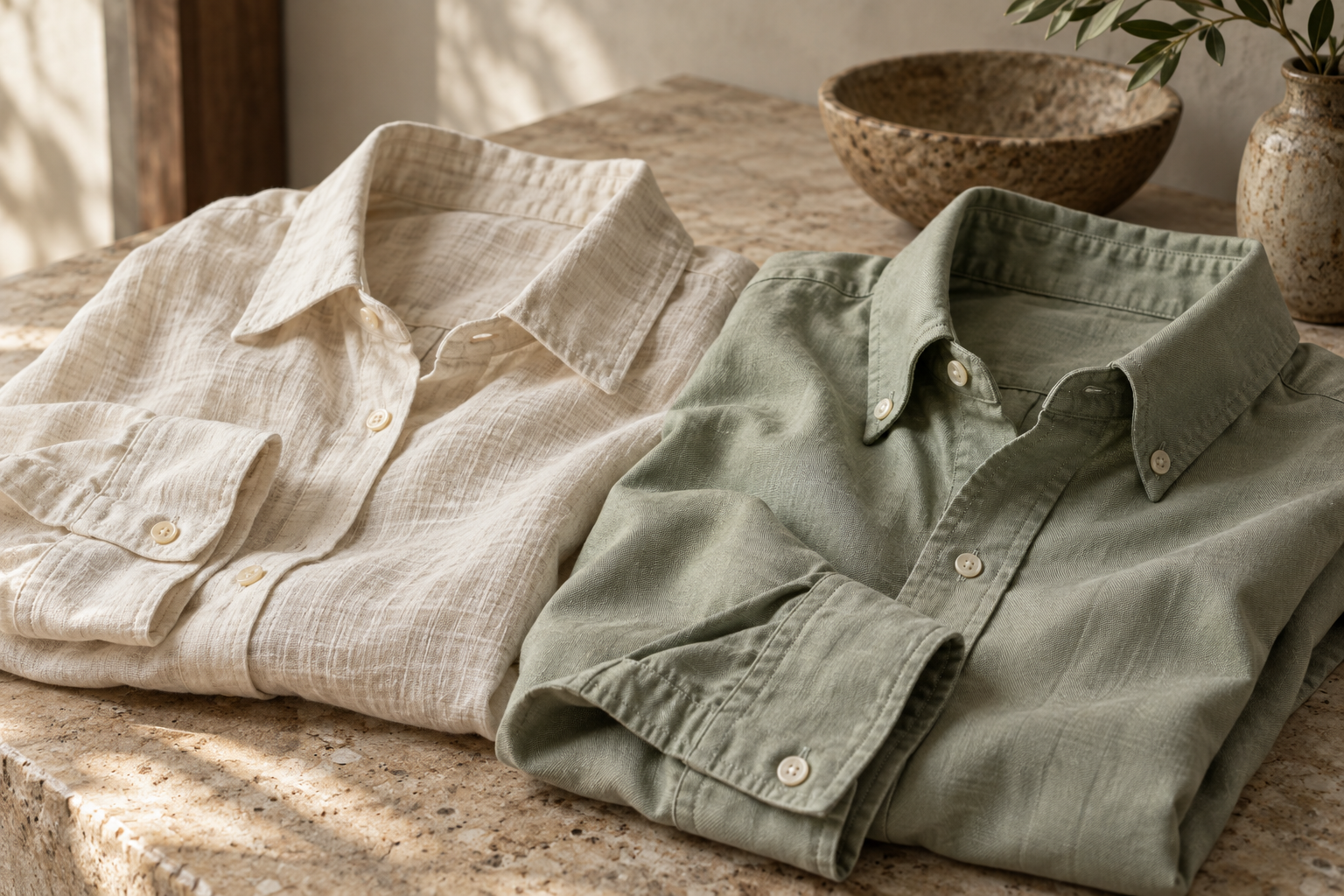
The illustration is a generic folded-shirt still life, not a confirmed Oxford weave and not one of the looks — treat it as setting the tone, while the three outfits in the table are taught in words. A weave close-up would be needed to show what actually distinguishes Oxford cloth.
Shirts & Tops
How to wear a linen shirt beyond the beach: three complete everyday combinations, tucked versus open wear, honest crease expectations and care-label-led preparation.
Shirts & Tops
A practical fit guide for untucked shirts: hem length, shoulder seam, sleeve length and room to move, with simple checks for each.
Shirts & Tops
How to choose a full, half, or front tuck for your waistband and blouse length, smooth the hips, and make the tuck survive sitting and movement.