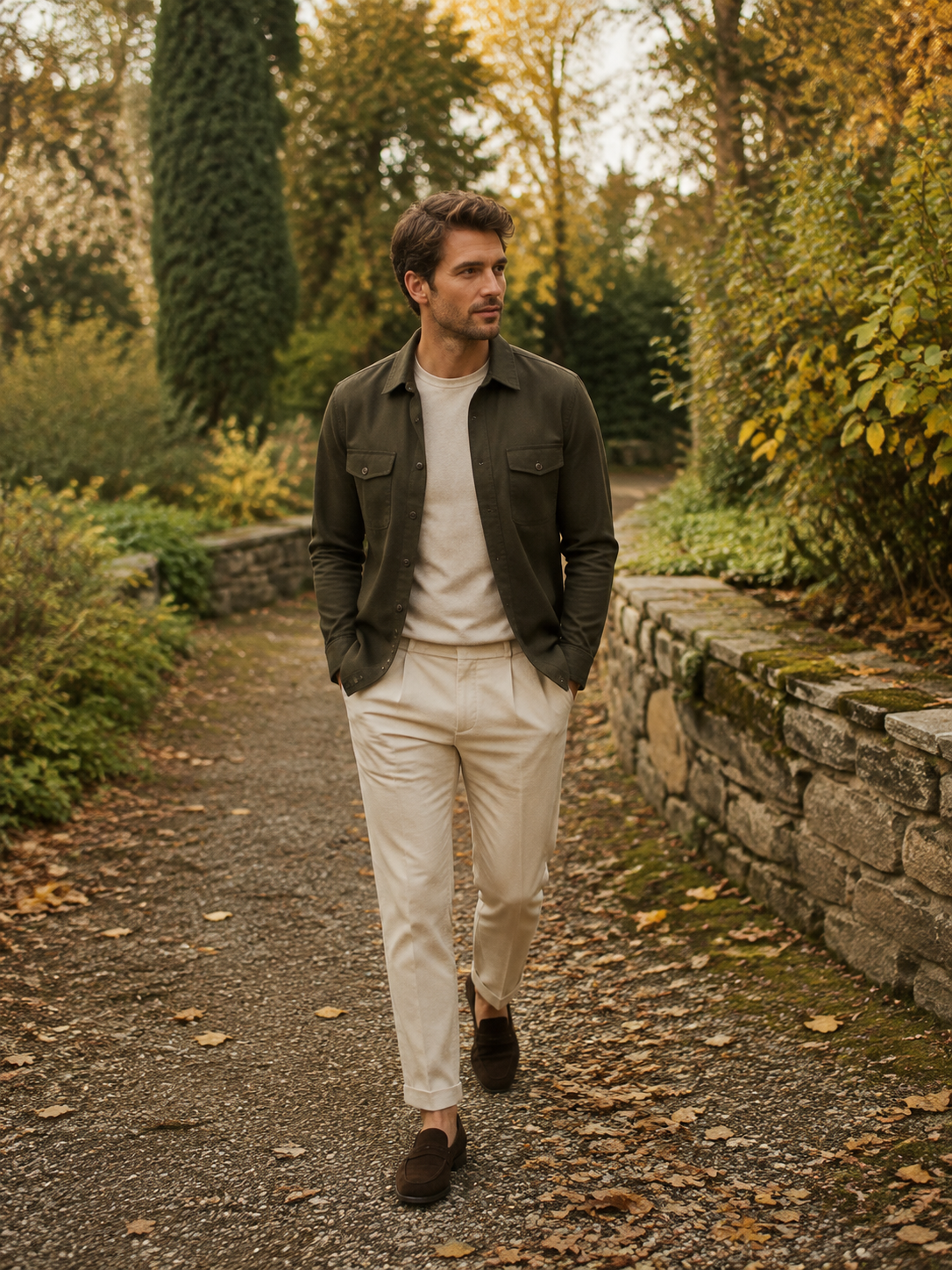
Shirts & Tops
How an Untucked Shirt Should Fit
A practical fit guide for untucked shirts: hem length, shoulder seam, sleeve length and room to move, with simple checks for each.

Outfit inspiration
A cardigan can be your main layer or sit beneath a jacket, depending on its thickness and cut. Three complete outfits — with the neckline, hem and buttoning checks — cover jeans, trousers and a skirt.
Begin hereInspiration
A cardigan can be your main layer or sit beneath a jacket, depending on its thickness and cut. Try it with trousers, jeans or a skirt, then check the neckline and hem together. Buttoning is optional unless the garment or setting calls for it; comfort and the complete outfit matter more than one fixed length.
Two construction facts change how a cardigan wears. Gauge — fine, mid or chunky — decides whether it can sit under a jacket or must be the outer layer. Cut decides the silhouette: classic set-in sleeves, dropped shoulders and longline hems are all legitimate designs; they simply produce different outlines to check in the mirror.
A cardigan only reads smart if the shoulder seam sits exactly on your shoulder and the hem ends at the hip bone.
Those proportions produce one particular tailored look, not the only smart one. Drop-shoulder and longline cardigans are deliberate designs — worn with volume balanced elsewhere, they read relaxed-smart rather than sloppy. Check the complete outfit's balance instead of measuring one seam.
The photograph shows the combination: an oatmeal cardigan over a plain top with dark jeans and brown loafers. It works because every element is plain and mid-weight, so the cardigan reads as a considered third piece rather than a throw-on. The same formula carries a chunkier knit — jeans are sturdy enough to balance it.
A plain white or ivory top — tee or fine knit — that stands on its own if the cardigan comes off. Dark, straight or slim-straight jeans keep the lower half settled.
Wear it open first. An open cardigan is a layer you can remove, so the outfit beneath must already be complete.
Brown loafers, suede chukka boots or clean leather sneakers. A belt matching the shoes ties the jeans in.
Look at the neckline and hem together: nothing gaping at the chest, nothing pooling at the hem. If the cardigan is longline, keep the top beneath shorter so the layers read as a stack.
With tailored trousers, a buttoned cardigan stands in for a blazer or waistcoat. A fine-gauge knit in navy, charcoal or dark green buttoned over a shirt or plain tee, with wool trousers and leather shoes, is the office-ready version. The illustrated trousers look — a cardigan over a white top with olive trousers — is the same idea at its most relaxed.
A fine merino or cotton cardigan buttons flat; a chunky one gaps and pulls across the chest. If yours gaps, wear it open with a smarter top beneath instead.
Over a shirt, leave the collar points outside the cardigan's neckline. Over a plain tee, the cardigan's own neckline becomes the frame — a V-neck suits this best.
Wool or heavy cotton trousers with derbies or loafers, belt matching the shoes. This is what lifts the cardigan above weekend wear.
Button it fully, then half, then open — and check the tension at each state. The right setting is the one where the front lies flat and you can move without the buttons straining.
Buttoned works when
Wear it open when
The second illustration shows an ivory knit with a rust midi skirt and brown flats — the top there is a pullover, and a fine cardigan swaps in for the same job: button it or leave it open over a plain top, and the skirt carries the outfit. A midi skirt with a proper waistband keeps the register smart; sneakers or flat leather shoes finish it for daytime, loafers or heeled boots for dinner.
Run before any cardigan outfit leaves the house:
A cardigan under a blazer replaces a waistcoat and adds warmth without structure — but only in a fine gauge. A thick knit bunches at the armhole and pushes the jacket's shoulders forward. Dress completely, close the jacket, then reach forward and to both sides.
If every setting fails — gaps at every button state, hems that pool, shoulders that sag whatever you pair them with — the garment's fit is the question, not the outfit. And if pilling, stretching or sagging appears after washing, the care routine, not the styling, needs attention.
Diagnose and care for the knit
The detailed fit diagnosis for knits, including dropped shoulders and longline cuts.
Thin-layer logic for the shirt-and-cardigan combination.
3 looks to explore
The illustrated look: an oatmeal cardigan worn open over a plain top, dark jeans and brown loafers. Steps: build the top-and-jeans base, add the cardigan open, finish with leather. Check: the base stands alone and the neckline and hem sit clean together.
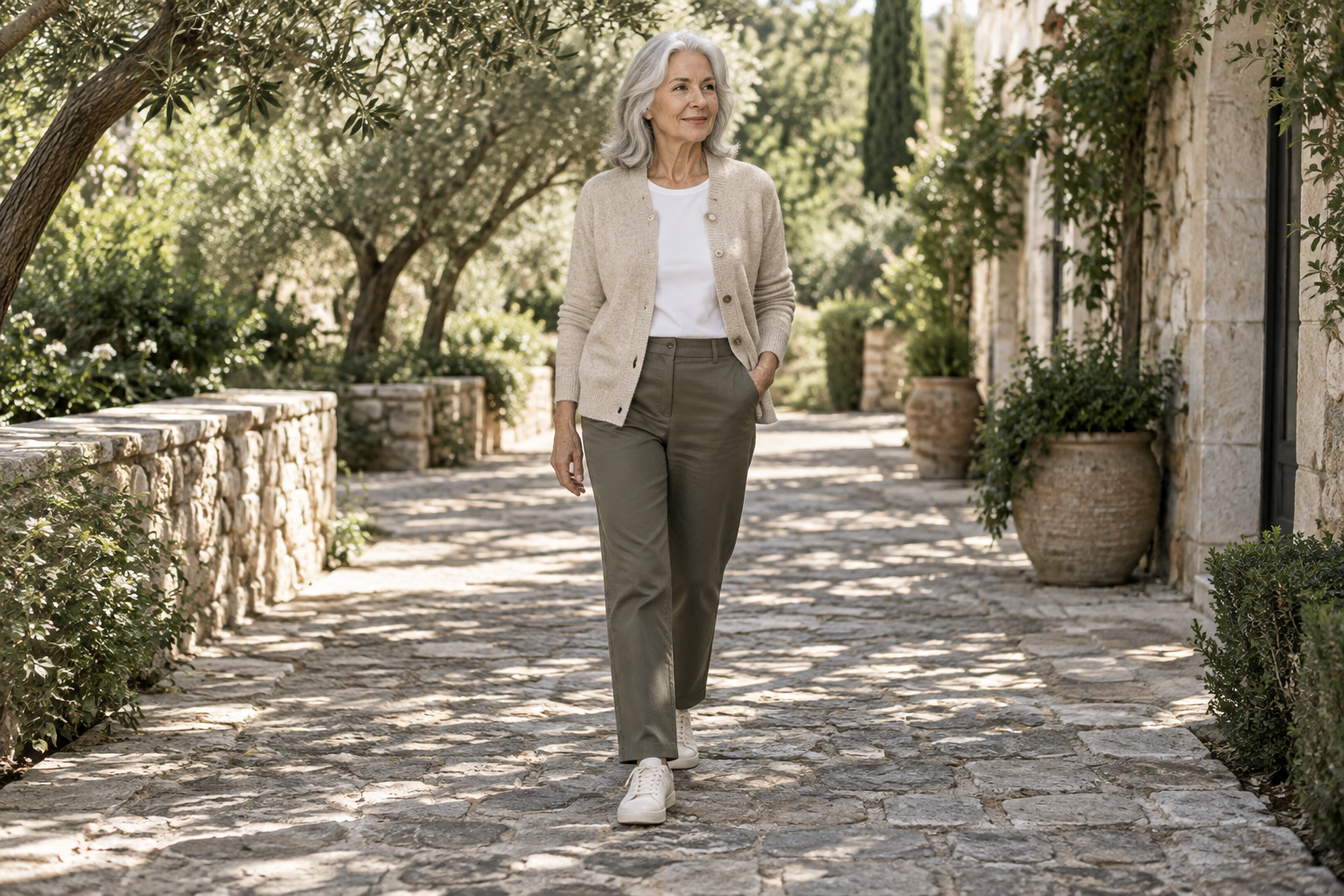
An oatmeal cardigan over a white top with olive trousers and cream sneakers — the tailored end uses the same shape with wool trousers and leather shoes. Steps: choose the top, add trousers, test the buttons at full and open. Check: the front lies flat at whichever closure you keep.
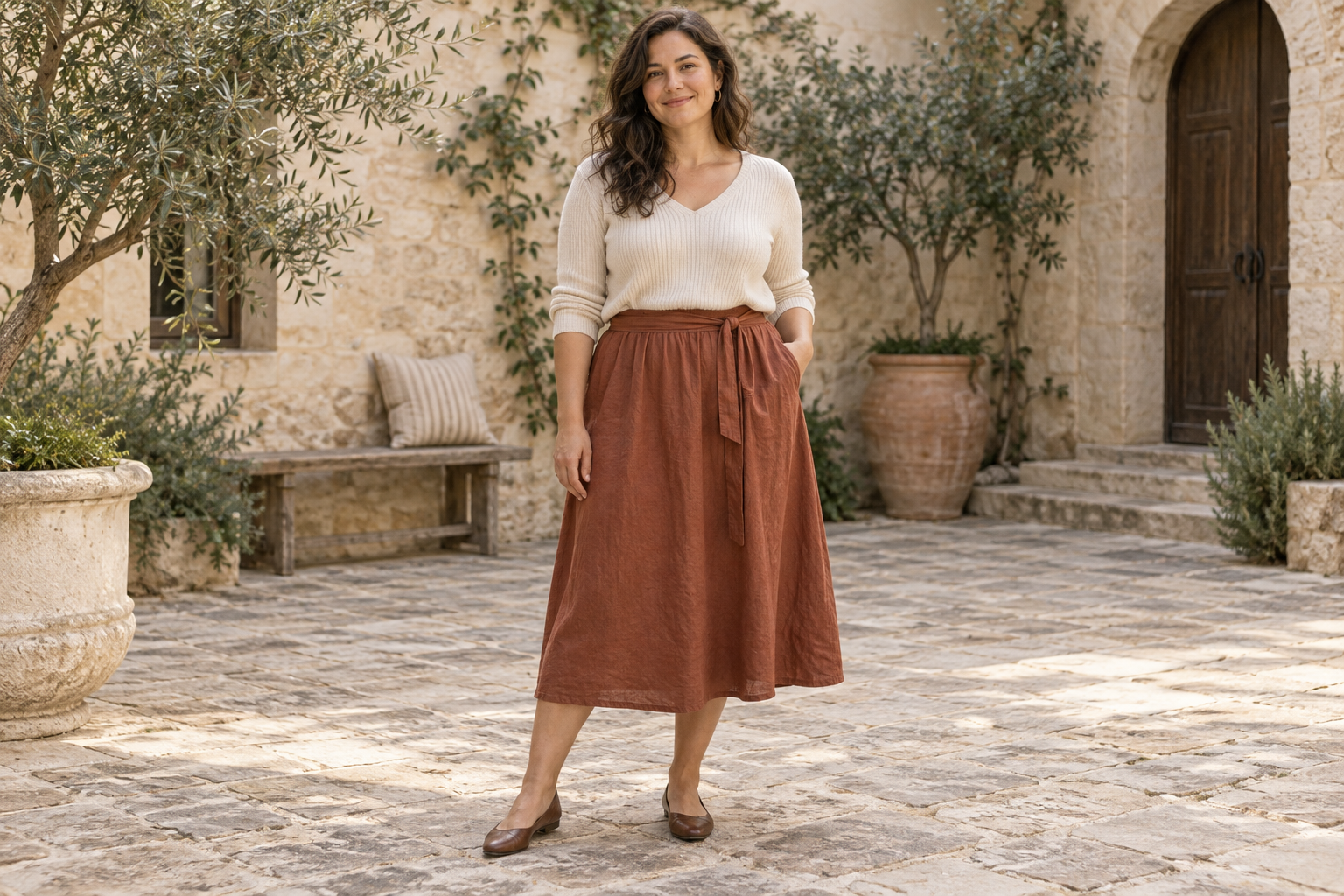
An ivory knit top with a rust midi skirt and brown flats — the top in the picture is a pullover, not a cardigan; the idea is the knit-plus-skirt pairing a fine cardigan also serves. Steps: button or open the cardigan over a plain top, then pick shoes for the setting. Check: the waistband reads clean and the layers stack without bulk.
Shirts & Tops
A practical fit guide for untucked shirts: hem length, shoulder seam, sleeve length and room to move, with simple checks for each.
Trends in Practice
Where linen shirts beat cotton and where they don't: breathability, wrinkles, formality, weight, seasons and care, with scenarios for choosing between them.
Shirts & Tops
Two workable turtleneck formulas for smart casual — fine knit under a jacket, heavier knit as the top — plus a neck-comfort check, alternatives for high-collar sceptics, and what care labels limit.