Shirts & Tops
How an Untucked Shirt Should Fit
A practical fit guide for untucked shirts: hem length, shoulder seam, sleeve length and room to move, with simple checks for each.
Lookbook
A turtleneck can work under a jacket or as the main top, depending on its thickness and cut. Two complete formulas below, plus the comfort check and the alternatives if high collars are not for you.
Begin hereInspiration
A turtleneck can work under a jacket or as the main top, depending on its thickness and cut. Start by checking that the neck feels comfortable, then try the complete outfit while sitting and turning your head. Fine and chunky versions create different looks, but neither is automatically the correct choice.
Fine-gauge knit under a jacket
Heavier knit as the top
Turtlenecks are not one neckline. The garment's pattern determines how the neck sits, and folding against the design is where most neck discomfort starts.
A merino turtleneck is automatically smart casual, and loafers are the required shoe.
Dress codes respond to the whole outfit, not one fibre: a fine merino turtleneck under denim and trainers reads casual, while a heavy cotton rollneck under flannels can read smarter than expected. Footwear follows the trouser register rather than a fixed rule.
Before wearing any of these looks out:
Where to go next
Check shoulders, sleeves and hem before styling any knit — turtlenecks included.
If the high collar is not for you, the same slot takes other tops.
6 looks to explore
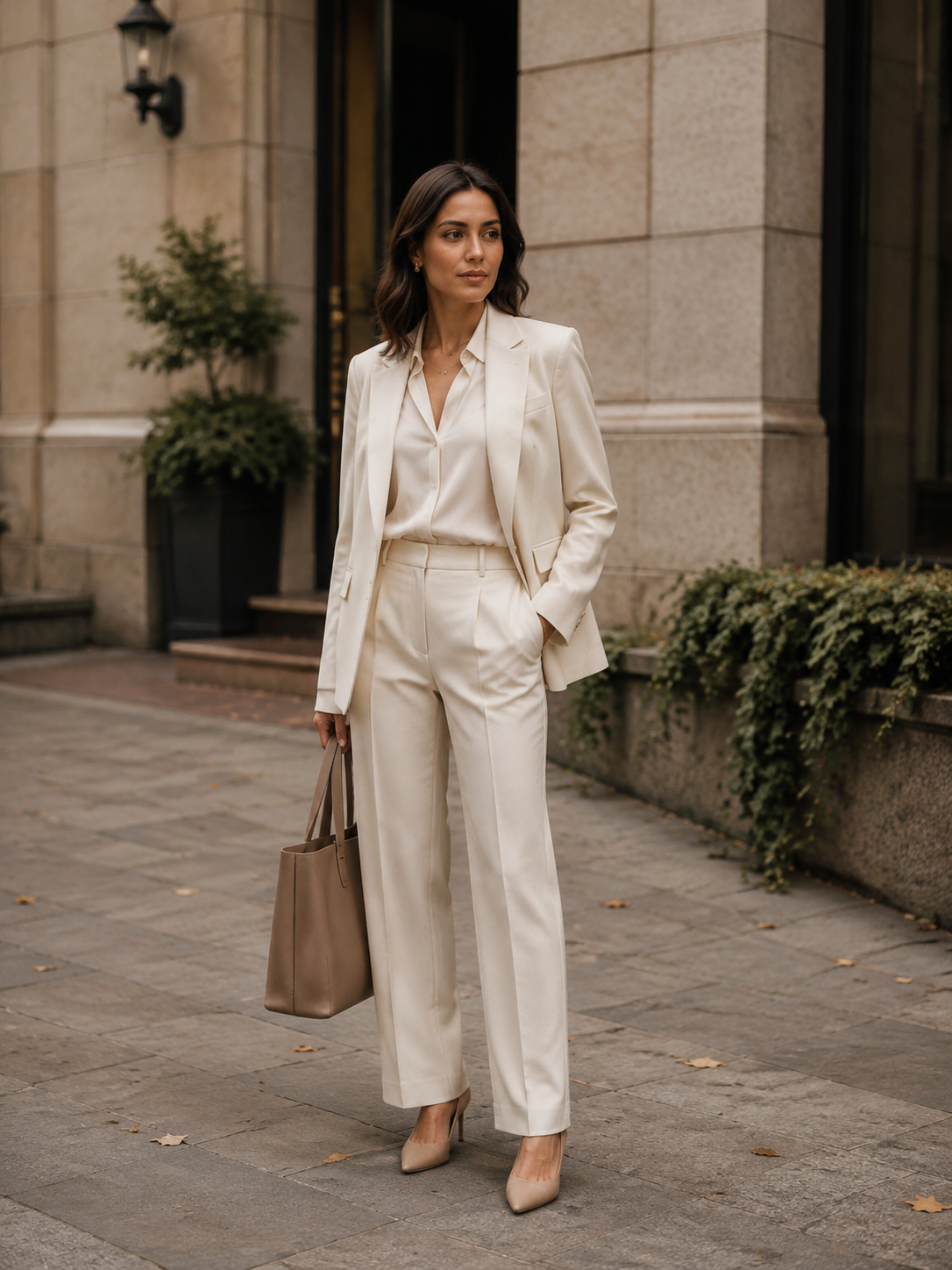
A close-fitting fine-gauge turtleneck in black or navy under a mid-grey suit, with dark derbies. The knit should be thin enough that the jacket closes without strain, and the neckline snug enough to sit flat where a shirt collar would. The photo shows the suit register; the knit is the part to recreate.
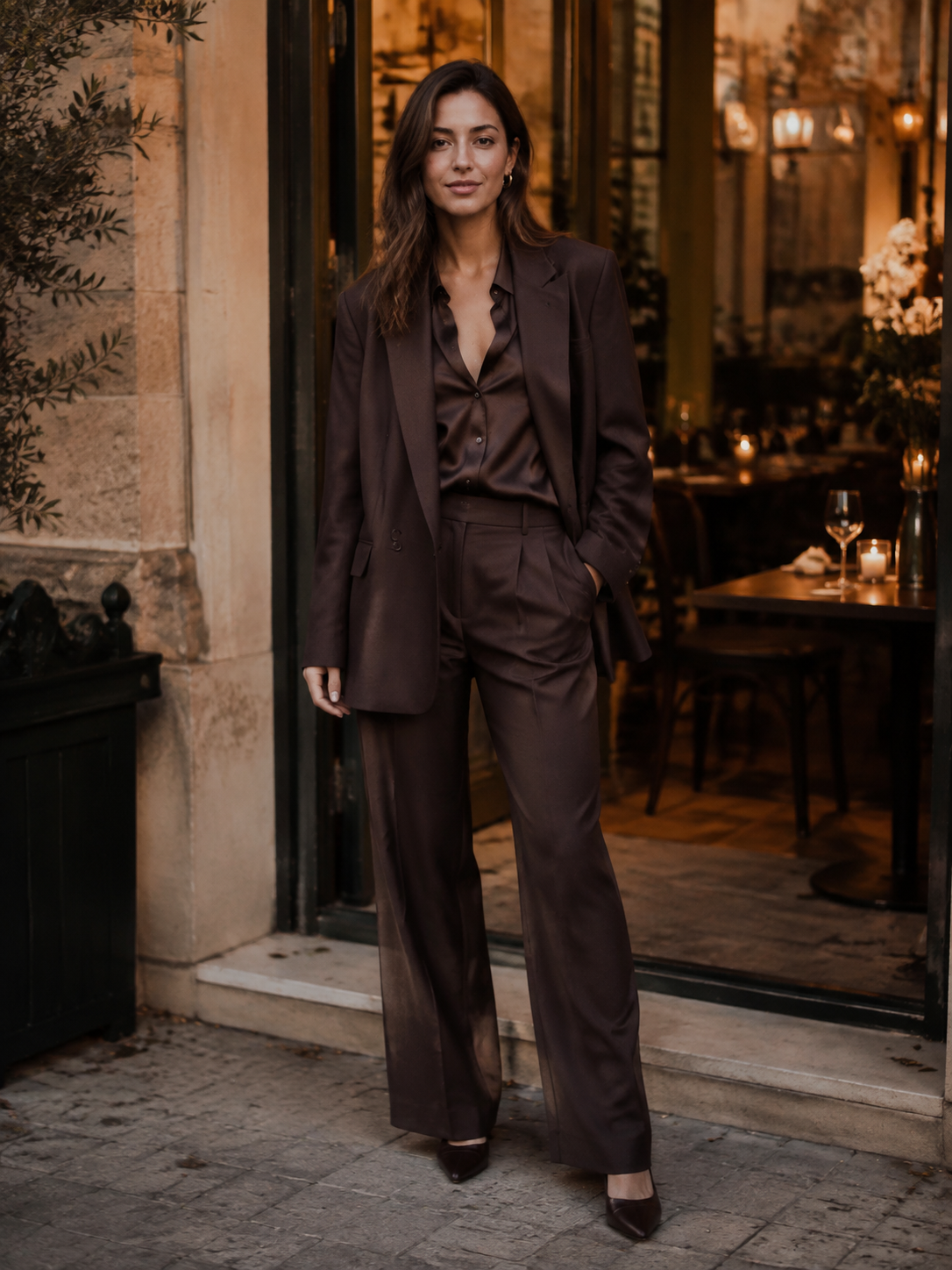
A navy fine-gauge turtleneck under a camel or dark unstructured blazer, dark grey flannel trousers and brown suede loafers. This is the dependable smart casual pairing: the knit does a shirt's job, and the soft jacket keeps the outfit below full tailoring. Keep the knit thin so the lapel rolls cleanly.
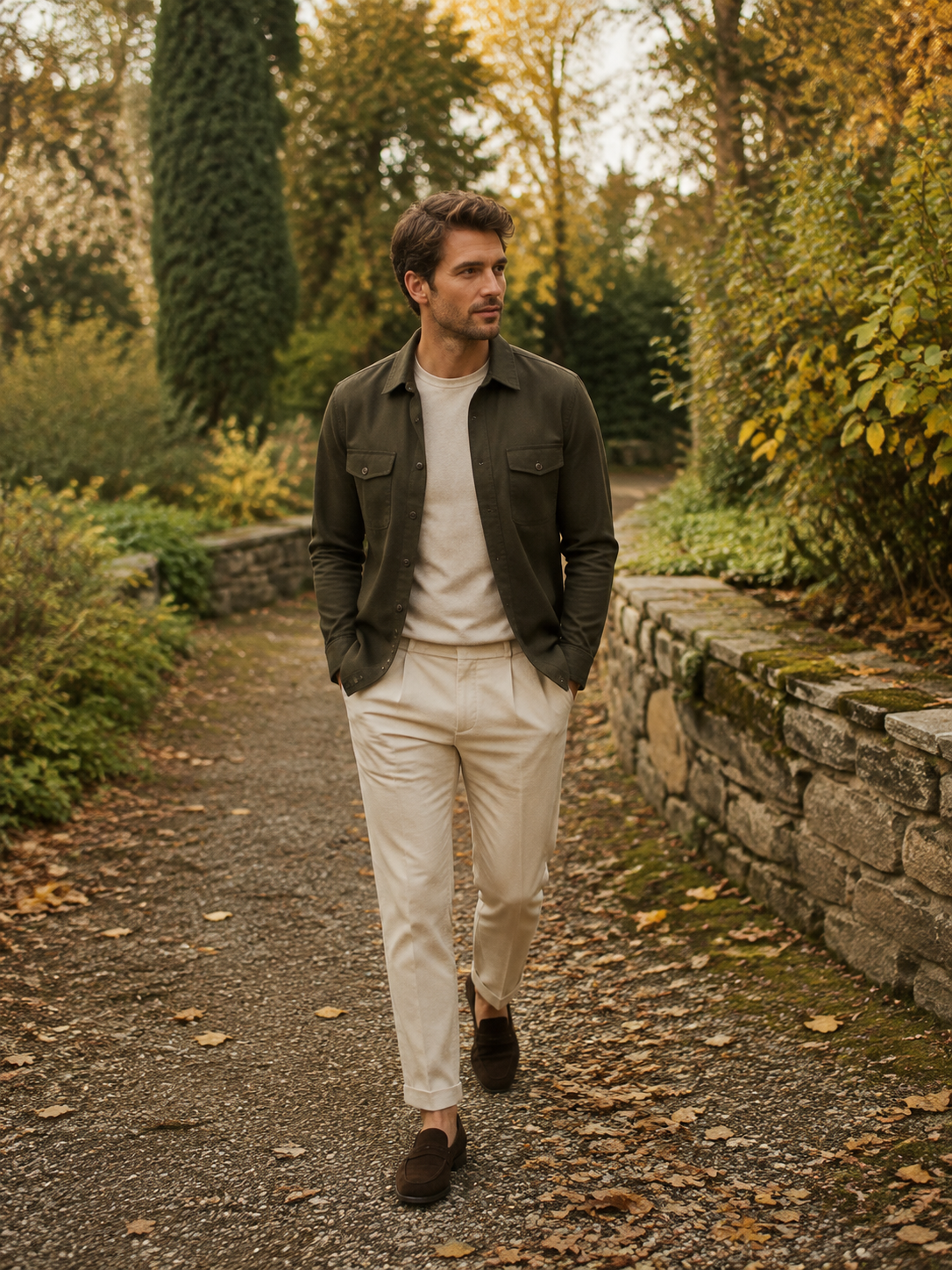
A cream mid-weight or chunky turtleneck with a slightly relaxed body, straight-leg dark indigo denim and clean white leather trainers. The extra ease at the neck and hem reads as weekend ease because the rest of the outfit matches it. A short front tuck keeps the slouch from becoming shapeless.
An oatmeal mid-weight turtleneck with room through the torso, grey wool drawstring trousers and dark brown loafers. The relaxed knit softens the tailored trousers, which is the balance smart casual asks for. Swap in a close-fit fine knit and the same trousers read a step more formal.
A black close-fit turtleneck under a navy or dark wool chore coat, charcoal trousers and dark boots. The fitted knit keeps clean lines under the coat's straighter cut — a slouchy rollneck would fold and bulk at the collar. Evening-appropriate without jacket-and-tie formality.
A charcoal fine-gauge turtleneck with a matching waistcoat, mid-grey trousers and dark oxfords. The close neckline matters most here, because any looseness shows immediately under a waistcoat. This lands a notch more formal than a blazer look and suits dinner reservations or smarter offices in cold months.
Shirts & Tops
A practical fit guide for untucked shirts: hem length, shoulder seam, sleeve length and room to move, with simple checks for each.
Trends in Practice
Where linen shirts beat cotton and where they don't: breathability, wrinkles, formality, weight, seasons and care, with scenarios for choosing between them.
Shirts & Tops
A cardigan can be the main layer or sit beneath a jacket, depending on its thickness and cut. Three recreatable outfits — jeans, trousers and a skirt — with the neckline, hem and closure checks for each.