Decide collar versus collarless by proportion
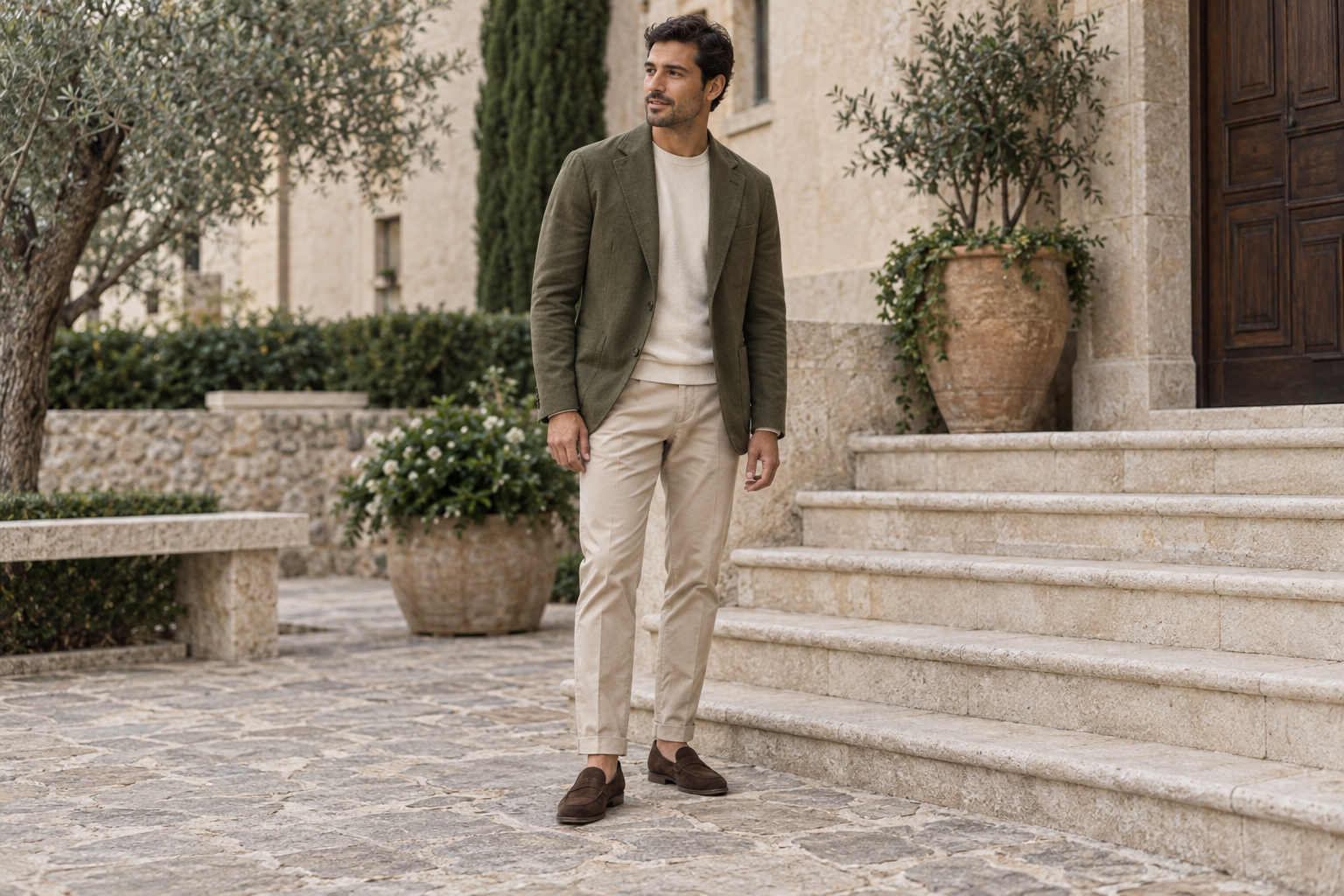
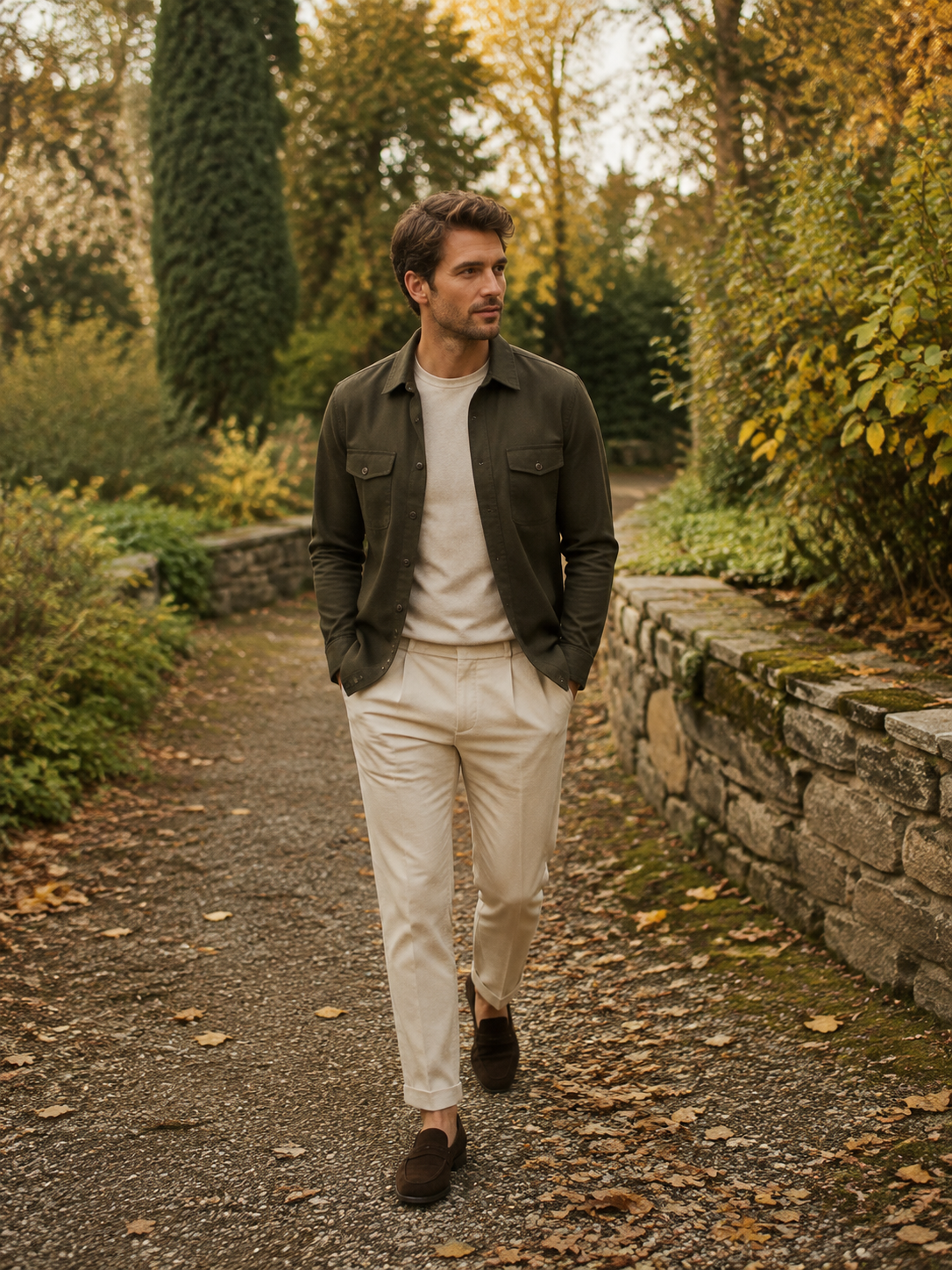
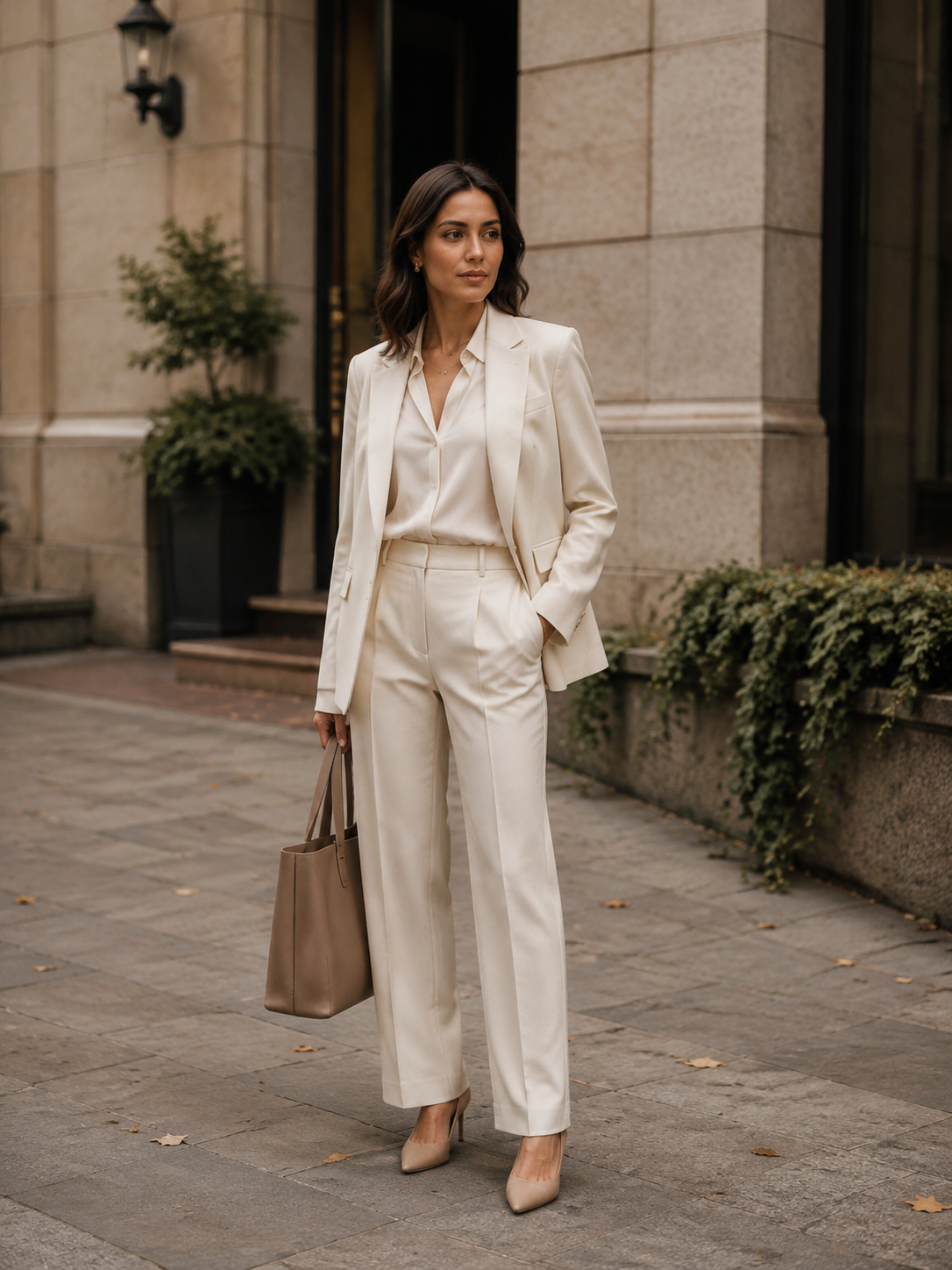
A collared shirt frames the blazer lapel and reads more structured; a collarless or crew-neck top reads softer and slightly more casual. Neither is better — the question is whether your blazer's lapels are wide enough to carry a collar. Narrow lapels over a full pointed collar look cramped, while wide lapels over a bare crew neck can leave a large expanse of jacket with nothing breaking it up.
Check: Put the blazer on over the top and look chest-up in the mirror: the collar should sit inside the lapel line with a little shirt visible, or the neckline should sit close enough to the collarbone that the jacket does not swallow it.
Match fabric thickness to the shoulder structure
A structured blazer with padding or a canvassed chest has room for a crisp, thicker shirt, and the layers press each other flat. A soft, unstructured blazer over a stiff shirt bunches at the shoulder and wrinkles where the layers fight. As a rule, thick under structured and thin under soft keeps the shoulder line smooth — a heavy oxford under a slouchy knit blazer is the combination that usually fails.
Check: Feel the shoulder of the blazer once layered: it should lie smooth with no lumps or creases radiating from the seam, and the top should not have pressed deep wrinkles into the jacket when you take it off.
Choose a neckline that suits how open the jacket sits
The visible strip of top between the lapels is the whole point of the layer, so pick its shape deliberately. A buttoned collar leaves only a sliver and reads formal; an open collar makes a V of shirt that lengthens; a scoop or V-neck knit creates the same vertical line in a softer register. A high crew neck under a buttoned blazer leaves almost nothing visible, which is fine as a plain block of colour but wastes a pattern.
Check: Button the blazer and look at what remains visible: there should be a clear, deliberate shape at the neck — a triangle of shirt, a line of knit — not a random sliver that shows mostly seam or label.
Manage the sleeves deliberately
About a half-inch of cuff showing past the jacket sleeve keeps the layering readable and adds a line of contrast at the wrist — a long-sleeved shirt does this naturally. With a short-sleeved or sleeveless top under a long-sleeved blazer, bare arms replace the cuff line, which reads more casual and can feel bare in office settings; a fine long-sleeved layer underneath solves it without warmth. Pushed or bunched sleeves under the jacket add bulk at exactly the point the sleeve should be smooth.
Check: Let your arms hang: either a clean half-inch of cuff shows past each jacket sleeve, or the jacket cuff sits alone with nothing bunched inside — no rolled fabric at the elbow or wrist.
Check opacity and lining contact on the actual garments
Whether a light shirt or pale knit shows through is a property of that specific fabric, weight and colour, not of a category. Hold the top up in daylight over what you would actually wear beneath it — nothing, a camisole, an undershirt — and judge it there. If the blazer is lined, the lining is what sits against the top all day; a smooth lining lets a fine knit glide, while a coarse or unlined interior can pill or cling.
Check: Put the layered combination on and look at the front in ordinary indoor light: the top should read as one solid colour with no visible seams, labels or skin tone shifts through the cloth, and nothing should cling or catch when you slide a hand inside the jacket.
Set the colour contrast you want
High contrast between top and blazer — navy jacket over white shirt — reads sharper and more formal; low contrast, like tonal blues or grey on grey, reads quieter and more modern. Pattern belongs in the visible strip: a striped or checked shirt under a plain blazer adds interest with almost no risk, while a patterned blazer usually wants a plain top. If in doubt, repeat a colour already in the outfit — the trousers or the shoes — somewhere in the top.
Check: Squint at yourself in the mirror: the top and blazer should read as two distinct but related blocks, with the shirt or neckline clearly visible rather than merging into the jacket.
Do the movement test before committing
Layers that look fine standing still fail when you sit, reach or drive. Sit down, cross your arms, reach forward as if for a steering wheel, and raise both arms overhead: the shirt should stay tucked or neatly untucked, the neckline should not gape, and the back of the top should not ride up and bunch under the jacket. Fabrics with a little give forgive more here than stiff ones.
Check: After sitting and reaching, look side-on and behind in the mirror: the shoulder and back of the blazer should still lie smooth, and the top should need no more than one tug to sit right again.