Skip to content

Find your next good read.

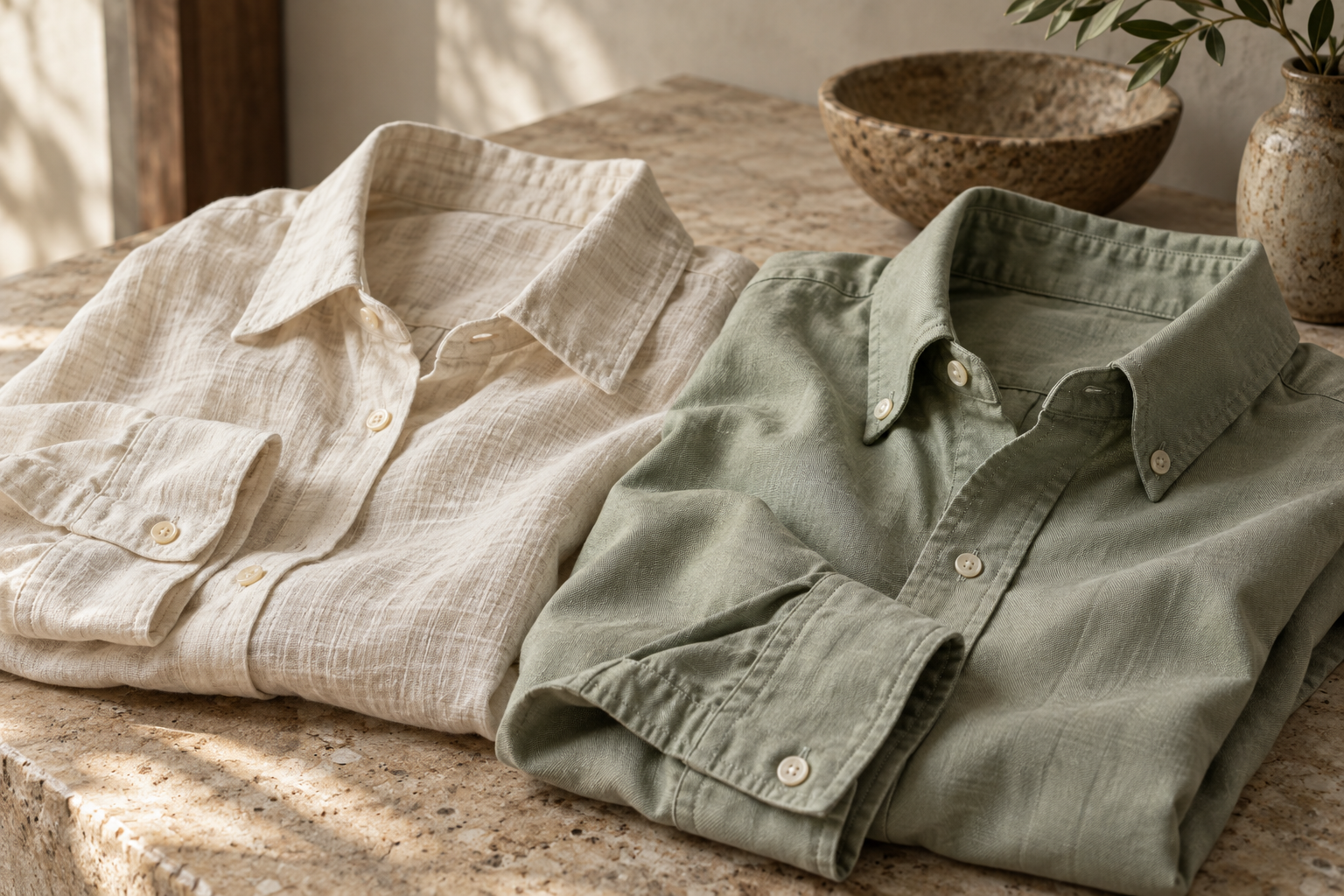
Folded ivory and sage shirts on a limestone surface.

Shirt comparison

Blouse vs Button-Down Shirt: Choosing a Smart Casual Top

Blouse and shirt labels overlap, so compare the actual garment rather than assuming one is always softer or dressier. Here is where the two tops genuinely diverge and how to pick the right one for your setting.

Begin here

Comparison

Blouse vs button-down shirt

Blouse and shirt labels overlap, so compare the actual garment rather than assuming one is always softer or dressier. A button-down collar, strictly, has buttons securing its points; people also use the term loosely for any button-front top. Check the neckline, fabric, fit and layering you want, then choose the piece that suits your setting.

Myth

A button-down is any shirt with buttons down the front.

Fact

That is a button-front shirt. In maker and menswear usage, "button-down" refers to the collar: its points button to the shirt so they stay put. The loose everyday usage is common, so when a product page says button-down, check the photo to see whether it means the collar or just the front closure.

Myth

Blouses are always collarless, softer and summer-only, while shirts are always more structured.

Fact

The categories overlap at every point. Collared blouses, crisp woven blouses, and relaxed unstructured shirts all exist, and plenty of blouses are made in warm winter weights. Judge collar, fabric and weave on the specific garment rather than on the word on the label.

One phrase, two meanings: check which button-down you are looking at

Because the loose and strict uses of "button-down" both appear in shops, the word alone cannot tell you what a garment is. A button-down-collar shirt holds a neat collar frame under a sweater or jacket, which is a styling property. A merely button-front top may have any neckline at all. A quick scan of the collar in the product photos settles which one you are comparing.

Reading the labels: what each phrase does and does not tell you
Label as usedWhat it reliably tells youWhat it does not tell you
Button-down (strict: button-down collar)The collar points button to the shirt, holding a tidy collar frame.Fabric weight, fit, formality or how it layers — those still need checking.
Button-down (loose: any button-front top)The garment fastens with buttons down the front, so you control the neckline.Whether there is a collar at all, or buttons on it — check the image.
BlouseIt is a soft-sprung top category, often with a varied or no collar.That it is collarless, drapey, warm-weather or less structured — all of these vary.

Layer the top before you commit to it

Most regretted top purchases are layering mismatches, not style errors. A collar that looks crisp alone can bunch under a crew-neck sweater, and a collarless neckline can sit awkwardly at a jacket's edge. Try the top with the jacket or knit you actually intend to wear, buttoned and unbuttoned, seated and standing.

Run this check with your real outer layer on:

  • Under a crew-neck sweater: the collar lies flat or the collarless neckline sits clean, with no bunching at the neck.
  • Under a jacket: the neckline fills or clears the jacket's opening the way you want, and nothing pulls across the back.
  • Sleeves: you can push up or layer sleeves without the top's sleeves binding at the shoulder.
  • After sitting and standing: the top's hem and neckline sit where they did when you started.

Reach for the shirt when

  • A blazer or jacket is likely during the day — the collar fills the jacket neckline.
  • You want to set the neckline yourself with the placket, open or buttoned.
  • You need a top that tucks cleanly and stays put through a long day.

Reach for the blouse when

  • The outfit is built around a softer neckline — a dinner, an occasion, a V-neck frame.
  • You will layer under crew-neck knits, where a collar just bunches.
  • Heat and long sits are likely; fluid fabrics stay comfortable and pack with fewer creases.

THE SHORT ANSWER

Choose for the day ahead.

Choose the button-front shirt when the day might involve a jacket, when collar structure helps the outfit read deliberate, or when you want a top that tucks cleanly and stays put. Choose the blouse when you want a softer line at the neck, when the outfit is built around tailoring or texture rather than structure, or when a collar feels like too much under a crew-neck sweater. If you dress for mixed settings, the structured shirt is the more adaptable piece — but a well-cut blouse in a good fabric often reads the smarter of the two, because it behaves like tailoring rather than utility.

Side by side.

The differences that matter
AspectBlouseButton-front shirt
Fabric and drapeOften a lighter woven fabric — silk or polyester crepe, viscose, fine cotton — that drapes close to the body, though crisp, structured blouses exist too.Typically cotton, a cotton blend, or linen in a weave with body, so the shirt holds a shape away from the torso — though soft, unstructured shirts exist as well.
Closure and necklineClosures and necklines vary widely: buttons may run partway or be hidden, and necklines range from crew and V-neck to boat or tie-neck, many with no collar at all.A full button placket to the hem lets you set the neckline exactly — open for relaxed, buttoned for smarter — and with a true button-down collar, the collar frame stays put as well.
Formality readOften reads polished and dressed-up, closer to tailoring, but the fabric and neckline decide: a crisp woven blouse can out-structure a soft shirt.Reads neat and structured with a slightly utilitarian edge at its most relaxed; at its smartest buttoned with tailored trousers, and entirely at home under a blazer.
Layering under knitwear and jacketsSits smoothly because there is usually no collar bulk, so it layers cleanly under crew-neck sweaters; under a jacket, the neckline choice sets the whole frame.The classic jacket under-layer: the woven body is flat and a collar fills the jacket's neckline. Under a crew-neck sweater, though, a collar can bunch and needs arranging.
Fit approachJudged on drape: the fabric should skim without clinging or billowing, shoulder seams land on the shoulder, and buttons — where present — must not pull or gap across the bust.Judged on structure: the shoulder seam sits on the bone, the placket lies flat without straining, and the collar closes without pulling even when left open.
SeasonsNeither category owns a season. Light drapey blouses suit heat, but warm-weight blouses exist for winter; judge the fabric, not the label.Often all-season in practice — fine cotton in summer, under knitwear the rest of the year; linen leans warm-weather, flannel and heavier twills lean cool.
CareAlways read the label: silk and viscose blouses often need gentle or hand washing and careful drying, and drapey synthetics can hold creases or pill over time.Check the care label for fibre and temperature; cotton shirts crease and usually need ironing or steaming to look sharp, though many blends reduce that workload.

What should guide your choice?

  • Dress expectation: does the setting read polished office, relaxed office, or social — and which garment's default register matches it?
  • Neckline control: do you want to set the frame yourself with a button placket, or let the blouse's neckline do the deciding?
  • Layering plans: is the top going under a crew-neck sweater, a jacket, or nothing — collar bulk matters differently in each case.
  • Climate and season: how hot is the day, and how much time will you spend outdoors versus in heated rooms? Judge the fabric's weight, not the category.
  • Upkeep: are you willing to hand-wash or gently launder a delicate blouse and press a cotton shirt, or do you need low-effort care?

The right choice depends on the setting.

An office with a smart casual dress code

Either works, so build around the rest of the outfit. A silk-touch blouse with tailored trousers and loafers reads more dressed-up; a buttoned shirt with the same trousers reads crisper and more structured. If you often add a blazer through the day, the structured shirt is the safer base — the collar fills the jacket neckline cleanly.

Dinner or an evening occasion

The blouse usually wins here. A V-neck or tie-neck blouse in a fluid fabric with dark trousers or a midi skirt reads more occasion-like than a work shirt, and the softer neckline suits a setting where the utilitarian note of a collar adds nothing. Keep jewelry simple so the neckline stays the feature.

A day that might need a jacket

Wear the structured shirt. When a blazer goes on for a meeting, ceremony, or a cooler evening, the woven shirt layers flat and the collar reads deliberate. A collarless blouse under a jacket can work, but the neckline has to sit precisely at the jacket's edge, and the combination has less margin for error.

Warm weather and travel days

A loose blouse in a breathable viscose or cotton voile stays comfortable through heat and long stretches of sitting, and it packs with fewer sharp creases than a pressed cotton shirt. Pack the blouse for hot-city trips and reserve the structured shirt for the evenings where its crispness earns its keep.

You already own one and are unsure of the fit

The comparison above is about choosing between garments, not judging fit — a gapping placket or dropped shoulder changes the answer entirely. The button-down blouse fit guide walks through shoulder, bust and sleeve checks before you keep or return a top. And once a top passes, the tucking guide covers keeping it looking deliberate all day.

Keep exploring.