
Shirts & Tops
Polo vs Button-Down Shirt: How to Choose and Check Fit
How polos and button-down shirts differ in fabric, collar behavior, and formality, plus fit checks specific to each so either one sits right on you.
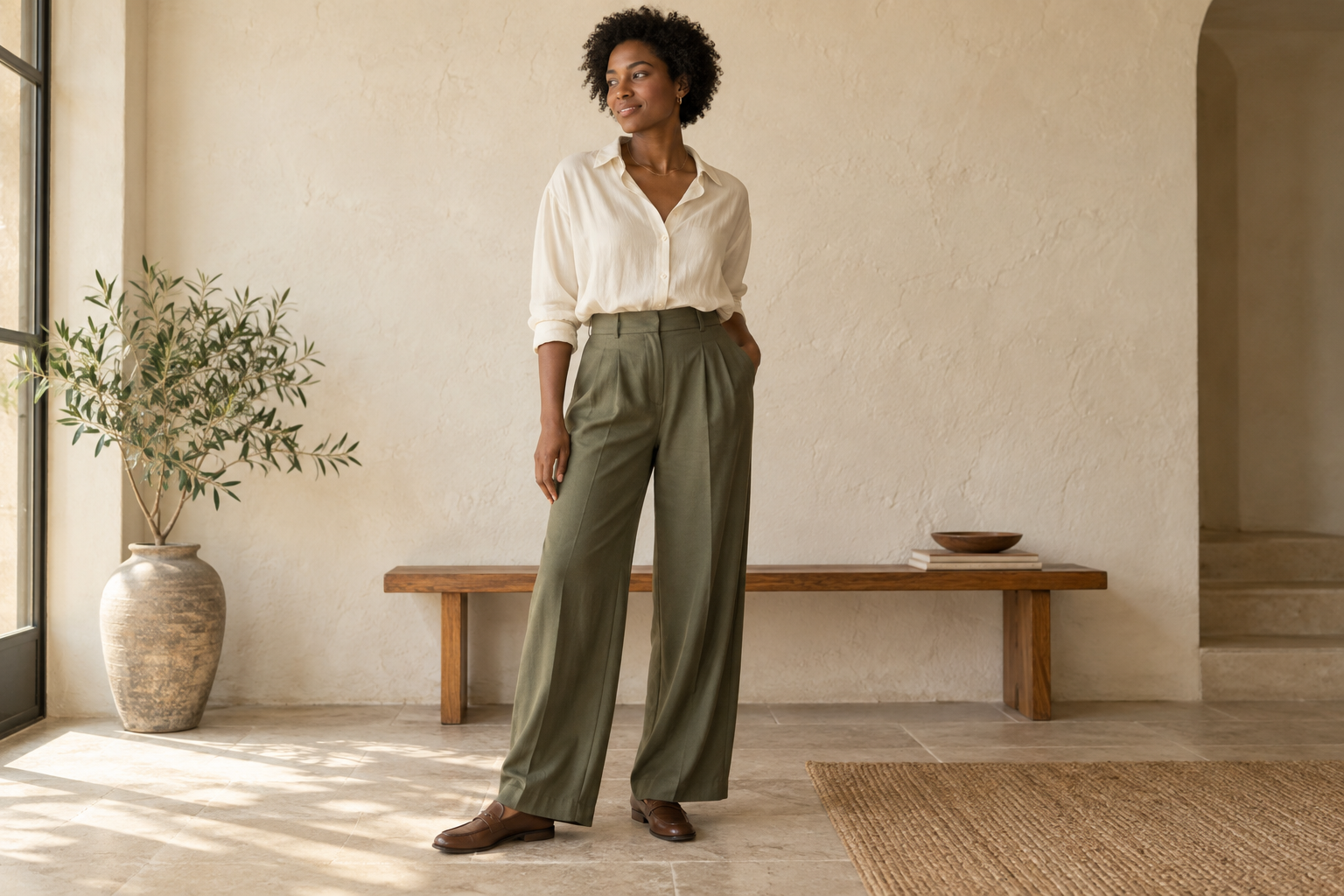
Fit guide
A button-front blouse should close comfortably and move with you without unwanted gaps or pulling. Work through shoulders, bust, sleeves and hem in order, and you will know within minutes whether a blouse fits or does not.
Begin hereHow-to
A button-front blouse should close comfortably and allow the movement you need without unwanted gaps or pulling. Try it with your usual underlayer, then sit, reach and cross your arms gently. Shoulder and hem placement depend on the design, so distinguish a deliberately relaxed cut from a blouse that restricts movement or needs constant adjustment.
There is a standard trick — if the placket stays closed during a certain hand movement, the blouse fits.
No named hand test predicts fit, because gap location and trigger differ by body, cut and fabric. What works is observing the actual placket through the movements of your real day — sitting, reaching, crossing your arms — and noting where and when any gap opens.
A correct fit means pinching a set amount of fabric, or sizing up until you can.
No universal measurement separates a good fit from a bad one; ease varies with fabric, cut and how fitted you want the look. A blouse that pulls when you sit is too tight for you regardless of the pinch test — and a relaxed cut that skims without swinging is not wrong for lacking spare inches.
A shoulder seam drifting down the arm is a fault on a set-in sleeve but the entire point of a dropped-shoulder design, and a softly gathered yoke is meant to stand away from the body. Check the product description or care label for construction clues, and look at how the seam sits relative to your shoulder bone. Deciding what the garment is trying to be comes first; only then can you tell restriction from intent.
You can say where — if anywhere — the blouse pulls, what movement triggers it, and choose a sensible next step: a different cut, a different size, or a tailor's assessment of this specific garment.
Look at where the shoulder seam meets your arm. On a standard set-in sleeve the seam should land at the edge of your shoulder bone; on a dropped-shoulder or raglan design, read the seam position as part of the intended silhouette instead. A set-in seam drifting down the arm means the body is too long through the shoulder and everything below will droop.
Check: Raise both arms to shoulder height: on a set-in sleeve, the seam stays near the bone's edge rather than sliding toward the bicep.
Buttoned to your usual height, watch the button line across the fullest part of the bust at rest, then seated, then reaching forward, then with arms gently crossed. Note whether any gap opens between specific buttons, and which movement opens it. A placket that stays flat through all four is doing its job; a gap only on reach is a different problem from a gap at rest.
Check: After resting, sitting, reaching and crossing your arms, the placket line is straight with no gap open between buttons at the bust.
Stand relaxed and look at the fabric through the waist. It should skim your outline without billowing away from the body or pulling so the side seams stretch — a woven blouse should hang, not cling. How much ease feels right varies with the fabric and the intended look, so judge pull and swing rather than any fixed amount of spare cloth.
Check: The side seams hang vertical, the front buttons sit in a straight unstressed line, and the blouse neither clings nor swings when you move.
With arms relaxed, the cuff should sit at the base of the thumb-side wrist bone, and the sleeve should let you bend the elbow without the cuff climbing far up the forearm. Through the arm, the sleeve should hang straight rather than pulling tight or flaring far beyond the intended line of the design.
Check: Bend each elbow to ninety degrees: the cuff may rise a little but should not expose half the forearm, and a buttoned cuff closes without strain.
Decide tucked or untucked first, because the length that works differs. For a front or full tuck, there should be enough body that the blouse stays anchored when you sit and raise your arms; untucked, the hem should end at a deliberate point — around mid-fly to just below the hip on most designs — without swallowing your leg line.
Check: Tucked, the blouse stays anchored through raised arms and sitting; untucked, the hem ends where you chose, not where it drifts.
Reach forward, twist side to side, sit down and stand up, and cross your arms — fit shows up in motion, not standing still. Watch the buttons at the bust, the shoulder seams, and whether the hem stays where you put it. Note the location and the trigger of any pull, because that note is what decides your next step.
Check: After the full movement run, the placket is still straight, no button has strained open, and nothing about the blouse restricts you.
The chest is the constraint, not the whole body. Try a different cut with more room through the bust before reaching for a size up, since sizing up can widen the shoulders and waist too. If the body then becomes too loose elsewhere, a tailor can quote on taking it in — whether that is worthwhile depends on the garment's construction and cost, so ask before committing.
Shoulder seams landing well down the arm are usually poor candidates for alteration, because reshaping a set-in shoulder moves the whole sleeve and the quote often exceeds the garment's value. The better first move is a different cut: many brands run slim, regular and relaxed fits through the same size range. Get a tailor's assessment only if the blouse is worth it to you specifically.
A blouse cut close enough to look sharp standing often lacks ease through the back and waist for sitting. Confirm it is the seated posture causing the pull, then choose a cut with a slightly curved hem and more room through the back panel. Relying on a tuck or a belt to reshape a too-close blouse treats the symptom, not the fit.
Those are separate tasks with their own guides — opacity depends on weave, weight and underlayers, and tucking depends on hem shape, length and tuck style. Judge fit first with the steps above, then take the passing blouse to the white-shirt opacity guide or the tucking guide for the specific fix.
Shirts & Tops
How polos and button-down shirts differ in fabric, collar behavior, and formality, plus fit checks specific to each so either one sits right on you.
Shirts & Tops
How blouses and button-down shirts differ in fabric, neckline, and layering, with clear criteria and scenarios for choosing between them.
Shirts & Tops
A practical fit guide for untucked shirts: hem length, shoulder seam, sleeve length and room to move, with simple checks for each.