
Trousers & Pants
How Chinos Should Fit: Waist, Thighs and Leg Shape
How to judge chino fit area by area: waist and rise, seat, thigh room, leg shape, inseam break with real shoes, and the seated comfort test.
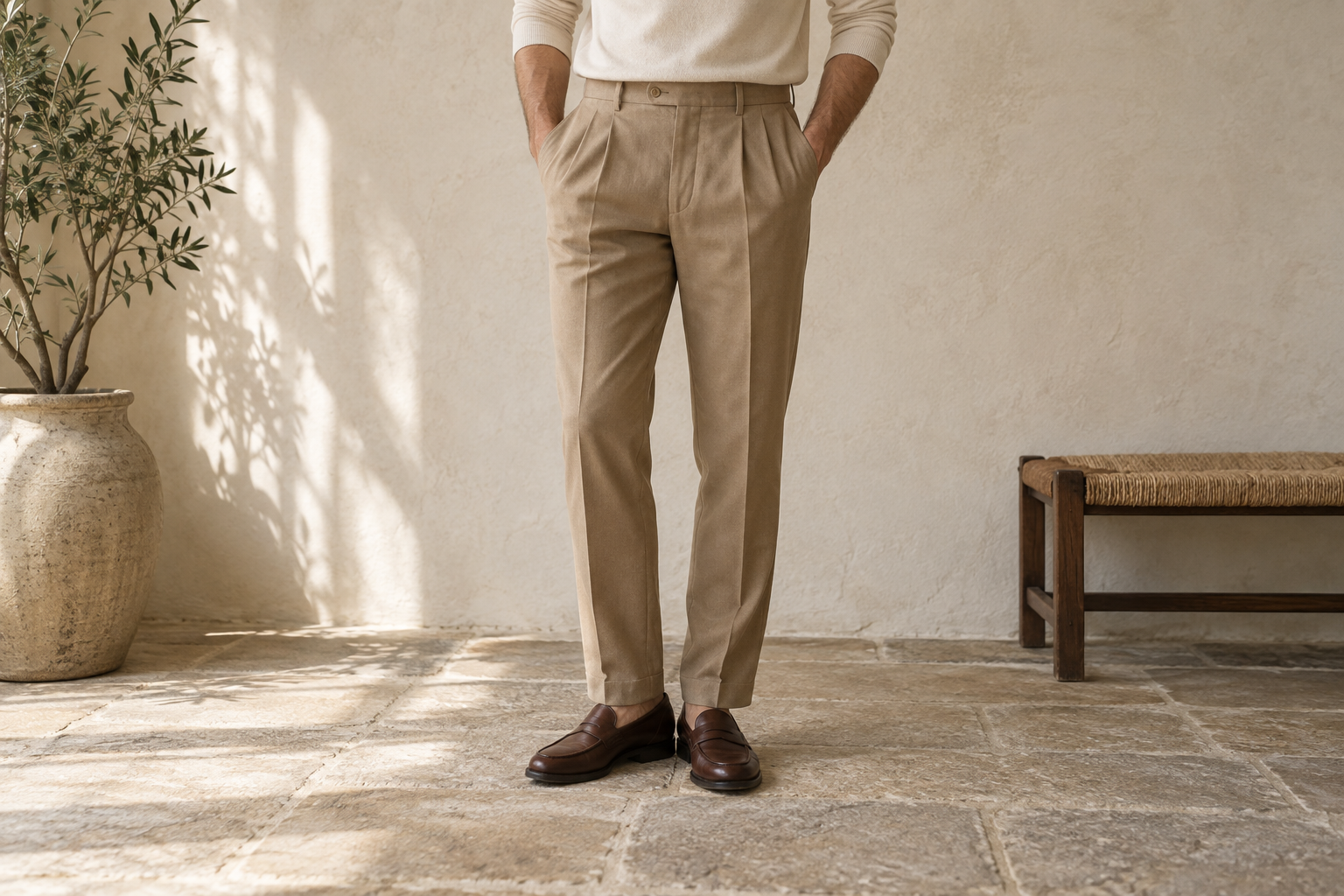
Fit guide
A tailor may be able to alter your chinos, but the options depend on how they are constructed and what you need changed. Identify the problem, understand what each change involves, and get a garment-specific quote before deciding between alteration and a different cut.
Begin hereHow-to
A tailor may be able to alter chinos, but the options depend on their construction and the change you need. Shortening a hem is a different job from adding room at the seat or waist. The skill is diagnosing the problem precisely, then asking a garment-specific question rather than hoping for a universal fix.
Any chino problem can be fixed by a tailor, and every alteration costs about the same.
Alterations differ hugely in scope and risk. Taking fabric in, letting fabric out, tapering and hemming are separate jobs with separate limits — and whether any of them is worthwhile depends on the garment's construction and value, which is exactly what the quote is for.
| Alteration | What the tailor does | What limits it | Relative scope |
|---|---|---|---|
| Hem | Shortens the leg and re-finishes the bottom edge, often preserving the original treatment. | Cuff style, topstitching and any detailing at the original hem. | Usually the smallest job — confirm cost for your garment. |
| Waist take-in | Reshapes the waistband and rear seams to remove a modest amount of room. | Waistband construction, pocket placement and how large the change is. | Modest changes are commonly workable; large ones distort shape. |
| Letting out | Releases seam allowance to add room at the waist or seat. | Available fabric: if the maker trimmed or finished the allowances tight, there is nothing to release. | Only possible when allowance exists — inspect before promising. |
| Taper | Re-sews the inseam or outseam to narrow the leg from knee or thigh down. | The starting leg shape, seam finishing and matching topstitching. | Moderate changes are routine; slim-from-wide is a poor request. |
| Seat / crotch | Dismantles and rebuilds the most stressed seams of the trouser. | Complexity, labour cost and the risk the shape still reads wrong. | Rarely proportionate except on high-value garments. |
Where to go next: the hem you request should have a target — how long straight-leg trousers should be sets it before you brief the tailor. When the quote rivals replacement, chinos versus dress pants reframes the cut decision, and the same judgement applies up top in what a tailor can change on a blazer.
Know which changes a tailor can realistically make on your chinos, what to ask for at the consultation, and when a different cut is the better spend — so you only commission work with a good chance of a result you will actually wear.
Describe what is wrong in terms of location and amount: waist looseness, restriction when you sit, excess length, or a leg that is too wide. Vague requests get vague results, and a tailor cannot quote honestly against 'make them fit better'. Write the description down and check it against the trousers before you go.
Check: You can state the problem, where it is, and roughly how many inches of change it needs.
Taking fabric in removes material at the seams, so a modest amount is usually feasible. Letting out adds room, which is only possible where the maker left seam allowance — the tailor will need to inspect the garment to know. Tapering is its own case: it removes fabric, so it is limited by the leg shape you want to end with, not by spare cloth.
Check: You can say whether your change removes fabric or adds it, and why that matters for feasibility.
Turn the chinos inside out and look at what a tailor would work with: waistband construction, pocket bags close to the side seams, topstitching, and how much allowance the seams actually hold. Heavy visible wear at the seat or hem also limits what is worth re-sewing. This two-minute look tells you whether your request is routine or ambitious before anyone quotes it.
Check: You know whether your seams show allowance, whether pockets sit near the seams, and whether any topstitching would have to be matched.
Bring the trousers and the shoes you will wear most, and state your preferred hem treatment if length is the issue. Ask for a complete quote for the specific garment — not a price list from memory — and ask what each part of the work involves. A tailor who can explain the approach to your pair is a better signal than any fixed tariff.
Check: You have a written, garment-specific quote covering every change you discussed, with the intended finish described.
Confirm exactly what will change and what will not: how much at the waist, where the taper starts, how the hem will be finished. Ask directly whether any part might not work, and accept a straight answer — 'this seam has no allowance' is useful information, not a sales failure. If the plan involves rebuilding the seat, weigh that quote against a different cut before agreeing.
Check: You have agreed the scope in plain terms and can repeat back what will and will not change.
Try the chinos on at the shop with your shoes, then sit and walk a few paces. Check the seams you paid for: the waistband lies flat, the hem break sits right, and any new stitching matches on both legs. If something looks unresolved, ask for an explanation now rather than after you have worn them.
Check: Seated and standing, nothing pulls, gapes or twists — and any concern you raised has been answered or fixed.
This usually means the waist was taken in too aggressively or at the wrong points, pulling the pocket bags forward. Take the trousers back — a competent tailor can re-balance the take-in so the pockets sit flat again. The prevention is asking for a smaller, balanced adjustment in the first place.
Twist usually means the new seam was not aligned with the grain of the fabric. Point it out and let the tailor correct it. If the fabric has visible topstitching that cannot be matched, that should have been flagged before the work — raise it now and agree what a fair resolution looks like.
Stop and compare honestly. If the total covers much beyond a hem and a small waist adjustment on an inexpensive pair, a different cut that fits closer out of the box is probably the better spend. Keep or donate the original pair — the lesson about which cut suits you carries over to the next purchase.
Trousers & Pants
How to judge chino fit area by area: waist and rise, seat, thigh room, leg shape, inseam break with real shoes, and the seated comfort test.
Trousers & Pants
How chinos and dress pants differ in fabric, sheen, crease and care, and how to tell which one a given smart casual setting actually calls for.
Trousers & Pants
Set wide-leg pants length with your actual shoes on: check the hem clears the ground when you walk, choose full-length or cropped on purpose, and prepare a safe alteration.