Skip to content

Find your next good read.

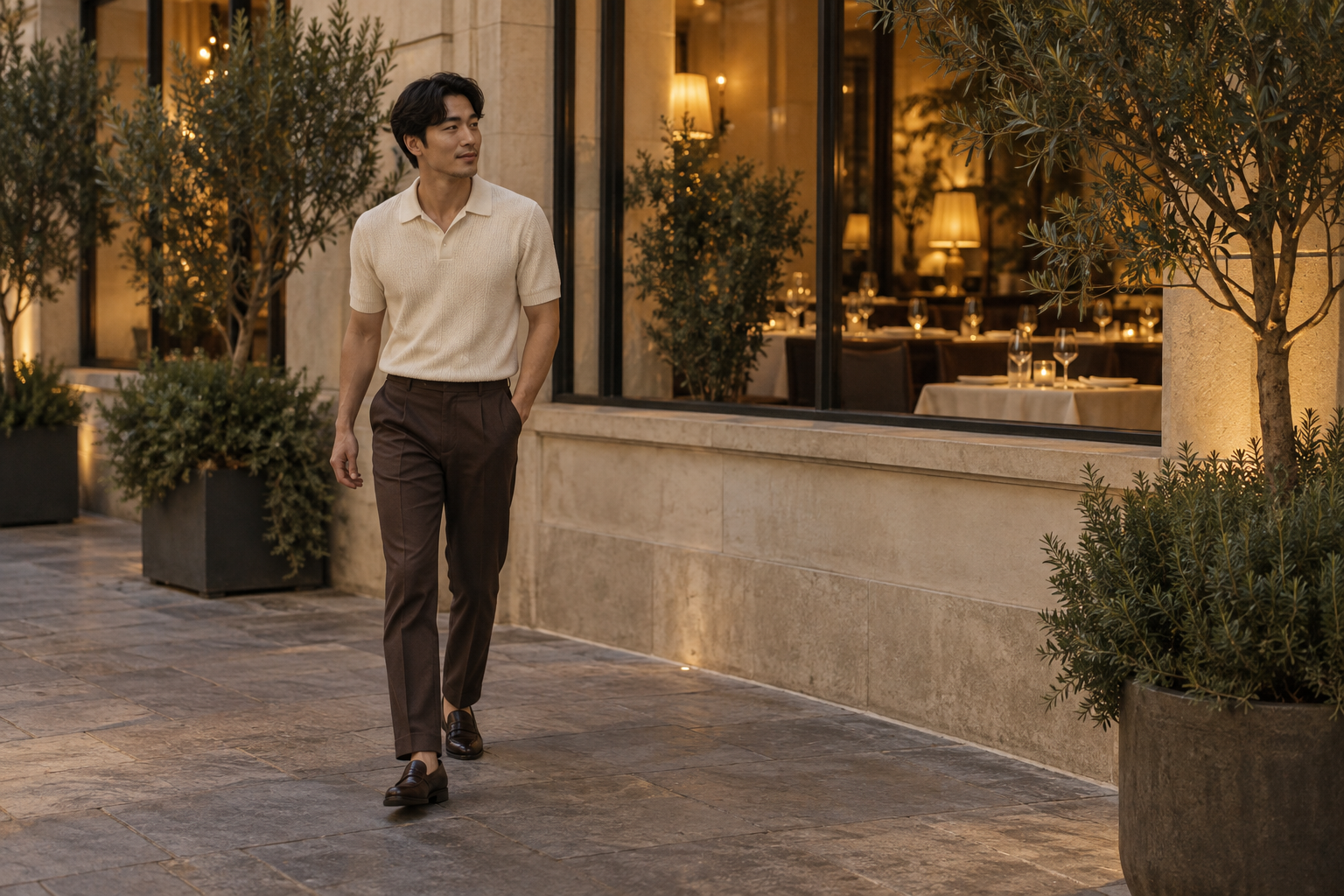
Man in a cream knit polo and dark brown trousers walks beside a warmly lit restaurant.

Shirt comparison

Polo vs Button-Down Shirt: How to Choose and Check Fit

Choose a polo or button-down shirt according to the setting, the fit and the layers you plan to wear. Here is how the two differ in practice — and how to check the fit of each on your own frame.

Begin here

Comparison

Polo vs button-down shirt

Choose a polo or button-down shirt according to the setting, the fit and the layers you plan to wear. A polo is a knitted shirt and can give a softer appearance; a button-down is a woven one and may hold a different shape. Neither automatically wins for comfort or versatility. Check the actual collar and fabric, especially when wearing the top under a jacket.

Myth

A polo collar always fights a blazer, so the button-down is the only shirt that can be worn under a jacket.

Fact

Knit thickness, collar construction and jacket structure all change the result. A fine-knit polo under an unstructured jacket in warm weather can layer cleanly; a thick ribbed collar under a structured one may bunch. Put the actual shirt under the actual jacket and judge the bulk and movement — the category name does not decide it.

A polo earns its place when

  • The setting is relaxed and the rest of the outfit reads considered — tailored trousers and clean shoes carry it.
  • Comfort through long days matters more than structure: the knit gives where a weave does not.
  • You want the softer collar and texture as a deliberate contrast in a smart casual outfit.

A button-down earns its place when

  • The occasion leans smarter, or a jacket may come on during the day.
  • You want a collar that holds its shape through hours of wear.
  • The shirt needs to serve mixed settings, since a woven shirt relaxes down more easily than a polo dresses up.

THE SHORT ANSWER

Choose for the day ahead.

Choose the button-down when the occasion leans smarter, when you might add a jacket, or when you want a collar that holds its shape all day. Choose the polo when the setting is relaxed, when comfort matters more than structure, or when the rest of the outfit already reads sharp enough to carry it. If you can only own one and you dress for mixed settings, the button-down is usually the more adaptable shirt — it relaxes down far more easily than a polo dresses up. That is a tendency, not a rule: a well-made polo in the right setting outperforms a neglected button-down every time.

Side by side.

The differences that matter
AspectPoloButton-down woven
ConstructionA knit: loops of yarn rather than woven threads, which is why it stretches and feels soft against skin. Weight varies from fine merino-style knits to thick piqué.A weave: threads crossed at right angles, giving structure, crispness, and far less natural give. Weave density varies — see our Oxford vs poplin comparison for how fabric choice changes the read.
Naming and collarButton-front at the placket, with a soft knit collar that usually stays up but can curl or flop with age, especially after washing and drying.The name comes from the collar: points held down by small buttons. That structure keeps the collar's shape through a full day of wear. A woven shirt with a plain collar is button-front but not a button-down.
Formality readRelaxed by default; at its smartest with tailored trousers and clean leather shoes, never fully formal.Smart-casual up to business-casual; works open-necked with denim or buttoned under a blazer.
Jacket pairingDepends on the garments: a fine knit under a soft-shouldered jacket can sit cleanly, while a thick ribbed collar may bunch against structured lapels. Try the combination rather than assuming.Usually the easier under-layer: flat woven fabric and a held collar sit neatly under blazers and sweaters with less to go wrong.
Fit checksJudge it like a knit top: the fabric should skim the torso with slight give at the chest and sleeve, without pulling at the placket or bagging at the waist. Check the neckline sits flat without gaping.Judge it like a woven shirt: the shoulder seam on the shoulder bone, the placket lying flat with no strain between buttons, and enough torso ease to move without the fabric clinging or billowing.
SeasonsA warm-weather default, but not warm-weather only: long-sleeve and heavier-knit polos exist and layer under knitwear. Judge by the fabric weight, not the category.All-season: short sleeves in summer, long sleeves under knitwear or a jacket the rest of the year.
Care notesCheck the label: knits can shrink or lose shape with heat. Wash cool, reshape while damp, and dry flat or low-heat only if the label allows.Read the care label for fibre and temperature; wovens crease more, so ironing or steaming is part of the routine for a crisp look.

What should guide your choice?

  • Dress expectation: how formal does the setting actually read, from garden party to office-casual?
  • Layering plans: will the shirt sit under a jacket or sweater? Test that combination before the day, not on it.
  • Weather: heat and humidity favour breathable knits; cooler days make the woven layer easy.
  • Fit preference: do you want the close, stretchy skim of a knit or the structured drape of a weave?
  • Upkeep: how much ironing, reshaping and careful washing are you willing to do per wear?

The right choice depends on the setting.

A warm workday in a relaxed office

Either can work, and the office's actual range decides it. A button-down in a fine woven cotton holds a considered line through the day and removes any doubt in offices where some colleagues wear jackets. A polo suits the more relaxed end of the dress code, especially in heat — check that the knit is fine enough to read neat, and that the collar still sits flat after the commute.

A dinner that might bring a jacket out

Start with the button-down. If a blazer comes on for a nicer venue, the woven shirt layers flat and the buttoned collar reads deliberate. A polo is still a fair choice for a relaxed dinner in warm weather — the knit reads easy beside dark trousers and loafers — but decide before you leave whether the jacket is part of the evening, and dress for it.

Travel and long days out

The polo often wins on comfort for long stretches of sitting and walking, and many knit fabrics resist creasing better than fine wovens. Pack the button-down separately if the trip mixes casual days with smarter dinners — the two cover each other's weaknesses. Whichever travels with you, try both on at home seated as well as standing, since travel is mostly sitting.

Keep exploring.

Jackets & Blazers

How to Wear a Blazer Casually

How to wear a blazer casually: knit, shirt and relaxed-layer combinations built around complete outfits, with the swaps and checks that make each one work.