Skip to content

Find your next good read.

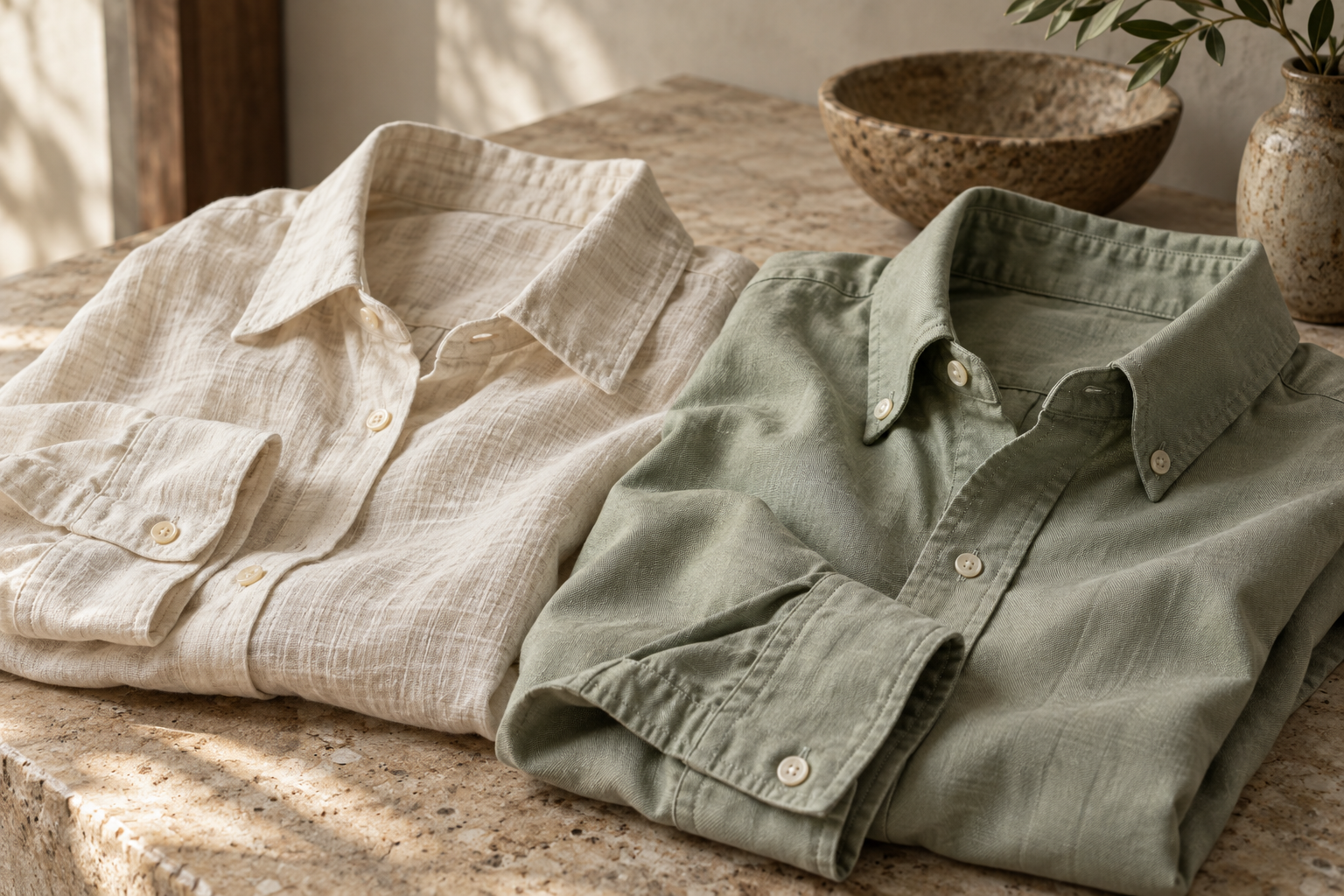
Folded ivory and sage shirts on a limestone surface.

Fabric comparison

Oxford vs Poplin Shirts: Fabric Differences Explained

They look similar folded on a shelf and behave differently on the body. Here is what the weaves actually do — and how to check the shirt in front of you.

Begin here

Comparison

Oxford or poplin: which cotton shirt for the occasion

Oxford and poplin describe fabric constructions, not complete dress codes. Oxford cloth commonly has a more visible texture, while poplin usually has a smoother surface. The actual weight, yarn and finish of the specific shirt still matter, so compare the shirts in front of you for opacity, feel, care and how they sit with the outfit you plan to wear.

Myth

Oxford is a colour — or oxford and poplin are the same plain cotton with different names, so one rule covers both.

Fact

Both are plain-weave cotton shirting families, but the yarn grouping differs: oxford's basket-style weave leaves visible texture, poplin's fine plain weave sits flat. The names describe construction — and variants such as fine Oxford, Royal Oxford and cotton blends blur any simplistic split.

Choose oxford when

  • The setting is relaxed and texture adds interest rather than reading as scruffy.
  • The day is long or involves travel and you want creases to disappear into the weave.
  • You want a hard-wearing shirt that improves with age in weekly rotation.

Choose poplin when

  • The shirt sits under a blazer or fine knitwear, where a flat surface layers without bulk.
  • The room expects a crisp, pressed read and visible sheen helps rather than hurts.
  • You need the shirt to photograph cleanly at a wedding or formal daytime event.

Compare the shirts in front of you — texture, weight, opacity, finish — not the category names on the rail.

Reading labels: why variants bend the rules

  • "Fine" or "slim" Oxford: lighter yarns narrow the texture gap with poplin, so expect a subtler grain.
  • Royal Oxford: a more pronounced basket effect and a dressier drape than standard oxford — it breaks the "oxford means casual" shorthand.
  • Poplin with a matte finish or heavier yarn: loses some of its usual sheen and can read more casual than the name suggests.
  • Blends (polyester, elastane): change sheen, wrinkle behaviour and care, so fibre content on the label matters as much as the weave name.

THE SHORT ANSWER

Choose for the day ahead.

For smart casual — jackets, knitwear and open collars — oxford is the better default: its texture suits relaxed settings, it hides creases and it improves with age. Poplin wins when the setting is smarter or the shirt sits under a jacket or fine knitwear, because its smooth surface reads crisper. Most weekly shirt-wearers end up wanting one of each, treating that verdict as a starting tendency the specific shirt's weight and finish can override.

Side by side.

The differences that matter
AspectOxfordPoplin
Weave structureA basket-style weave where yarns cross in pairs, creating a slightly pebbled, airy cloth — bulkier than a flat plain weave, without twill's diagonal lines.An over-one, under-one plain weave with fine, high-thread-count yarns, producing a flat, smooth, dense cloth with little visible texture.
TextureNoticeably textured to the eye and the hand; the weave reads as structure even at a distance.Smooth and flat; run a hand across it and you feel very little, which is the point.
SheenCommonly matte, because the basket texture scatters light — though soft finishing can add a low lustre.Often a subtle, natural sheen from the fine yarns, a large part of why it reads as dressier — though matte finishes exist.
Wrinkle behaviourThe texture disguises creases, so it looks presentable deep into a long day and forgives travel and desk work.Shows creases plainly — pressed poplin looks immaculate at 9am and distinctly lived-in by evening.
Formality readLeans casual by construction; the natural shirt of smart casual, less so of business formal settings.Leans formal; the classic dress-shirt cloth, though a casual colour and cut drop it into smart casual easily.
Typical weightUsually mid-weight and substantial; it holds collar and body structure without heavy interfacing — but lightweight oxfords exist.Often light to mid-weight and finer; it drapes closer to the body and layers invisibly under knitwear.
Opacity tendencyThe bulkier yarns commonly make it the more forgiving choice in white; still hold any white shirt to the light before buying.Fine yarns let more light through, so white poplin is the weave more often found sheer — be stricter with the light test.
Best settingsWeekends, casual offices, pubs, dinners with friends — buttoned with a jacket or worn open over a tee.Client meetings, weddings, evening events, and any day the shirt sits under a blazer or a fine-gauge sweater.

What should guide your choice?

  • How sharp does the room expect you to look — and does the shirt's surface texture help or work against that?
  • Will the shirt be worn alone, where oxford texture adds interest, or under a jacket where poplin sits flatter?
  • How long is the day, and will visible creases by hour six bother you or anyone else?
  • Is the shirt for one smart occasion or for weekly rotation, where hard-wearing matters more than crispness?
  • What is already in your wardrobe — a second poplin duplicates a dress shirt, a first oxford adds a new register?

The right choice depends on the setting.

A client meeting or business-casual office

Poplin, pressed, in white or pale blue. The smooth surface and slight sheen sit correctly under a blazer, and the crispness signals intent in rooms where oxford texture can read as too relaxed. If the office rarely goes past chinos and no jacket, an oxford does the same job more comfortably.

A weekend lunch or pub with friends

Oxford, worn open-collar or buttoned to the neck without a tie. The texture carries the outfit on its own, and creases from the morning's errands disappear into the weave. Poplin here can look like you forgot to change after work.

A wedding or formal daytime event

Poplin is the safer guest shirt: its sheen and flatness photograph cleanly and sit properly under a jacket through a long day. The risk is creasing — press it immediately before leaving and accept some evolution by the evening, or bring a spare if the day runs long.

Layering under knitwear in cooler months

Poplin's fine weave means no bulk at the collar and chest under a fine merino crew or quarter-zip, with just the collar showing cleanly. An oxford adds thickness that can bunch under close knits, though it works under a heavier shetland-style jumper where texture-on-texture is the point.

Travel and long days

Oxford's crease-disguising texture makes it the easier travel shirt — unpack it, shake it, wear it. Poplin rewards a press or a hotel-room steam; if you pack it, roll it rather than fold it and expect to touch it up.

Keep exploring.