Skip to content

Find your next good read.

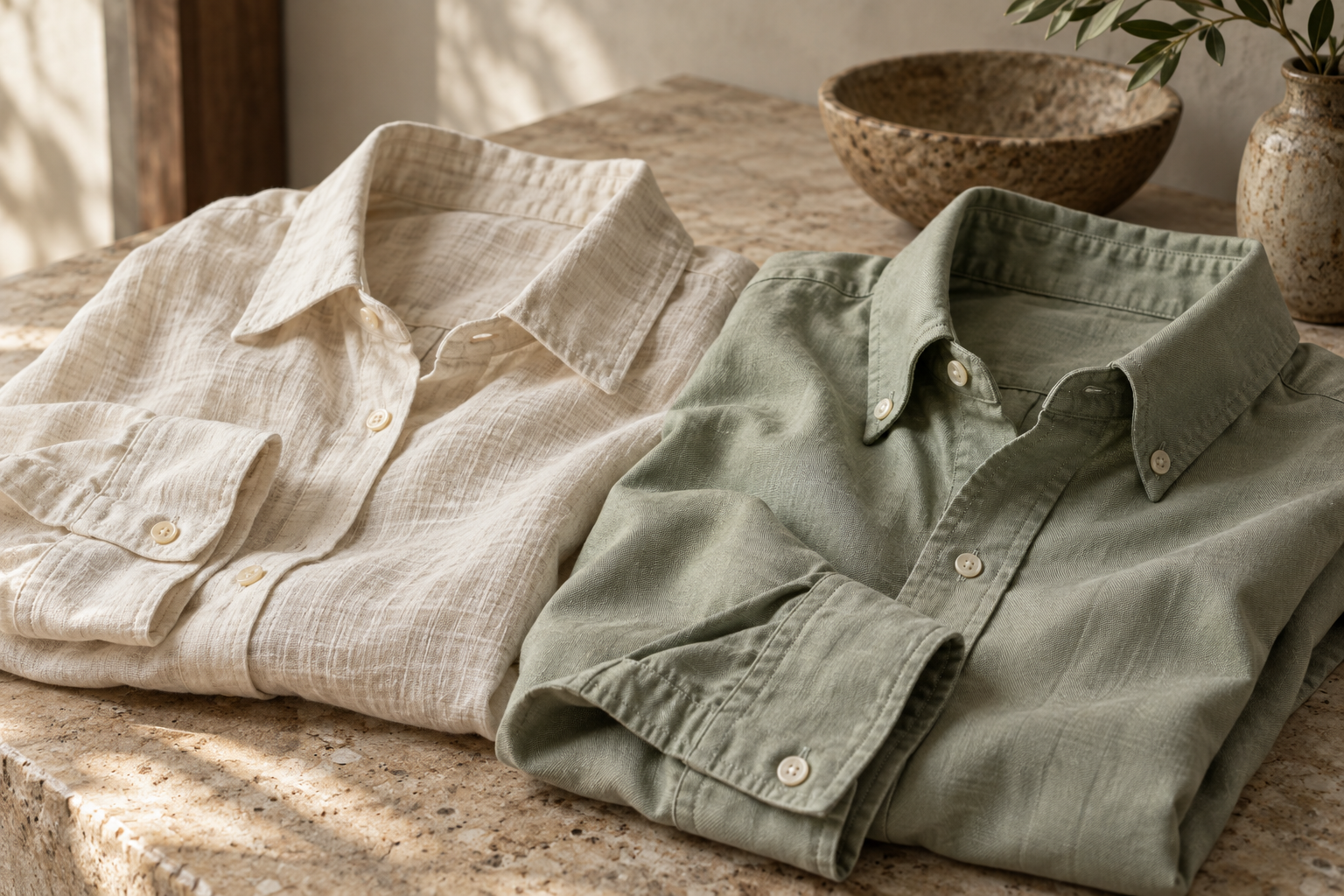
Folded ivory and sage shirts on a limestone surface.

Fabric comparison

Linen vs Cotton Shirts for Men: Which Should You Choose?

Both are warm-weather staples, but they behave very differently on the body and in the room. Here is where each fabric wins.

Begin here

Comparison

Linen or cotton: compare the cloth, not just the fibre

Choose between linen and cotton shirts by comparing the actual cloth, fit and care needs. Linen often has a visibly textured, creased appearance, while cotton comes in many constructions from light poplin to heavier Oxford cloth. Fibre alone cannot tell you which shirt will feel cooler, dry faster or suit a particular occasion.

Myth

Linen is always the cooler shirt, and cotton is always clammy.

Fact

Cool feel depends on weave, weight, fit and airflow together with the fibre. A loose light cotton poplin can out-perform a dense or heavy linen on a hot day. Treat fibre as one variable you can inspect, not a guaranteed result.

THE SHORT ANSWER

Choose for the day ahead.

On hot, humid days and in relaxed settings — holidays, garden parties, seaside dinners, weekends — linen is usually the better shirt: its open, textured cloths move air readily and dry quickly, and the creasing reads as part of the look. On cooler days, in smarter settings, or whenever you need a crisper, more put-together look, cotton wins: it holds a press and a shape, reads more formal and comes in a far wider range of constructions. Most wardrobes genuinely want both, and the deciding factor on any given morning is the actual weather plus how sharp the room expects you to look — not the fibre on the label.

Side by side.

Typical differences between linen and cotton shirting — construction varies more between shirts than these fibre tendencies suggest
AspectLinenCotton
Typical appearanceVisibly textured with a slubby weave; creases within minutes of wear, and the rumpling is the intended look.Smoother and more uniform across weaves; holds a press through the day in most constructions, creasing mainly at elbow and cuff.
Airflow and cool feelOften feels coolest per gram of cloth, because common linen shirting weaves are open and the fibre conducts heat well — but a heavy or dense linen loses that edge.Varies with construction: a light poplin or voile breathes well, while a dense or heavier weave holds more heat. The weave matters as much as the fibre here.
Moisture behaviourAbsorbs moisture readily and tends to dry quickly thanks to the fibre structure and open weaves — though drying still depends on weight and airflow.Absorbs moisture too, and lighter constructions dry acceptably; heavier or denser cottons hold moisture longer than comparable linen.
Formality readReads relaxed and holiday-adjacent even in dark colours; can pass business casual but rarely reads as sharp tailoring.Reads neat and intentional across the range, from casual Oxford cloth to a pressed shirt that works under a jacket.
Weight rangeMostly light to mid-weight shirting; heavy linen cloths exist but are uncommon in shirts compared with cotton's full range.Spans the full range, from gauzy summer poplins to heavy flannel and brushed cotton for the coldest months.
Texture over timeStarts crisp and slightly stiff, then softens with every wash; many owners like it best after a season of wear.Softens too, but good cotton holds its structure for years; cheaper cotton tends to thin and lose shape sooner.
SeasonsStrongest in late spring and summer and in humid travel, but a mid-weight linen shirt works into warm autumn days.A full-year fibre family: light weaves cover summer, mid-weights carry spring and autumn, flannels take winter.
Care specificsMany linen shirts can be machine washed on gentle, but shrinking and finishing vary widely — check the care label before assuming anything.Care varies too: most cotton shirts wash easily, but treated or blended cloths may want cooler cycles — defer to the label rather than habit.

What should guide your choice?

  • How hot and humid will the day actually be — comfortable warmth or the kind where any fabric clings?
  • How rumpled is acceptable in the room: does a creased shirt read as relaxed charm or as carelessness?
  • Is the shirt working alone, or under a jacket where crispness and collar structure matter more?
  • How much care effort will you make — and what does the label of this particular shirt actually allow?
  • Is this a one-off summer purchase or a shirt you need to earn its hanger space across the whole year?

The right choice depends on the setting.

A hot, humid city day or holiday

Linen is usually the pick. Its open weaves move air when the pavement is radiating heat, and it dries fast after a sweaty commute or a swim — though a very light cotton poplin comes close, and fit matters as much as fibre. Choose a mid-tone so damp patches show less, and accept the creases; a pressed linen shirt stops looking like linen within the hour anyway.

A smart casual dinner or rooftop drinks

Either works, with a split decision: linen if the evening is outdoors in the warm and the dress code leans relaxed, cotton if the room is air-conditioned and others wear jackets. A pressed cotton shirt with sleeves rolled reads sharper than linen in dim indoor light.

A casual office through the seasons

Cotton carries this job. It survives five days a week, washes back to presentable, and works with knitwear in cooler months, where linen's range is narrower. Keep one linen shirt for the June heatwave and the office summer party rather than building the rotation on it.

Beach days, boats and garden parties

Linen suits these settings best — splashes and humidity are the conditions its quick-drying tendency was made for, and the rumpled texture matches the mood. A pale cotton shirt in the same conditions can stay damp in heavier weaves and shows every mark, so if you prefer cotton here, pick the lightest poplin you can find.

Keep exploring.