
Shirts & Tops
Oxford vs Poplin Shirts: Fabric Differences Explained
Oxford and poplin cotton shirts differ in weave, texture, sheen and formality. How to tell them apart and pick the right one for the setting.
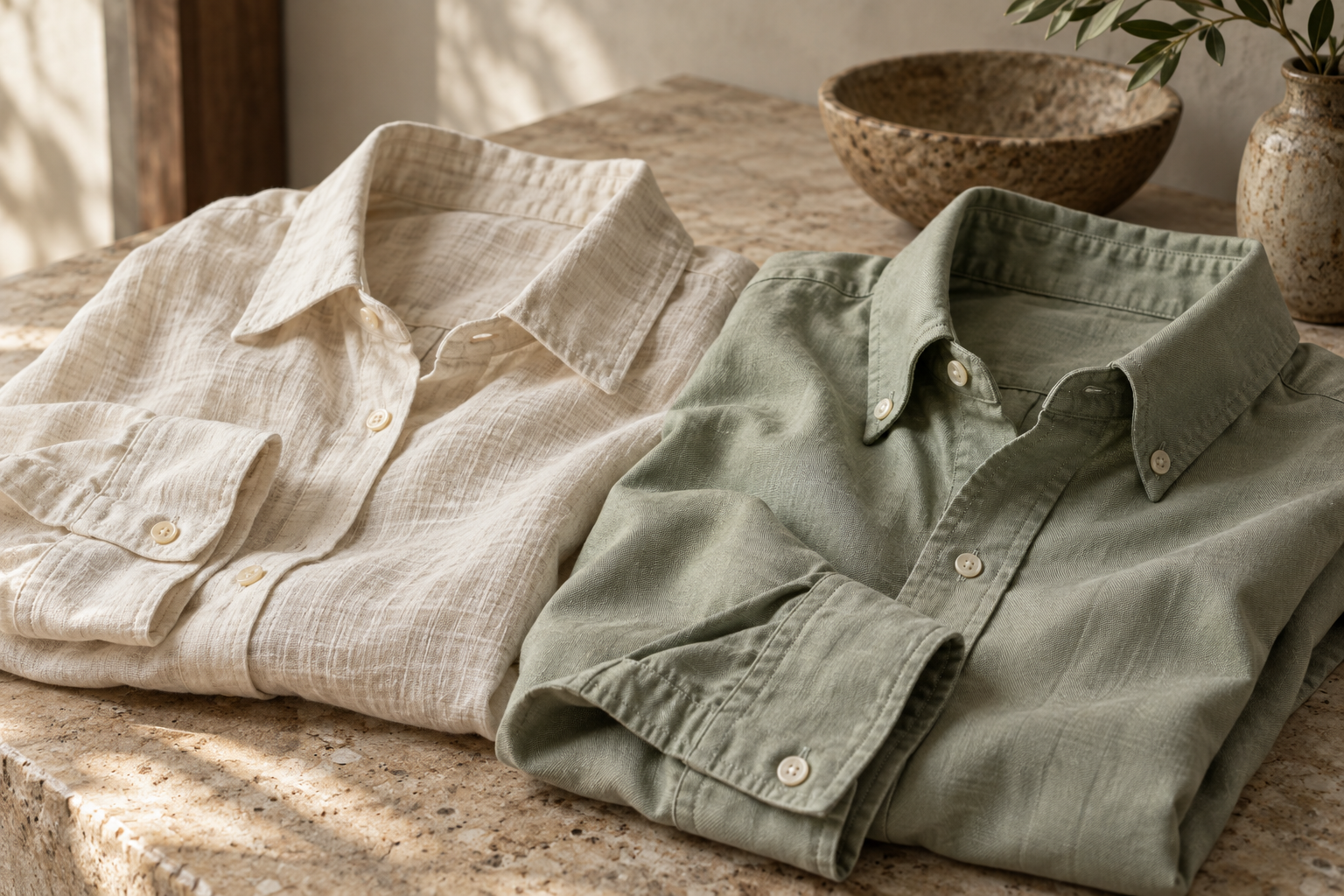
Fabric guide
Choose an alternative to a linen shirt by identifying what you want to change: texture, creasing, care or comfort. Cotton blends, seersucker and lyocell garments offer different options, but the fabric name does not tell the whole story. Compare the actual weight, weave, cut and care label before deciding.
Begin hereHow-to
Choose an alternative to a linen shirt by identifying what you want to change: texture, creasing, care or comfort. Cotton blends, seersucker and lyocell garments offer different options, but the fabric name does not tell the whole story. Compare the actual weight, weave, cut and care label before deciding.
Tencel and lyocell are two names for exactly the same thing, so any lyocell shirt behaves like any other.
TENCEL is a brand name covering certain lyocell and modal fibres made by one manufacturer; not all lyocell is TENCEL-branded. More importantly, weight, weave, knit versus woven construction and finishing change how any lyocell-containing shirt drapes, creases and breathes — check the garment, not just the fibre word.
Seersucker is always cotton, and it never needs ironing.
Classic seersucker is cotton, but cotton-blend and other-fibre seersuckers exist. The puckered weave does hold its texture with little or no ironing in most cases — yet the care label governs, and some finishes or trims still ask for gentle pressing. Read the label on the specific shirt.
| Option | What it keeps from the linen idea | What it trades away |
|---|---|---|
| Cotton-linen blend | Some breathability and texture; softer hand than pure linen | The more cotton, the less of linen's open coolness survives — a minority-linen blend behaves close to plain cotton |
| Seersucker | Built-in texture that never presses out; airy in heat | Distinctly casual reading, often striped; surface can snag |
| Lyocell-containing shirt | Smooth drape and resistance to the creasing linen is famous for | Little dry texture, possible sheen under some lights; reads smarter rather than relaxed |
| Chambray | Washed-back relaxed colour, easy care, usually the cheapest | Plain smooth cotton: no special airflow in genuine heat |
A clear answer to what you want from linen — airflow, texture, or the relaxed look — and a specific fabric choice among blends, seersucker, lyocell-containing and chambray shirts that delivers it, with the tradeoffs you have already accepted rather than discovered later.
Linen offers three things, and no alternative offers all three: airflow (an open, breathable cloth in heat), texture (a dry, slightly irregular hand that reads natural) and the relaxed look (creases that signal ease rather than neglect). If you want coolness, look at open-weave cottons and blends; if you want the texture, seersucker or chambray. If you want the look without the creases, that is where blends and lyocell earn their place.
Check: Finish the sentence 'the thing that puts me off linen is —' and 'the thing I want is —'; if your answer to the first is wrinkles, blends and lyocell shirts are your lane, and if it is coarseness, look at cotton blends and chambray.
A cotton-linen blend keeps some of linen's breathability and texture while the cotton softens the hand and, in most blends, reduces creasing. The tradeoff is real: the more cotton, the less of linen's open coolness survives, and a heavily cotton-dominant blend can behave like an ordinary cotton shirt with a hint of slub. Check the label ratio and treat something like a majority-linen blend as closer to linen, and a minority-linen blend as closer to cotton — the ratio tells you a tendency, never a guarantee.
Check: Hold the blend shirt up to the light next to a pure cotton shirt if you have one: you should see a slightly more open, irregular weave — if it looks identical to plain cotton, you are paying for the word linen, not the qualities.
Seersucker is a fabric with a puckered, crinkled weave built into the cloth itself, so its texture never presses out and it needs little or no ironing to look intentional — classic versions are cotton, and blends exist. The puckering holds the fabric slightly off the skin, which many people find airy in heat. The tradeoff: the puckered stripe reads distinctly casual and often arrives in stripes (plain-colour seersucker is less common), and the surface can snag.
Check: Run a hand over the fabric: the puckers should be even and springy, and when you scrunch a corner in your fist it should spring back crinkled rather than creasing flat. Then read the care label rather than assuming — it, not the name, settles the ironing question.
Lyocell is a smooth, cool-to-the-touch cellulosic fibre; TENCEL is a brand name for certain fibres of this type, and shirts may carry lyocell alone, under the brand, or blended with cotton or linen. Woven lyocell-containing shirts drape softly and resist the creasing linen is famous for, giving you the put-together-in-heat feeling. The tradeoff is the opposite of linen's: little dry, matte texture, possible sheen under some lights, and a smarter rather than relaxed read — and how any specific shirt behaves still depends on its weight and construction.
Check: Hold the shirt by the shoulder and let it hang: a draped lyocell-containing shirt should fall in long, soft folds with no crisp springiness, and the surface should feel cool and smooth rather than dry and grainy.
Chambray is a lightweight cotton plain weave that looks vaguely denim-like but wears far cooler, and it is usually the cheapest option here. It delivers a washed-back casual colour and easy care, and it creases far less than linen. The tradeoff: as a plain smooth cotton it offers no special airflow or texture — in genuine heat it behaves like any cotton shirt — so it suits the relaxed look on a budget, not the coolness.
Check: Compare the weight against a dress shirt you own: chambray should feel noticeably lighter and softer, and the colour should look washed-back rather than deep and uniform.
The fibre percentages, care instructions and country-of-making on the label tell you more than the name on the front. Check whether the shirt is woven or knitted — a knit behaves entirely differently from a woven cloth of the same fibre — and feel the inside: linings and seams change how the shirt sits against skin. If the label claims performance, treat it as a claim to test, not a fact to trust.
Check: You should be able to state, from the label alone, the fibre percentages and the care the maker recommends — and both should match the qualities you decided you were buying in step one.
Fabric behaviour on the body is what decides it, so try your shortlist on and treat the merchandise decently while doing it. Scrunch a sleeve lightly in your fist for ten seconds and see how it recovers, sit for a minute and check where it creases, look at the fabric in daylight (sheen shows there), and raise your arms overhead to test the shoulder fit. Do not wring, twist or aggressively scrunch the garment — a light squeeze tells you everything the recovery test can.
Check: After the scrunch-and-sit test, ask one question: would I be happy wearing this at hour four of a warm day, with no chance to change? The fabric that passes that is your answer, whatever its label says.
The blend is probably linen-dominant, which keeps linen's creasing along with its coolness. That is not a defect, but if the wrinkles bother you, move down the cotton ratio or switch to seersucker or a lyocell-containing shirt, which hold a smoother surface. Check the care label too — some blended shirts simply need ironing, and no ratio changes that.
The puckered texture is inherently relaxed and stripes push it further. Wear it in a plain colourway if you can find one, keep the cut trim and the trousers tailored, or accept that it belongs to weekends and travel. If your week needs a smarter shirt, a lyocell-containing or linen-majority blend shirt carries more formality at a similar weight.
Smooth cellulosic surfaces reflect light more than matte cottons and linens, and in close contact with skin some knits cling when you sweat. Choose a woven shirt or a lyocell-cotton blend rather than a jersey knit, check the colour under daylight before buying — deep colours show sheen most — and size with a little ease so the fabric moves away from the skin.
That is expected: weight, weave, knit versus woven construction and finishing vary independently of the fibre name. Put the two shirts through the same scrunch-and-sit test and let the cloth, not the label word, win. If both pass, price and care instructions are the honest tiebreakers.
Shirts & Tops
Oxford and poplin cotton shirts differ in weave, texture, sheen and formality. How to tell them apart and pick the right one for the setting.
Trends in Practice
Where linen shirts beat cotton and where they don't: breathability, wrinkles, formality, weight, seasons and care, with scenarios for choosing between them.
Shirts & Tops
Silk is a fibre and satin is a weave. How to compare two satin blouses on composition, construction, care and cost using the label and the garment itself.