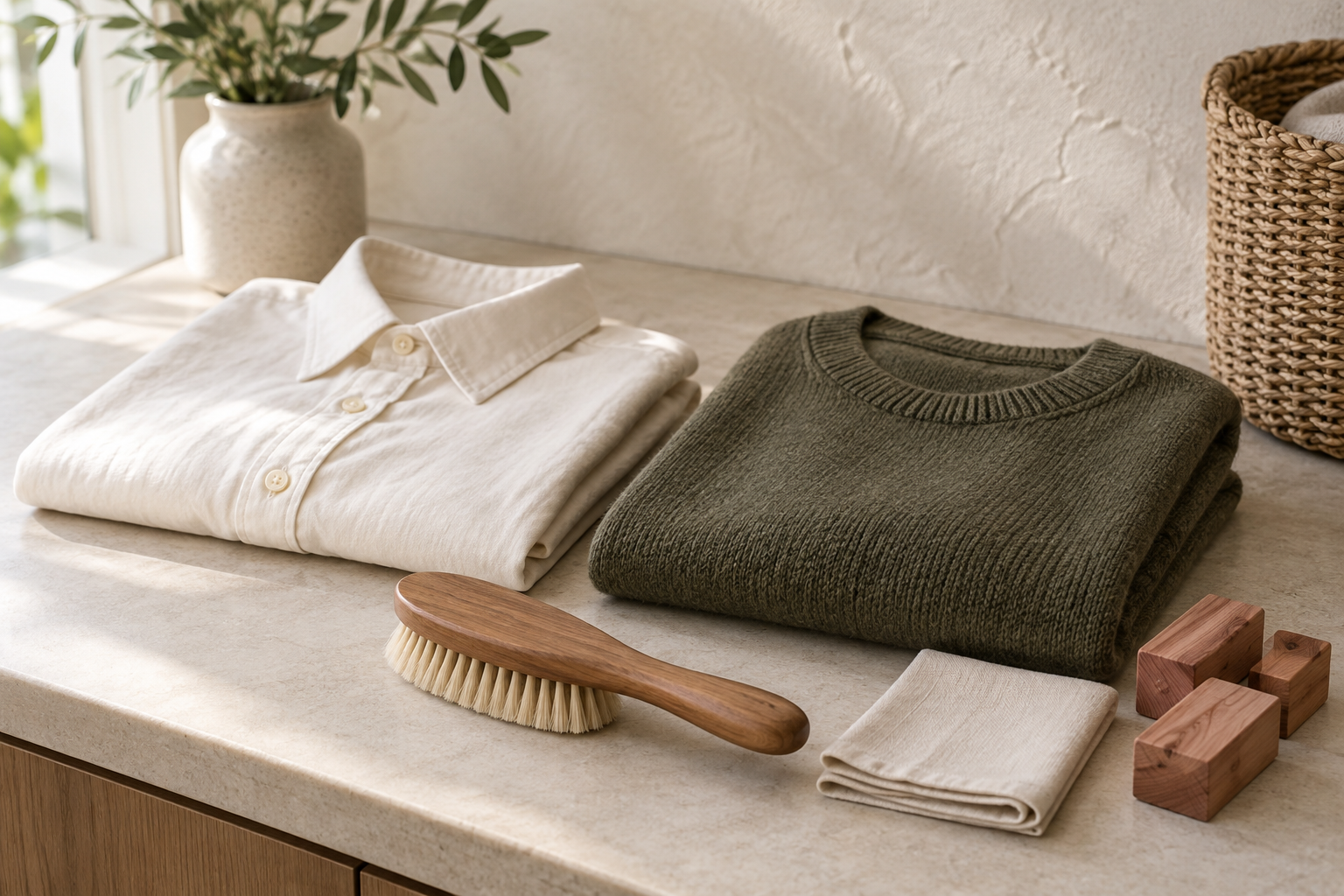
What to Do About Linen Shirt Wrinkles Without an Iron
When a linen shirt is wrinkled and no iron is available, check its care label before adding water, steam or heat. Hanging and gentle reshaping may improve some creases, but they will not necessarily produce a pressed finish. Choose only a method allowed for that garment, and stop if you notice marking, distortion or damage.
When a linen shirt is wrinkled and no iron is available, check its care label before adding water, steam or heat. Hanging and gentle reshaping may improve some creases, but they will not necessarily produce a pressed finish. Choose only a method allowed for that garment, and stop if you notice marking, distortion or damage.
Check permission before any method
The care label decides what is on the table. A washable label with no restrictions leaves room for moisture-based methods; a hand-wash-only, do-not-tumble or dry-clean label removes them. Trims, interlinings and dyes can carry limits the fibre name never mentions.
Before treating anything, confirm each of these.
The care label is present and legible — and any written words on it govern over symbols.
The label permits moisture and, if you plan a tumble, machine drying of any kind.
Trims, prints or interlinings give no reason for extra caution you cannot verify.
You have a proper hanger and a place to let the shirt dry undisturbed afterward.
You accept that improvement, not a pressed finish, is the realistic best outcome.
Four myths that damage linen shirts
Myth
A steamy bathroom presses a linen shirt like an iron.
Fact
Ambient steam may help some creases relax, but it will not produce a pressed finish, and no universal session length delivers a promised result. Treat it as a gentle first step, judged on what you see, not a treatment with a guarantee.
Myth
Sharp fold creases in linen are permanent.
Fact
Long-set creases resist home methods, and some may never fully release — but permanence is not certain either. Washing or thoroughly re-wetting the shirt where the label allows, then drying it smooth, is the reset most likely to help; a cleaner can press out what remains.
Myth
Smooth the fabric firmly with your hands while it is hot and steaming.
Fact
Do not. Hot, damp linen is weaker and can distort, and hands in the steam path can be scalded. Let the fabric cool, then reshape gently with a flat hand — or reshape while it is merely damp, without heat, taking care not to pull.
Myth
Linen wrinkles mean you cared for it badly.
Fact
Linen is made of stiff, low-elasticity flax fibres that hold a bend instead of springing back. Some rumpling is the fabric behaving as it does; it is a large part of why people wear linen at all.
Open the symptom that matches. Start there.
All-over soft rumpling
Possible cause: General wear, sitting and washing leave the whole garment softly crumpled. This is the natural behaviour of flax fibre: it bends easily and does not spring back the way cotton or synthetics do.
Try first: Check the care label, then hang the shirt on a proper hanger, straighten the collar and plackets with a light hand, and give it time — wearing it also relaxes linen. Expect softening, not a pressed finish; what remains is linen's texture.
Crisp creases from folding
Possible cause: The shirt was folded for a while — drawer, suitcase or shopping bag — and the fold lines set as sharp creases, sometimes with paler lines where the fabric was doubled.
Try first: Where the label allows moisture, steam or re-wetting is the direction that may relax set fibres — targeted steaming, misting, or a wash followed by drying the shirt smooth. Follow the maker's instructions for any appliance, and accept that deep fold lines may improve rather than vanish.
Set-in wrinkles from long storage
Possible cause: Weeks or months folded or packed tightly have genuinely set the wrinkles; steam alone barely moves them, and the fabric may even smell of the drawer or box it lived in.
Try first: Re-wet the fibres properly rather than steaming: wash the shirt per its care label, or mist it evenly damp where that is permitted, reshape it on a hanger without pulling, and let it dry slowly. Even then, very old set creases may only partially release — see escalation.
Wrinkles from drying or storage while damp
Possible cause: The shirt was left crumpled while wet or damp — balled up after washing, worn while sweating, or left in a heap out of the machine — and dried in that distorted shape.
Try first: If the label permits, re-wet the shirt so it can be reshaped from scratch, then immediately hang it smoothly on a proper hanger and straighten the seams and collar by hand while merely damp. Drying in the correct shape is the fix; a short tumble with a damp cloth can finish it only if the label allows machine drying.
Marking, puckering or possible damage
Possible cause: Water spots, shine, pulled seams, distorted weave or a smell of mildew are not wrinkle problems — they are damage or contamination problems that no smoothing method will fix.
Try first: Stop treating. Do not add steam, water or heat to a shirt you suspect is damaged, and hand it to a cleaner for assessment instead of experimenting further.
Different causes need different fixes.
Linen is made from the flax plant, and its fibres are stiff and low in elasticity — when the fabric bends, the fibres hold the bend instead of springing back. Moisture cuts both ways: it relaxes the fibres, which is why steam and re-wetting are the levers home care can reach, but a shirt that dries while crumpled dries into the crumpled shape. Heat and pressure set wrinkles deeper, which is why folding, tight storage and hot drying make creases so effectively. And some degree of rumpling is inherent to linen rather than a flaw to eliminate — the lived-in texture is a large part of why people wear it, and chasing a cotton-flat finish without an iron will only frustrate you.
Make one small change.
Check the care label first — if anything on it forbids moisture, heat or machine drying, the wet methods below are off the table and you go straight to hanging and reshaping. Where the label permits it, hang the shirt on a proper hanger in the bathroom while you take a hot shower, with the door closed; ambient steam may help some creases relax, though it will not press the shirt and no fixed session length guarantees a result. Let the shirt cool, then reshape gently with a flat hand — ease the hem and side seams true, smooth the front and back, straighten the collar — and let it finish air-drying on the hanger. Expect a softer, more natural look rather than crispness, and deep fold creases that improve rather than disappear.
Work on the part that needs it.
Use a hand-held steamer, per its own instructions
A garment steamer aims moisture at the collar, placket and fold lines instead of the whole room. Hang the shirt, read the manufacturer's instructions for distance, filling and use on this fabric type, and keep the steamer moving with your hands well clear of the steam path. Results vary by garment — some creases soften, deep set ones may barely move. Resting the head in one spot can leave water marks, so if spotting appears, stop.
A damp cloth and a short tumble — only if the label allows machine drying
This option exists only where the care label permits tumble drying. Use a low or air setting with a slightly damp towel, check partway through rather than trusting a timer, and remove the shirt while it is still very slightly damp. Hang it and reshape gently so it finishes drying true. Do not run it until fully dry — overdrying sets wrinkles hard and can shrink linen, and if any marking appears, stop.
Wash and dry it smooth, where the label permits
For set-in or damp-storage wrinkles, a proper wash per the care label resets the fibres more thoroughly than any spot treatment. The fix is in the drying: immediately hang the shirt on a proper hanger, straighten the seams, collar and plackets while it is merely damp, and let it dry undisturbed. This is also the method most likely to soften creases that steaming could not — and the one that makes clear which creases are truly set.
Wear it in and let the texture read as intentional
Body heat and movement relax linen as you wear it, so a shirt that looks rumpled on the hanger often settles into a softer drape within the first hour of wear. Style it so the texture looks chosen: roll the sleeves neatly, wear it open over a plain tee, or pair it with equally relaxed pieces. Linen worn rumpled next to sharp tailoring can read as neglect; the same shirt with other easy, textured pieces reads exactly as it should — like linen.
When to stop adjusting.
If the wrinkles have survived washing and a careful re-dry, they are genuinely set into the fibre, and more home steaming only adds risk of water marks and distortion. A cleaner can press the shirt properly — professional pressing combines heat, moisture and real pressure — and can also assess whether the fabric was damaged by how it was stored; be realistic about cost, since pressing makes sense for a shirt you love, not a basic one. Know when to stop: a linen shirt worn for a whole day will wrinkle again no matter how it started. If the creases bother you every time, the useful decisions are to accept linen's texture and wear it in relaxed settings, plan prevention with our packing guide, or choose a different fabric for occasions that need a crisp finish — and our travel-shirt selection guide covers choosing shirts that travel without pressing.
From checking the label to drying the shirt before it goes back on the hanger — how to steam creases out without soaking, scorching or stressing the fabric.
Fold or roll, layer, and unpack linen shirts so they arrive needing only a quick hang and steam — honest packing steps, since linen always creases a little.
How to read clothing care labels: the five symbol families, what dots, bars and letters add, and what to do when the label is missing or says do not wash — including when to hand the garment to a cleaner or ask the maker.