Jackets & Blazers
How a Blazer Should Fit: Length, Sleeves and Closure
Check shoulder, jacket length, sleeve length, chest room and closure one at a time. What a blazer should do off the rack and what a tailor can fix.
Blazer styling
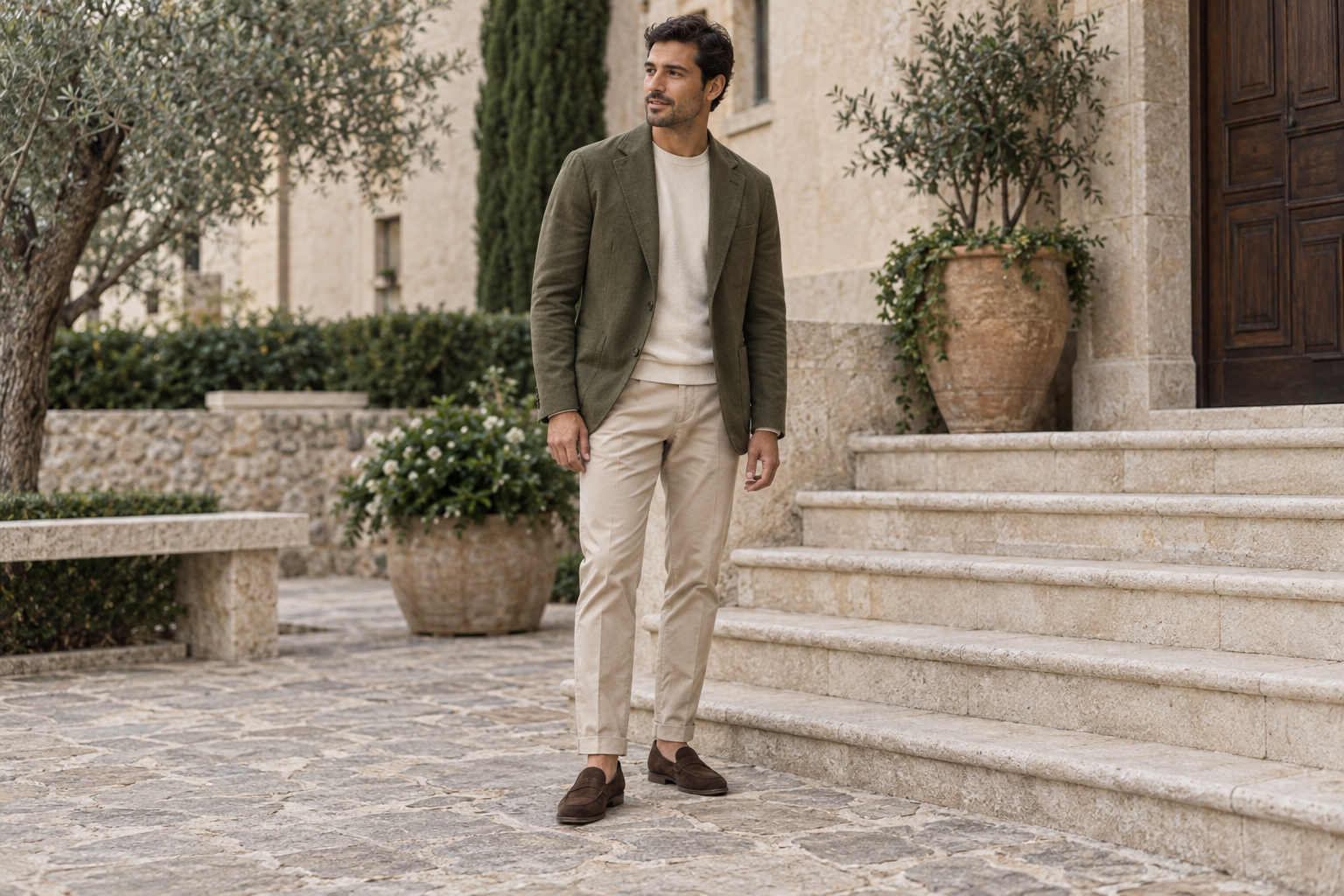
A blazer relaxes when everything around it does. Complete casual blazer outfits to browse, plus the swaps and venue checks behind each one.
Begin hereInspiration
Wear a blazer casually by pairing it with pieces that suit a more relaxed setting, such as a knit, chinos or permitted jeans. Check the full outfit and the venue rather than assuming a T-shirt automatically makes tailoring casual. A softer jacket may help the effect, but fit, comfort and the combinations you already own matter too.
You do not need a new blazer to wear one casually. Structure, fabric and detailing change how easily a jacket relaxes, but almost any blazer that fits well can sit inside a casual outfit once the other pieces cooperate. If you are buying, a less structured jacket in a matte cloth makes every combination below easier.
A relaxed-leaning blazer gives you
A built suit jacket gives you
Putting a T-shirt under a blazer automatically makes the whole outfit casual.
The shirt is one piece of one layer. Trousers, shoes, fit and the venue all send signals too, and a crisp white tee under a sharp dark blazer can read smarter than an open-collar shirt with worn sneakers. Judge the complete outfit, not the top layer alone.
Casual blazer styling is mostly a short list of substitutions. Each one lowers the outfit's formality a visible step, and two or three together take a suit jacket firmly into weekend territory. Work down the table and stop when the outfit matches the room you are dressing for.
| Instead of | Try | Why it works |
|---|---|---|
| A pressed dress shirt | A fine-gauge knit, a roll-neck or an open-collar oxford | Softer textures at the collar undo the shirt-and-tie association the jacket inherits. |
| Matching suit trousers | Chinos, brushed cotton, wool flannel or permitted jeans | A different trouser breaks the suit read immediately — it is the single loudest casual signal. |
| Polished leather dress shoes | Suede loafers, chukka boots or clean minimal sneakers | Matte, softer footwear keeps the lower half in the same register as the new top half. |
| A tie | An open neck, a crew neck or nothing under a zip knit | Removing the tie removes the last formal cue from the shirt layer. |
| A matched, sober palette | Two or three muted tones drawn from the jacket | Relaxed outfits read easier when colour contrast is gentle rather than graphic. |
Check the venue before choosing trainers or denim:
The same blazer supports different amounts of relaxation depending on where you are going. Venue rules, other guests and even the time of day move the line. Use these starting points, then adjust to what you see when you arrive.
5 looks to explore
The knit-and-trouser route in full: an olive blazer over an ivory knit, sand trousers and brown loafers. Two muted colours and a matte knit keep it relaxed without a single formal cue.
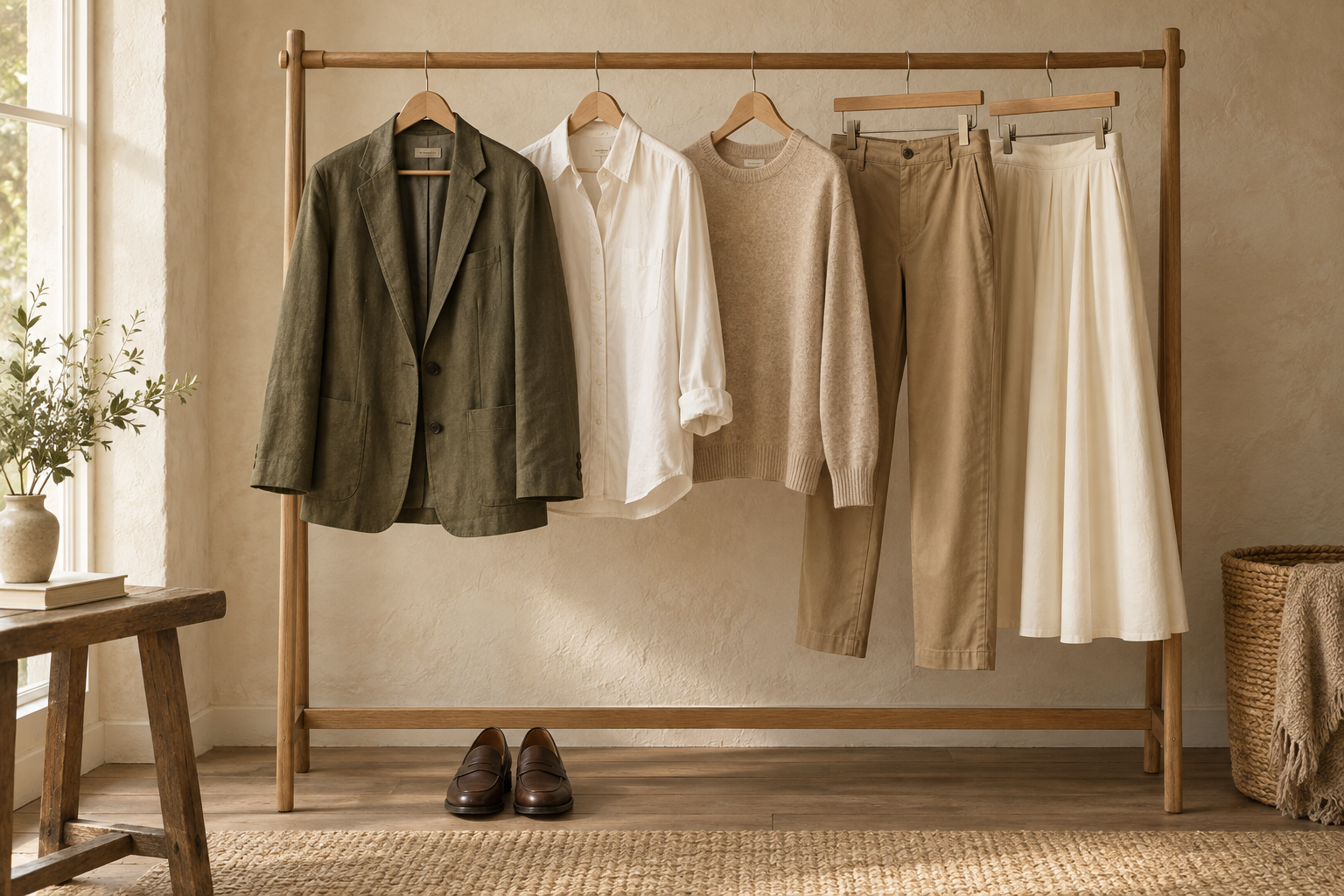
An olive blazer, an ivory shirt, an oatmeal knit and tan trousers with loafers — everything needed for the layered look above. Wear the knit over the open-collar shirt, or each piece with the blazer on its own.
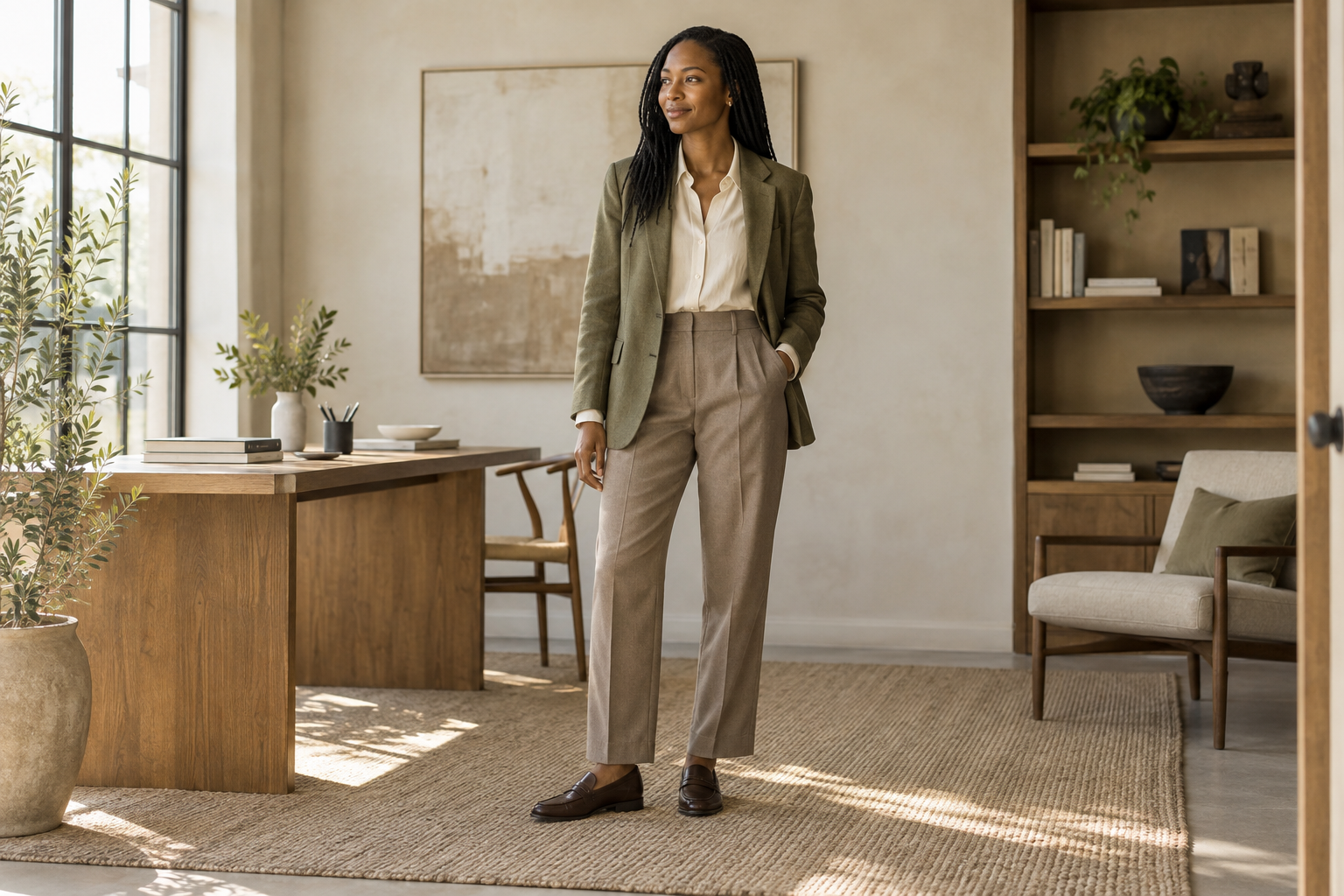
A cream shirt under an olive blazer with taupe trousers and brown loafers carries the casual-blazer idea into an office. Push the sleeves back once and keep the collar open.
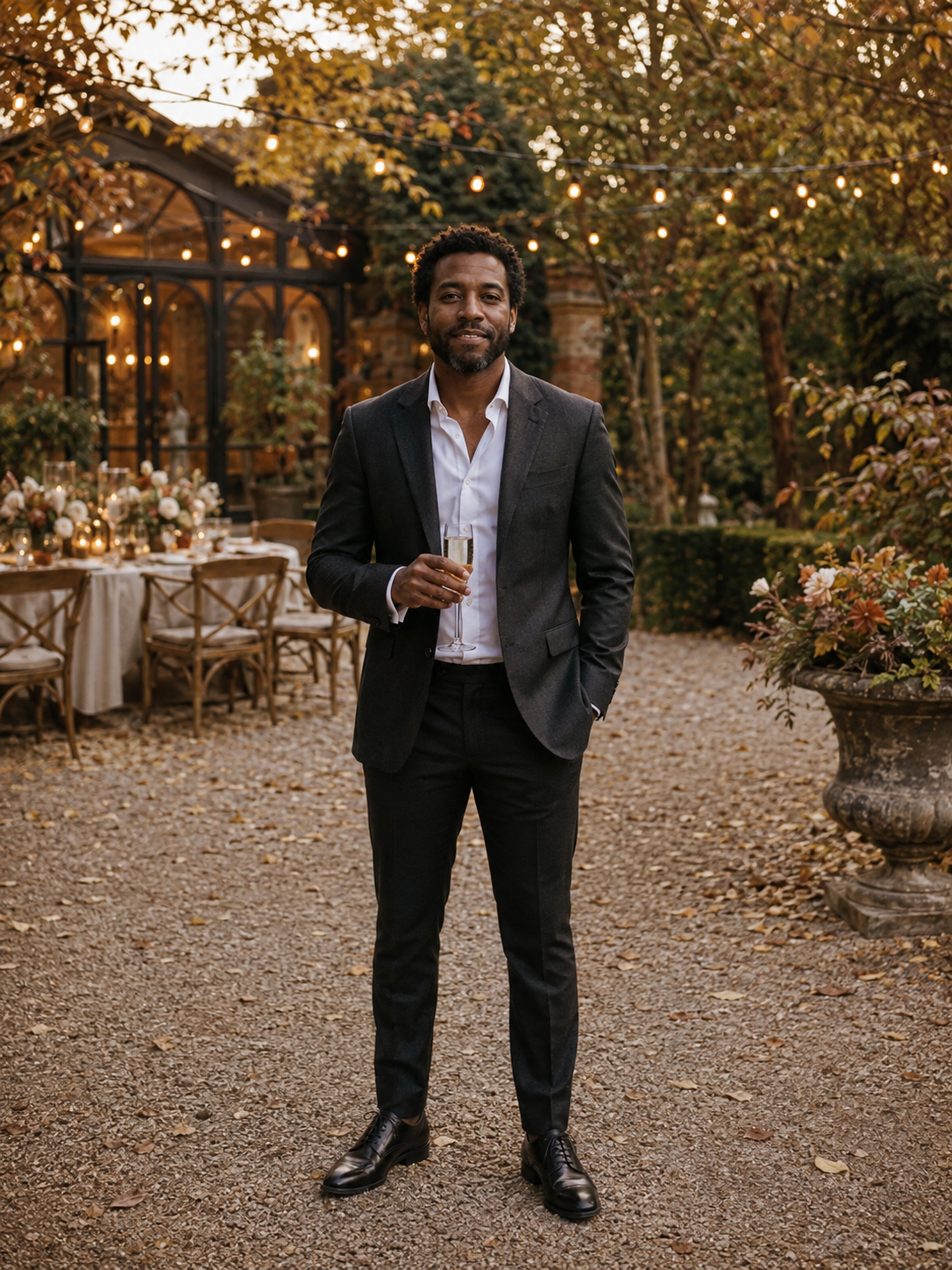
For a garden celebration, a dark blazer over an open-collar white shirt with tailored trousers. The open neck and soft palette do the relaxing; nothing else needs to try.
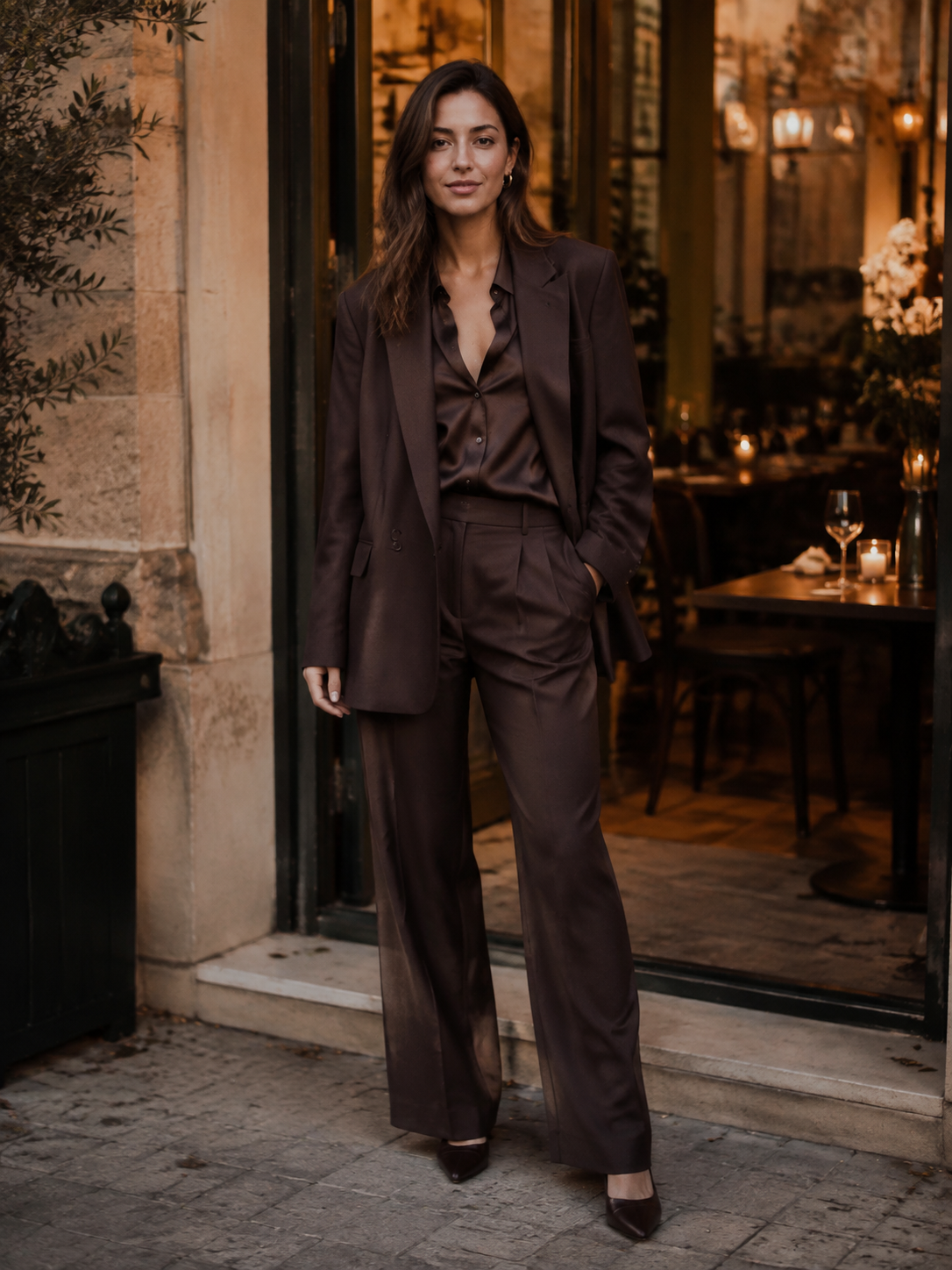
Brown tailoring with a silk-style shirt in a warm, low-lit room. A tonal, texture-led palette like this reads evening-appropriate while staying a long way from black tie.
Jackets & Blazers
Check shoulder, jacket length, sleeve length, chest room and closure one at a time. What a blazer should do off the rack and what a tailor can fix.
Jackets & Blazers
Matching trousers, fabric and construction are the useful tells. Compare blazers, sport coats and suit jackets — and learn which works with odd trousers.
Jackets & Blazers
How to wear a blazer with sneakers: check the venue first, then balance jacket, trousers and shoe as one outfit — with minimal, retro and smart-leaning looks to start from.