Client day
Keep the blazer within reach even if you normally skip it: a jacket over your usual knit-and-shirt base is a ten-second upgrade. If the meeting is informal, the base look already reads presentable.
Occasion guide
A blazer is the easiest shortcut to smart casual, but it is not the only one. Structure can come from layers, collars, and tailoring instead — here is how to build office outfits that hold up without a jacket.
Begin hereOccasion advice
For a smart casual office outfit without a blazer, start with your workplace's guidance and the day's meetings. A shirt with chinos, or a blouse with tailored trousers, can provide a useful base. Add a cardigan if you need warmth, and choose shoes you can comfortably wear through the whole day.
This page is about a real office day: desk work, internal meetings, maybe a video call. A client visit, a presentation or an explicit jacket requirement sets its own terms, and the employer's stated expectations always outrank anything here. When in doubt, ask your manager what senior or client-facing days actually require — the question reads as preparation.
Jacket-free is the norm when
Keep a blazer within reach when
| Formula | Base layer | Trousers or skirt | Shoes | Best for |
|---|---|---|---|---|
| Knit over collar | Fine crew neck over a pressed collared shirt | Tailored trousers or dark chinos | Leather loafers or derbies | Ordinary desk days in any season |
| Cardigan | Button-through cardigan over a tee or shirt | Dark chinos or wool trousers | Loafers or clean minimal sneakers | Variable-temperature offices |
| Polo | Knitted or pique polo in a plain colour | Straight tailored trousers | Loafers, flats or minimal sneakers | Warm offices and summer months |
| Blouse and trousers | Cream or plain blouse with a deliberate front | Wide-leg tailored trousers or a skirt | Brown loafers or low heels | Meeting-heavy days |
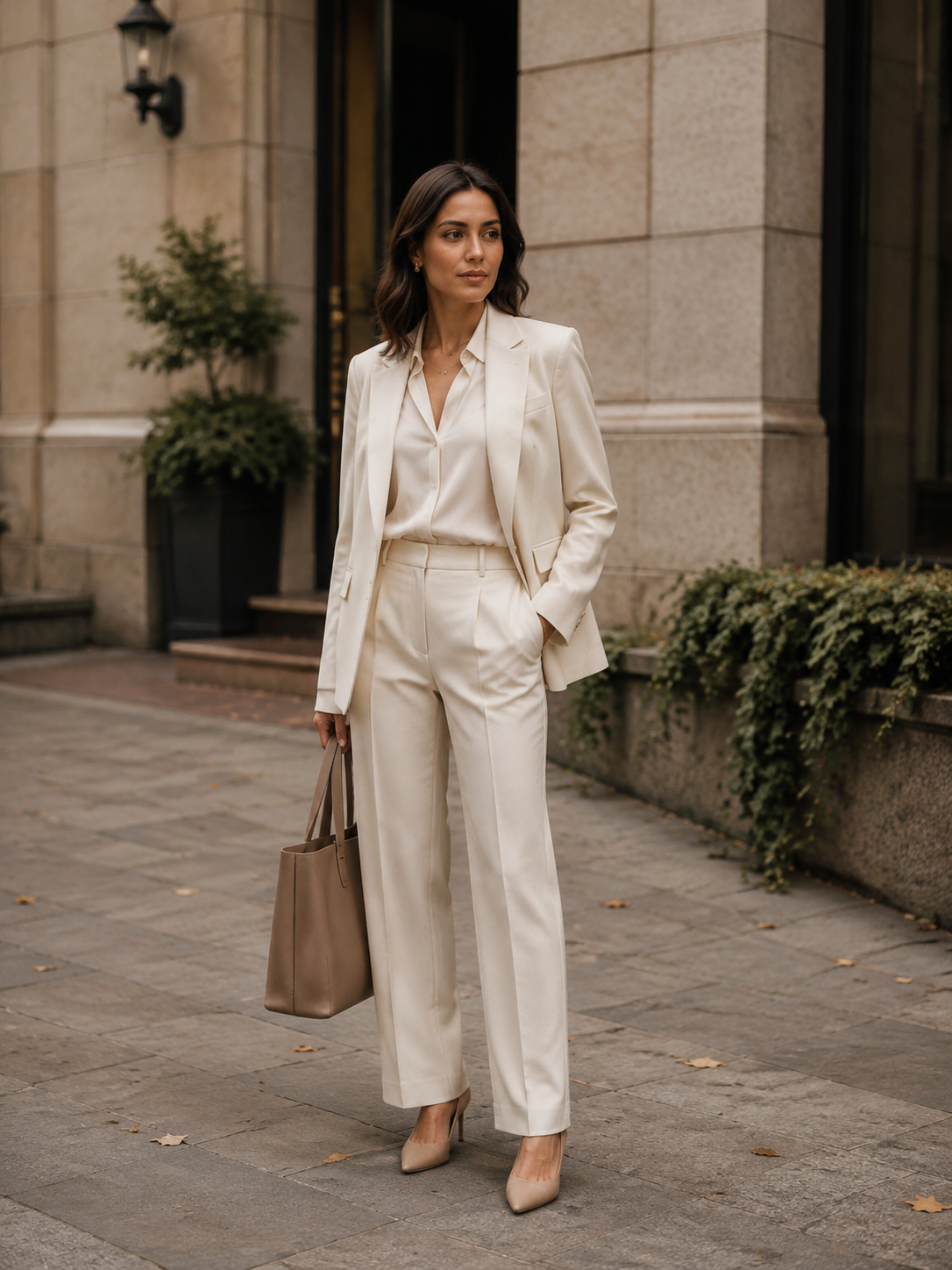
The blouse-and-trouser route is pictured below: a cream blouse with olive wide-leg trousers and brown loafers. It is an illustrated example of the combination, not evidence of fit or fabric content — check both on the real garments. Skip shiny performance fabrics in any formula; they read as sportswear under office lighting regardless of cut.
An office outfit is worn seated for hours, so fit decisions show up by mid-morning. Trousers need to sit comfortably at the waist without a belt doing structural work, and a shirt collar should sit flat outside a knit rather than tangling under it. Footwear needs to survive standing at the printer as well as the commute, which is where flat leather shoes and low heels earn their place.
Pressed shirt or blouse with tailored trousers and leather shoes — the base must be a complete outfit on its own, not half of one.
Add a fine merino crew or button-through cardigan over the base; the collar stays visible and the front line stays deliberate.
Wear the base alone and carry the foldable layer in a bag instead of wearing it; avoid heavy outer layers that leave you underdressed underneath.
Run this once on any new blazer-free combination:
Related guides
The full layering system when the journey and the desk disagree.
Preparing an outfit when you have not yet seen the office in person.
The parent hub of workplace dress guides.
BEFORE YOU CHOOSE
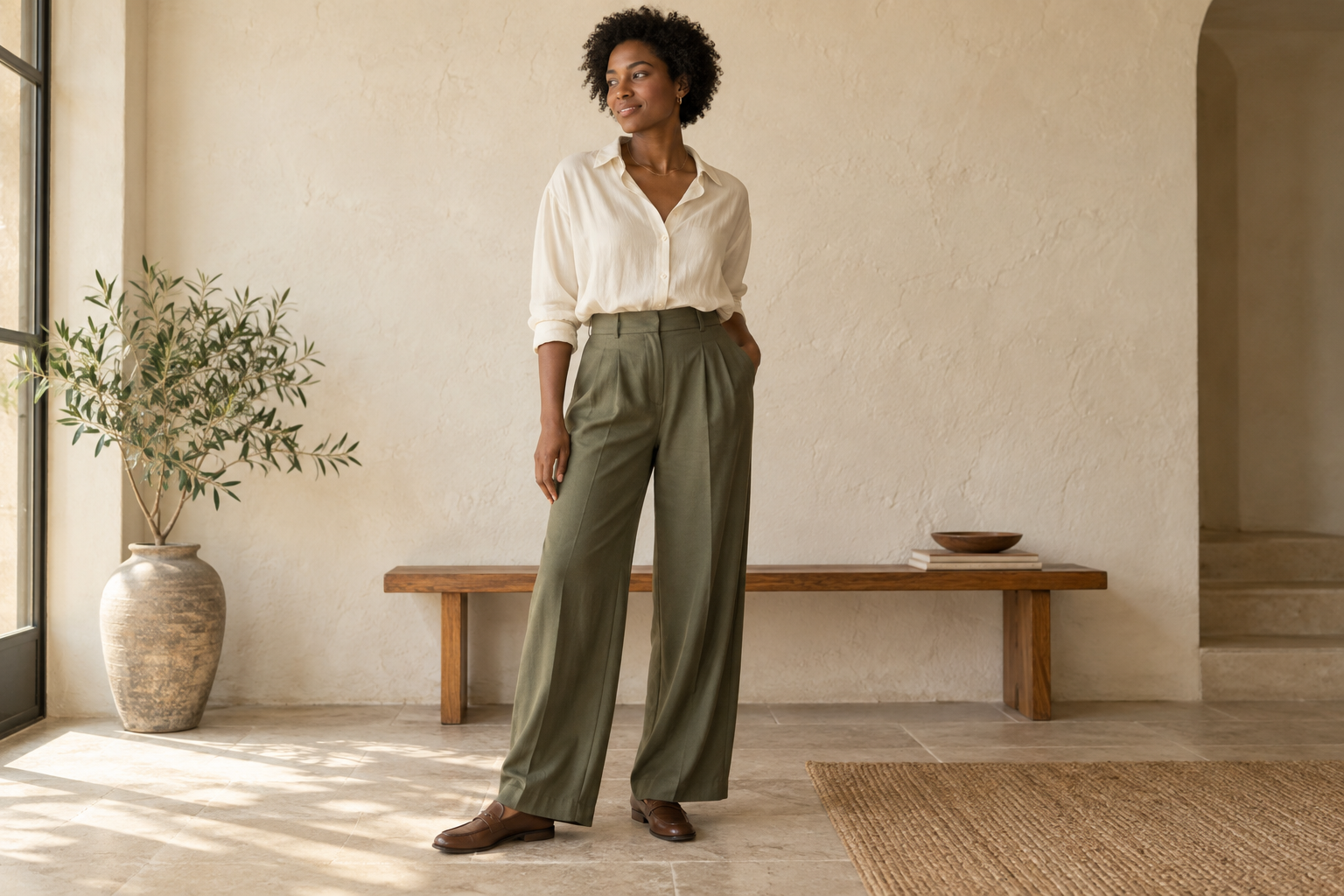
A cream blouse with olive wide-leg trousers and brown loafers — the blouse's pressed front and the trouser crease do the work a blazer would otherwise do. The image is an illustrated example of the combination, not evidence of fit or fabric behaviour.
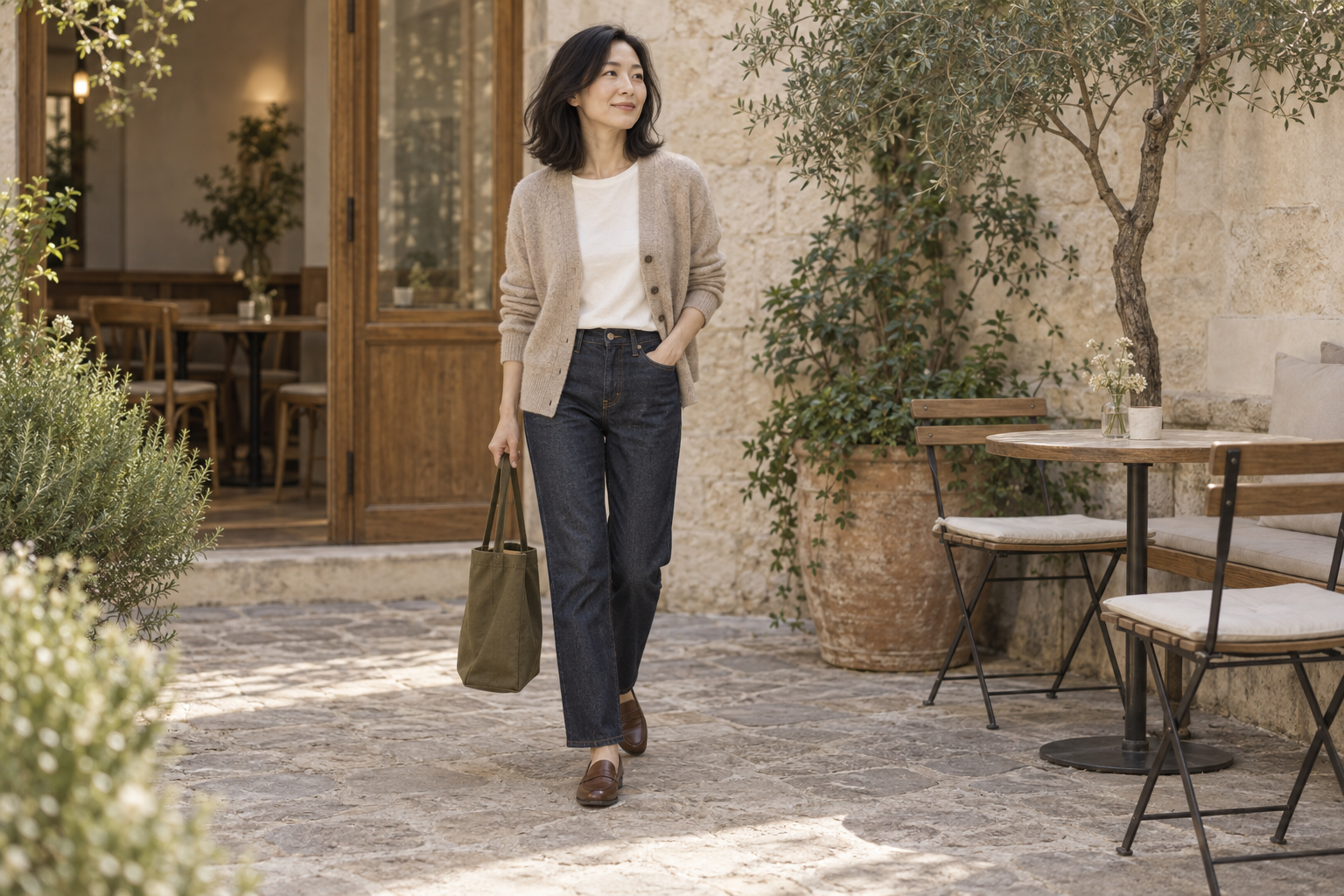
An oatmeal cardigan over a plain top, dark clean jeans and brown loafers, with a tote for the commute. Casual pieces, but the buttoned front and dark lower half keep it office-credible on relaxed days.
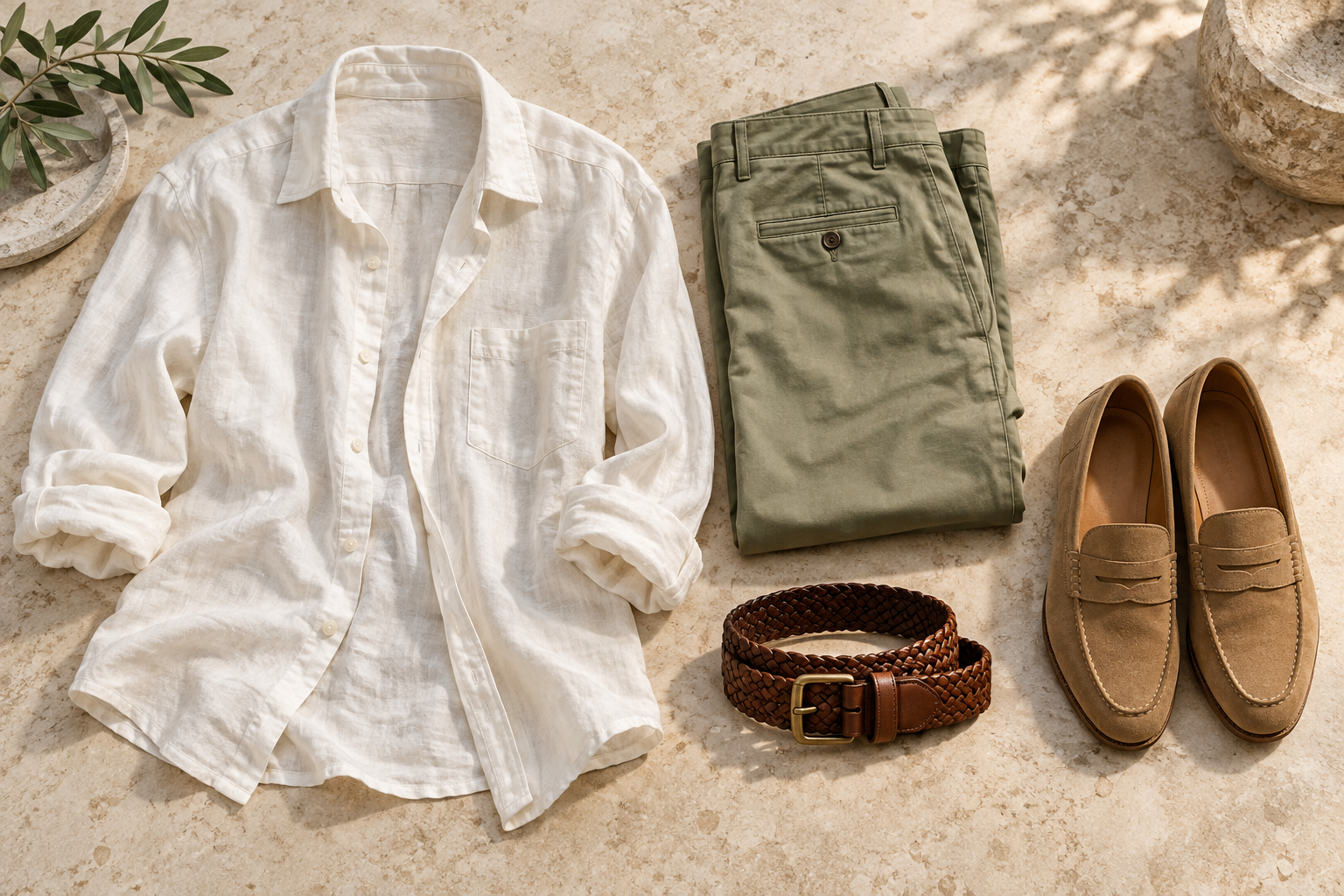
An ivory linen-blend shirt with pale olive trousers and tan loafers, laid out before wearing. Light fabrics for a warm office or commute; the tailoring below is what keeps it a work outfit rather than a weekend one.
Keep the blazer within reach even if you normally skip it: a jacket over your usual knit-and-shirt base is a ten-second upgrade. If the meeting is informal, the base look already reads presentable.
Studios and creative teams reward texture and colour more than formality. A collared corduroy shirt under a crew neck, or a coloured knit with relaxed tailored trousers and suede shoes, reads considered without looking borrowed from finance.
Dress for the desk but layer for the journey: a light merino over a shirt peels off to a still-complete outfit. Our guide to the hot commute and cold office problem covers the full system, including what to carry.
On camera a collar matters more than a jacket: a pressed shirt, collared knit or knitted polo frames the top half cleanly. Trousers and shoes only need to survive the walk to the kitchen, though dressing fully keeps the habit honest.
Work & Interviews
First-day outfit strategy for a smart casual office: start one notch up, read the room, and settle into the team's real dress code by week two.
Work & Interviews
Layer systems for the two-climate problem: a base that works alone, a packable office layer and a weather shell, so one outfit survives both extremes.
Work & Interviews
Smart casual conference outfits built for long days, cold halls and warm rooms, with looks for presenting, exhibiting and evening networking.