Your first day sets a first impression you only get once, but the goal is to fit in, not to impress. Start slightly more formal than you expect the office to be, then adapt once you have seen what everyone else wears.
Before your first day at a smart casual office, check the onboarding information or ask your contact what people usually wear. Choose familiar clothes that meet that guidance, with a removable layer and comfortable shoes. Pack what you need for the day so your outfit works for the commute as well as introductions.
Ask one question before you plan the outfit
Onboarding emails, offer packs and induction documents sometimes state a dress code, and that written brief outranks anything you read online — including this page. If nothing arrives, one short message to your contact settles it: “Looking forward to Monday — could you let me know what people usually wear in the office?” The question reads as preparation, and the answer removes the largest source of uncertainty in the whole decision.
Written guidance, when it exists — treat it as the brief to follow, not a suggestion to reinterpret.
What your interviewers wore, especially on video calls, as the closest observed evidence.
The company's own careers page and office photos, which show real days rather than recruiting copy.
Two adaptable outfits that need no guessing
Two first-day outfits, both adjustable on the day
Piece
Outfit A: trousers base
Outfit B: skirt or dress base
Core
Dark tailored trousers or chinos with a pressed collared shirt or blouse
A belted shirt dress, or a midi skirt with a fine knit top
Removable layer
Fine merino crew or cardigan over the shirt
Mid-grey cardigan that lifts off after lunch
Shoes
Clean leather derbies or loafers, worn in
Brown flats or low heels you have walked in before
Adjusts by
Removing the knit; rolling nothing, loosening nothing
Removing the cardigan; the dress or skirt holds the line alone
Both outfits use familiar clothes you have worn before, so nothing needs constant adjusting while you are learning names. Neither assigns pieces by gender — choose the base you dress in normally. A tie or a suit is not automatically wrong either: if the onboarding brief or the interviewers signalled a formal office, those are the right clothes; the mistake is wearing them without checking.
Test the commute, the chair and the bag
The day before, rehearse the actual day:
Walk or ride part of your commute route in the outfit and shoes at the time you will travel.
Sit for thirty minutes the way you will at a desk — nothing pulls, digs or rides up.
Load your laptop bag and carry it: the bag sits comfortably and nothing snagged or stretched.
Check the forecast and remember that offices run cooler than commutes in summer and warmer in winter.
Everything is pressed, shoes are clean, and the outfit is hung ready — the morning needs nothing but getting dressed.
Reading the office without ignoring the policy
Myth
Whatever you do, do not wear a suit — it will always read as a misjudged first day.
Fact
A suit is simply the most formal option. In finance, law or client-facing teams it is exactly right, and the onboarding brief outranks any general rule. The real mistake is dressing at a formality level nobody checked, in either direction.
The first week is for observing, not committing. Note what colleagues at your level actually wear — not the most senior person, and not the most casual — and let your second week drift toward that norm. Observation adjusts your choices; it does not override a written policy, and it does not licence abandoning the code entirely because one colleague wears trainers.
What to pack alongside the outfit
A foldable layer — the cardigan you might remove by mid-morning travels in the bag, not on you.
First impressions bias slightly formal: being a touch sharper than the room passes unnoticed, while being visibly underdressed on day one is the impression that lingers.
The first week is for observing, not committing — note what colleagues at your level actually wear and let your second week drift toward that norm.
Check any onboarding guidance before guessing: dress-code notes in offer packs or induction emails outrank anything you read online.
Video-call clues count — if your interviewers wore blazers on the call, plan for structure; if they wore hoodies in a listed office, pitching formal would be the mismatch.
Day one is usually induction rather than output — desk setup, introductions, maybe a building tour — so comfort and ease of movement matter more than they would on a client day.
A useful outfit formula.
The cautious base: tailored dark trousers or chinos, a pressed collared shirt or blouse, and clean leather shoes — one notch above what you expect.
The adaptable layer: a fine merino crew or cardigan worn over the shirt, which reads polished for introductions and can come off after lunch if the office proves more casual than expected.
Familiar pieces only: clothes you have worn before that do not need constant adjusting, and that look right standing, seated and walking.
Finish with quiet extras: a bag or tote that holds a laptop and paperwork, and grooming that suggests routine rather than a one-off occasion.
Skip suit-level pieces unless your research supports them — a tie or structured jacket can outperform the room on an ordinary first day, so let the onboarding brief make that call, not a general rule.
Two starting points.
The safe opener with a removable layer
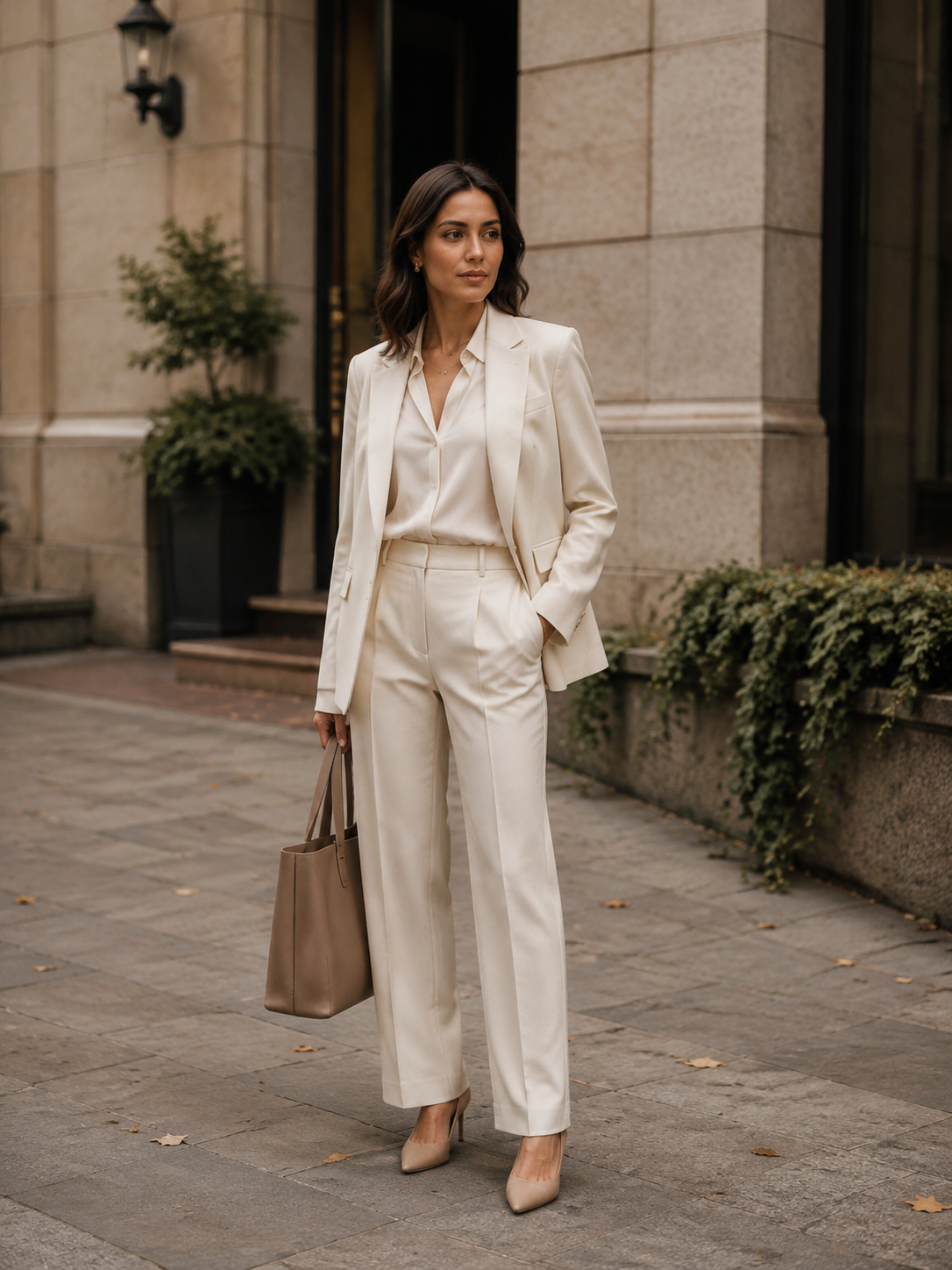
An olive blazer over a cream shirt with taupe trousers and brown loafers — the blazer shown here is a choice, not a first-day requirement, and the shirt and trousers hold the look on their own if it comes off. It is an illustrated example of the combination, not evidence of fit or fabric behaviour.
The no-jacket base
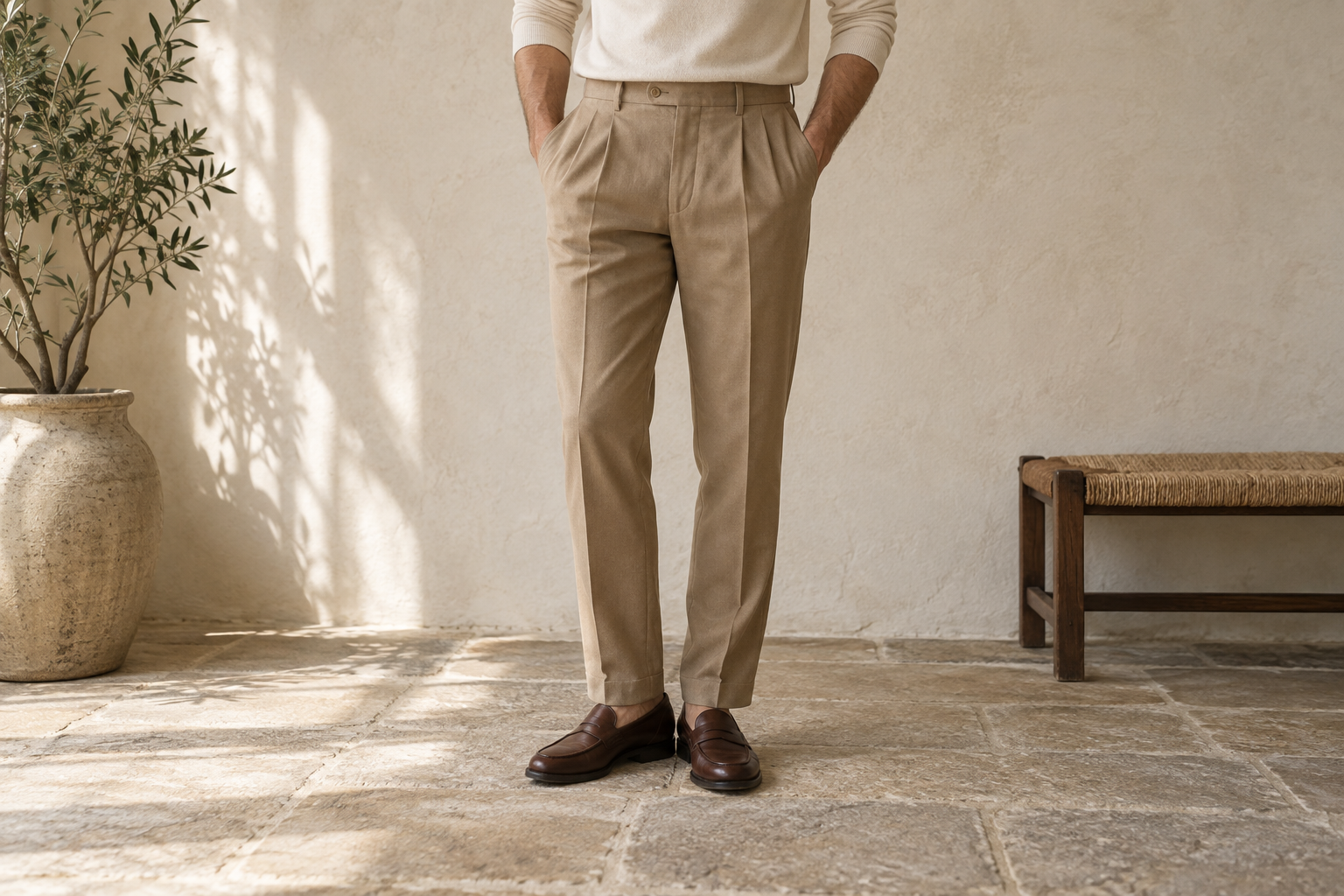
Tan pleated trousers with a cream knit top and brown loafers: the complete outfit with no layer at all. Right where the onboarding brief or your contact confirmed the office dresses casually — still a notch up, not a leap.
The skirt-base option
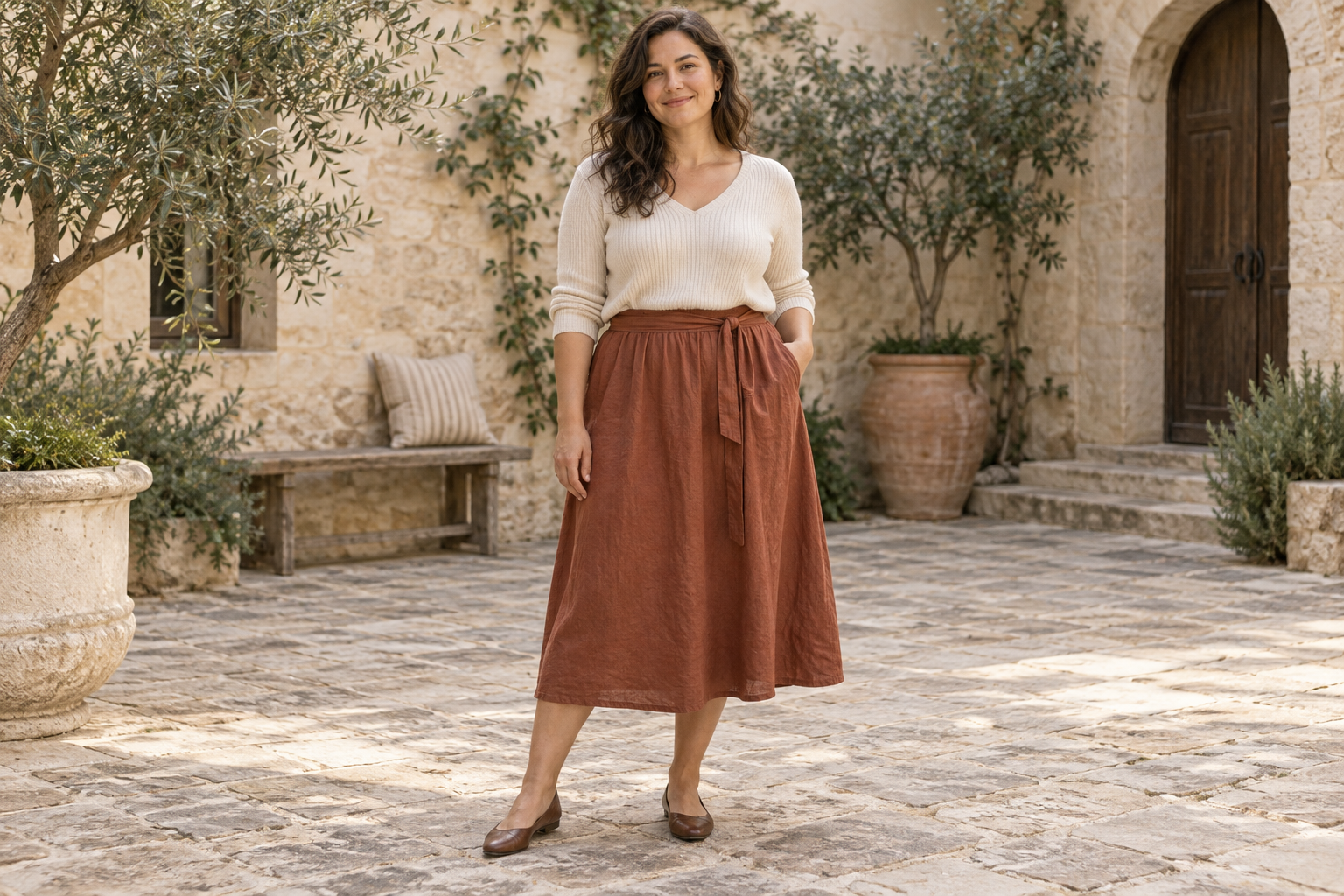
An ivory knit top with a rust midi skirt and brown flats. The same strategy as the trousers base — familiar pieces, a removable cardigan in the bag, and shoes already tested for the commute.
Adjust for the day.
Formal-leaning office
In finance, law, or client-facing teams, smart casual often means no tie rather than no jacket. Start with a blazer over your shirt and drop it only after you see colleagues without one; wool trousers beat chinos for the opening week.
Relaxed startup
When the signals say genuinely casual, aim at the top of their range rather than above it: dark tailored jeans or chinos, a quality knit or collared shirt, and minimal leather sneakers. A suit is not forbidden — it is simply usually more than the room, so let your evidence decide.
Industrial or hybrid floor
If the role splits between a desk and a workshop, warehouse or plant floor, build the outfit around the practical half: sturdy chinos, closed shoes with decent grip, and layers you can move in, keeping one smarter piece for the desk side. Site safety rules override style for the hours you spend there.
Hot weather
Heat justifies lighter fabrics, not lower standards: a linen-blend shirt, pale tailored trousers or chinos, and unlined leather loafers. Press everything that morning and carry a spare shirt if the commute is a sweaty one — first days forgive nothing visible.
Leave these assumptions behind.
Dressing for the job three levels up: matching the most senior person's wardrobe on day one reads as misjudged, so match the people who will sit beside you.
Wearing brand-new shoes or an untested outfit — blisters, a misbehaving hem or a gaping shirt will occupy the attention you need for names and introductions.
Ignoring the onboarding brief: if the pack or hiring manager said anything about dress, that instruction outranks general smart casual assumptions.
Overcorrecting in week two. If day one was too formal, drift down gradually; abandoning collars entirely by Wednesday makes both outfits look like different people.
How to build smart casual office outfits without a blazer, using knit-and-shirt layers, collars, and tailoring to keep structure from Monday to Friday.