Skip to content

Find your next good read.

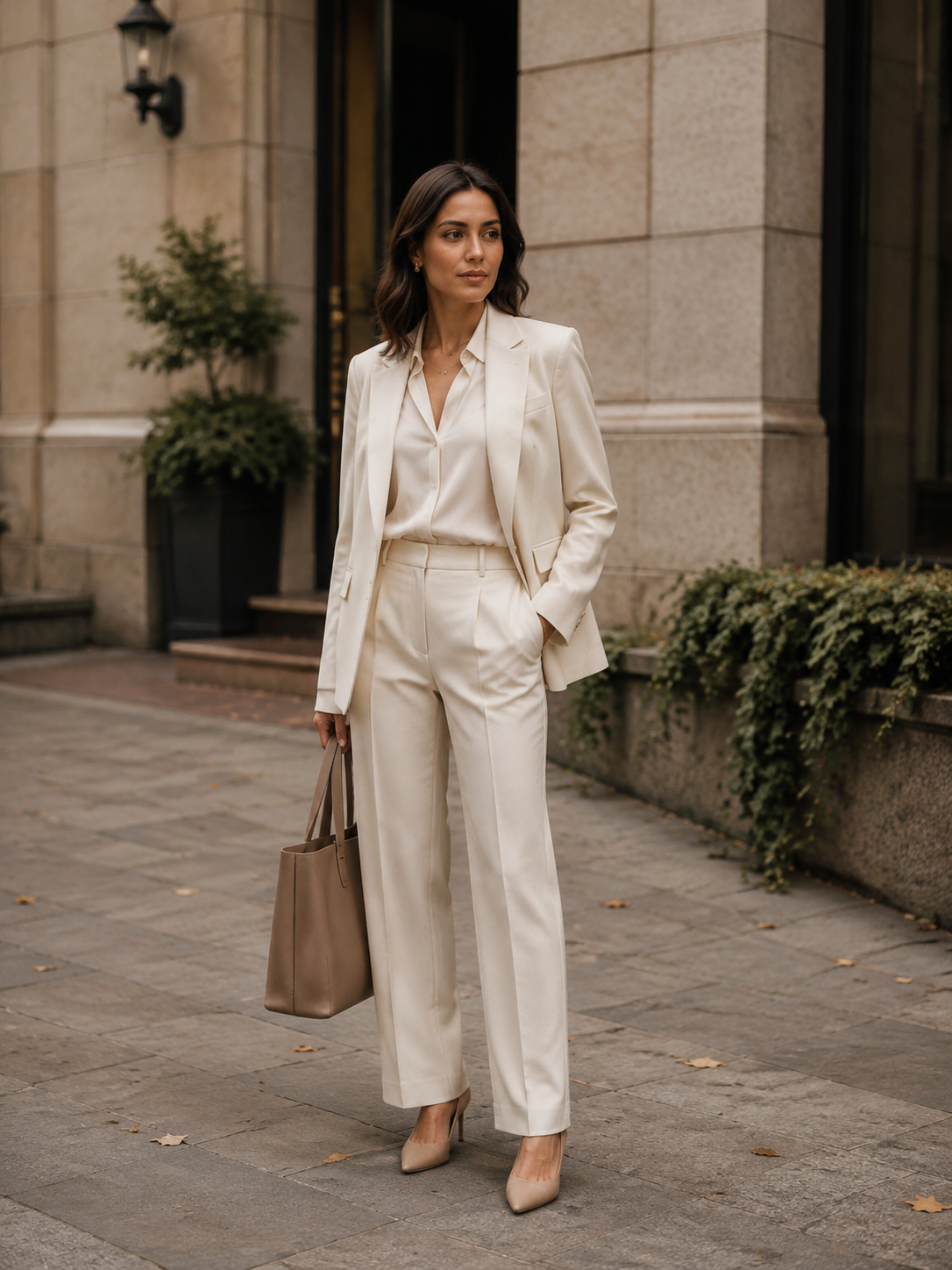
Cream tailored suit with relaxed trousers and a canvas tote

Occasion guide

Smart Casual Outfits for a Hot Commute and Cold Office

A sweltering platform followed by an over-air-conditioned office breaks most outfits. How to build a two-climate layer system where each layer has one job, and what to keep at your desk.

Begin here

Occasion advice

Outfits for a hot commute and a cold office

For a hot commute and a cold office, build an outfit that works with its outer layer removed. Carry a cardigan or light jacket for your desk, then choose the base outfit for the actual weather and workplace. A spare top can help after a difficult journey, but it is an option rather than a requirement.

Each layer has one job
LayerIts jobThe test it must pass
Base (shirt, knit, trousers or skirt)Handles the actual commute weather and reads smart indoorsLooks complete with nothing over it; no sweat marks showing
Office layer (cardigan, light jacket)Restores polish and warmth at your deskFolds flat in your bag without ruining the shape
Weather shell (coat, rain layer)Deals with wind, rain and the evening dropComes off indoors without upsetting the outfit beneath
Myth

Merino, Tencel or an unstructured blazer automatically stays breathable and wrinkle-free.

Fact

Fibre names are a starting point, not a guarantee. Weave, lining and fit decide how a garment actually behaves — check the lining, try it loose rather than tight, and test it on a warm day before you rely on it.

  1. Fold, do not crush

    Fold the office layer along its seams and lay it flat on top of the bag's contents. Creases you cause on the commute are the ones no label promised to prevent.

  2. Claim desk storage where it is permitted

    A drawer with a folded knit, socks and a spare top turns any hot arrival into a composed 9 a.m. Ask first — some hot-desking policies rule it out.

  3. Reset the system each evening

    Unpack the layer, air the base piece and repack the bag at night. Laundry is realistic, not heroic: one outfit doing double duty needs washing far more often than a rotating wardrobe.

Pack the spare, then test the plan

Run this check before you leave, and again at the end of the day.

  • Base looks intentional with every layer removed
  • Office layer folds flat and survives the bag test
  • Shell matches the actual forecast, not the season
  • Trousers or skirt lining checked — no heavy lining on a hot day
  • Spare top packed only if today's journey genuinely calls for it
  • Evening plan: is the office layer warm enough for the ride home?

BEFORE YOU CHOOSE

Read the room. And the invitation.

  • You are dressing for two environments in one day, and they contradict each other. The commute demands breathability; the office demands coverage and a layer that restores polish once you arrive.
  • Map your actual route first. Walking exposure, time in transport, the office's real temperature and any changing facilities each change the plan — a five-minute walk and a forty-minute train are different problems.
  • The layer you remove matters as much as the outfit underneath. Your base has to look complete and intentional on its own, because that is exactly how you will arrive at your desk.
  • Treat fibre claims as leads, not answers. A garment's lining, cut and weight decide how it handles heat and creases, so judge each piece by wearing it, not by the label.
  • The evening commute is part of the system. The packable layer needs to be warm enough to matter outside, not just decorative in the office chill.

A useful outfit formula.

  1. Base layer — its job is the journey: a breathable shirt or fine knit in a plain mid-tone that looks fully intentional when the outer layer comes off at the office door.
  2. Office layer — its job is the desk: a cardigan or light jacket you can carry folded, chosen for warmth at your chair rather than for the street.
  3. Weather shell — its job is the forecast: a proper coat or rain layer for wind and rain, removed indoors without disturbing the outfit beneath.
  4. Trousers or skirt: unlined tailored trousers, chinos or a skirt with real ease of movement. Check the lining and the actual feel of the fabric rather than trusting the fibre name.
  5. Carry system: a tote or backpack that holds the folded layer flat. A spare top is a sensible option after a difficult journey — an option, not a requirement for every day.

Two starting points.

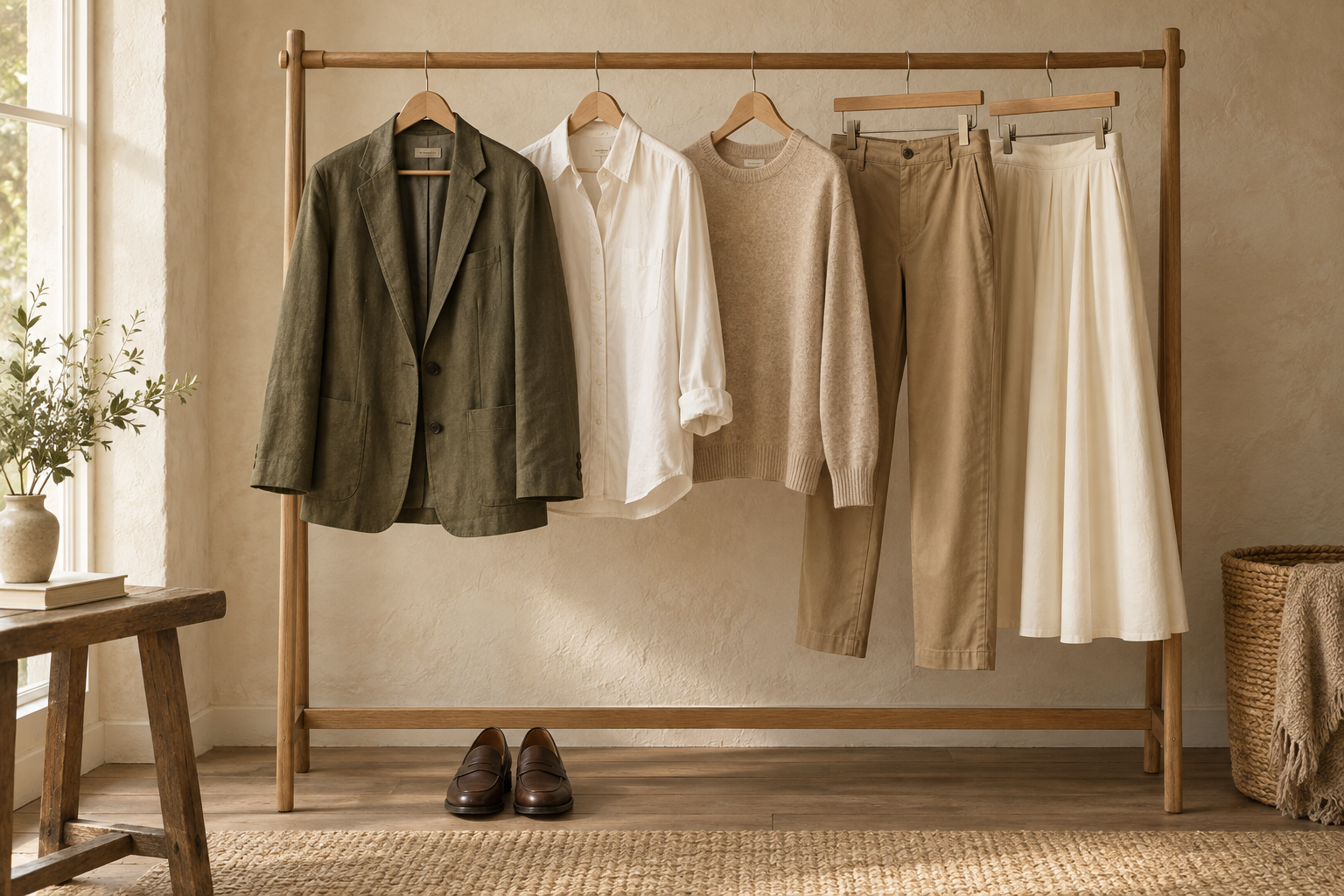
Olive blazer, ivory shirt, oatmeal knit, tan trousers and cream skirt on an oak rail above brown loafers.

The layer set

A rail of olive blazer, ivory shirt, oatmeal knit, tan trousers and cream skirt is a conceptual illustration of the choices, not measured thermal performance. Pick one base, one office layer and one shell from what you already own.

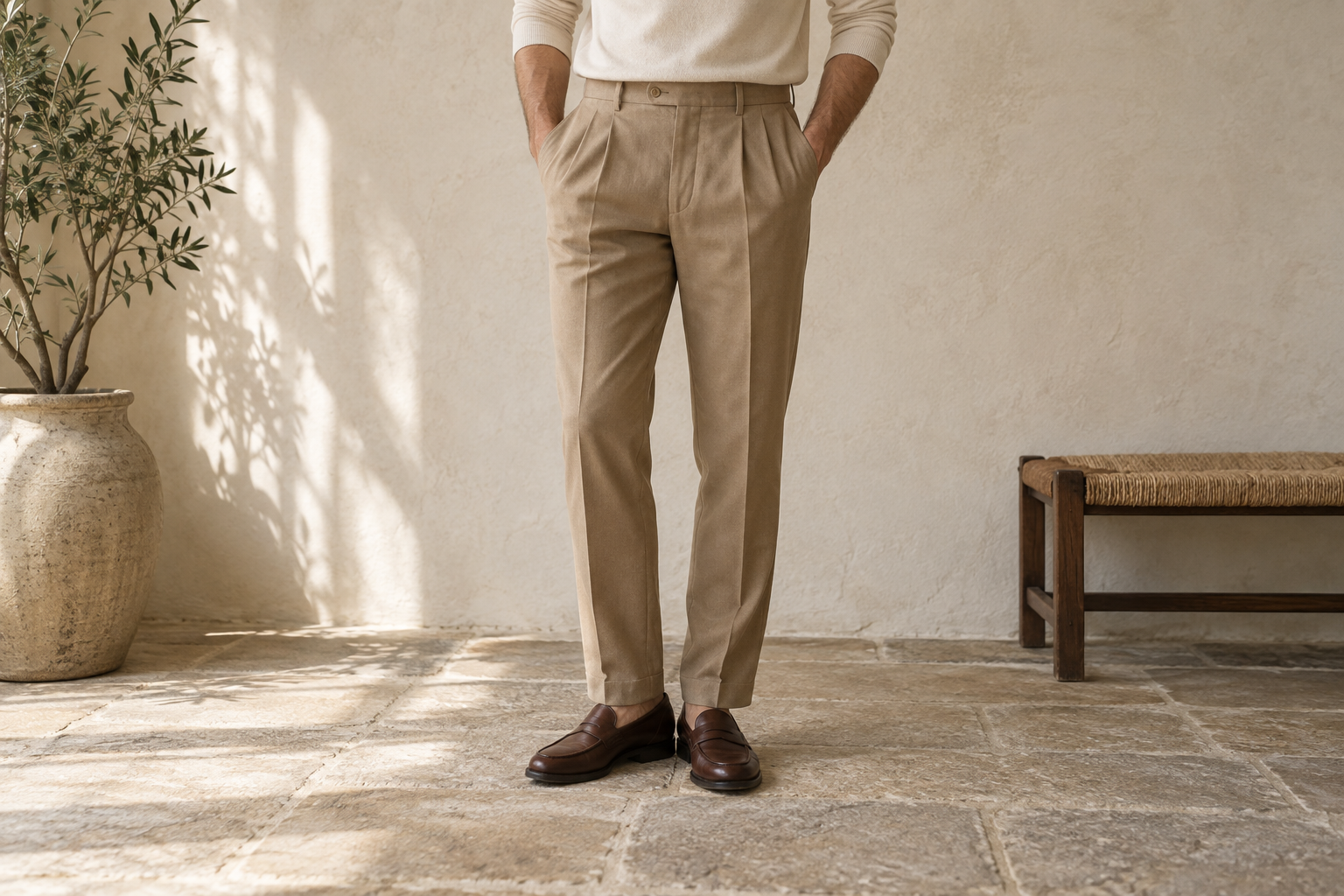
Tan pleated trousers worn with a cream knit top and brown loafers.

The trousers system

Tan pleated trousers with a cream knit top and brown loafers form the base; a folded cardigan rides in the tote. On the platform the knit is the whole outfit; at the desk the cardigan goes on and the look reads fully assembled.

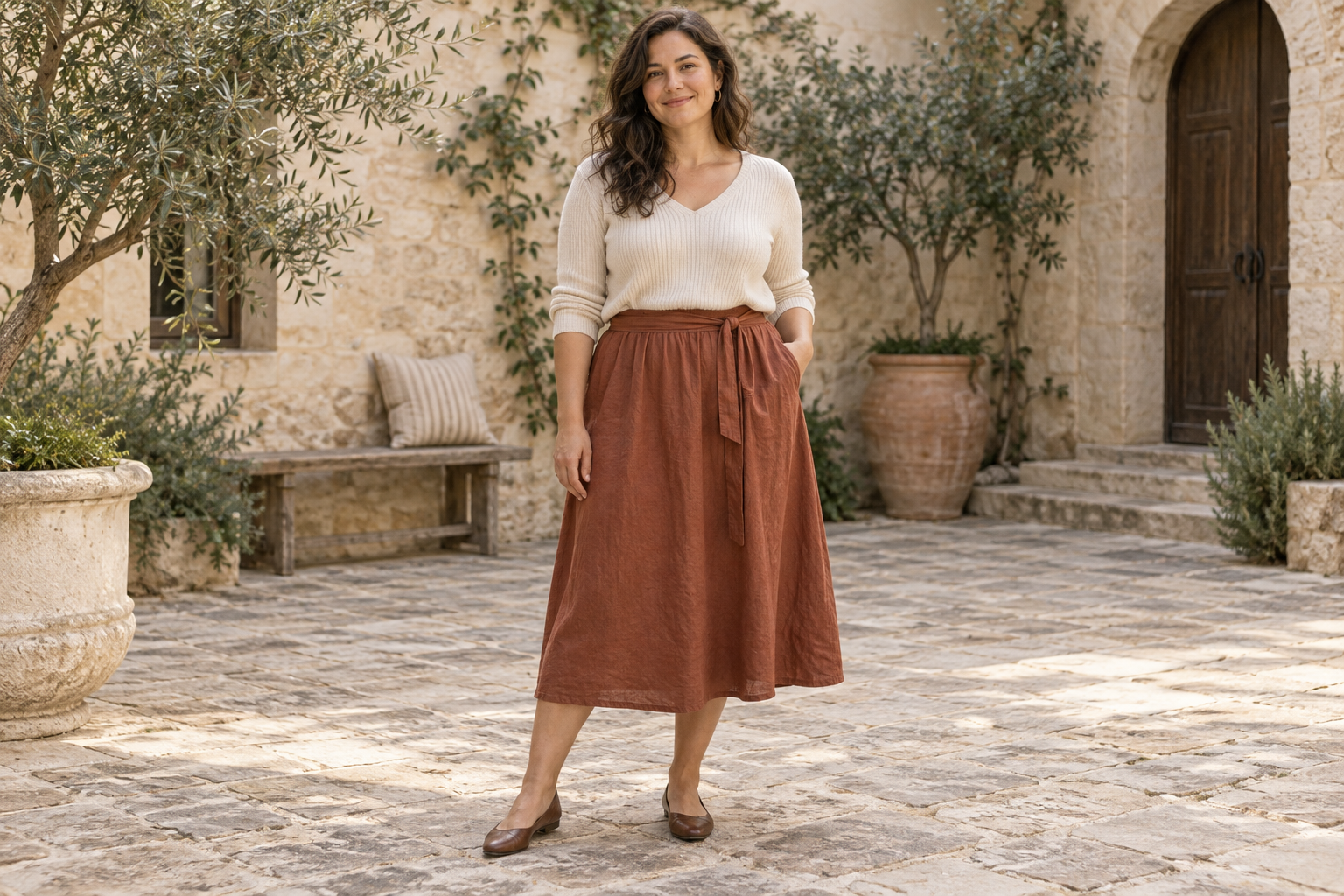
Woman in an ivory knit top, rust midi skirt and brown flats in a stone courtyard.

The skirt system

An ivory knit with a rust midi skirt and brown flats works the same way — a base that needs nothing added for the walk, with the office layer packed. If your office runs genuinely cold, test whether the skirt needs a layer beneath before committing.

Adjust for the day.

Hot transit, minimal walking

When the commute is a long train or tube ride, prioritise the base and the spare: a lightweight shirt, unlined trousers, and a packed change of shirt and socks for arrival. Carry the smart layer rather than wearing it, and let the desk drawer — where permitted — hold the refreshers.

Cold-weather commutes

Invert the system: a base that will not overheat indoors, a midlayer that does the office work, and a real coat for the street. The mistake is a thick jumper under a heavy coat — you arrive overheated and damp, so choose thin layers you can shed at your desk and dry overnight.

Bike or walk commutes

Human-powered commutes need a genuine change, not an adjustment. Ride or walk in honest performance pieces with a change of everything in the bag, keep shoes and an office layer permanently at your desk, and give yourself ten minutes to cool down on arrival.

When you cannot carry much

Without storage at either end, the bag becomes the system, so keep it minimal. Wear the base that looks complete on its own and carry only the one office layer you will actually use — a heavy compulsory packing list helps nobody.

Leave these assumptions behind.

  • Dressing for the office and enduring the commute. Lined trousers and a blazer worn on a hot train arrive damp and creased — and stay that way until lunch.
  • Wearing a base layer that only works under a jacket. If removing the outer layer leaves you in something that looks unfinished, the system has failed at its most important moment.
  • Buying a magic fabric. No fibre guarantees coolness or crease recovery — check the lining, the cut and the weight, and test the garment on a warm day before you depend on it.
  • Packing everything instead of the two pieces you will use. A spare top is insurance for a difficult journey, not a daily obligation, and the rest of the drawer only helps where storage is allowed.

Keep exploring.