
Skip to content

Find your next good read.

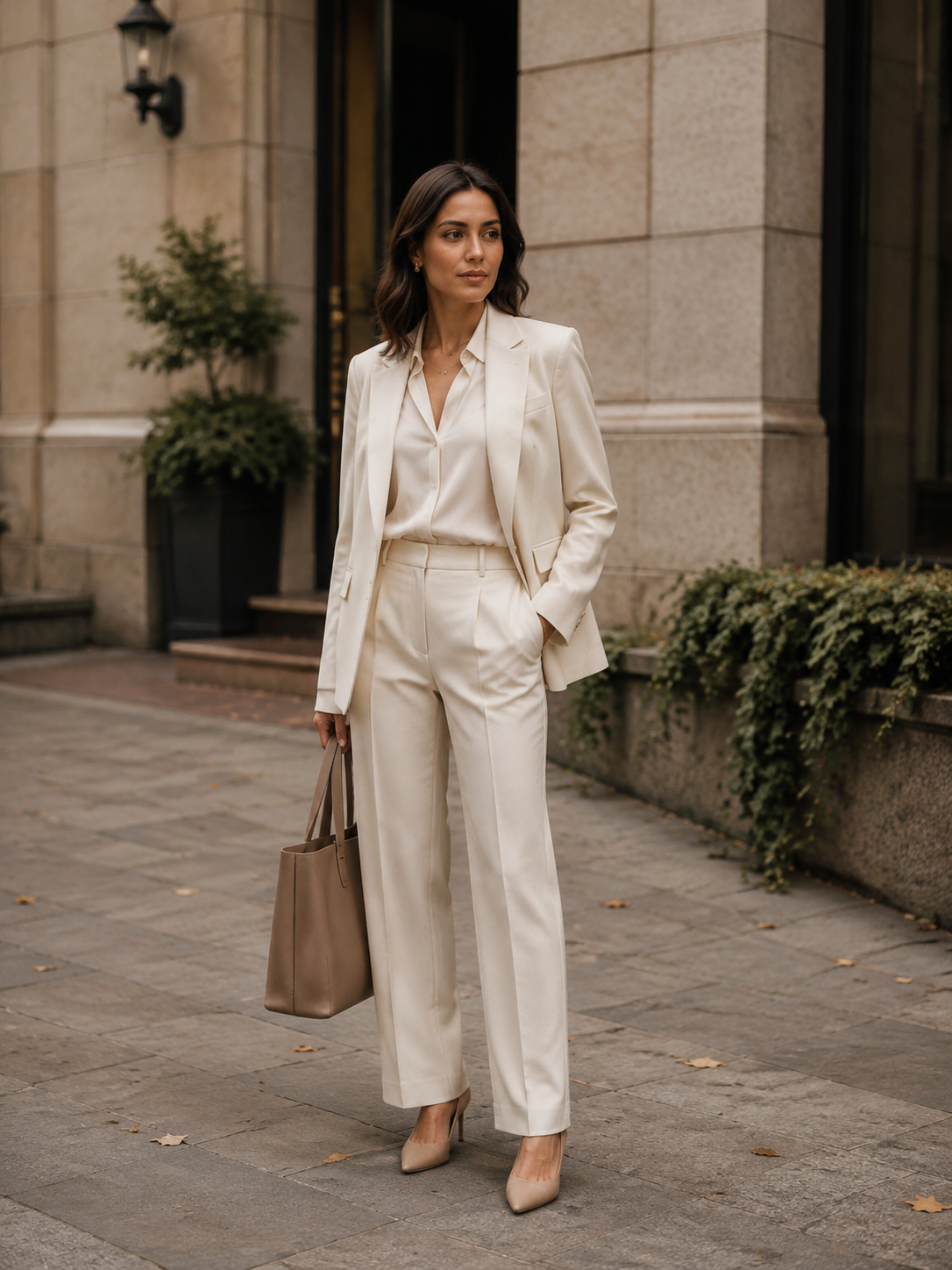
Cream tailored suit with relaxed trousers and a canvas tote

Occasion guide

Smart Casual Conference Outfits for a Full Day

Conferences reward outfits that survive twelve hours: sessions, corridors, photos and an evening event. Complete looks, layering logic and adjustments for speaking, exhibiting and travel days.

Begin here

Occasion advice

Smart casual conference outfits for a full day

A smart casual conference outfit needs to handle sitting, walking and changing room temperatures. Check the organizer's guidance and your agenda first, then choose familiar shoes and a layer you can carry. If you are presenting or attending a separate dinner, confirm whether either has different expectations.

Match the outfit to your conference agenda
Your roleWhat it changesCheck before packing
AttendeeLong sitting stretches and corridor walking between sessionsSession gaps, room distances, seating style
PresenterStage lighting, photos and a lapel mic favour solids and a shape-holding jacketWhether the organiser briefs speakers on dress
Travelling same daySofter pieces worn en route, sharper layer packed flatLuggage space and a chance to change on arrival
Evening receptionThe under-layer must pass on its own once the jacket comes offWhether the reception is separately ticketed and has its own dress note
Myth

Tech conferences mean jeans and sneakers are automatically fine.

Fact

Some tech events are that relaxed; others are not. The conference FAQ, any dress note and last year's attendee photos settle it — the industry label does not.

Run the departure test the night before

Run this departure test the night before, not at the venue door.

  • Shoes walked in for a full day before — not new this week
  • Waistband and shirt stay put through ten minutes seated and standing
  • Jacket or knit survives an hour folded in your bag
  • Badge has a home: placket, lapel or a lanyard in the bag
  • Phone, charger, notebook and water bottle fit pockets or a closing bag
  • Evening reception checked for a separate ticket or dress note
  • A travel sewing kit and a couple of safety pins for buttons and hems
  • A stain wipe or a folded damp cloth for coffee and lunch accidents
  • Plasters for the shoes that passed every test except kilometre six
  • A spare shirt rolled in a compression pouch on travel days

BEFORE YOU CHOOSE

Read the room. And the invitation.

  • Conferences are long. A single day can run from a morning keynote to an evening reception, mostly spent standing, walking between rooms, or perched on uncomfortable seating.
  • Venue temperature swings are the rule, not the exception. Air-conditioned halls run cold while packed session rooms and foyer queues run warm, so a removable smart layer is the difference between comfort and misery.
  • Check the organiser's guidance before guessing. A conference FAQ, a dress note in the joining instructions, or last year's attendee photos tell you more than any assumption about the industry.
  • Photos are constant. Badge walls, booth backdrops and candid event photography mean plain mid-tones usually photograph better than busy patterns, and a jacket sharpens most frames.
  • You carry things. Lanyard, notebook, phone, charger, water bottle — plan for pockets or a slim bag that closes, because an outfit that only works empty will not survive the day.

A useful outfit formula.

  1. Base: a pressed collared shirt or a quality fine-knit in a plain mid-tone — something that looks right under a jacket and on its own when the afternoon warms up.
  2. Trousers: tailored trousers or dark, unfaded chinos with enough give to sit through three back-to-back sessions without the waistband nagging.
  3. Layer: an unstructured blazer or a smart knit you can take off and carry. Judge it by how it actually survives an hour folded in your bag, not by any crease-resistant claim on the label.
  4. Shoes: polished leather shoes or clean minimal sneakers with cushioning you have already tested on a long walk. Brand-new shoes are the classic conference mistake.
  5. Accessories: a crossbody or slim tote that closes, a belt matching your shoes, and a light scarf or overshirt that doubles as the warmth layer when the hall's air conditioning wins.

Two starting points.

Woman in an olive blazer, cream shirt and taupe trousers with brown loafers in a sunlit office.

The jacket route

An olive blazer over a cream shirt, taupe trousers and brown loafers — the catalogue illustration shows the shape of the route. The jacket reads sharp in photos and comes off easily in warm rooms, while the loafers are a pair you have already walked a full day in.

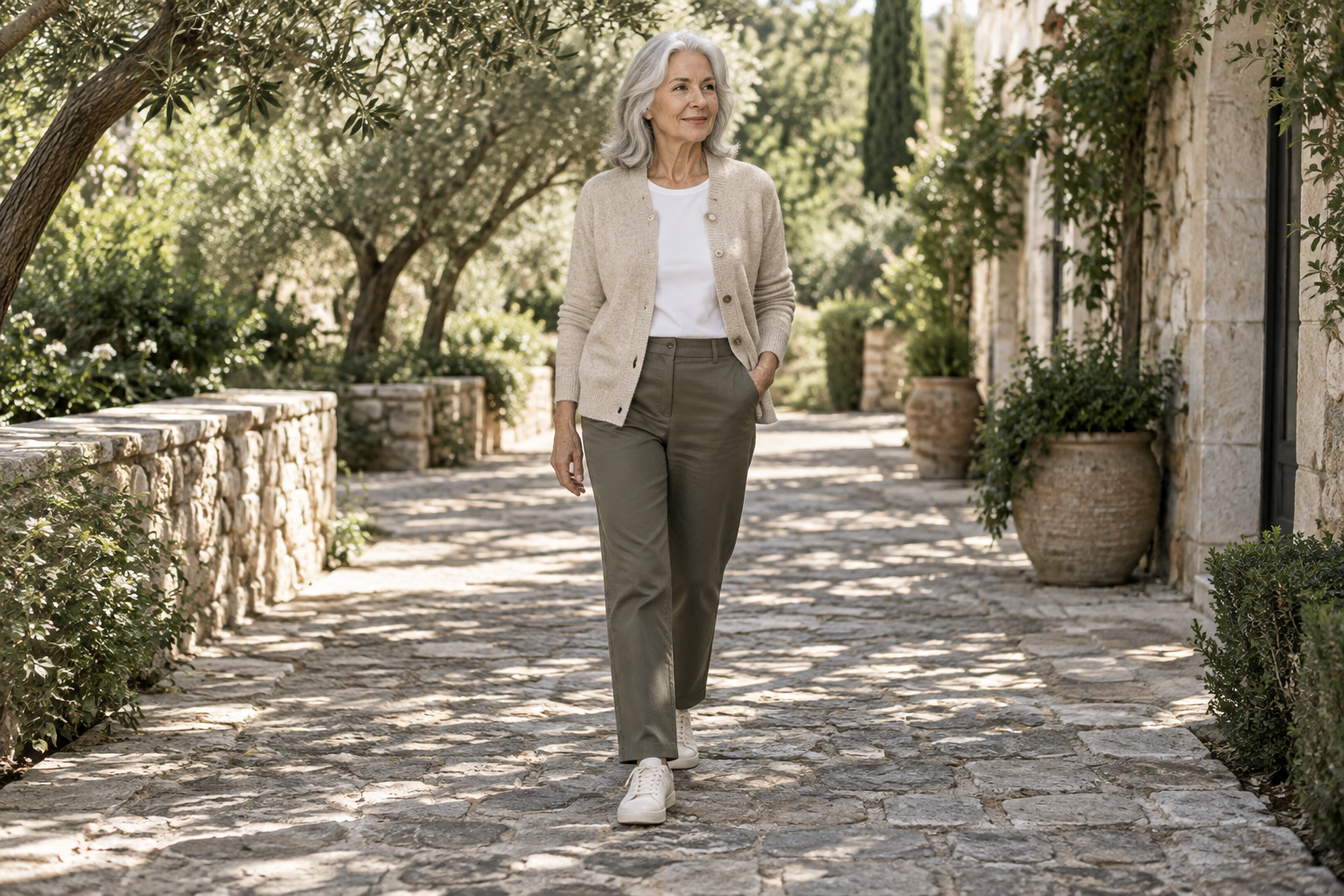
Silver-haired woman wearing an oatmeal cardigan, white top, olive trousers and cream sneakers on a stone path.

The walking-heavy agenda

Where the day is mostly on your feet, build the outfit around tested footwear: an oatmeal cardigan, a white top, olive trousers and cushioned cream sneakers like the ones in this comfort illustration. It is a lower register, but honest for a floor-heavy agenda the organizer's map confirms.

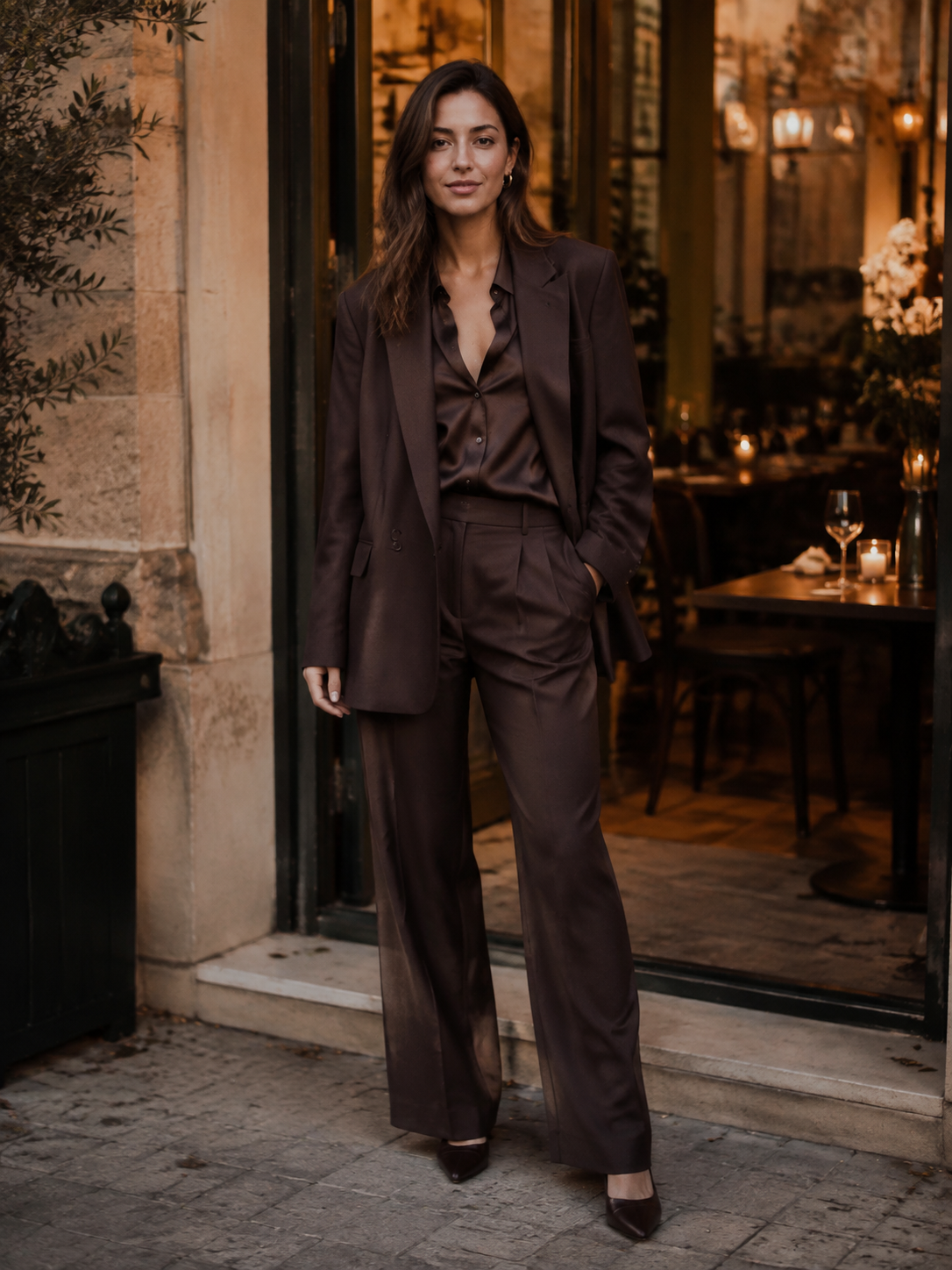
Chocolate brown tailoring and a silk-style shirt in a warmly lit restaurant

Straight into the evening reception

Black tailored trousers, a deep green silk-feel blouse or a pressed dark shirt, a slim black knit tied over the shoulders by day and worn properly by night, and polished boots or derbies. Nothing needs changing between the last session and the bar — confirm the reception's own dress note first.

Adjust for the day.

Presenting on stage

Speakers get photographed from below and lit warmly, so choose solids over patterns and a jacket or structured knit that holds its shape with a lapel mic clipped on. Test that your waistband and shirt stay put seated and standing, and skip loose scarves that catch on microphone clips.

Working the exhibitor floor

Standing for hours next to a booth demands the most comfortable version of the formula: cushioned shoes you trust, trousers with real give, and a lightweight layer you can shed in the hall's heat. Keep pocket space for pens and flyers — you will be in hundreds of photos with visitors.

Evening networking

Most conference evenings are drinks standing up in a space that runs warmer than the daytime hall. Remove or swap the outer layer, and make sure whatever you wear under the daytime jacket would pass on its own — because that is how you will end up wearing it.

Travel day

If you fly or take the train in the same morning, wear the softest pieces and pack the sharper layer flat to change on arrival. Choose fabrics you have seen recover from a fold, and hang pressed pieces in the hotel bathroom rather than living out of a suitcase.

Leave these assumptions behind.

  • Wearing brand-new shoes to a venue where you will walk several kilometres across the day — blisters by the afternoon session undo every other good decision.
  • Dressing only for the photos, in a suit-level outfit that becomes unbearable in a warm exhibition hall, then stays crumpled in a tote for the rest of the event.
  • Ignoring the layer plan. A single heavy piece leaves you choosing between sweating through sessions and shivering through keynotes; two light layers solve both.
  • Forgetting the evening. Outfits planned purely for daytime sessions fall apart the moment the jacket comes off for the reception — check the underlayer passes alone.

Keep exploring.