Skip to content

Find your next good read.

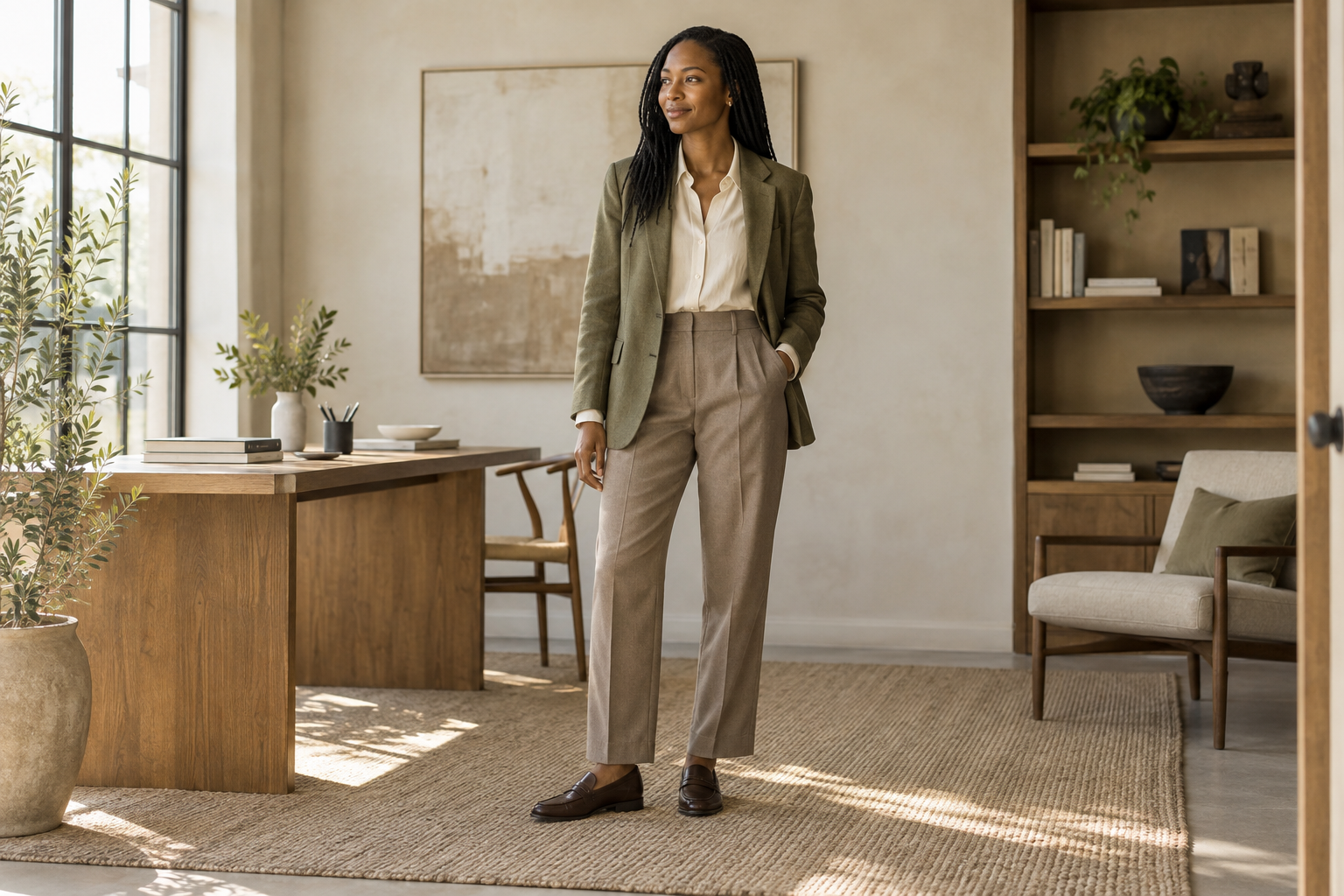
Woman in an olive blazer, cream shirt and taupe trousers with brown loafers in a sunlit office.

Occasion guide

What to Wear to a Smart Casual Interview

For a smart casual interview, start from the recruiter's instructions and prepare a complete outfit that survives sitting and the journey. For video, check how the clothes look in your real camera and lighting setup.

Begin here

Occasion advice

Dressing for a smart casual interview

For a smart casual interview, use the recruiter's instructions as your starting point. If you are unsure, ask what candidates normally wear for this meeting. Choose a complete outfit that feels comfortable seated and on the journey; for a video interview, also check how your clothes appear in your actual camera and lighting setup.

Clarify expectations with the recruiter first

Interview dress codes are set by the employer, not by the industry or by etiquette columns. Two companies using the phrase “smart casual” can mean different things — our guide to smart casual versus business casual covers where the codes blur, and the work and interviews hub collects the rest of the workplace guides. If you choose a blazer, our blazer fit guide explains the shoulder and length checks worth making before the day.

A short message does the job: “Looking forward to Thursday — could you let me know what most candidates wear for interviews here?” It reads as preparation, not ignorance, and the answer removes the largest source of risk in the whole outfit.

  • A stated code: take it at face value and pitch to the words used, not to what you assume the company meant.
  • No stated code: ask, or use the employer's own careers page, office photos and what your interviewers wore on video calls as evidence.
  • Explicit instructions to dress down: follow them; candidates who are told “no need to dress up” are not being tested on disobedience.
Myth

Wearing a full suit to a smart casual interview signals you misunderstood the company, and wearing no blazer signals you don't care.

Fact

Neither inference is reliable. A suit is simply the most formal option — sometimes a step above what was asked, sometimes exactly right. A well-put-together outfit without a jacket can be equally appropriate. Judge the outfit as a whole against the employer's stated expectations, not against a fixed hierarchy.

Fit and logistics: test the outfit before the day

An interview outfit fails on logistics more often than on style. Run these checks the night before, while there is still time to fix what they find.

The night before:

  • Sit down for ten minutes in the full outfit — nothing pulls, rides up or digs in.
  • Reach forward as you would to shake hands or pass a document; the shirt stays comfortable across the back.
  • Walk at commuting pace in the shoes; no rubbing, no slipping at the heel.
  • Everything is pressed and hung properly, and the shoes are clean.
  • Bag, notepad and documents are ready, so the morning needs nothing but getting dressed.

BEFORE YOU CHOOSE

Read the room. And the invitation.

  • Read the employer's signals before choosing anything: the recruiter's stated code comes first, and the company's own careers page, office photos and your interviewers' appearance on video calls are the next best evidence.
  • There is no universal hierarchy that ranks a blazer over a knit or wool over cotton. What matters is that the complete outfit is clean, pressed, well fitting and pitched to what the employer described.
  • Interviews put the outfit under conditions everyday wear does not: long periods seated, a commute, warm rooms and nerves. Check the outfit works in those conditions, not just standing in front of a mirror.
  • If you have no information at all, a neutral, tailored outfit with an optional jacket is the lowest-risk choice — it can be adjusted on the day by removing the jacket, which is easier than adding formality you did not bring.

A useful outfit formula.

  1. Trousers: tailored trousers or dark, well-pressed chinos — nothing with obvious fading, distressing, or a drawstring waist.
  2. Shirt or knit: a pressed collared shirt, or a fine knit over a shirt for a softer read; keep the collar crisp either way.
  3. Jacket: an unstructured blazer in a plain or subtly textured fabric, treated as an optional layer to add or remove — not a mandatory badge.
  4. Shoes: clean leather or suede shoes — derbies, loafers, or plain low heels — in good condition, with socks or hosiery that blends.
  5. Grooming and extras: pressed fabric, no visible wrinkles, a belt that matches the shoes, and accessories quiet enough that nothing competes with what you are saying.

Two starting points.

Woman in an olive blazer, cream shirt and taupe trousers with brown loafers in a sunlit office.

Womenswear base look

An olive blazer over a cream collared shirt, taupe tailored trousers and brown leather loafers. The jacket adds structure for the meeting and comes off cleanly if the room is warm; the loafers handle stairs, commute and a full day without complaint. Every piece is quiet, so nothing distracts from the conversation. The image is an illustrated example of the combination, not evidence of fit or fabric behaviour.

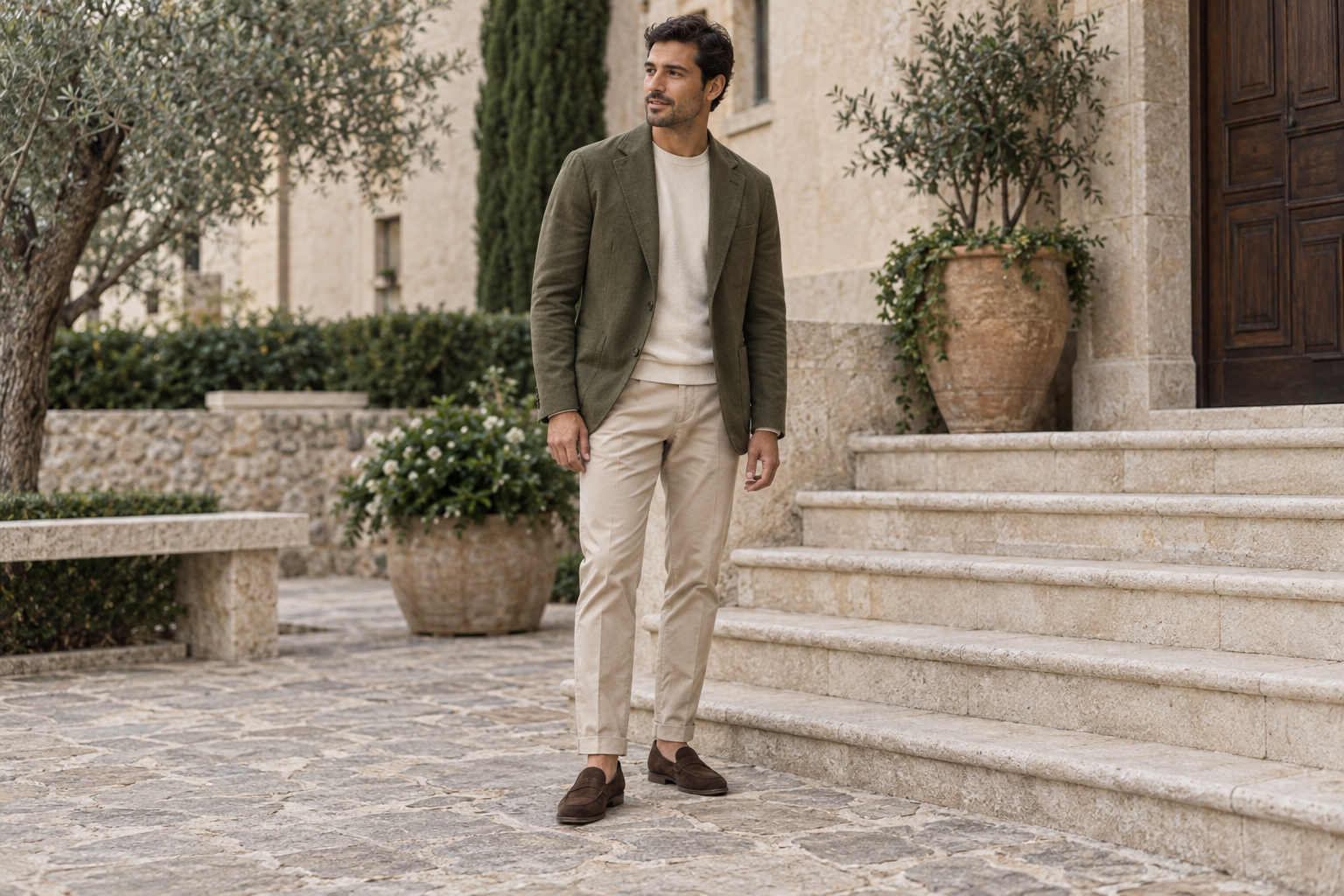
Man in an olive blazer, ivory knit, sand trousers and brown loafers beside stone steps.

Menswear base look

An unstructured olive blazer over an ivory fine-gauge knit, with sand tailored trousers and brown loafers. The knit under the jacket keeps the collar comfortable without a tie, and the soft shoulder sits at smart casual rather than formal. Worn without the jacket, the knit and trousers still read put-together — the outfit survives its own layer coming off. As above, this is an illustrated example of the combination.

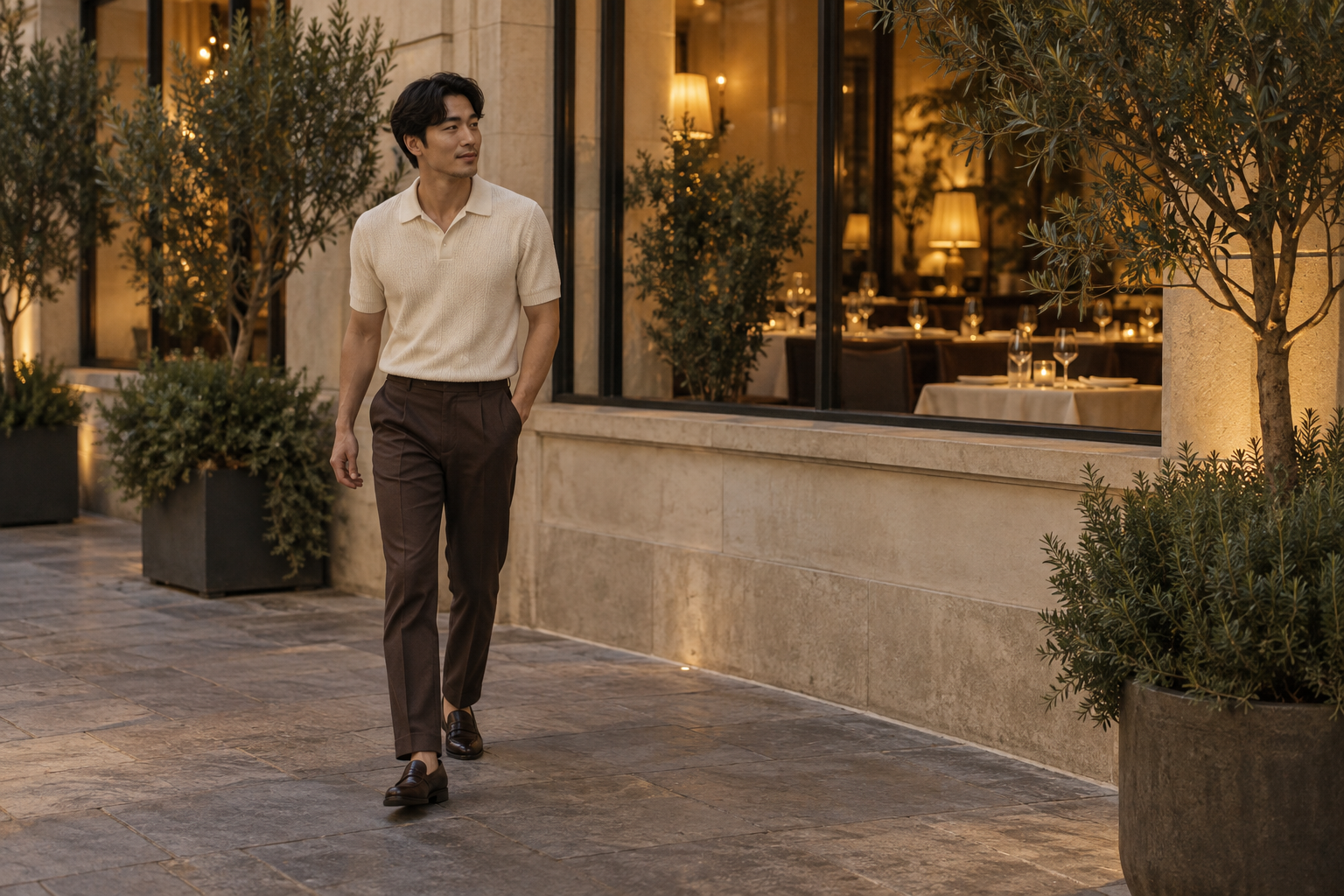
Man in a cream knit polo and dark brown trousers walks beside a warmly lit restaurant.

The softened variant

A fine cream knit in a polo shape with dark brown tailored trousers and clean dark shoes. One notch of polish over everyday wear rather than two — the right answer where a recruiter has said candidates dress casually, or for warm-weather meetings where a jacket would be uncomfortable. The trousers' tailoring is what keeps the look interview-grade. This image is an illustrated example of the combination.

Adjust for the day.

When the role is explicitly formal

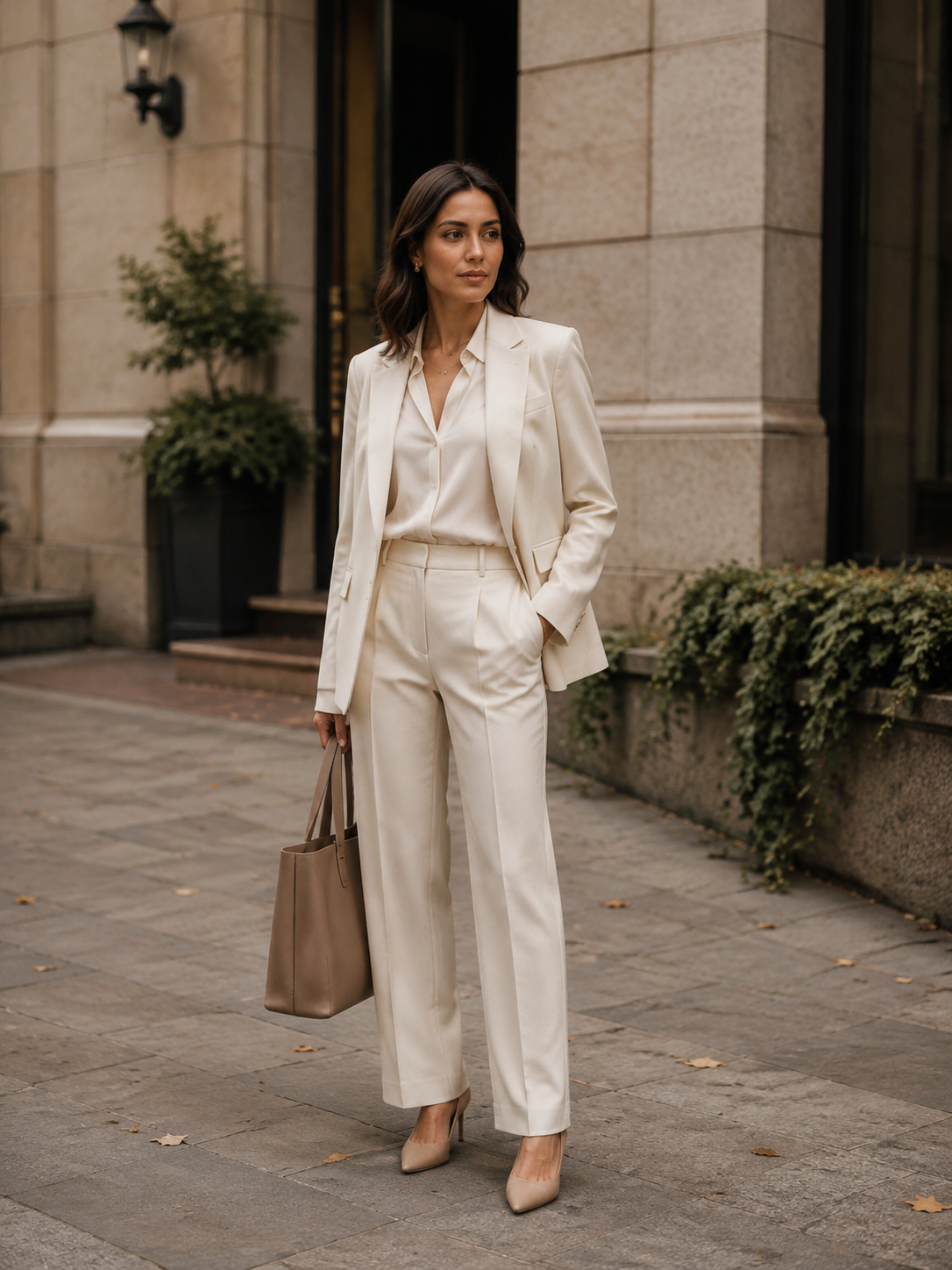
Some employers state expectations directly — a suit for client-facing finals day, formal dress for an on-site assessment. Those instructions override any general formula, including everything on this page. Where an employer's own guidance exists, use it; do not infer rules from the industry's reputation, because the same job title carries different expectations at different companies.
Roles with uniforms or safety requirements

For roles where the daily work involves a uniform, protective equipment or specific footwear, the interview outfit is usually ordinary smart casual. If you are unsure whether to bring safety shoes or references to practical assessments, the recruiter organising the day is the right person to ask.

Video interviews

Dress fully rather than half — being complete changes how you sit, and it removes the risk of standing up on camera. Choose a collared shirt or knit in a solid mid-tone that contrasts gently with your background, because very fine stripes and tight checks can shimmer on screen. Test the actual setup: sit where you will sit, open the camera app, and check what the frame really shows, including what happens when you lean forward or gesture.

Hot weather

Heat justifies dropping the jacket; it does not justify dropping the press. A linen or cotton-blend shirt, well-pressed tailored trousers and leather loafers keep the standard while staying cool. Press everything that morning, because humidity exaggerates every existing crease.

Leave these assumptions behind.

  • Guessing instead of asking. The recruiter's instructions — or one short question when there are none — remove more risk than any styling decision on this page.
  • Treating smart casual as a licence for worn denim, unpolished sneakers, or a t-shirt. Casual pieces are fine when they are clean, plain, and fit well.
  • Skipping the seated test. Trousers that ride up, a shirt that pulls across the back when you reach, or shoes that pinch after twenty minutes all register over an hour-long meeting, even in good fabric.
  • Ignoring wrinkle-free logistics. An outfit pressed the night before and hung properly beats a smarter outfit pulled crumpled from a wardrobe five minutes before you leave.

Keep exploring.