Skip to content

Find your next good read.

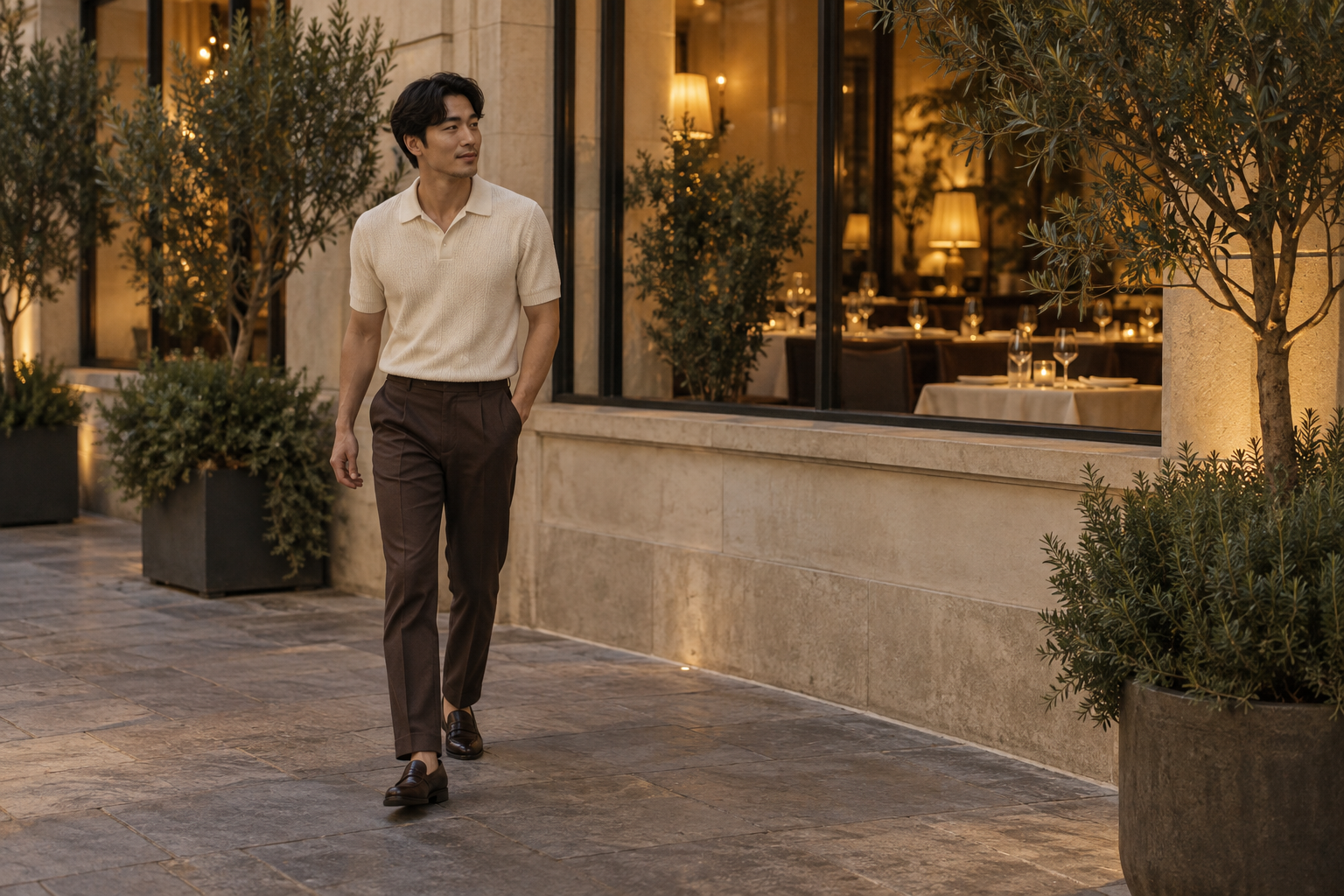
Man in a cream knit polo and dark brown trousers walks beside a warmly lit restaurant.

Occasion guide

What to Wear to a Smart Casual Dinner

For a smart casual dinner, check the restaurant's stated rules first, then choose an outfit comfortable enough for the meal and the journey. This guide gives three complete formulas, the substitutions that work without new shopping, and the seated and last-minute checks that finish the job.

Begin here

Occasion advice

Dressing for a smart casual dinner

For a smart casual dinner, check the restaurant's stated rules, then choose an outfit comfortable enough for the meal and the journey. Chinos with a knit polo and loafers are one option; a midi skirt with a simple knit and flats is another. Confirm that jeans or trainers are allowed before relying on either.

Verify the booking before choosing the outfit

The venue decides the pitch, so read it before you open the wardrobe. An upscale restaurant that takes bookings and uses tablecloths expects tailoring-adjacent dressing; a neighbourhood bistro with walk-ins and paper menus is happy with dark jeans and a good shirt.

Check these before you commit to an outfit:

  • The reservation confirmation or the restaurant's own site: any stated dress code is a brief to follow, not a suggestion to second-guess.
  • The restaurant's own photographs of the dining room and its guests in the evening — not review snapshots, which prove only what one table wore once.
  • Whether your table is in a special room or part of an event: tasting rooms, rooftop spaces and private dining often run one notch stricter than the main floor.
  • The evening's weather and the walk between transport and door — a ten-minute winter stroll makes your coat part of the outfit.

Three dinner formulas that cover most bookings

Each formula below is a complete outfit for a stated setting — pick the row that matches the venue you just verified, and the substitutions section underneath covers pieces you already own.

Three smart casual dinner formulas, by venue
PieceUpscale restaurantCasual bistroOutdoor terrace
Trousers or skirtWool trousers or a knee-or-lower dress; skip denim unless it is very dark and the room is known to be relaxedDark, straight-cut jeans without distressing, or chinosChinos or a midi skirt in a fabric that survives an evening breeze
TopPressed collared shirt or a fine knit; structured blouse for womenswearPressed shirt or a good knit — the quality does the workLighter knit or shirt; humidity in covered terraces argues against heavy fabrics
LayerUnstructured blazer as standardOptional: an overshirt or fine cardigan lifts without the formalityProper layer — bomber, chore jacket or wrap — for the post-sunset drop
ShoesPolished leather: loafers, derbies, pumps or heeled bootsClean leather or suede shoes or bootsClosed shoes even in summer — sandals stay home after dark
Myth

Smart casual means jeans and trainers are automatically fine for dinner.

Fact

Some bistros accept both; many rooms do not, and evening service runs dressier than daytime at the same address. Casual pieces belong when they are clean, plain and fit properly — and only when the venue allows them. Our guide to whether jeans are smart casual covers how to read the line.

Substitutions that use what you already own

  • No blazer? A cardigan with some weight, or a bomber in a clean finish, does the same job: the layer is what turns day clothes into an evening outfit.
  • No dress? Satin-look or tailored trousers with a fine knit read the same register as a midi dress, and a knee-or-lower skirt with a simple knit and flats matches either.
  • No heels? Clean flat leather shoes — loafers, ballet flats with a firm heel counter, flat boots — carry a dinner outfit; our guide to smart casual shoes without heels covers the fit details worth checking.
  • No knit polo? A buttoned oxford or a pressed collared shirt sits at the same pitch; a plain quality tee works only under a jacket or layered under knitwear.
  • Celebration table? Add one deliberate flourish — a silk or satin blouse in place of cotton, a patterned shirt in an otherwise plain outfit, suede in place of polished leather. One focal point keeps it festive without tipping into occasion-wear.

Test the outfit seated, not standing

Dinner is a seated event, and waistbands, sleeves and shoes all behave differently at a table. Run these checks while there is still time to change.

The pre-dinner seated test:

  • Sit for ten minutes in the full outfit: the waistband should not dig when you are halfway through the main course, not just when you stand.
  • Check sleeve and jacket movement reaching forward to a table setting — nothing should pull across the shoulders or back.
  • Walk the real distance from your transport to the door in the shoes; new leather soles or unworn heels discovered en route are an avoidable kind of misery.
  • Decide where outerwear lives: a coat you are happy to hand over at the cloakroom, not a duvet-style puffer that undoes the outfit on arrival.

Last-minute changes: from desk to table

  1. Build the office outfit to flex

    A blazer that works off the hanger, trousers that survive the commute and shoes already polished need almost nothing done to them at 6pm.

  2. Subtract before you swap

    Remove the tie or ID lanyard and open the collar one button. Most work-to-dinner conversions are subtractive, and a car or cloakroom mirror handles them without a bathroom change.

  3. Swap only what the code forbids

    If a checked garment is explicitly prohibited — trainers at a no-trainers room, for example — replace that single piece rather than rebuilding the outfit. A packed pair of loafers under the desk solves the strictest bookings.

  4. Confirm, do not guess, when the invitation is vague

    For a venue you have not visited, one message to the restaurant about dress settles more than an hour of guessing. The dinner and going out hub collects the other evening scenarios, including restaurant dress codes.

BEFORE YOU CHOOSE

Read the room. And the invitation.

  • Evening dinners run slightly dressier than daytime ones. The same restaurant that welcomes chinos at Sunday lunch reads a 7:30pm table as an occasion, so a jacket or a dress earns its place after dark in a way it might not at midday.
  • Season shapes the outfit as much as the venue. Winter turns the coat into part of the look — choose one that belongs with the clothes under it — while summer heat and humid dining rooms argue for breathable fabrics and against a lining-heavy jacket you will regret by the second course.
  • Who is going sets the dial. A birthday with friends allows more personality than a first dinner with a partner's parents, and a group booking usually means matching the median of the table rather than out-dressing it.

A useful outfit formula.

  1. Trousers: tailored trousers, dark well-fitted jeans without distressing, or a knee-or-lower dress or skirt — anything with a drawstring or obvious wear stays at home.
  2. Shirt or top: a pressed collared shirt, a fine knit, or a blouse with structure; a plain quality tee only works under a jacket or layered under knitwear.
  3. Jacket or layer: an unstructured blazer, a bomber in a clean finish, or a cardigan with a bit of weight — the layer is what turns day clothes into an evening outfit.
  4. Shoes: clean leather or suede — loafers, derbies, Chelsea boots, or heeled boots and pumps — polished enough to pass a restaurant's ambient light.
  5. Extras: a belt that agrees with the shoes, one or two quiet accessories, and outerwear you are happy to hand over at the cloakroom.

Two starting points.

Man in a cream knit polo and dark brown trousers walks beside a warmly lit restaurant.

The knit-polo formula

A cream knit polo with dark brown tailored trousers and clean dark shoes — the menswear base look: quiet colours, one texture shift, and nothing that fights under low restaurant lighting. The image is a generated illustration of the colour and proportion combination, not a photo or evidence of material, fit or comfort; check those on your own clothes.

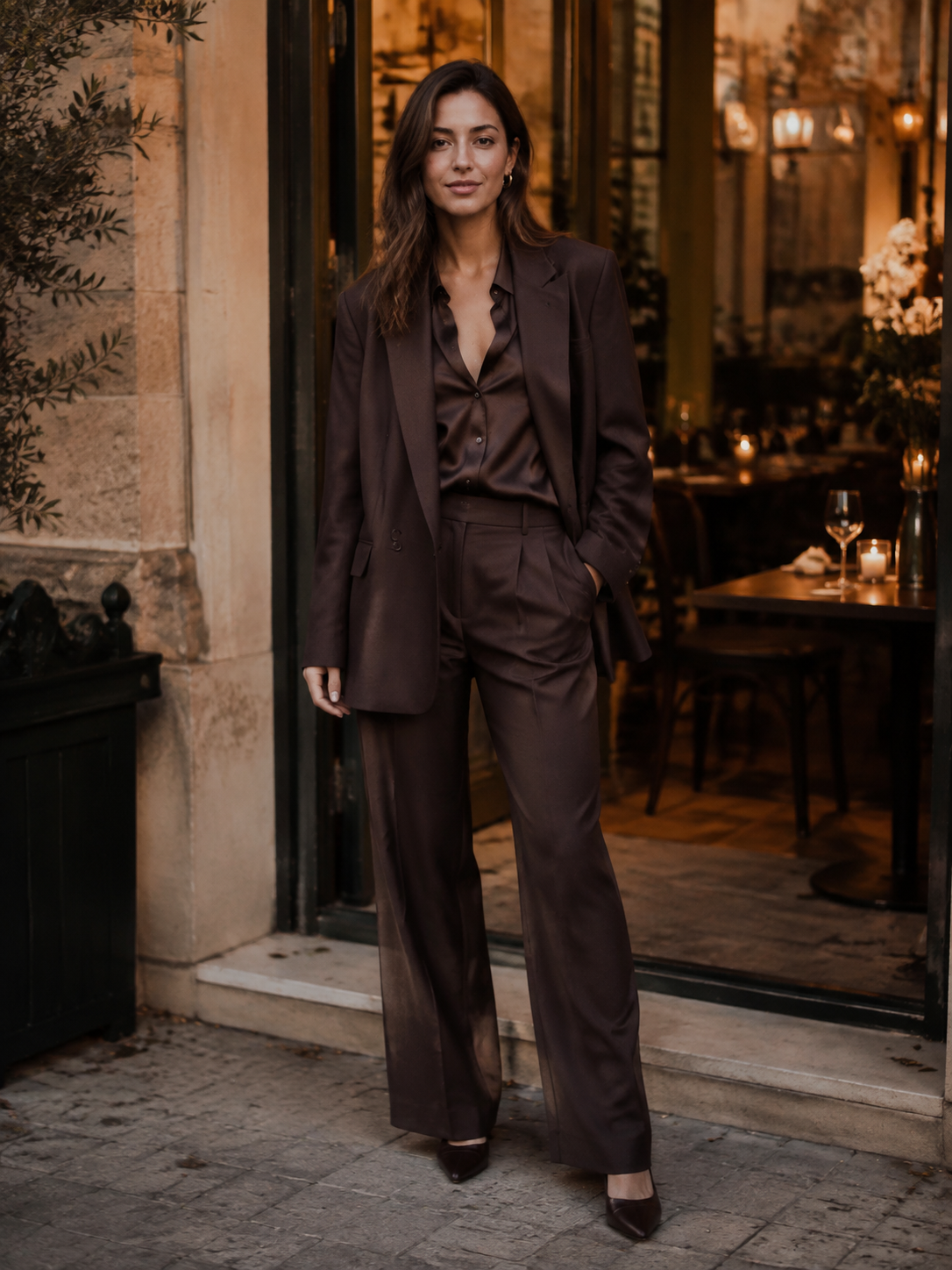
Chocolate brown tailoring and a silk-style shirt in a warmly lit restaurant

Womenswear base look

A midi dress in plain jersey or crepe with sleeves that work bare or with a wrap, black heeled ankle boots or low pumps, and a small structured bag. Alternatively, satin-look trousers with a fine knit and heeled loafers read the same register.

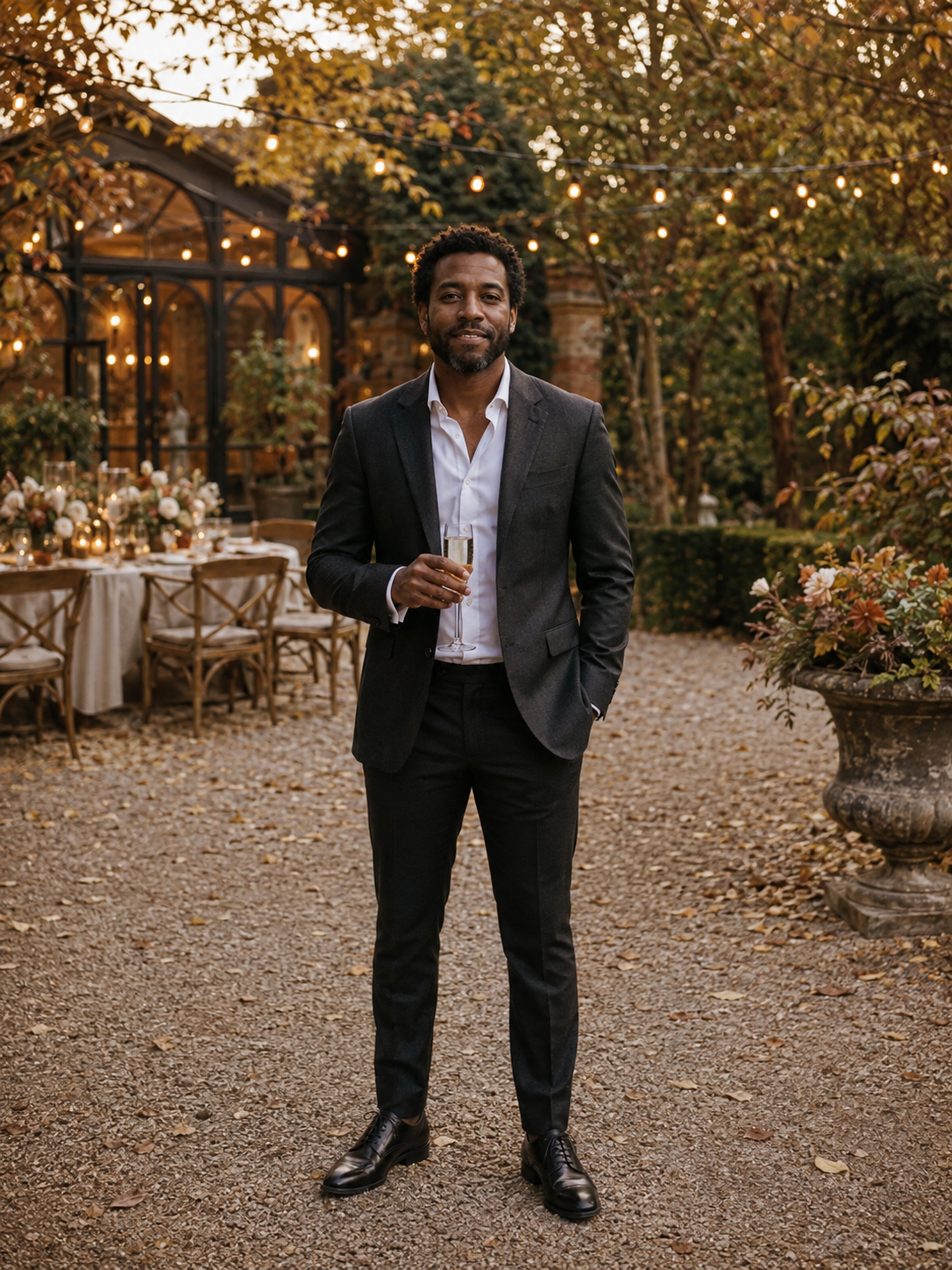
Dark blazer, open-collar white shirt and tailored trousers at a garden celebration

The celebration lift

For a birthday or anniversary table, add one deliberate flourish: a silk or satin blouse in place of cotton, a patterned shirt under an otherwise plain outfit, or suede in place of polished leather. One focal point keeps it festive without tipping into occasion-wear.

Adjust for the day.

Upscale restaurant

Lean to the formal end of the verified code: wool trousers or a tailored dress, a collared shirt or structured top, a blazer as standard, and proper leather shoes. Skip denim entirely unless it is very dark, very tailored and the room is known to be relaxed about it.

Casual bistro

Dark, straight-cut jeans with a pressed shirt or good knit and clean leather shoes or boots are exactly right. The jacket becomes optional — a well-fitting overshirt or fine cardigan does the lifting without the formality.

Outdoor terrace

Plan for the temperature drop after sunset. Bring a proper layer — bomber, chore jacket or wrap — and choose closed shoes over sandals even in summer. Lighter fabrics up top keep the evening easy while the layer covers the drop.

Dinner straight from work

Build the office outfit so it flexes: a blazer that works off the hanger, trousers that survive the commute, shoes already polished. The change is usually subtractive — tie off, collar open — rather than a full swap in a bathroom mirror, and only an explicitly prohibited garment needs replacing outright.

Leave these assumptions behind.

  • Dressing for the dinner you wish it were rather than the venue that booked it — the restaurant's stated policy, not its prices or plating, tells you how formal to go.
  • Treating smart casual as permission for gym trainers, faded denim or a slogan tee. Casual pieces belong when they are clean, plain, fit properly — and allowed.
  • Forgetting the coat until you arrive. A duvet-style puffer over otherwise perfect evening clothes undoes the outfit at the cloakroom.
  • Skipping the seated test. Trousers that dig, sleeves that pull and shoes that pinch all register over three courses, in good fabric as much as bad.

Keep exploring.

Dinner & Going Out

What to Wear for Dinner and the Theatre

One outfit for dinner and a theatre performance: checking both venues' stated requirements, dressing for the stricter one, and staying comfortable on the journey between them.

What to Wear

Dinner & Going Out

What to wear for dinner and going out: how to read the venue, two complete smart casual outfits, seated-comfort checks and the swaps that take a day outfit into the evening.