Matinee with dinner after
Daylight exposes the outfit more than a 7.30pm curtain, so lean the base a touch smarter and plan for afternoon warmth: lighter fabrics, a layer you can carry, and shoes already broken in for the extra hours on your feet.
Occasion guide
A theatre night with dinner is two venues and a journey in one outfit. Check both venues' stated requirements, dress for the stricter one, and make the seated and walking parts comfortable.
Begin hereOccasion advice
For dinner and the theatre, check both venues and dress for the stricter stated requirement. Choose clothes comfortable enough for a meal and a seated performance, plus shoes suited to the journey between them. A removable layer can help, but confirm cloakroom arrangements rather than assuming you can leave a coat.
The theatre means formal dress — dinner beforehand has to match the occasion-wear.
Most theatres publish no formal code at all; many ask only that guests avoid sportswear, and some publish nothing. The restaurant's stated policy is often the stricter of the two. Verify both, then dress for whichever requirement is tougher.
The evening is one outfit stretched across a route: venue A, the journey, venue B — in whatever order you booked. Before choosing anything, write down the actual sequence and look up each venue's own guidance.
Your booking confirmations tell you the curtain time and the reservation time — do not assume dinner comes first. A pre-theatre table, an interval that falls early, or a post-show supper all change where the walking and sitting land.
Look on the theatre's website for its visitor or accessibility pages: any stated dress request, coat or cloakroom information, and seating notes for the seats you booked. Venue policies differ; do not generalise from one famous auditorium to all of them.
Use the same check as any restaurant booking: the venue's own site and your confirmation. If one venue states a requirement and the other stays silent, the stated one controls the outfit.
Note the distance and mode between venues — ten minutes on pavement, two stops on the tube, or a taxi door-to-door each argue for different shoes and outer layers.
Each option below is a complete outfit designed to pass both venues and survive the transfer. Pick by the stricter venue's wording and the weather on the route, not by the occasion.
| Piece | Polished (a “smart” restaurant wording) | Standard (smart casual or silent venues) | Relaxed (both venues clearly casual) |
|---|---|---|---|
| Base layer | Pressed collared shirt or silk-style blouse; wool trousers or a tailored dress | Fine-knit crew or polo with charcoal trousers, or a midi dress in jersey or crepe | A good plain tee or ribbed top under dark, straight jeans |
| Layer | Unstructured blazer as standard | A cardigan with weight or a clean bomber — shed-able in a narrow seat | An overshirt that reads finished at dinner |
| Shoes | Polished derbies, pumps or heeled boots | Loafers, block heels or dressy boots with grip | Clean minimal leather sneakers — only if neither venue names footwear |
| The check | Clears a stated smart policy with room to spare and photographs finished at the bar | Meets a smart casual wording and survives hours in a narrow seat | Fits the letter of relaxed venues — and still only if the theatre's own page raises no objection |
A performance means the outfit is worn in a fixed, narrow seat for an unbroken stretch, so test it seated rather than in front of a mirror. Run these checks while there is still time to change.
The seated test, plus the bag question:
Coats are where combined evenings go wrong, because people assume storage that may not exist. The theatre's own visitor page is the only reliable source on whether a cloakroom operates, whether it charges, and how busy it gets.
The transfer punishes the outfit more than either venue does. Grates, kerbs, rain and stairs are all between the buildings, not inside them, so plan shoes and layers for the route.
Choose for the route
Leave at home
BEFORE YOU CHOOSE
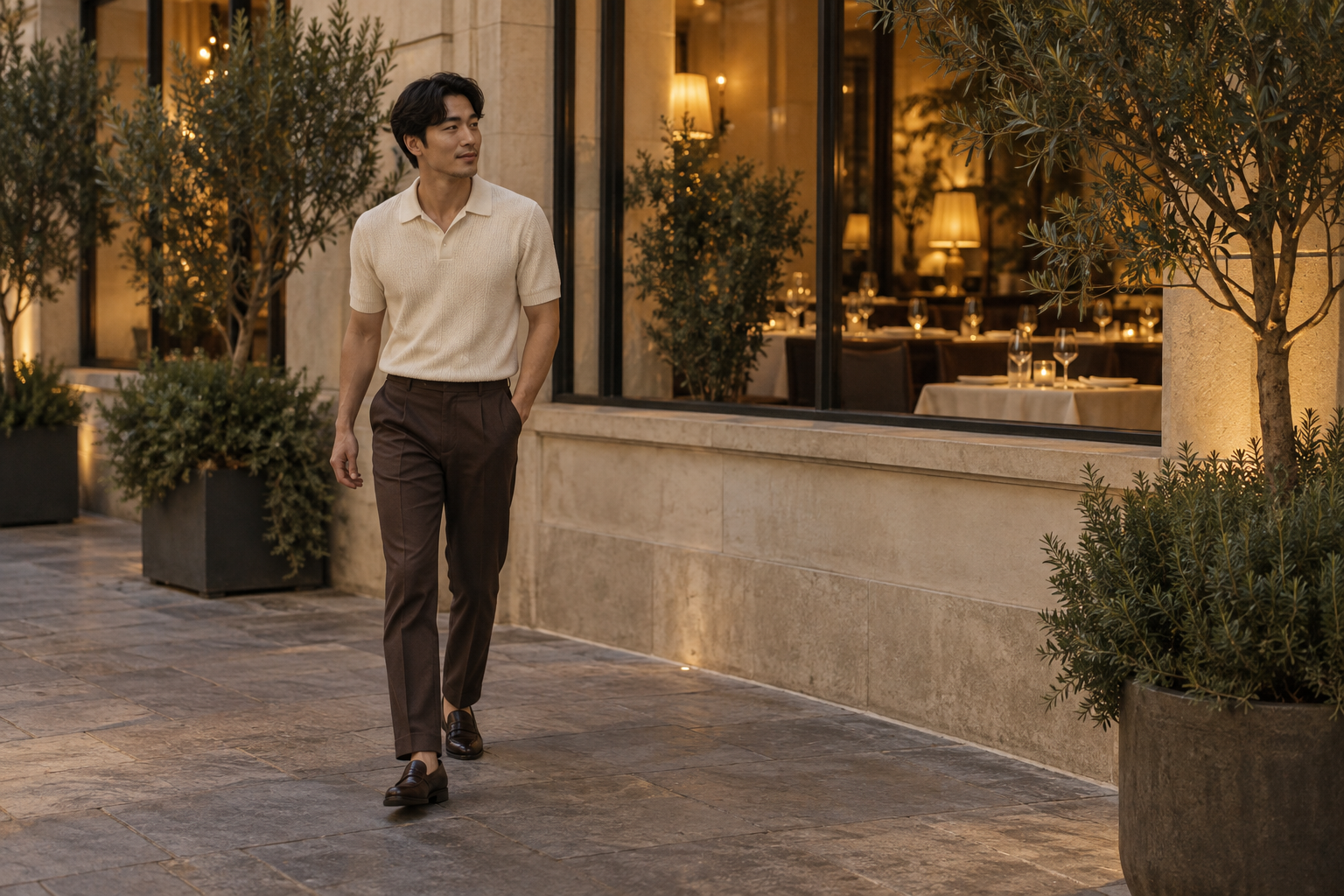
Charcoal tailored trousers, a deep-green fine-knit crew, a navy unstructured blazer, dark leather loafers and a slim crossbody. Comfortable in a theatre seat, clears a standard smart casual or no-sportswear wording, and reads finished at dinner with the blazer alone. The image is a generated illustration of the colour and proportion combination, not a photo of these garments.

A midi dress in printed jersey or soft crepe, block heels, a cropped jacket and small earrings. Jersey and crepe hold their shape in a theatre seat where a stiff fabric creases, and the block heels manage both the stairs and the walk to the restaurant.
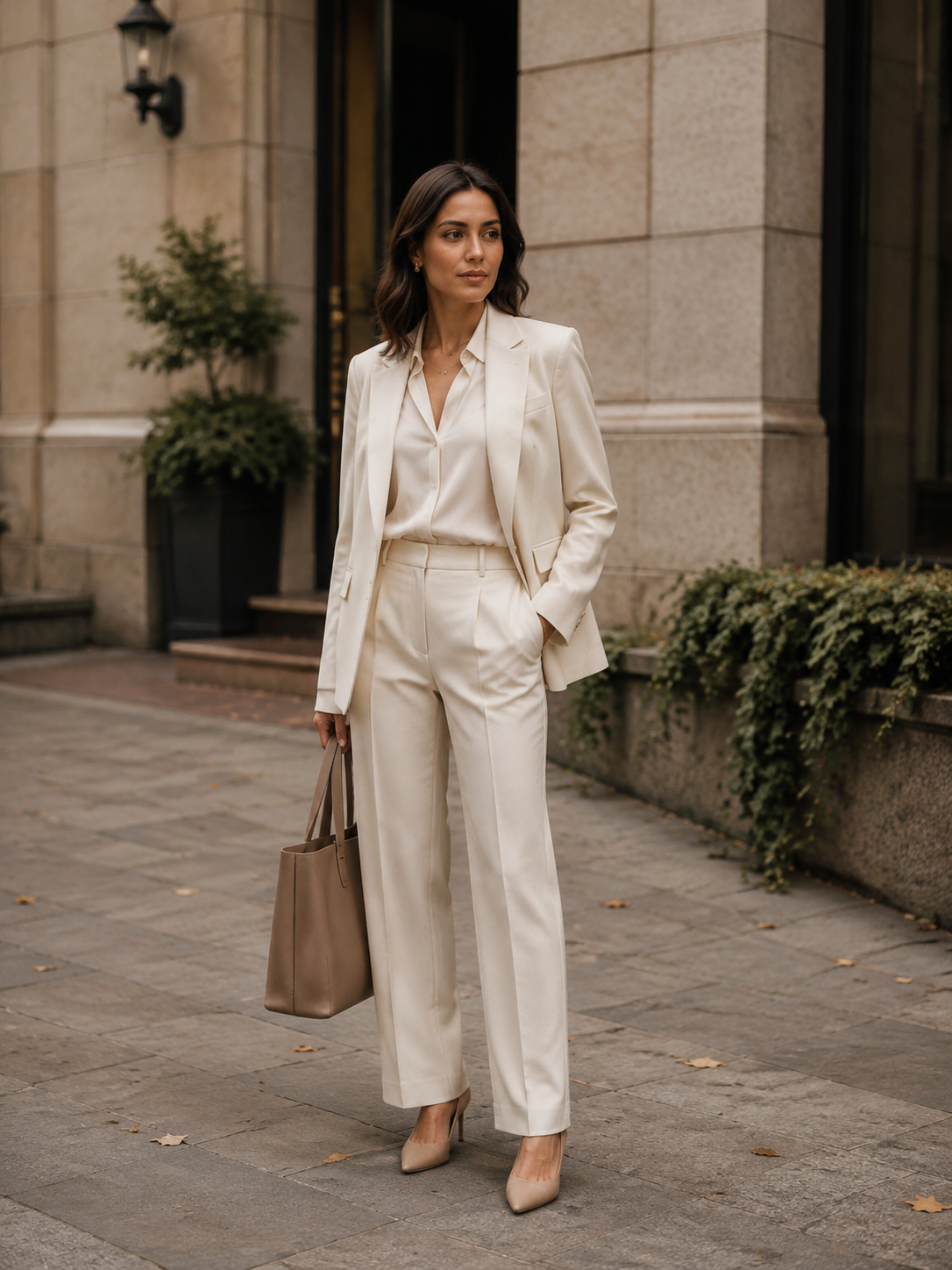
Whatever the workday left you wearing usually works when both venues stay silent on dress: wool trousers, a light-blue shirt, a merino cardigan, derbies or loafers. Add a scarf and coat for the walk and swap nothing at the theatre door.
Daylight exposes the outfit more than a 7.30pm curtain, so lean the base a touch smarter and plan for afternoon warmth: lighter fabrics, a layer you can carry, and shoes already broken in for the extra hours on your feet.
Some larger venues see more dressing up than small ones — but check the specific venue's own pages rather than assuming a tier from its size or city. A jacket or a considered dress fits those rooms without reaching for black tie.
Small theatres are often genuinely relaxed, and a no-sportswear request may not appear at all. Keep the smart casual base anyway — you still have dinner booked — but a knit-and-dark-jeans version is entirely appropriate where both venues allow it.
Winter adds the commute between stops: a proper coat over the blazer, a scarf that lives in the coat, and boots or loafers with real soles. Whether the coat checks in depends on the venue's own cloakroom information — the blazer keeps the outfit intact underneath either way.
Dinner & Going Out
How to dress for a dinner held outside after sunset: layers that pack small, footwear that handles grass, and adjustments for wind, light, and insects.
Dinner & Going Out
What to wear to a smart casual dinner: check the restaurant first, then three complete outfit formulas with seated-comfort tests, substitutions and work-to-dinner swaps.
Dinner & Going Out
Smart casual first date outfits built around the plan, the venue and your own comfort — complete options you can sit, walk and talk in, with no dress-code guesswork.