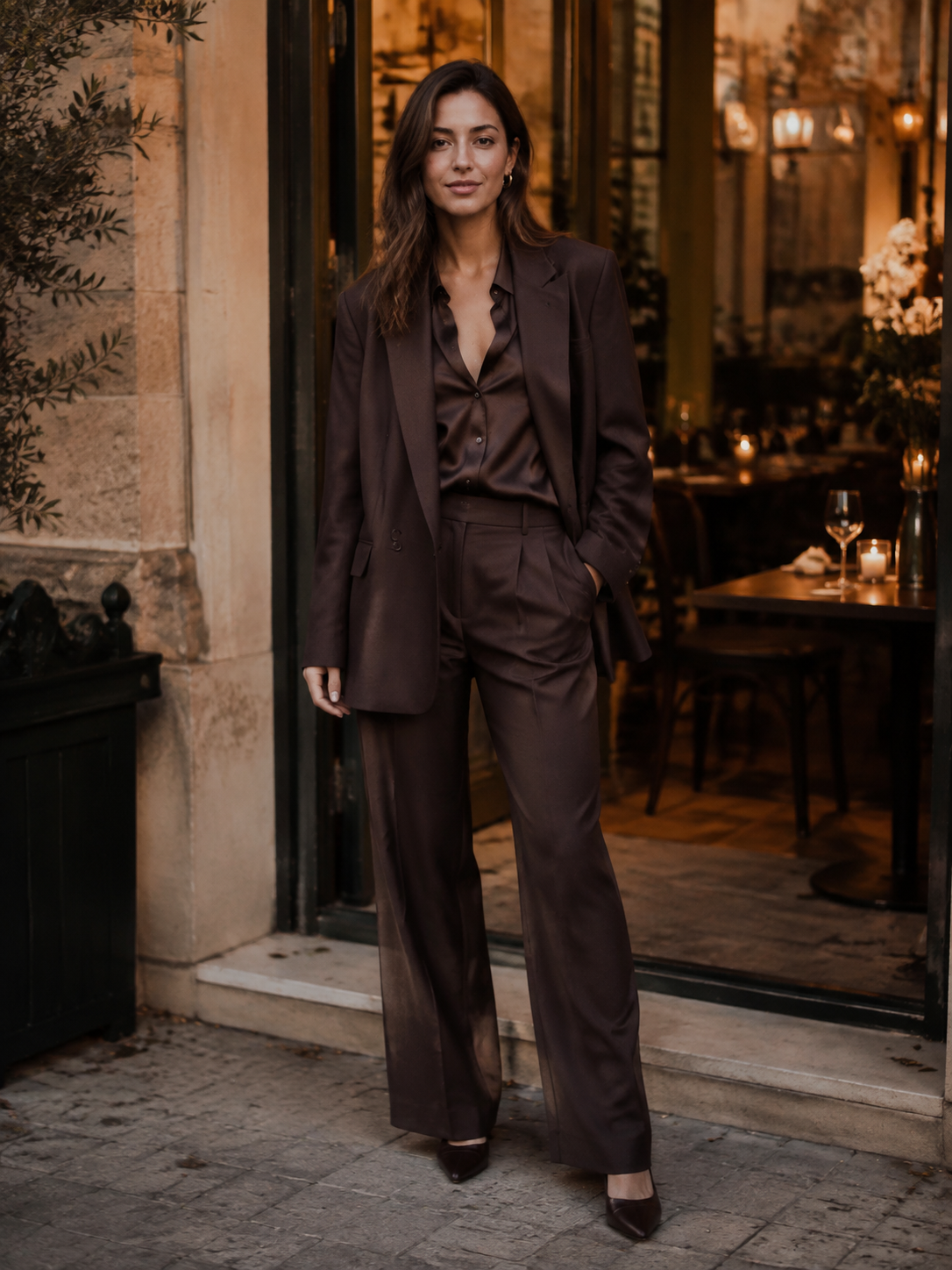
A calm approach to first date dressing: start from the actual plan, check the venue if there is a code, and wear familiar clothes you have already tested sitting and walking.
For a smart casual first date, choose familiar clothes that suit the plan and let you relax. Check the venue if there is a dress code, then try the complete outfit with the shoes you will wear. You should be able to sit, walk and focus on the conversation without constant adjustments.
Start from the actual activity, not the impression
The plan sets the formality more precisely than any dating advice. A coffee that might become a walk asks for shoes and a waistband that manage both; a booked restaurant asks for the smarter end of smart casual; drinks at a wine bar sit between. If you are unsure which it is, ask — confirming the plan is ordinary courtesy, and it is also the single best styling input you can get.
Dinner reservation: tailored trousers or a dress, a pressed shirt or knit, leather or suede shoes.
Drinks at a bar: dark jeans or chinos, a collared shirt or fine top, a jacket or layer you can shed.
Coffee or a daytime walk: clean sneakers or sturdy flats, relaxed jeans or chinos, a tee or knit under a light jacket.
A combination: build for the most formal part, and let the layer come off as the plan relaxes.
Myth
Certain colours, labels or price points measurably improve how a first date goes.
Fact
There is no reliable evidence that a specific colour or brand changes how another person responds. What is verifiable is practical: clean, well-fitting clothes you feel comfortable in make it easier to sit, move and pay attention — which is the whole job of the outfit.
If the venue might have a dress code
A few restaurants publish a policy and apply it at the door, and it is worth sixty seconds to check their website or booking confirmation before the day. Most policies sit at or below smart casual, so the outfits in this guide clear them comfortably. Our restaurant dress code guide explains the typical wording, and the dinner hub collects the wider going-out guides.
Test the complete outfit before the day
The sitting and walking check is what separates an outfit that photographs well from one you can actually wear for three hours. Run it at home with the shoes you plan to wear, while there is still time to swap a piece.
Sit for ten minutes
Waistband, hem and shirt stay comfortable; nothing rides up or digs in when you lean back.
Walk at real pace
Shoes grip without rubbing at the heel, and the trousers or hem do not catch or cling with each step.
Climb stairs and reach
Layers move with you, and you can gesture, reach for a menu or take a coat off without a fight.
Adjust once, then decide
If something still needs fixing after one adjustment, swap that piece for a familiar one rather than hoping.
Rain plans and last-minute decisions
If the weather turns or time runs short:
One compact umbrella or a water-resistant jacket covers rain without overpacking a bag.
Leather or treated suede handles a damp pavement; open-weave canvas does not, so swap shoes rather than risk it.
Choose between two outfits you have already worn, using the venue and forecast as the only tiebreakers.
Skip the emergency purchase — an unworn outfit is the single most common source of discomfort on the night.
The last-minute method is deliberately dull: pick the outfit closest to the plan, fix the weakest single piece, and leave. A decision made from clothes you know beats a new outfit you are meeting for the first time.
BEFORE YOU CHOOSE
Read the room. And the invitation.
The venue is the brief. A neighbourhood wine bar, a mid-range restaurant, and a casual coffee that might become dinner all sit at different points on the same scale. Match the place, then add one small step of care — a pressed shirt, a proper jacket, clean leather shoes — because you wanted to, not because a rule demands it.
Comfort is practicality, not a compromise. You will sit for two or three hours, maybe walk afterwards, and an outfit that pinches, rides up, or needs constant adjusting will occupy your attention. If you would not wear it for a long dinner with a friend, it is the wrong outfit for a first date too.
Familiar clothes outperform new ones. If you never wear blazers, a stiff new one will feel like a borrowed personality rather than a polish upgrade. The goal is the most put-together version of how you actually dress.
Weather shapes the default. Summer forgives lighter fabrics and open collars; winter adds the coat and the layer as part of the outfit, since the arrival and the walk are part of the plan.
This page is about your own comfort and the setting's demands. It cannot tell you what another person will like, and no outfit needs to — the practical test is whether you can sit, walk and talk without thinking about your clothes.
A useful outfit formula.
Trousers or dress: dark, well-fitting jeans with no distressing, tailored chinos, or a dress or skirt you have already sat and walked in — nothing that needs pulling up or smoothing down.
Top: a pressed collared shirt, a fine merino knit, or a quality plain tee under a jacket — one layer of structure over one of softness, in colours you genuinely wear.
Layer: an unstructured blazer, a chore jacket, or a leather jacket you already own and like; it adds structure to the outfit and doubles as warmth on the walk between venues.
Shoes: clean leather or suede — loafers, derbies, or minimal sneakers in good condition. New shoes straight from the box are a known risk; wear them in first, or wear shoes you trust.
Grooming and extras: pressed fabric, a coat that matches the outfit's level for colder months, and accessories kept minimal — nothing that jingles, clinks, or needs explaining.
Two starting points.
The dinner reservation look
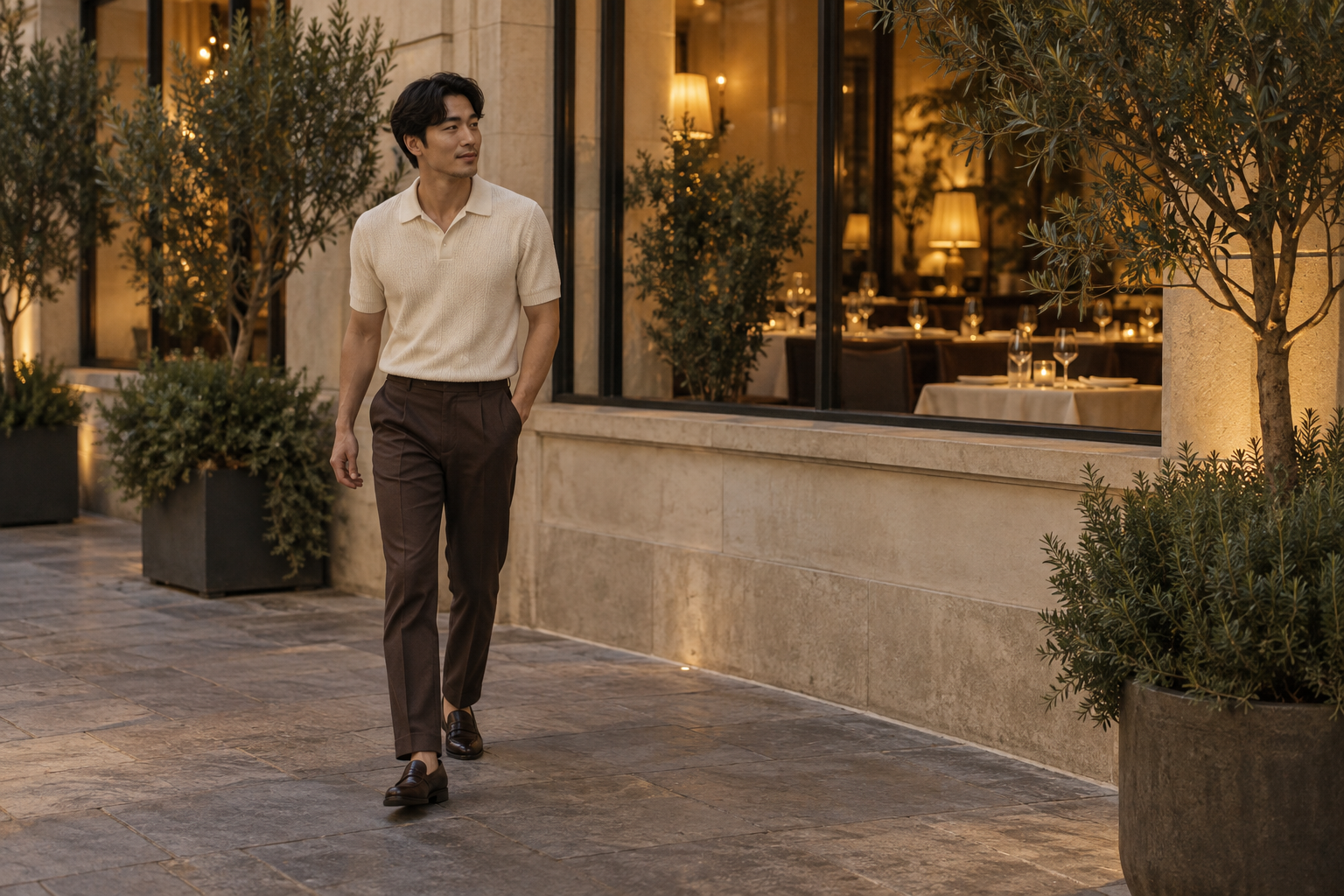
The photograph shows the pattern: a cream knit polo and dark brown trousers beside a warmly lit restaurant — one structured, one soft, both quiet. On a person, the same pairing runs to charcoal tailored trousers with a fine merino crew and black leather derbies or low flat shoes. It is a step above the wine bar for a proper restaurant, and every piece is easy to sit in for hours. The image illustrates a clothing option, not dating success.
The wine bar look
Dark indigo jeans with no distressing, a pressed white oxford shirt worn open-collar, a navy unstructured blazer, and dark brown suede loafers. Smart enough for a dimly lit room, relaxed enough that leaning back in a booth is comfortable.
The casual start look
Straight dark jeans, a plain ecru tee under an olive chore jacket, and clean white leather sneakers. Right for coffee that may turn into a walk, and it upgrades naturally if the plan becomes dinner — the jacket does that work.
Adjust for the day.
Venue is unknown
When only a name and a time were given, dress for the middle: dark jeans or chinos, a collared shirt or fine knit, a layer, and leather shoes. That version fits a bistro, a wine bar, and most restaurants, and it can relax — jacket off, sleeves rolled — if the place turns out casual.
Warm weather dates
Swap wool for linen and cotton: a pressed linen shirt, lighter trousers or a casual dress, and leather sandals or loafers. In summer, crispness — everything pressed, everything clean — does the work a jacket does in cooler months.
Cold weather dates
Winter dates are seen in coat and scarf for the first and last ten minutes, so make them part of the outfit: a wool overcoat over the blazer or knit, a plain scarf, and leather boots if the ground demands them. Check the coat over the full outfit before leaving.
Activity dates
A walk, a market, or a gallery shifts the centre of gravity to shoes and ease: minimal sneakers or sturdy flats, jeans or relaxed chinos, and a tee or knit under a jacket. Keep the same standard of cleanliness and fit — activity changes the pieces, not the care.
Leave these assumptions behind.
Buying something new for the night. Unworn shoes, a stiff new shirt, or an unfamiliar fit will be on your mind more than the conversation; road-test the full outfit at least once before.
Dressing three notches above the venue. A full suit at a pub table creates distance, not rapport — match the room and add one deliberate step of care instead.
Building the outfit around one loud piece. A statement jacket or very bold pattern invites commentary on clothes rather than anything else, and it is a hard look to relax under.
Dressing for an imagined standard rather than the plan. Expensive clothing is not the assignment, heels are not mandatory for anyone, and no body shape disqualifies an outfit — fit and comfort decide.
How to read a restaurant dress code before you book: where the policy lives, what the wording actually requires, and outfits checked against it — not against the price of the room.
What to wear to a smart casual dinner: check the restaurant first, then three complete outfit formulas with seated-comfort tests, substitutions and work-to-dinner swaps.
One outfit for dinner and a theatre performance: checking both venues' stated requirements, dressing for the stricter one, and staying comfortable on the journey between them.