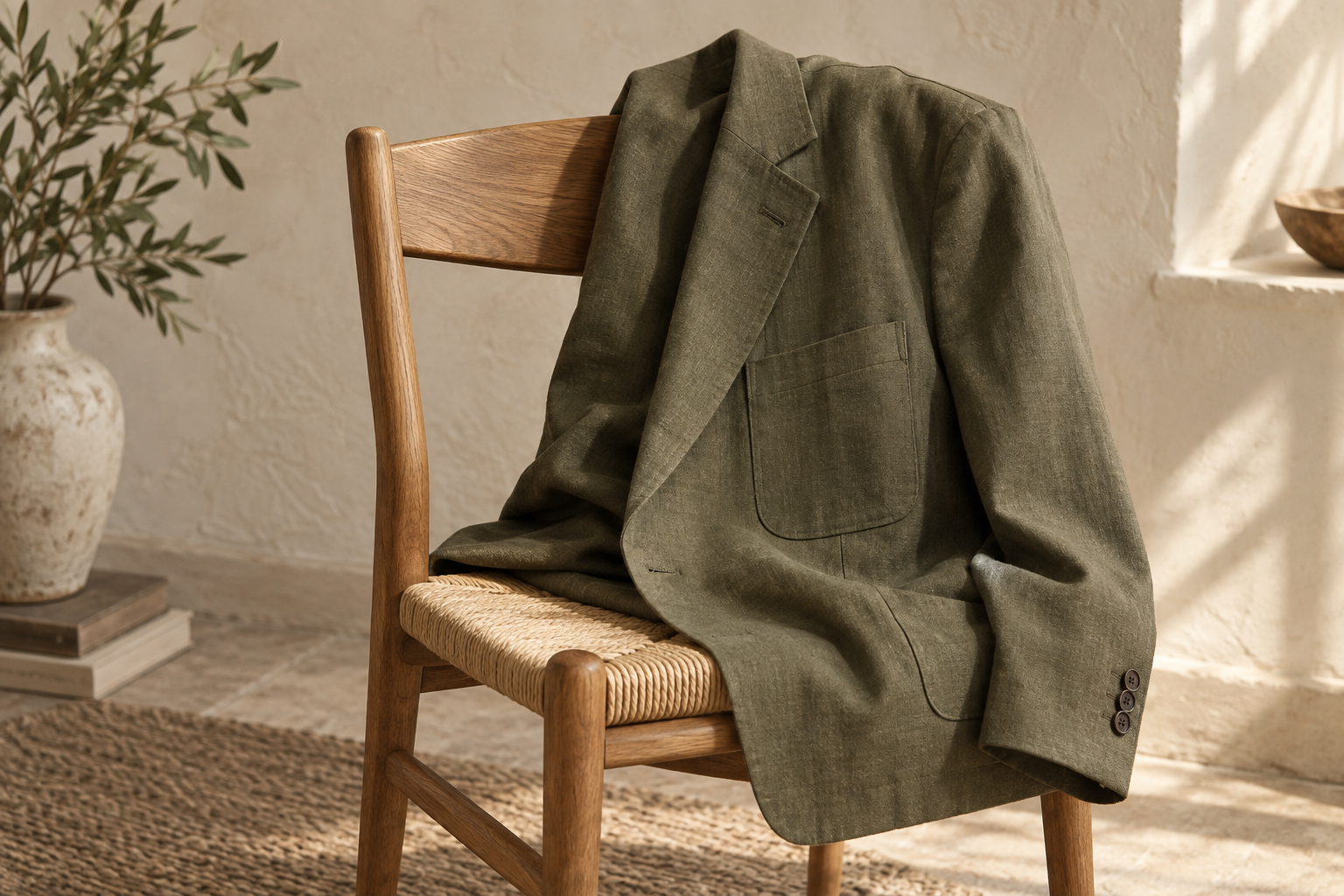
Jackets & Blazers
How a Blazer Should Fit: Length, Sleeves and Closure
Check shoulder, jacket length, sleeve length, chest room and closure one at a time. What a blazer should do off the rack and what a tailor can fix.
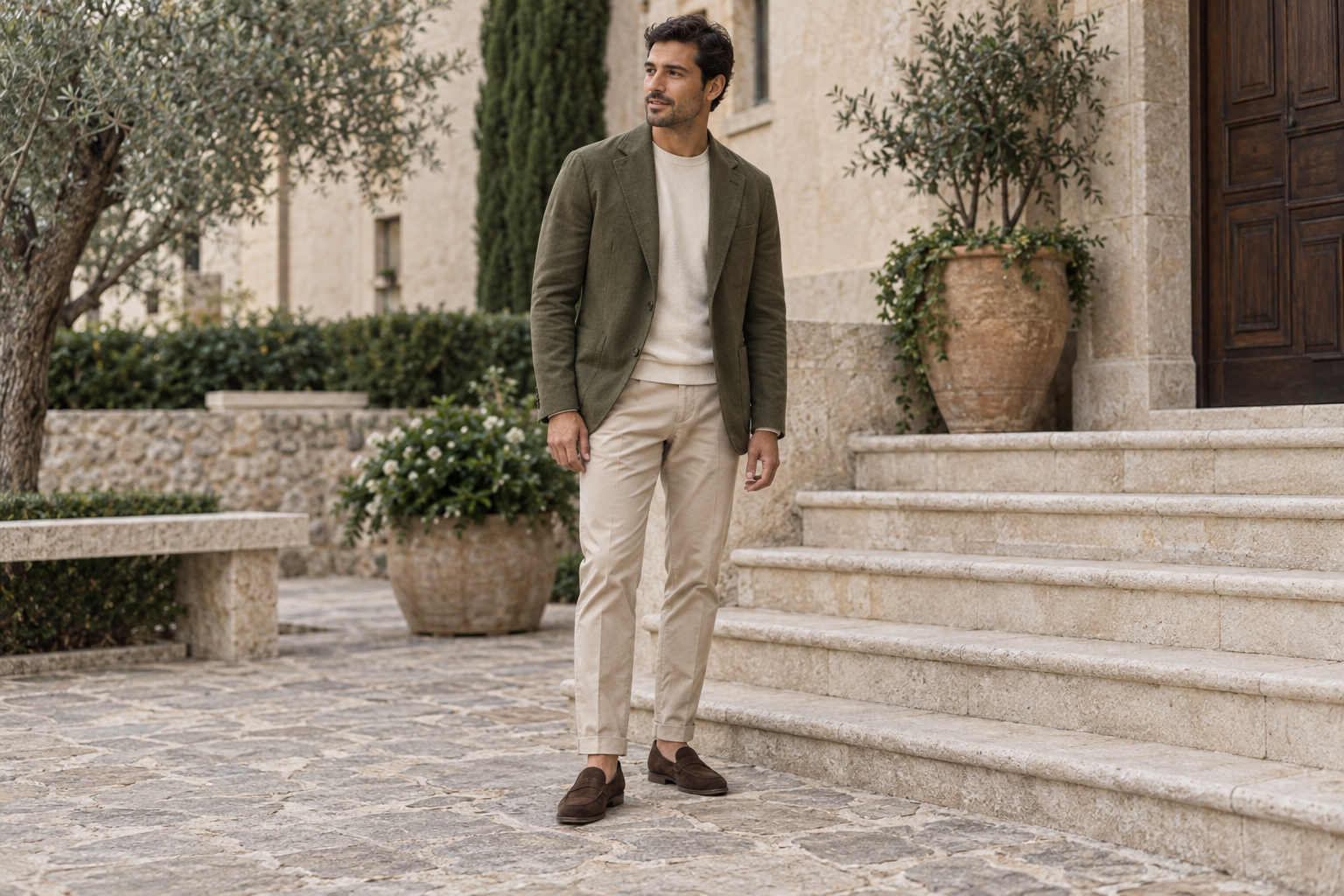
Outfit inspiration
A blazer and sneakers work when the whole outfit is balanced, not because one clean shoe redeems everything. Compare jacket, trousers and shoe together, starting from a soft navy blazer, a plain knit, chinos and simple sneakers.
Begin hereInspiration
To wear a blazer with sneakers, check that the setting allows trainers, then compare the jacket, trousers and shoe as a whole outfit. A soft navy blazer, plain knit, chinos and simple sneakers are a useful starting point. A bulkier runner can also work, but it changes the balance and may need a different trouser shape.
Sneaker acceptance is set by the room, not by fashion. Offices, restaurants, clubs and event venues each publish or enforce their own expectations, and a no-trainers rule overrides every styling argument on this page. When the code is unclear, the cost of one quick question to the venue, host or manager is lower than the cost of being the underdressed guest.
Where sneakers are allowed, the code usually still shapes which pair: a smart-leaning office may accept plain leather courts but not mesh runners, while a creative workplace rarely cares either way. Fashion photography proves only that a photographer found the combination photogenic — it is not evidence of universal acceptance anywhere you plan to go.
Swap the shoe under the same navy blazer and the whole register moves. A slim leather court sneaker keeps the line tidy and leans the outfit toward smart; a suede retro runner adds bulk and texture and leans it toward weekend. Neither is wrong — but each asks for a different trouser shape, and the visible change is mostly at the ankle and the silhouette's bottom third.
| What changes | Slim court sneaker | Retro runner |
|---|---|---|
| Visual weight at the ankle | Low, so the trouser can finish with little or no break | Bulkier sole, so the trouser needs a slight break or a wider leg to sit naturally on the shoe |
| Outfit register | Leans smart — survives a dark trouser and a poplin shirt | Leans casual — wants knitwear, denim, corduroy or another textural cue to look deliberate |
| Colour job | Reads neutral even in white; one quiet block at the bottom | Carries panels and a gum sole, so keep the rest of the outfit to two or three quiet colours |
| Easiest trouser partner | Slim chinos, tailored trousers, dark denim | Straight or relaxed jeans, olive or tan chinos with some weight |
There is no fixed allowed shoe bulk — a chunkier runner can absolutely work, and the check is simply whether the trouser and the rest of the outfit absorb its weight. If the shoe is the loudest thing you are wearing by a wide margin, the outfit is doing what the shoe says.
The ankle line is where these outfits succeed or look leftover. With sneakers, the trouser should finish at or just above the shoe without stacking into folds — a small single break for tailored trousers, a clean ankle or one cuff for denim and chinos.
Socks are a decision, not an afterthought: no-show socks vanish and read bare-ankle, while fine socks in a colour pulled from the outfit can bridge shoe and trouser. Avoid heavy athletic socks under anything tailored-leaning.
Before walking out the door — and again once you have sat down somewhere:
A pristine pair of sneakers will carry any blazer — condition is the only thing that matters.
Condition helps, but the blazer's structure, the trouser shape and the setting do most of the work. A squeaky-clean mesh runner under a structured charcoal jacket and flannel trousers still reads as a clash, which is why the smart-leaning looks below restrict themselves to low, leather pairs.
If the venue rules out trainers, a loafer is the nearest substitute in spirit — slip-on ease, a soft silhouette, the same bare-ankle or fine-sock line. Swap like for like in bulk: a slim penny loafer replaces a court sneaker, while a chunkier suede loafer can stand in for a retro runner.
Do not describe the loafers as sneakers to yourself or anyone else — the substitution works because it is honest about being a different shoe. And do not equate wear marks with character in either direction: scuffed loafers earn nothing, and pristine ones guarantee nothing.
Where to go next
Every jacket guide on the site in one place.
The lower half of this equation — trouser shapes, hems and breaks with trainers — in depth.
The broader casual-blazer method this page's looks are built on.
6 looks to explore
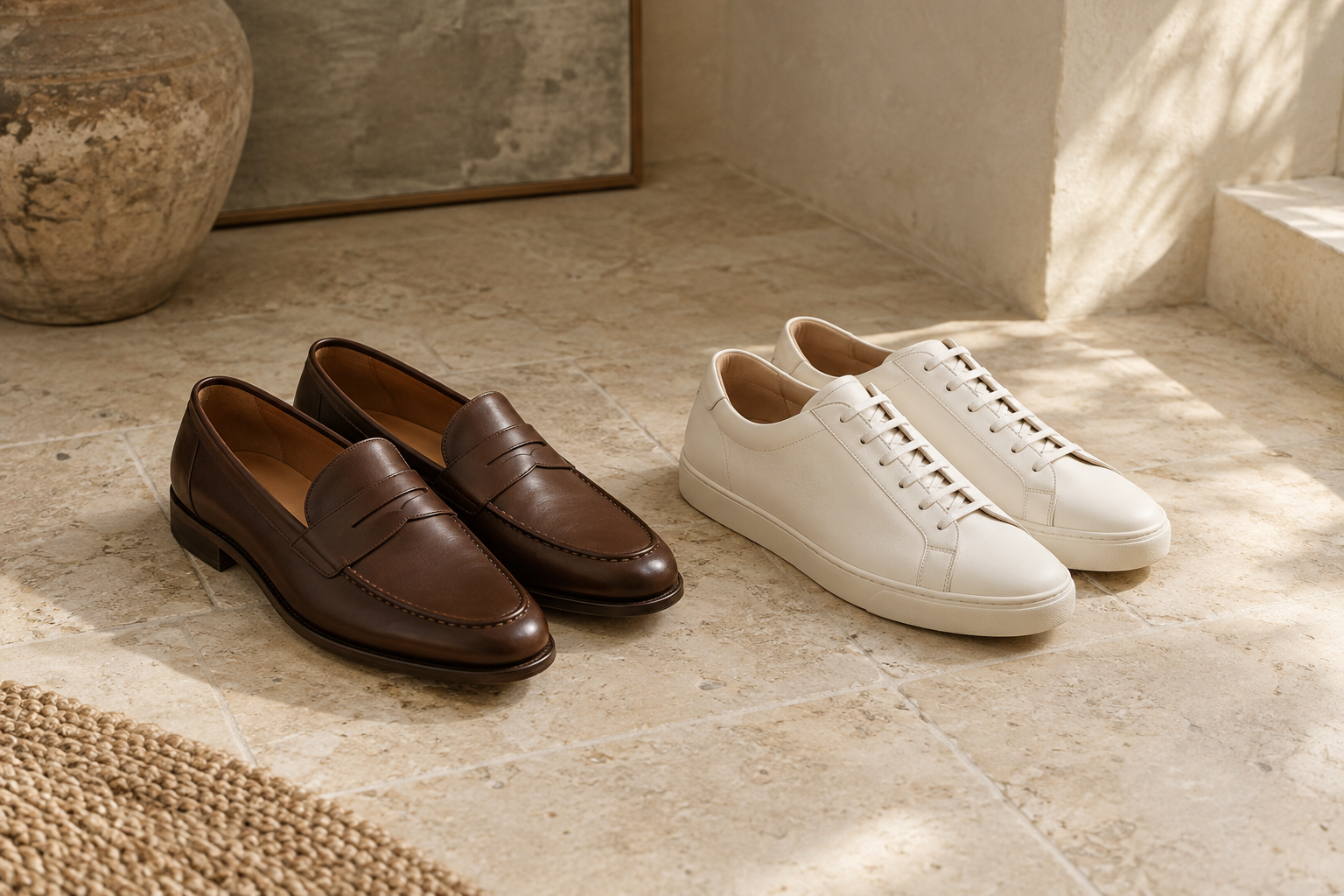
A navy unstructured blazer, a white crewneck in heavier cotton, slim charcoal trousers and plain white leather sneakers with no visible branding. One quiet colour per half, nothing decorated — the baseline the filters below vary. The illustration shows a cream leather sneaker beside penny loafers: the sneaker side is this look, the loafer side is the fallback when trainers are excluded.
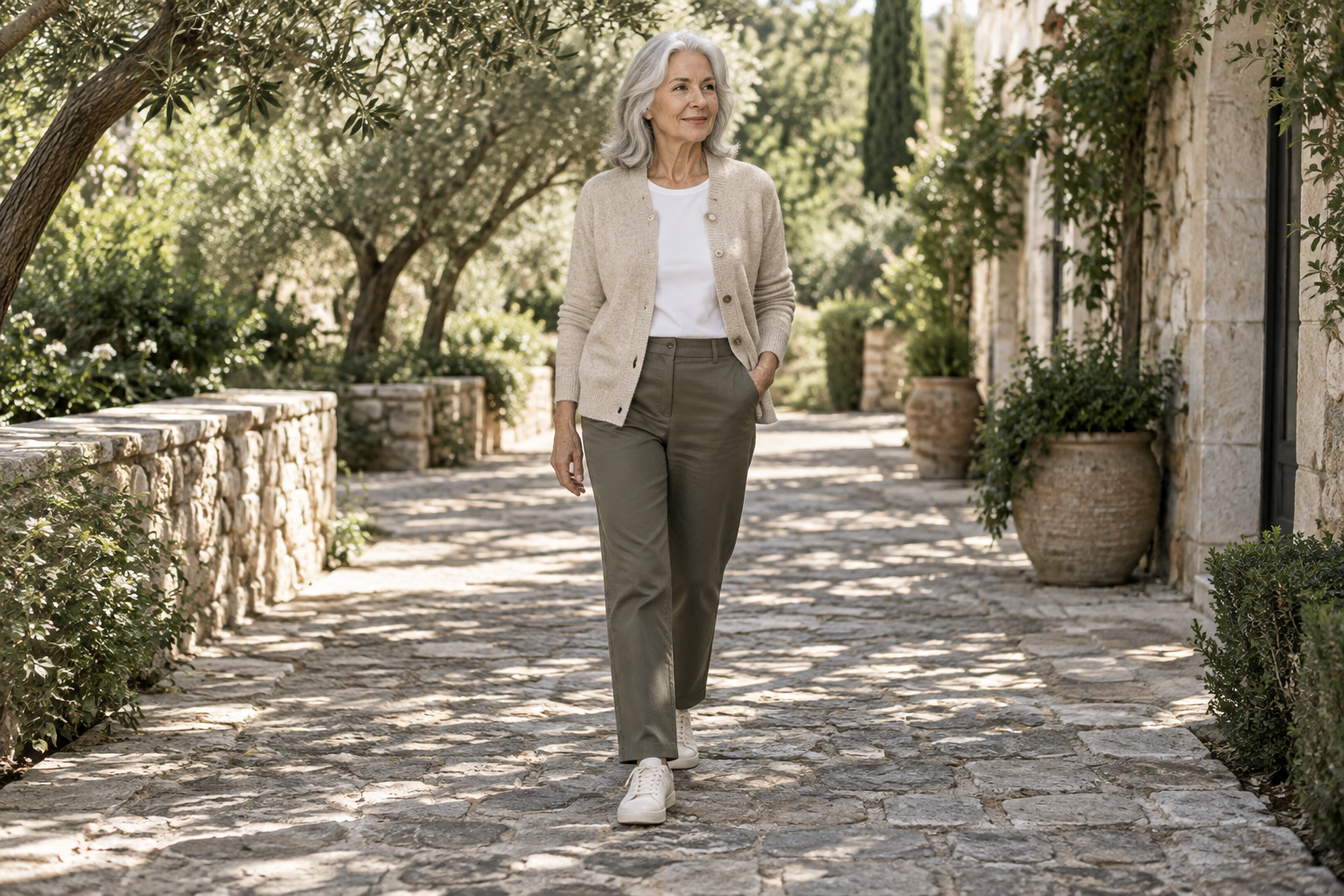
A fine-gauge grey knit, dark tapered trousers and low-profile trainers in one colour, so the eye reads a single dark column with the sneaker as its quiet finish. Keeping the shoe the same family as the trouser lengthens the leg and removes the risk of the shoe reading sporty. The illustration shows the equivalent quiet-palette daytime look with cream sneakers on a stone path.
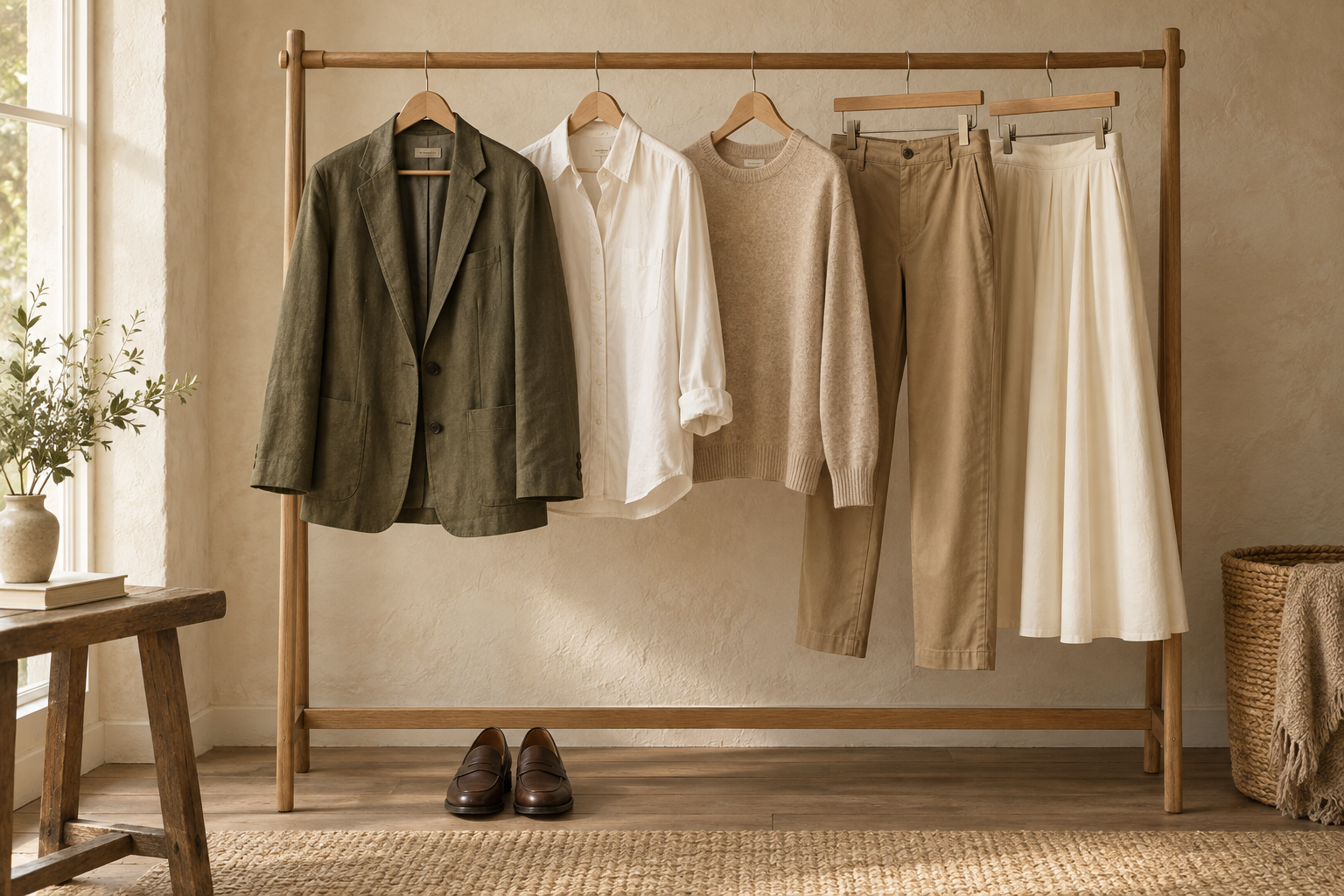
Retro runners earn their place through character rather than sleekness, so the rest of the outfit leans textural and casual: corduroy or brushed cotton trousers, a breton or striped knit, suede panels on the shoe agreeing with the cloth. The illustration shows the capsule of pieces on a rail, with loafers standing in — swap the described sneakers in their place.
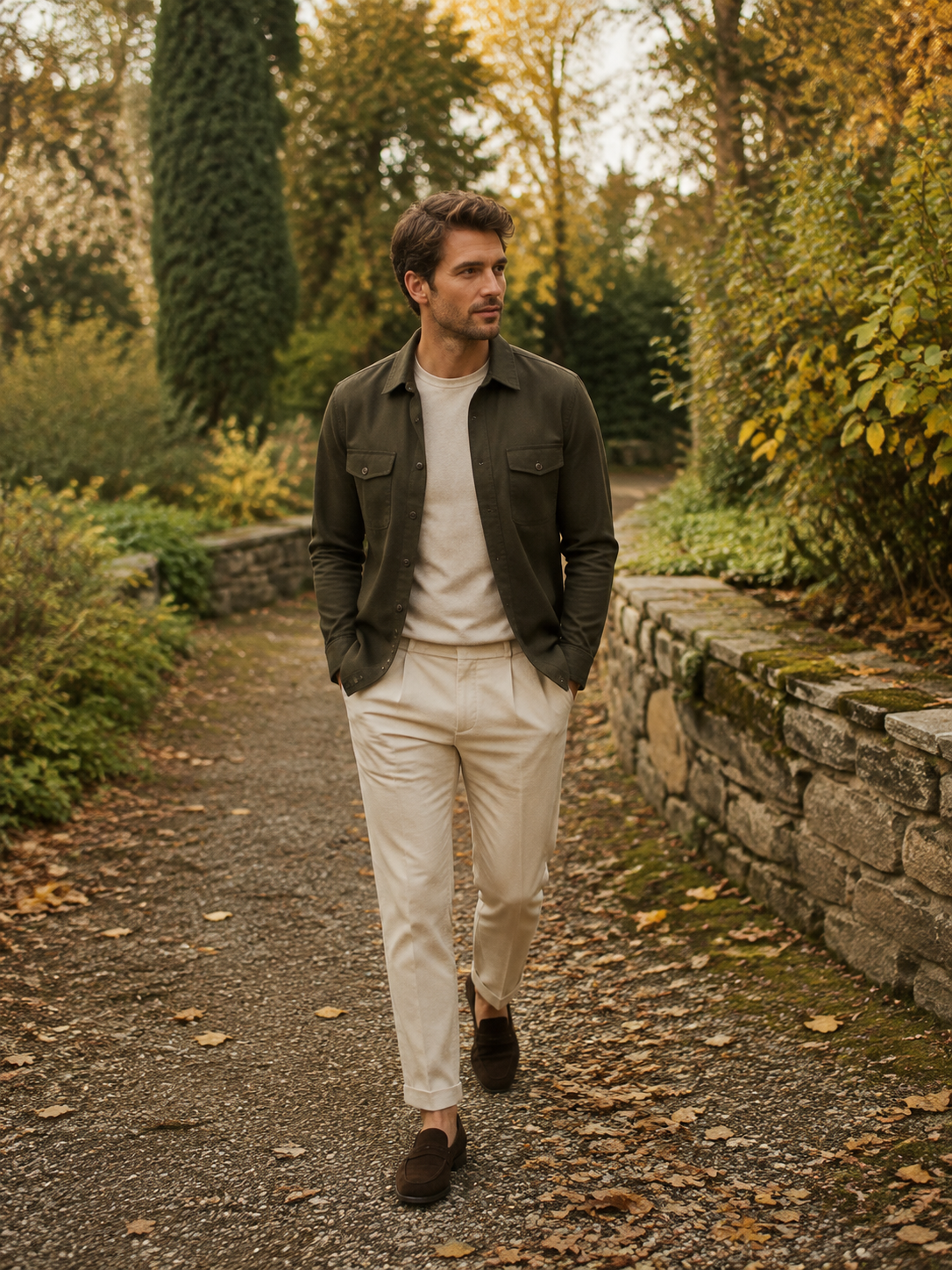
A relaxed hoodie or heavy knit under a soft jacket, dark straight jeans and classic leather court sneakers — the layer keeps the jacket from reading formal while the flat leather upper stops the hoodie from going full athletic. Each piece pulls the other back toward the middle. The illustration shows the weekend version of the palette on an autumn walk.
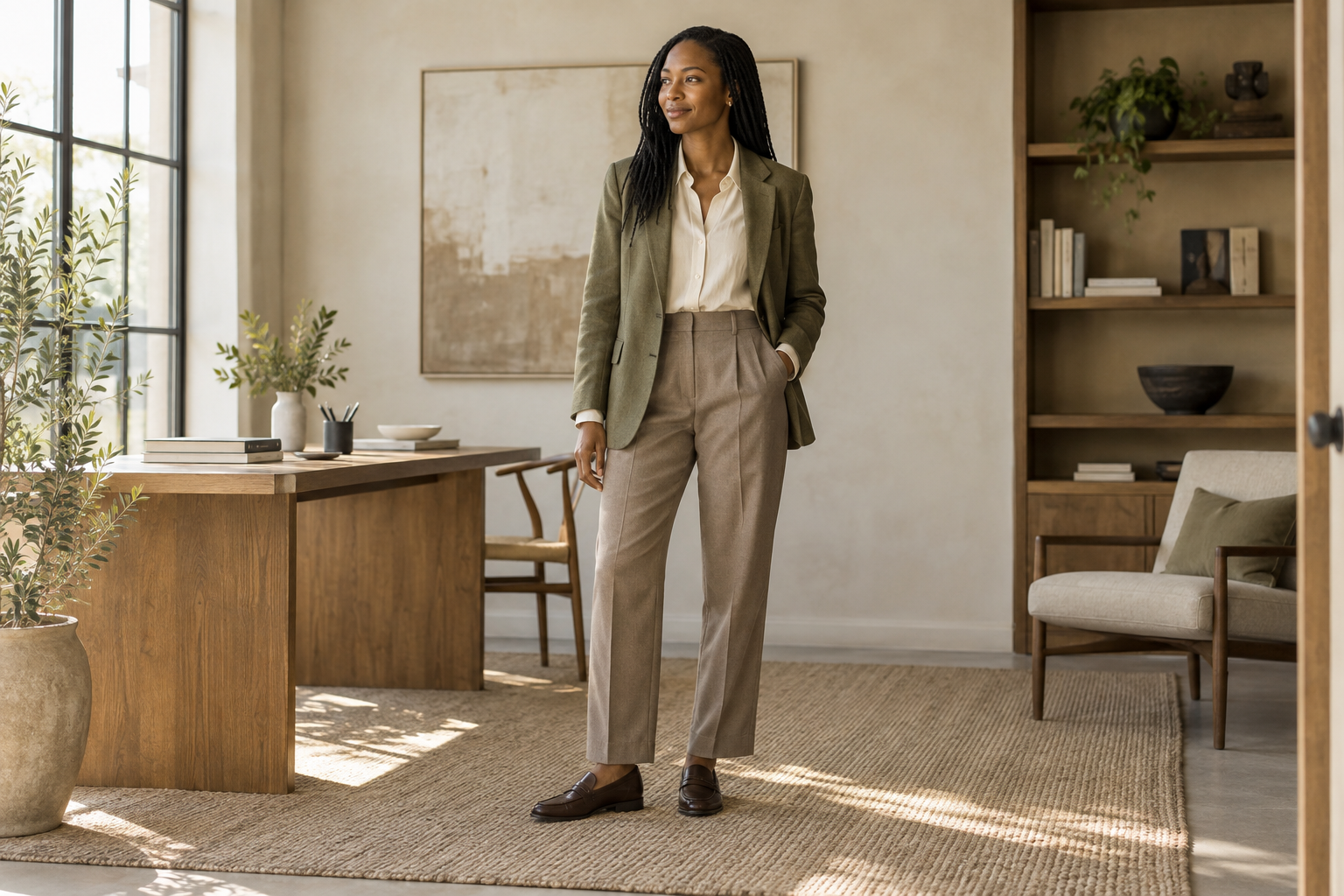
As far toward formal as this combination goes: a dark blazer over a white poplin shirt worn open-collar, dark wool trousers and slim black leather sneakers — low, leather, no mesh. The open collar keeps the mood consistent, because lacing a tie over sneakers would split the outfit in half. The illustration shows the same office register with brown loafers; this is the labelled substitution when sneakers breach the dress code.
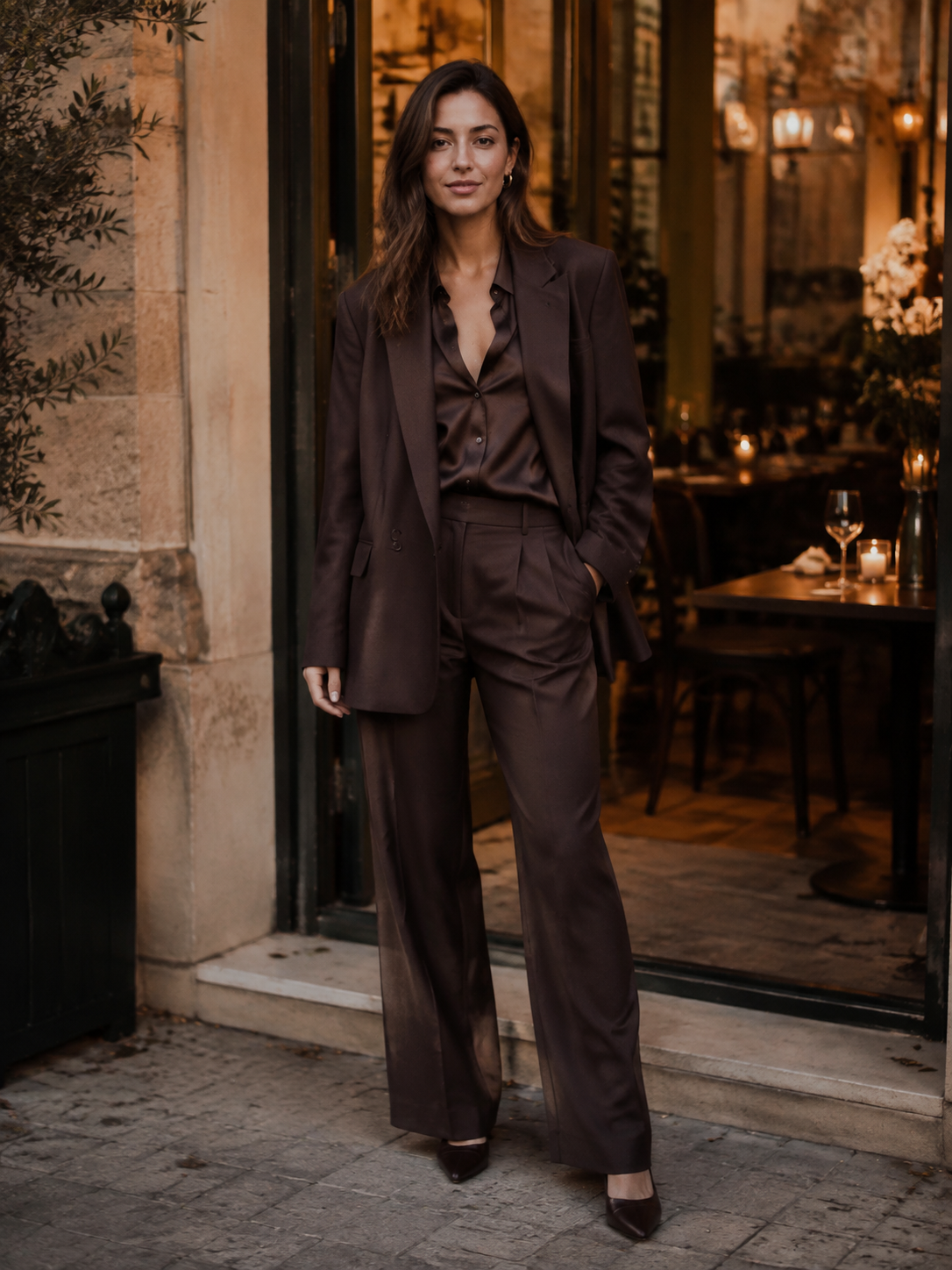
A cream knitted polo under a navy blazer, grey pleated trousers and white leather sneakers with rubber soles. The pleated trouser is the dressy element and the sneaker its counterweight, so the shoes should be wiped down and intact — at this level of tailoring, genuine neglect reads as neglect, not ease. The illustration shows the evening setting and palette.
Jackets & Blazers
Check shoulder, jacket length, sleeve length, chest room and closure one at a time. What a blazer should do off the rack and what a tailor can fix.
Jackets & Blazers
Matching trousers, fabric and construction are the useful tells. Compare blazers, sport coats and suit jackets — and learn which works with odd trousers.
Jackets & Blazers
How to wear a blazer casually: knit, shirt and relaxed-layer combinations built around complete outfits, with the swaps and checks that make each one work.