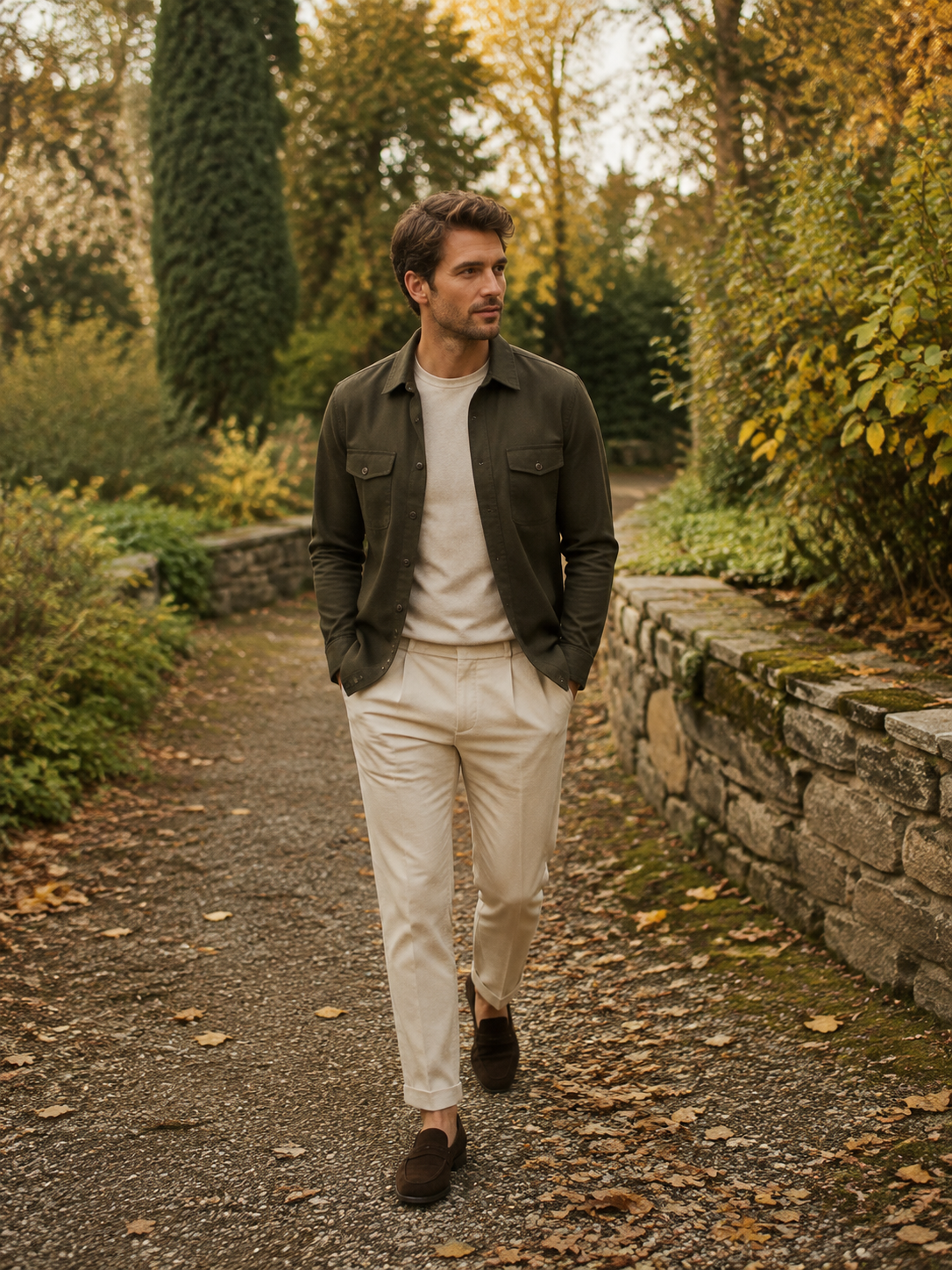
Interview or formal meeting
Wear the full suit. A suit jacket only works as a pair in a high-stakes setting — splitting it there reads as a missing trouser rather than a styling choice.
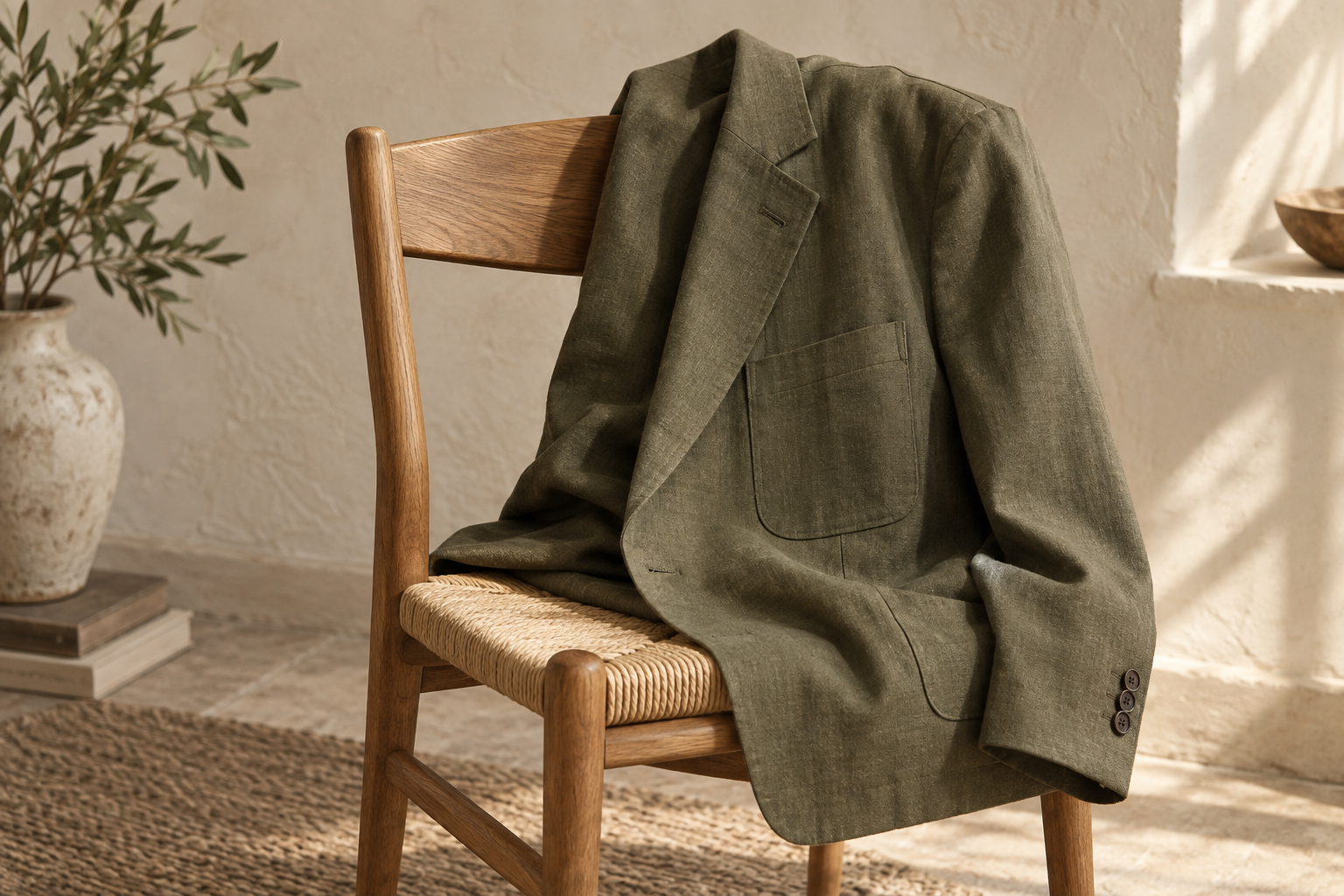
Jacket comparison
A suit jacket belongs to a matching suit, while blazers and sport coats are commonly worn with separate trousers. Retailers use the labels differently, so buttons or texture alone may not settle the name. Here is how to check what you own and pair it with confidence.
Begin hereComparison
The three terms get used loosely, and retail labels overlap, so the useful question is not just what a jacket is called but how it behaves with the trousers you want to wear. Start with how the garment was sold and what its fabric and construction can support.
Metal buttons always mean a blazer, and any textured jacket is a sport coat.
Metal buttons are the blazer's traditional marker, but makers use them loosely and plenty of blazers wear horn or corozo buttons. Texture is also a tendency, not a rule: smooth worsted and plain flannel sport coats exist. These features are hints that suggest a category — the sale context and the matching trousers settle it.
Works as an odd jacket
Does not work as an odd jacket
| Feature | Points toward suit jacket | Points toward odd jacket |
|---|---|---|
| Matching trousers | A twin pair exists or the garment was sold with one. | No twin pair anywhere, and the sale was standalone. |
| Fabric finish | Smooth worsted, often with a faint sheen under light. | Matte, textured or visibly woven cloth — tweed, flannel, hopsack, linen. |
| Structure | Often more built, with fuller canvas and lining — though unstructured suits exist. | Frequently softer and less lined, for easier casual wear. |
| Buttons and details | Whatever the suit was designed with, matched across the set. | Patch pockets, horn or metal buttons, and detailing chosen for standalone character. |
Where to go next: check how a blazer should fit before judging whether an odd jacket layers cleanly, see what a tailor can change on a blazer if the shoulder or sleeve needs adjusting, and for cooler months a chore jacket plays the same odd-jacket role in a more casual register.
THE SHORT ANSWER
The most reliable tell is how the garment was sold: a suit jacket belongs to a matching suit, while blazers and sport coats are odd jackets meant for separate trousers. Fabric and construction help you judge the rest — and when it comes to wearing a jacket solo, a restrained matte cloth matters more than the label. Plain navy or mid-grey suiting can pass as an odd jacket; pinstripes and sheen cannot.
| Aspect | Blazer | Sport coat | Suit jacket |
|---|---|---|---|
| Defining source | An odd jacket by design, in a refined cloth — traditionally navy. | An odd jacket in casual or textured cloth — the broadest, loosest category. | Sold as part of a matching suit; the trousers are the proof. |
| Fabric | Smooth, solid and refined — navy, black or deep green, often hopsack or fine wool. | Typically textured or patterned: tweed, flannel, herringbone, linen — though plain ones exist. | Identical cloth to its trousers, dyed and woven as one batch. |
| Buttons | Traditionally metal, but horn and corozo versions are common — a hint, not a rule. | Often horn, leather or wood to suit rustic cloth. | Whatever the suit was designed with, matched across the set. |
| Structure | Light to moderate; clean shoulder and simple lining are typical. | Often the softest and least lined, for breathability and ease. | Often the most built of the three — though unstructured suits blur this. |
| Formality | Polished and deliberate — dressier than a sport coat, softer than a suit. | The most casual of the three, with country and heritage associations. | Most formal as a full suit; alone it reads simply as a suit jacket. |
| Pairing flexibility | Designed for odd trousers — grey flannels, chinos and dark denim all work. | Built for odd trousers; pairs with almost anything except its own tailor-made match. | Weakest solo. Plain navy or mid-grey in matte cloth can pass; pattern or sheen cannot. |
Wear the full suit. A suit jacket only works as a pair in a high-stakes setting — splitting it there reads as a missing trouser rather than a styling choice.
A sport coat is the workhorse here. Its textured cloth already signals ease, so a plain shirt or fine knit finishes the outfit without effort.
A navy blazer with mid-grey trousers is the classic answer: polished, deliberate, and clearly not half a suit.
A restrained navy or mid-grey suit jacket can cover both a meeting and a casual dinner if the cloth is plain and matte. A blazer packed with odd trousers does the same job more honestly, since it was designed for the role.
Search your closet for trousers in identical cloth, check receipts or product listings for how it was sold, and then simply decide whether the cloth looks believable next to your separates. A confident label matters less than an outfit that reads as a deliberate choice.
Jackets & Blazers
Check shoulder, jacket length, sleeve length, chest room and closure one at a time. What a blazer should do off the rack and what a tailor can fix.
Jackets & Blazers
A fitting method for coats worn over tailoring: shoulder and sleeve room, length, fabric weight, and the movement test done with the blazer on, not off.
What to Wear
Harrington jacket smart casual rules versus the bomber: which passes where, the fabric that decides it, five outfits, and the mistakes that read sporty.