Shoes
How to Choose a Sole for Smart Casual Shoes
Leather or rubber, stitched or glued, dyed edge or natural — how each sole choice shifts formality and grip, and how to test a pair in store before buying.
Outfit inspiration
Chukka boots can pair with chinos, jeans or tailored trousers, depending on the boot and the setting. Compare the upper, sole and trouser fabric rather than treating all chukkas alike; brown chukkas with a knit and chinos are a practical starting point.
Begin hereInspiration
Chukka boots can pair with chinos, jeans or tailored trousers, depending on the boot and the setting. Compare the upper, sole and trouser fabric rather than treating all chukkas alike. Brown chukkas with a knit and chinos are a practical starting point; try another shoe if the venue, weather or walking demands something different.
A chukka is an ankle-high boot with two or three eyelet pairs and open lacing. Nothing in that definition requires suede: suede is a material choice, not the boot itself.
These three cover cotton, denim and wool — the fabrics most chukka outfits live in. Each names its layers and the reasoning, so you can run the comparison against your own wardrobe. They are worked judgments to test, not uniform rules.
| Trouser fabric | Boot (upper and sole) | Full layers | Why it works |
|---|---|---|---|
| Cotton (chinos or a cotton suit) | Tan or dark brown suede, slim leather or rubber sole | Fine knit or oxford shirt; unstructured jacket if the room wants one | Suede's matte texture closes the formality gap that smooth leather would leave open over cotton |
| Denim (mid-blue or dark, straight leg) | Snuff or dark brown suede; crepe or rubber sole both live here | Olive overshirt over a white tee, or a grey crew neck | Denim's weight matches a chunkier sole, so the boot reads as a refined casual shoe rather than a mismatch |
| Wool (flannel or herringbone trousers) | Dark brown suede, slim leather sole | Shetland or cable knit; parka or wool coat in cold weather | Nap against nap: suede echoes flannel's brushed surface, and the slim sole keeps the boot trim under tailoring |
Slim rubber or leather sole
Crepe sole
The useful version of this comparison is about appearance and proportion, not exclusions. Crepe under fine wool usually looks mismatched because the sole outweighs the cloth — that is a proportion judgment you can make per outfit. Likewise, claims about crepe's grip or comfort come from maker descriptions and your own wear, not from the material's reputation.
Leather chukkas are pointless — the chukka is a suede boot, and leather versions lose what makes it distinctive.
Leather is a deliberate register change, not a mistake: it tightens the boot toward the smart end and handles wet days better than suede. It genuinely is less distinctive, which is why pairing matters more — but that is a trade-off to choose per wardrobe, not a prohibition.
The chukka's open lacing makes it less forgiving of a bad hem than a Chelsea — every bunch of fabric shows against the laces. Run these two checks with the full outfit on.
Stand in front of a mirror: the trouser should break once at the boot's top and stop there. If it stacks and folds over the lacing, the trousers need tailoring — the folds will not settle on their own.
Lace the boot evenly and walk a few steps. The hold should be firm across the midfoot with no pressure point on top of the foot; re-eye the lacing if one spot bites, since open lacing lets you retune tension.
Sit and climb a stair. The hem should stay clear of the laces, and nothing should catch underfoot between trouser and boot — if it does, the hem length or the leg opening needs adjusting.
Weather is where chukka choices become honest about their limits. Match the construction to the day instead of hoping the boot copes.
Run this once with the full outfit on:
Where this decision goes next
What to do when the dry-weather rule slips: drying and reviving suede after an unexpected wet walk.
The sole decision in depth: how crepe, rubber and leather constructions change what an outfit and a day can carry.
6 looks to explore
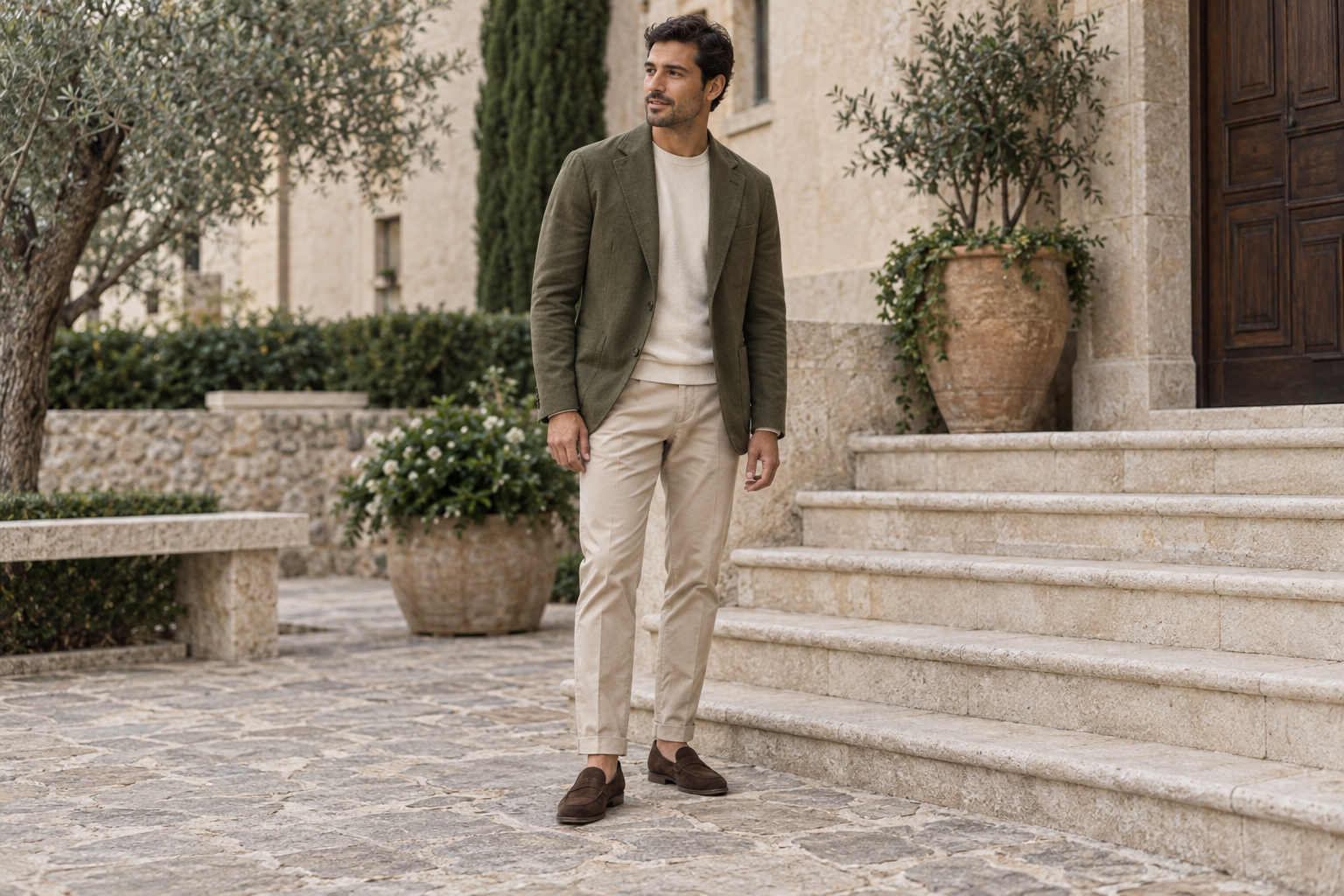
Tan suede chukka boots on a slim leather sole, mid-grey wool flannel trousers with a slight taper, and a navy shetland sweater. This is the archetype: suede's nap echoes flannel's brushed surface, so the textures talk to each other. A slim sole keeps the boot trim enough for tailored trousers. The image shows the relaxed-tailoring proportion and palette — its footwear is a brown loafer, not the boot.

Dark brown suede chukkas with an unstructured cotton suit in stone, worn open-collared. Suede is the reason this works — the matte texture closes the formality gap that smooth leather would leave open. The trouser hem should break once at the boot's laces; open lacing shows fabric pooling more clearly than a Chelsea, so the hem wants to be clean. The image matches the office register; the shoe pictured is a loafer.
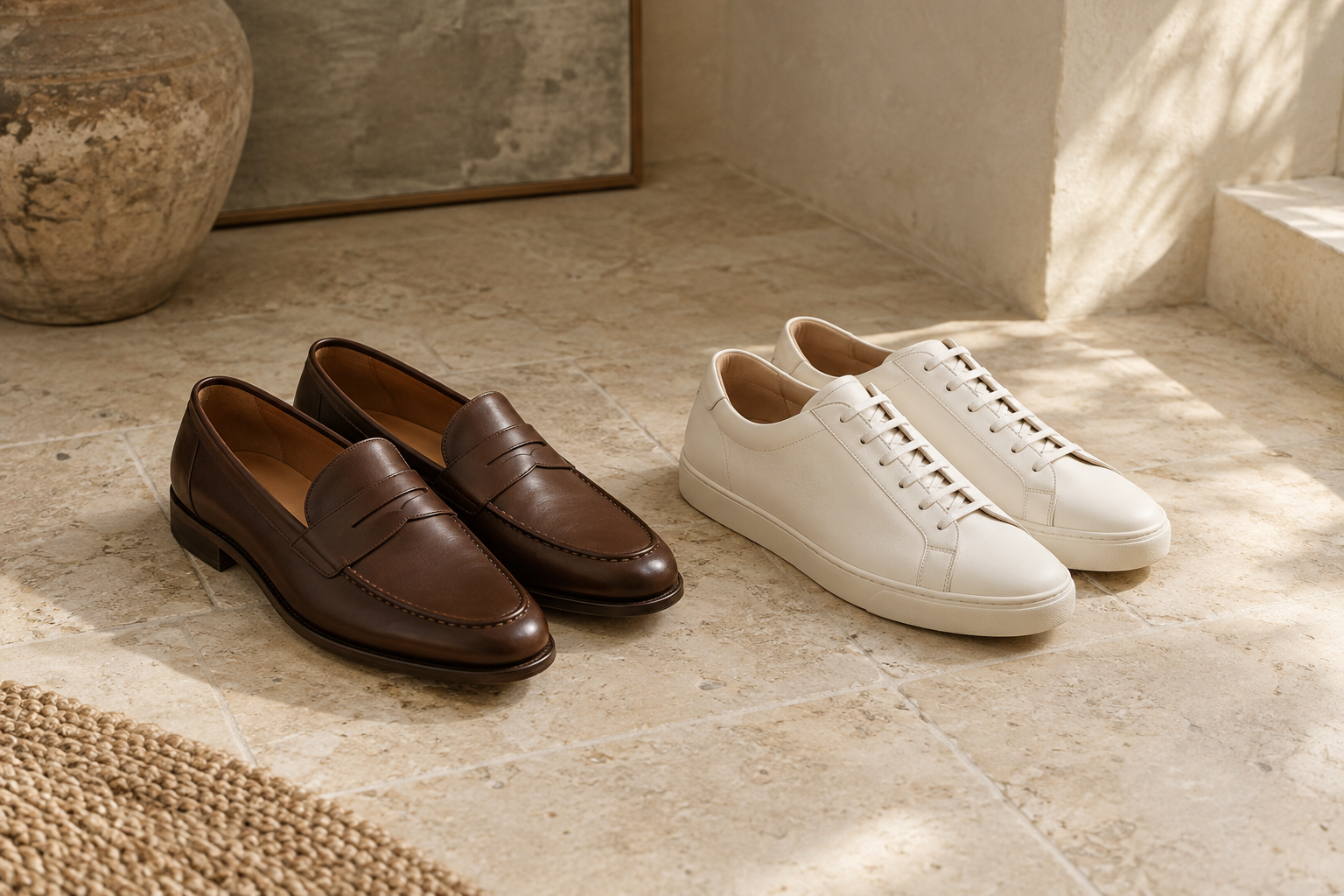
Snuff suede chukka boots on a crepe sole, dark straight-leg jeans, and an olive overshirt over a white tee. Crepe's most natural home: it matches denim's weight and makes the boot read as a refined casual shoe. With anything smarter than denim or heavy cotton, the sole's weight starts to outweigh the cloth. The image shows the shoe-register contrast this page compares — loafers against sneakers, no chukka.
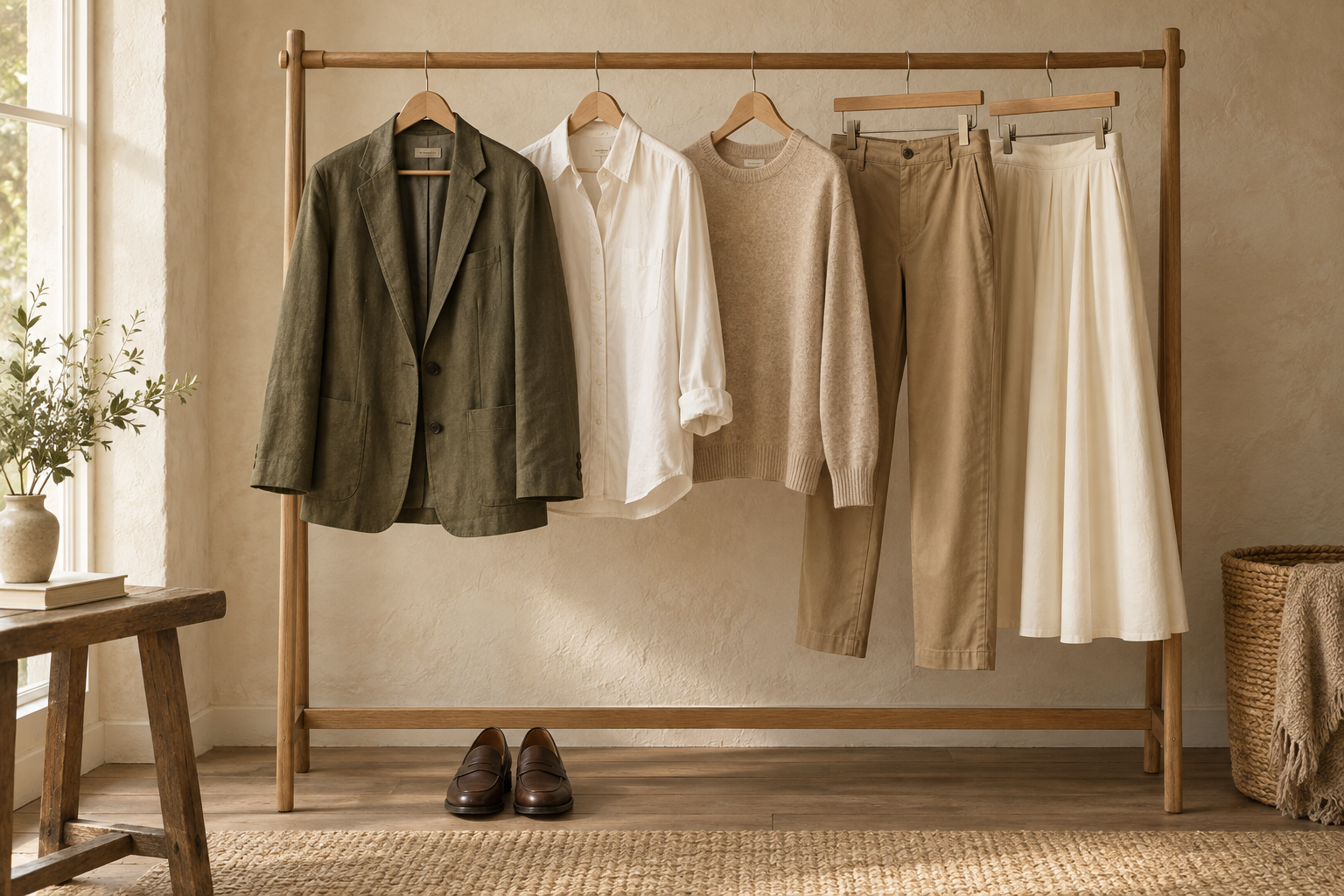
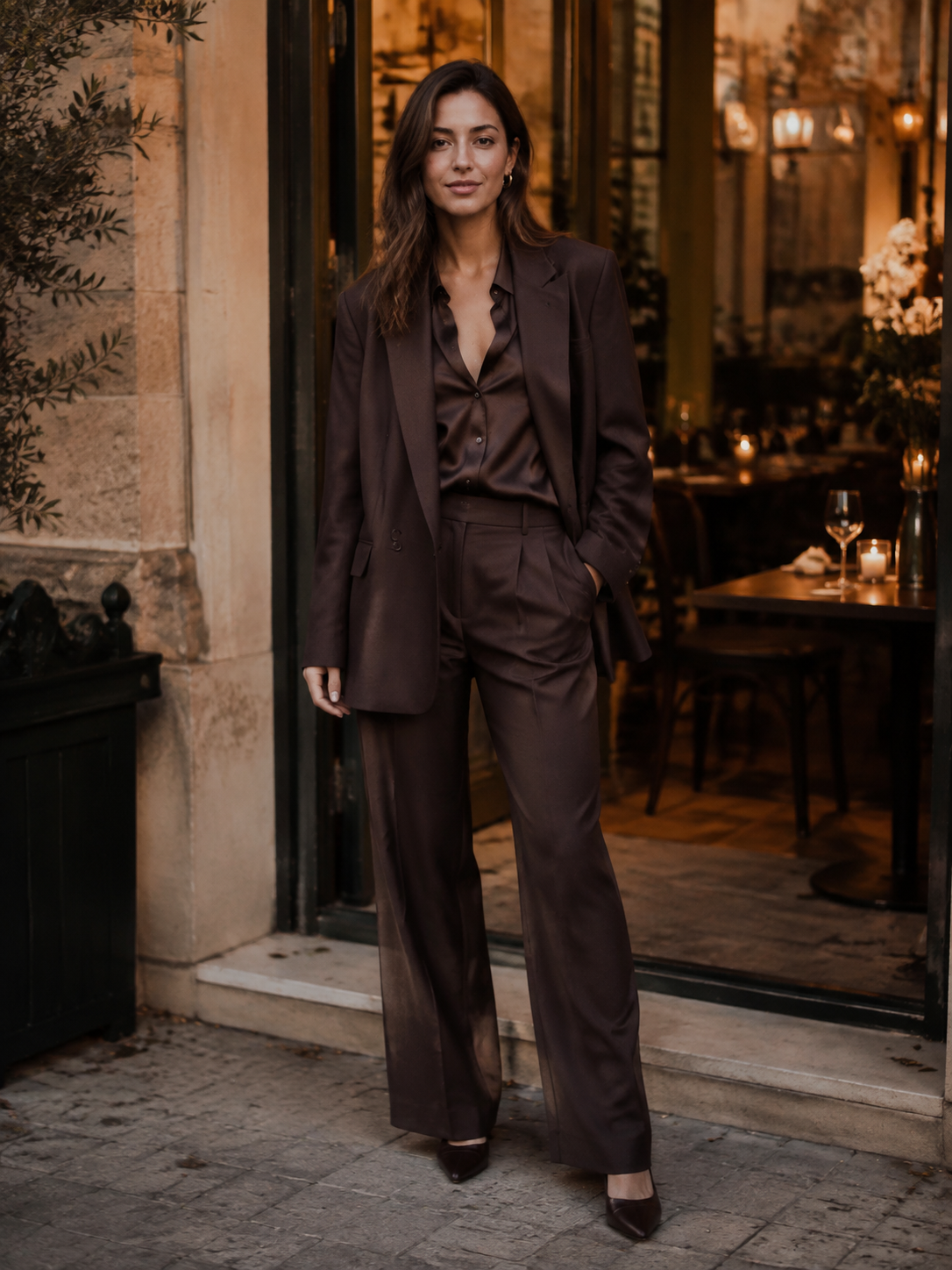
Dark brown polished leather chukkas with charcoal wool trousers, a light blue oxford shirt, and a brown cardigan. Leather tightens the boot up, so the rest of the outfit holds the smart end. The honest limit stands regardless of upper: open lacing never reads as neat as an oxford under sharp tailoring, so this is the middle zone, not a formal suit. The image matches the capsule palette; its footwear is a loafer.
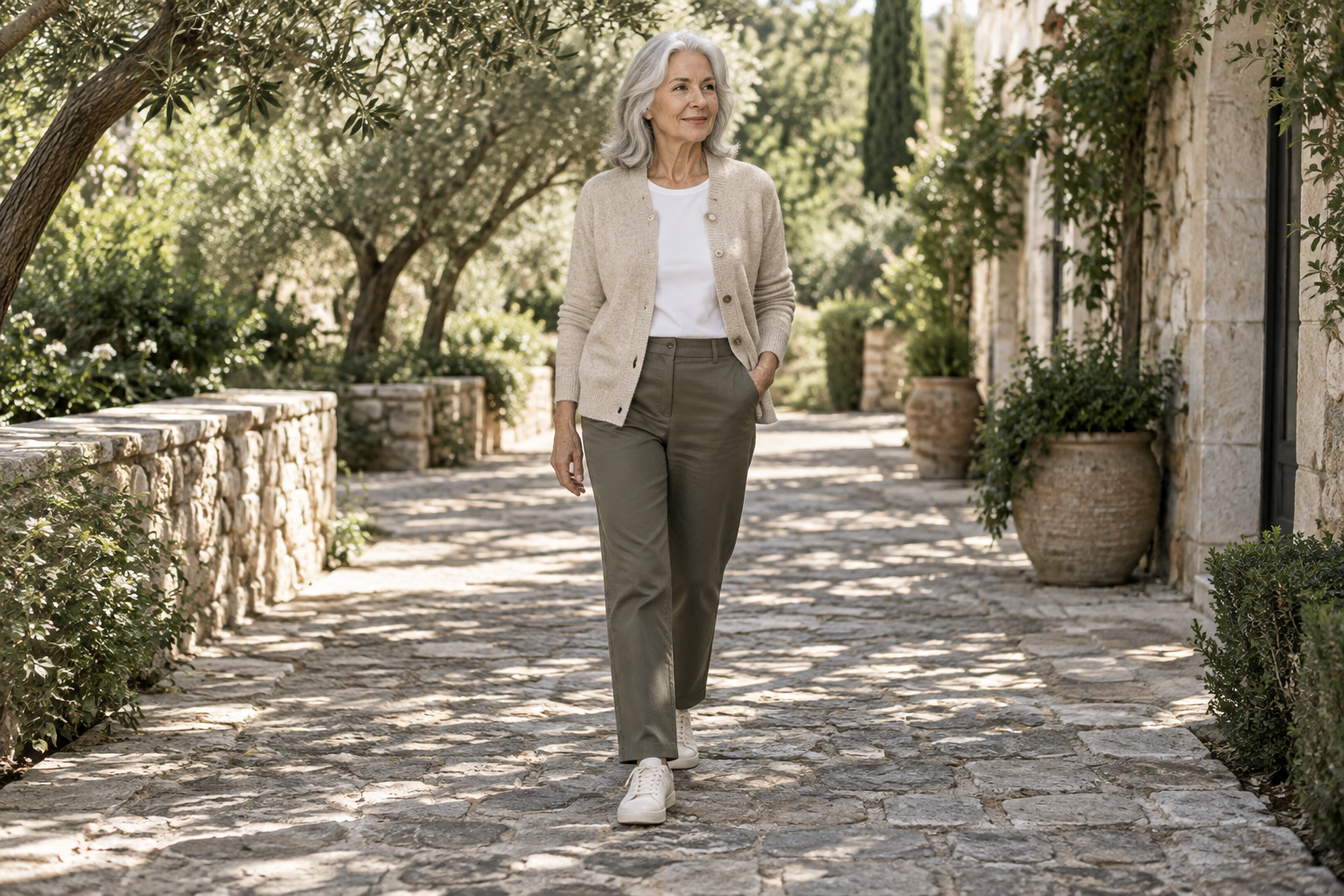
Black leather chukkas on a slim sole with black slim-straight jeans, a grey roll neck, and a black wool coat. A single-column look where the boot disappears into the leg — the hem falls to the top of the shaft with one break. Black chukkas are the dressiest version but the least versatile: clean with black and grey, stiff-looking against mid-blue denim. The image matches the weekend register; its footwear is a cream sneaker.
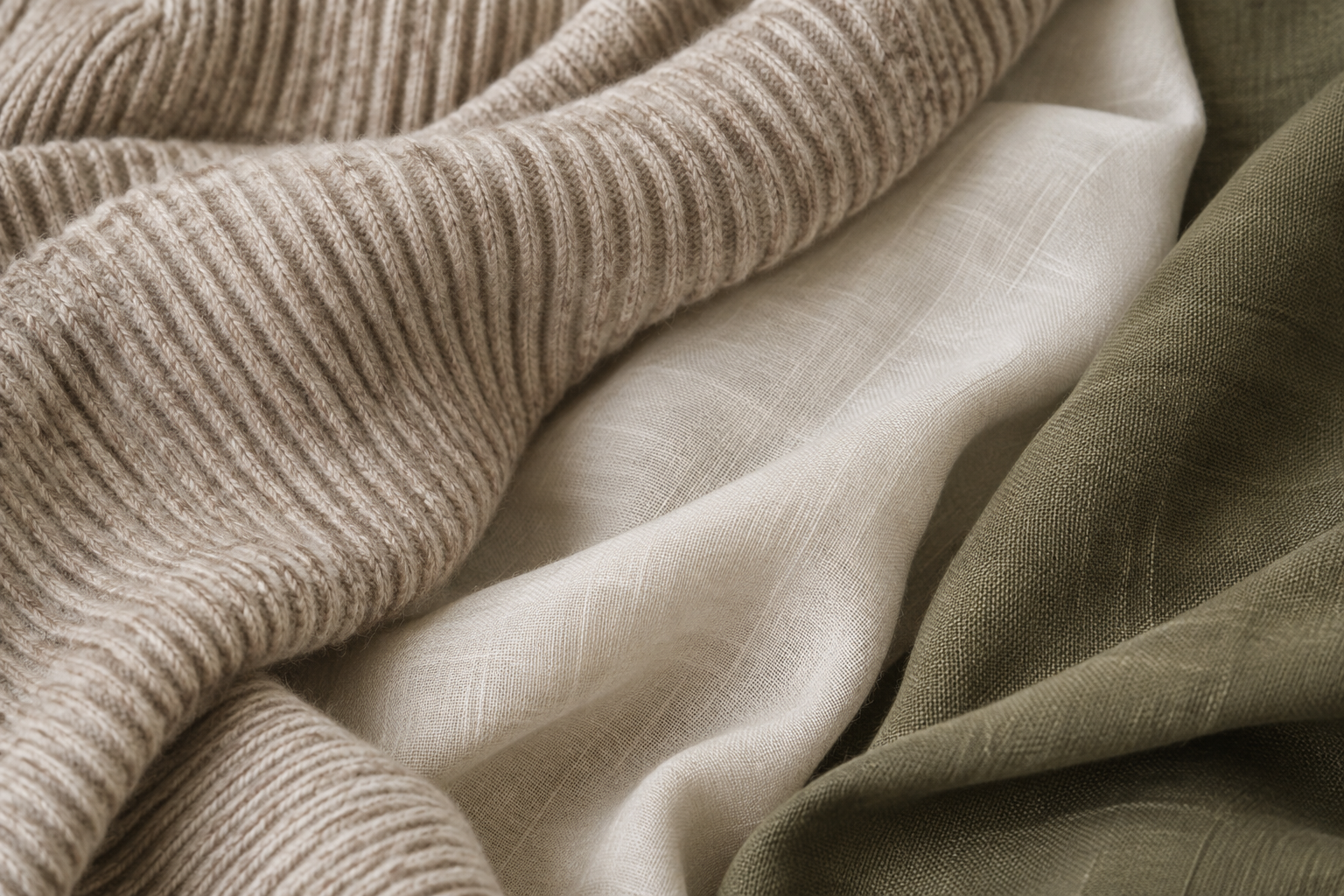
Dark brown suede chukkas with brown herringbone wool trousers, a heavy cable knit, and a dark green parka. Cold weather is where suede earns its keep — the nap reads warm and handles wool's weight. Add thick wool socks and expect the trouser to sit right at the boot's top line. One caution: suede and slush do not mix, so this look is for dry cold. The image shows the exact texture stack — knit, wool, herringbone — the look is built on.
Shoes
Leather or rubber, stitched or glued, dyed edge or natural — how each sole choice shifts formality and grip, and how to test a pair in store before buying.
Clothing Care
Suede and rain are awkward partners but rarely fatal ones. How to dry wet suede slowly, brush the nap back, treat water spots, and know when a cobbler should take over.
Shoes
Pair sneakers with tailored trousers by checking the venue, then matching sneaker profile to trouser width and hem. Six profiles, three formulas and the checks that settle it.