Trousers & Pants
Chinos vs Dress Pants: Choosing Smart Casual Trousers
How chinos and dress pants differ in fabric, sheen, crease and care, and how to tell which one a given smart casual setting actually calls for.
Lookbook
For smart casual linen trousers, start with a shirt or knit and shoes that suit the setting, then check opacity and movement in normal daylight. Some creasing is expected, but its amount varies with the cloth and construction.
Begin hereInspiration
For smart casual linen trousers, start with a shirt or knit and shoes that suit the setting, then check opacity and movement in normal daylight. Some creasing is expected, but its amount varies with the cloth and construction. Try an ivory shirt with olive trousers and loafers for a relaxed starting point, adjusting the layer for the venue.
Linen creases because of how its fibres are structured, and creasing usually begins within the first hour of wear regardless of care. That puts it in a different category from stained, stretched or dirty clothing, which signals neglect. A creased linen trouser at a summer lunch reads as a fabric behaving normally.
How much creasing appears, and how sharp it looks, is not the same for every pair. Heavier cloths generally hold a calmer surface than very lightweight ones, and some blends crease less sharply — but the blend percentage and construction vary by maker, so the label is the only reliable guide for a specific trouser. The practical move is to try the pair on, sit for five minutes, and see how the creases that form actually look on that cloth.
A linen-cotton or linen-viscose blend guarantees wrinkle resistance, and dark colours solve creasing.
Blends may crease less sharply and dark shades make crease shadows less visible, but neither eliminates creasing — the behaviour depends on the specific cloth's weight, weave and construction. Check the maker's composition and test the garment rather than assuming.
Each formula below fixes the trouser colour family and then works upward: shirt weight, layer, footwear. Swap within the structure freely. The images in the collection illustrate the type of combination; they are generated illustrations, not evidence of fabric behaviour or fit.
| Setting | Trouser | Top and layer | Footwear |
|---|---|---|---|
| Warm office or city day | Navy, olive or pale olive — colours that quieten crease shadows | Tucked oxford or fine knit; unstructured blazer if the room expects a jacket | Leather loafers or suede derbies with a matching belt |
| Dinner or evening | Charcoal, mid-grey or dark brown, often as a blend | Fine merino or short-sleeve knit, or a dark camp-collar shirt | Dark leather loafers; no visible sock needed at a table |
| Warm weekend | Stone, white or olive, worn relaxed | Knit polo, striped tee or camp collar; overshirt as the removable layer | Woven leather sandals, espadrilles or clean white trainers |
A worked starting point for the weekend column: an ivory shirt with pale olive linen trousers, a woven brown belt and tan loafers, with the overshirt or knitted layer chosen for the venue. It is relaxed in fabric and register, but the tucked front and leather shoes keep it on the smart side of casual. From there, trading the loafers for sandals and the tuck for an untucked knit moves the same trousers fully into resort territory.
Before wearing white, stone or any pale pair out:
Every pale linen pair needs the same underwear solution.
Opacity varies widely with cloth weight, weave and lining; two stone pairs from different makers can behave differently. Test each specific pair in daylight with your intended underlayers.
Tonal pairing (stone with ivory, grey with navy-adjacent tones)
Contrasting knit (olive with ivory, navy with stone)
The decision is texture as much as colour. Linen's surface is visually busy up close, so a smooth shirt contrasts by finish even when colours are close, and a slubbed knit harmonises even when colours differ. Neither approach prescribes a body type or a single fit — wear whichever pairing you like the shape of, standing in front of the mirror in daylight.
Packing linen trousers guarantees creases — folded cloth holds sharp folds that no packing trick fully prevents, and hanging them in a steamy bathroom only softens, never removes, the set. Plan outfits so the day's first hours, when travel creases are sharpest, are the most casual. This is a styling limit, not a care instruction; the laundering and pressing method belongs to the care guide.
If you press at all, follow the maker's label: fibre blends and finishes differ in what heat and steam they tolerate, and the label is the authoritative source for a specific garment. Many people press only the top block and let the legs live with their creases — a reasonable editorial choice for relaxed looks, not a rule the fabric requires.
Where this decision goes next
Deciding whether linen is the right cloth at all — weight, breathability and alternatives — lives there.
If a city linen look needs a jacket, this covers which blazer constructions survive the heat.
Every trouser guide, from fit and fabric to specific pairings.
6 looks to explore
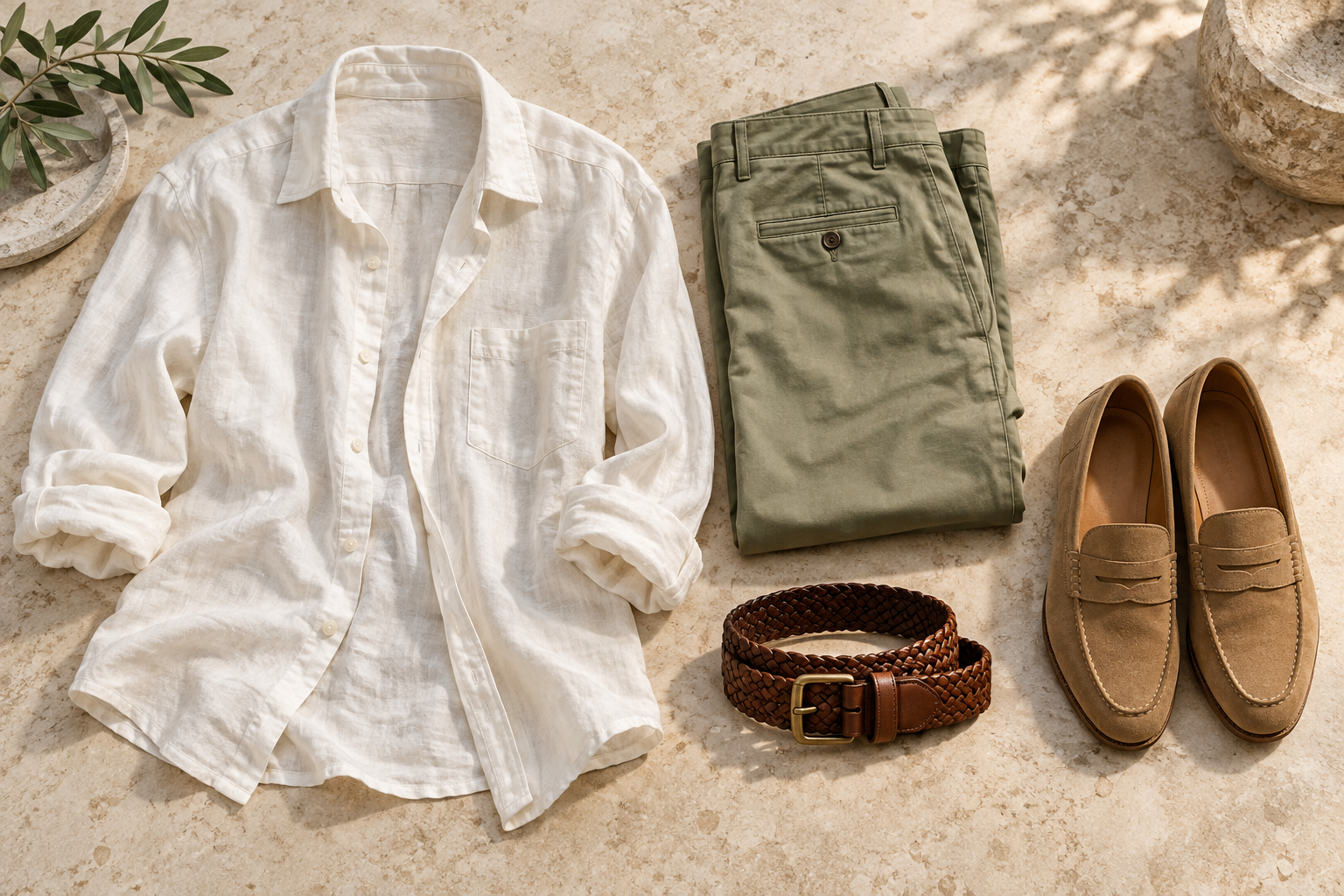
Pale olive linen trousers with a tucked ivory shirt, a woven brown belt and tan loafers, laid out before wearing. The tucked front and leather shoes carry the smart register while the fabric stays seasonal — the relaxed starting point this page opens with. Illustrated example of the combination, not evidence of fibre content or crease behaviour.
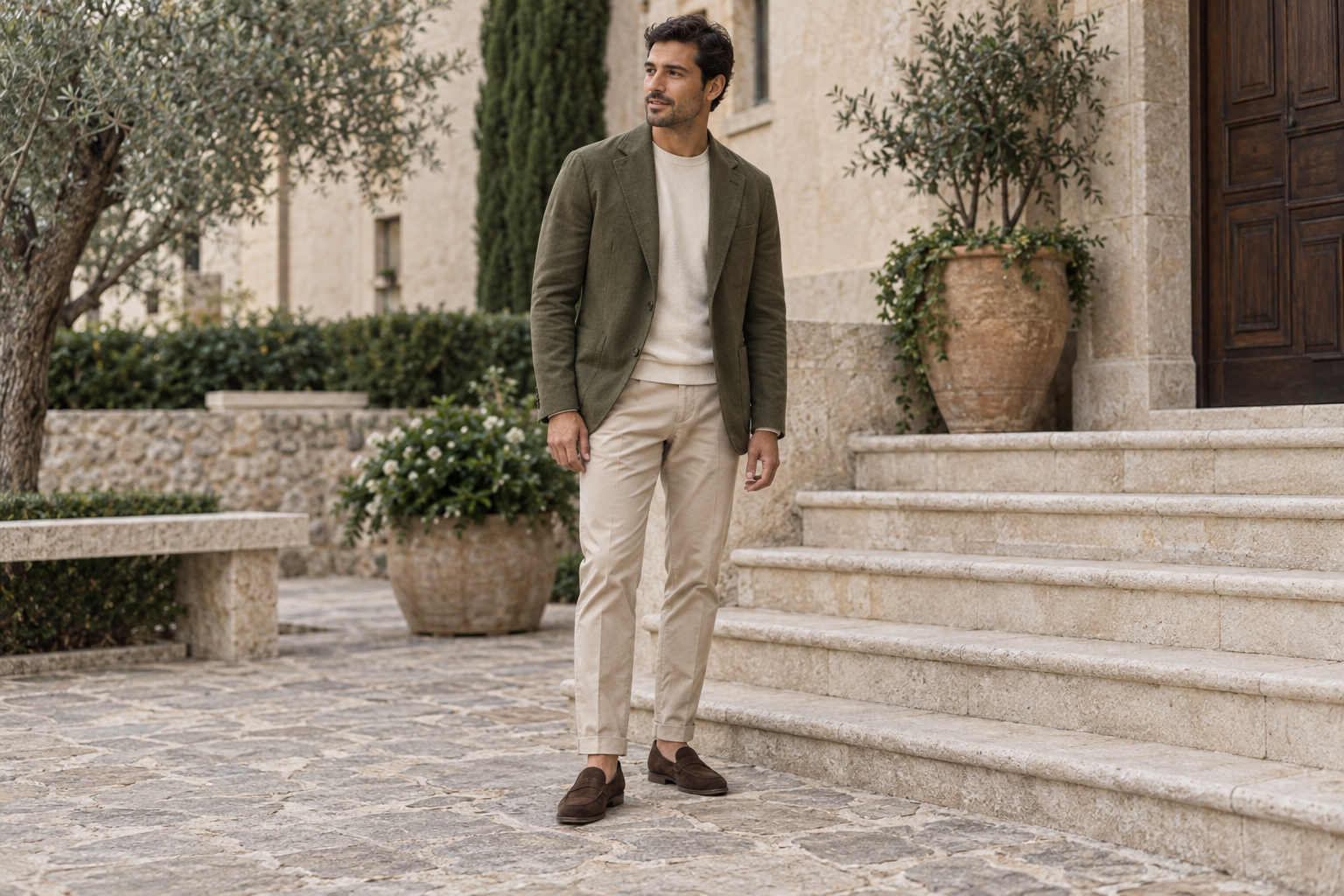
Sand linen trousers with an ivory fine knit and an unstructured olive blazer, finished with brown loafers. The blazer's soft construction sits at the same register as the trouser's surface, so neither half looks over-pressed next to the other — the linen answer to a suit.
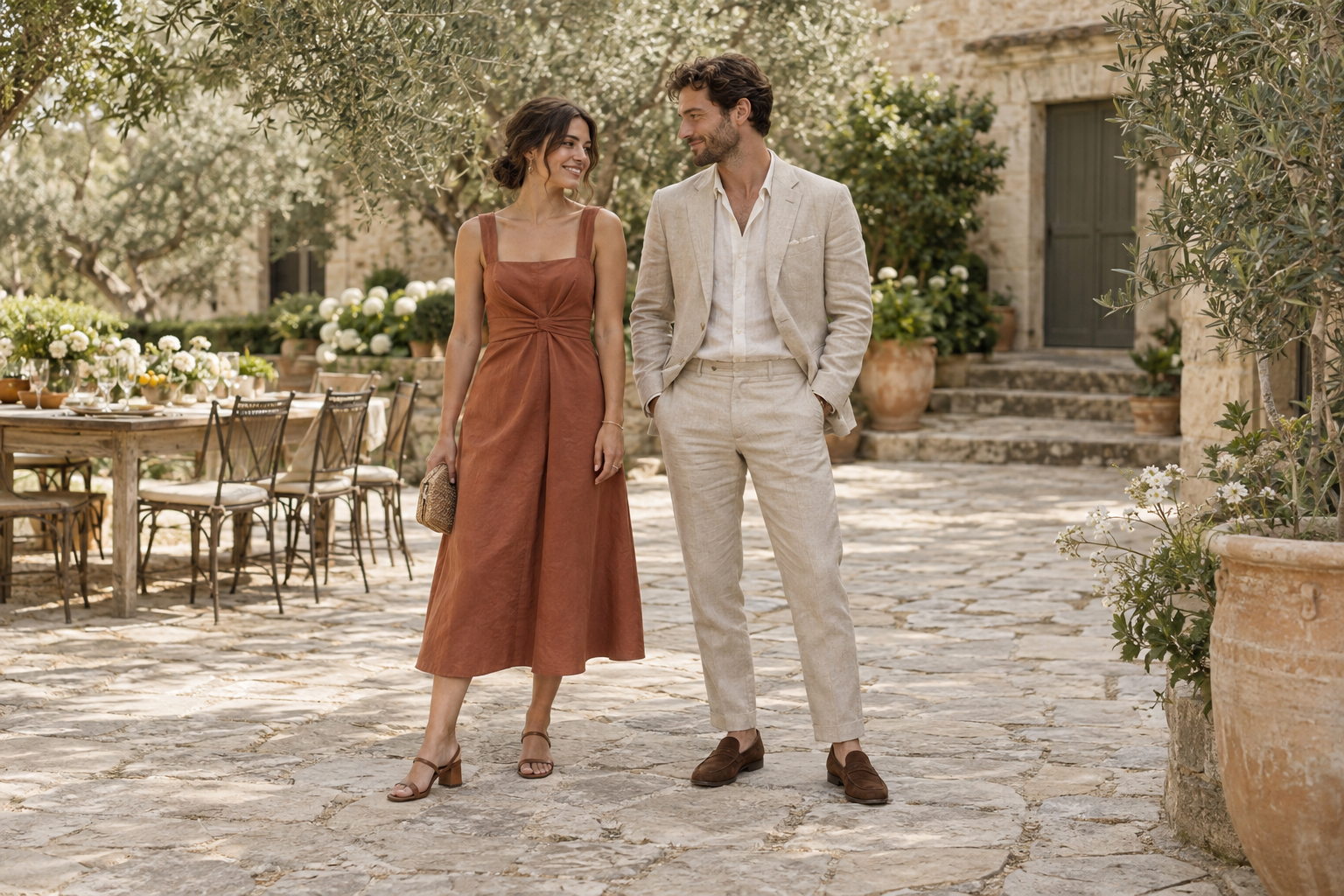
A pale linen suit worn as separates — trousers with the matching shirt over a tee — in a warm courtyard. Tonal linen on linen is the resort register: nothing stiff, and creasing that reads as the fabric's character rather than neglect.
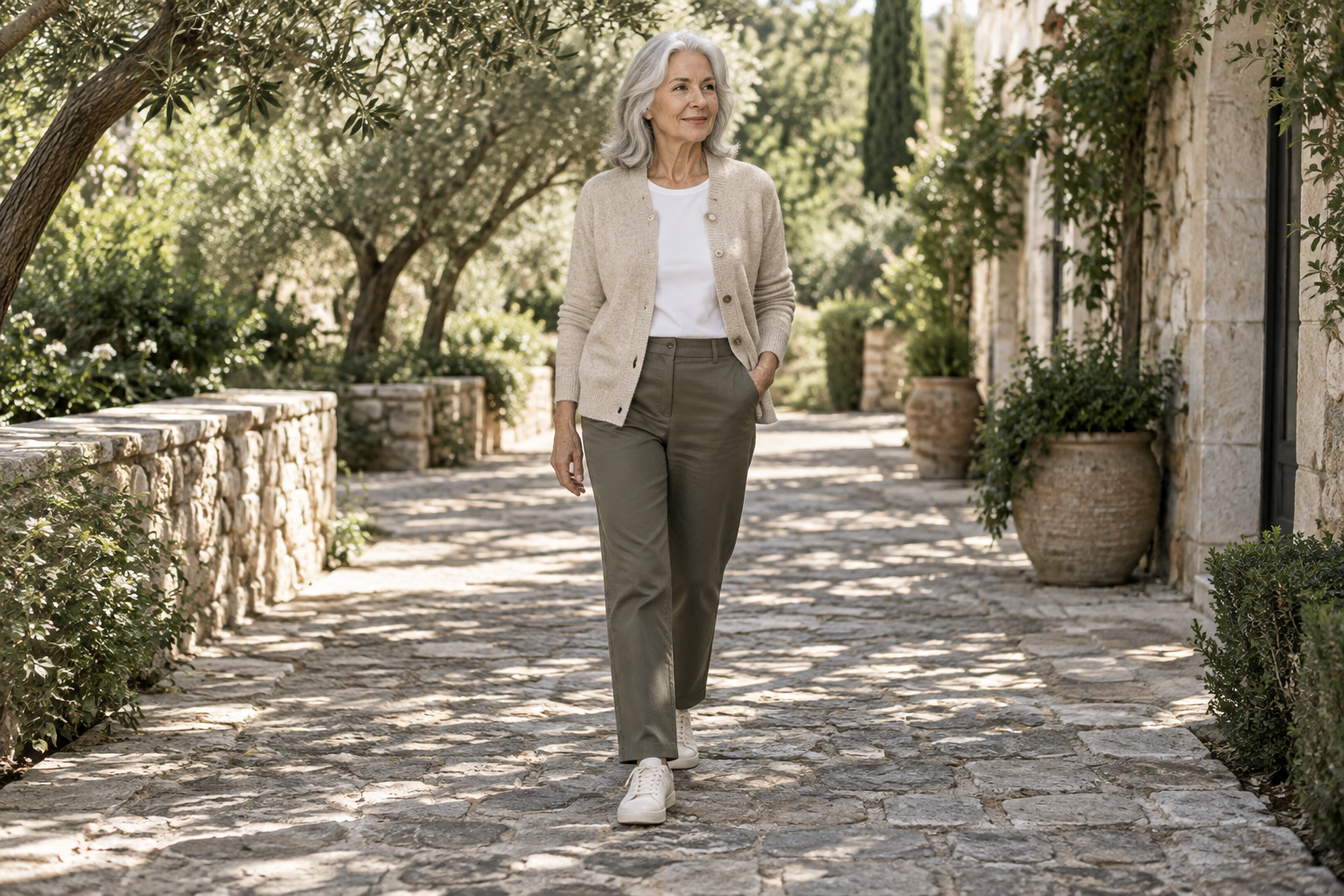
Olive linen trousers with a plain white tee, an oatmeal cardigan knotted or worn open, and cream trainers. Olive keeps lunch-time marks and crease shadows quieter than white or stone, and the tee still makes a complete outfit if the cardigan comes off.
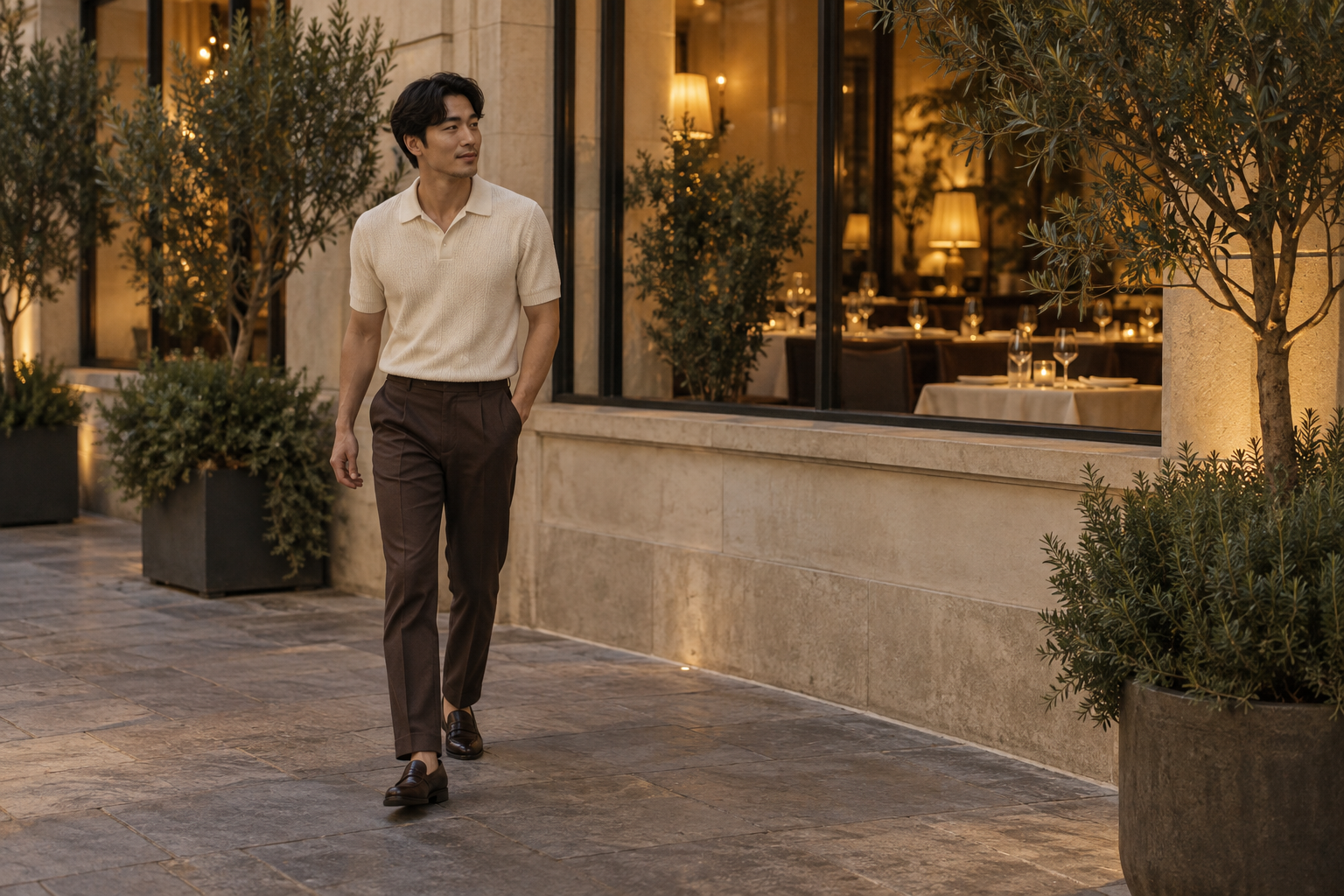
Dark charcoal or brown linen-blend trousers — check the label for the actual blend — with a cream knit polo and dark leather shoes. A blend may hold a calmer line through an evening than pure lightweight linen, but judge the specific cloth; dark tones also keep whatever creases form quiet.
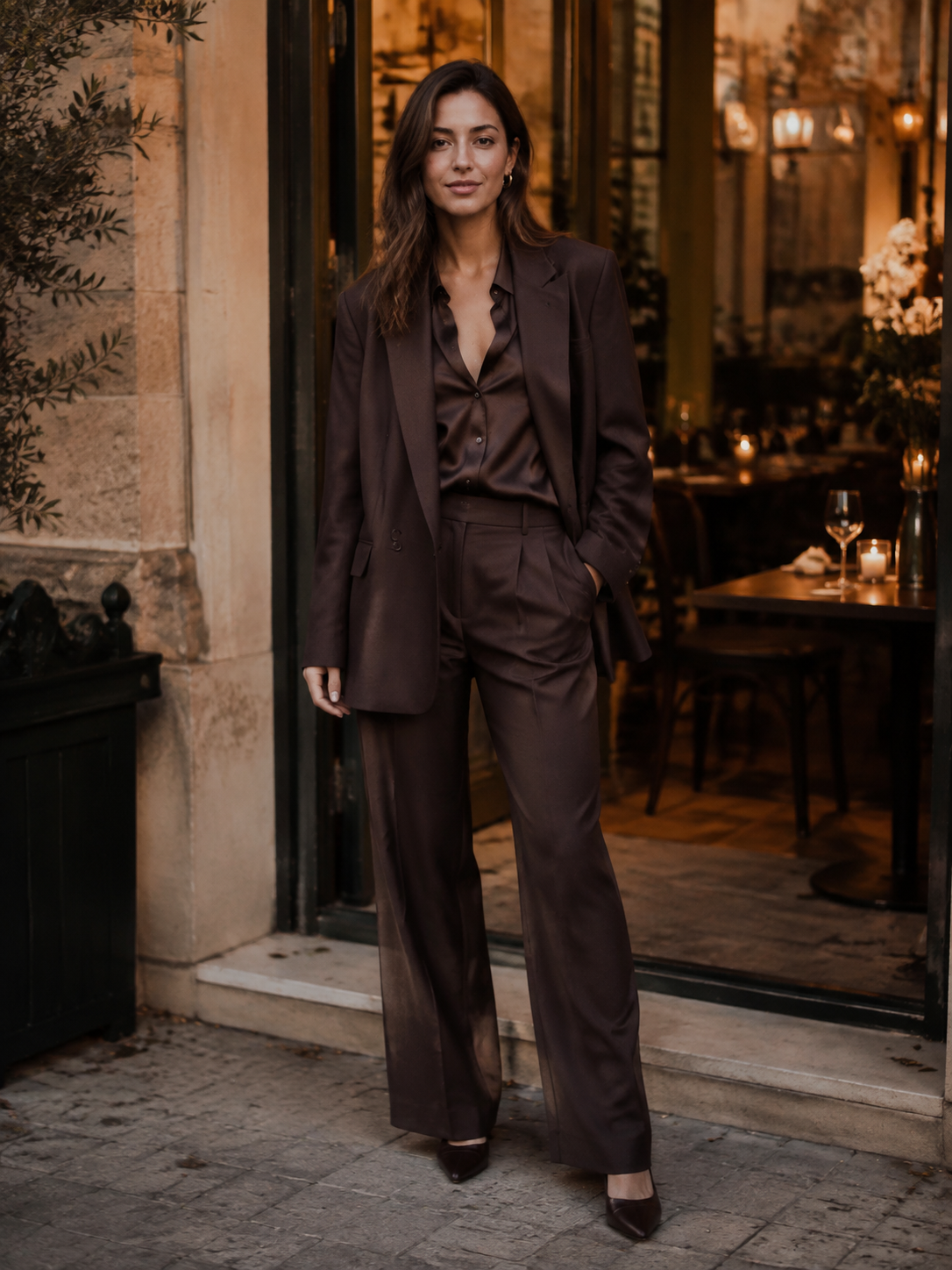
Mid-grey linen trousers with a dark brown camp-collar shirt worn untucked and dark loafers, in warm evening light. Grey sits between white and navy for crease visibility — noticeable up close, quiet across a table. If you press at all, follow the garment label and favour the top block.
Trousers & Pants
How chinos and dress pants differ in fabric, sheen, crease and care, and how to tell which one a given smart casual setting actually calls for.
Trousers & Pants
How pleated and flat-front trousers differ in construction, drape, room and formality, and how to compare the two fronts on an actual try-on.
Trousers & Pants
Six corduroy trouser outfits for autumn weekends, the office and evenings, with wale scale and bulk-balancing explained for each look.