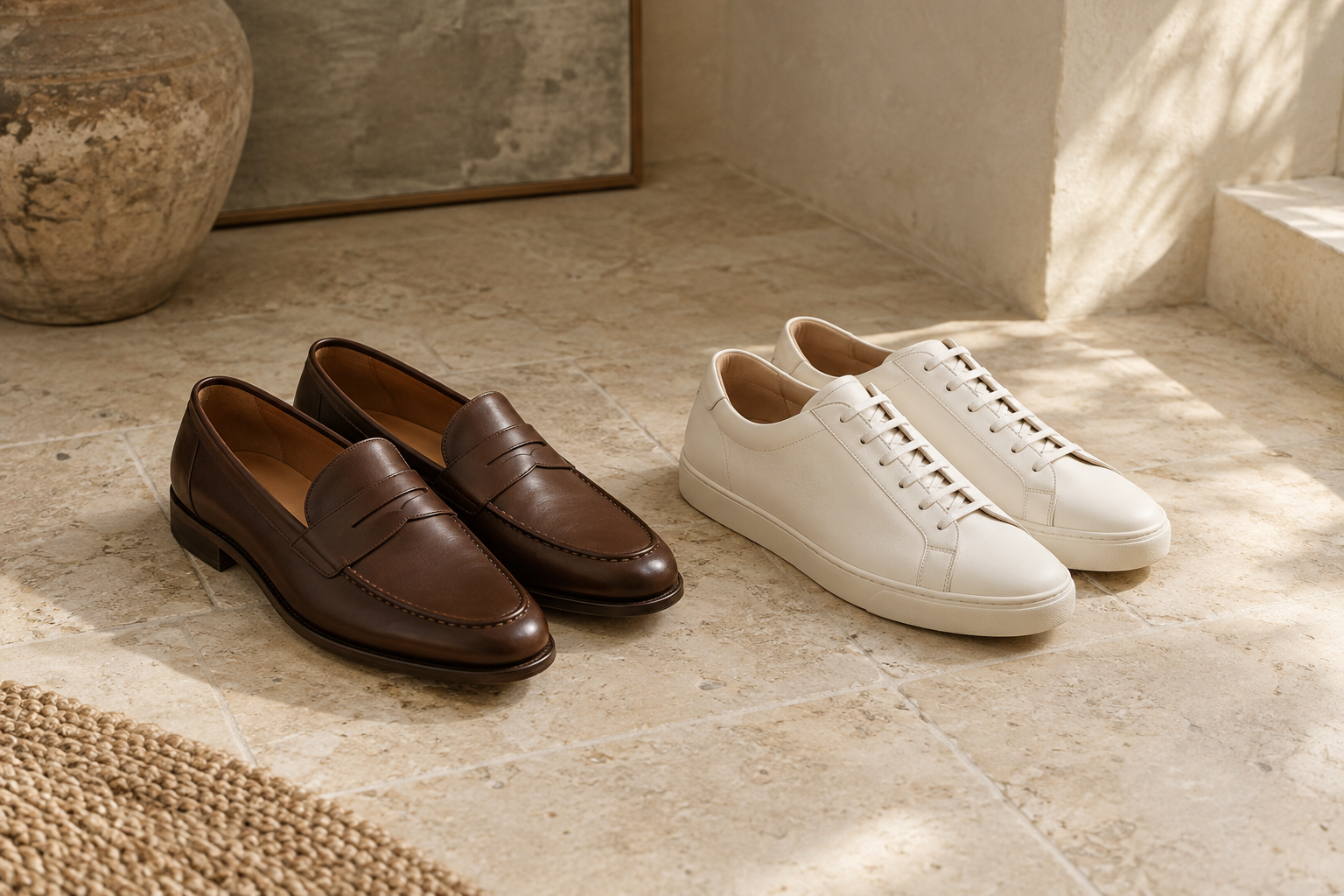
Visible socks with loafers are an optional styling choice, not a new rule everyone needs to follow. A recent recommendation can be useful if it helps you compare colour, weight and trouser length on your own terms. Try one pair you own with your loafers, judge both appearance and comfort, and keep in mind that an article's enthusiasm does not prove the combination works for every setting.
01 / THE DEVELOPMENT
The idea in focus.
02 / OUR INTERPRETATION
What it means in practice.
Read alongside GQ's coverage, the 2026 message is that the visible sock has crossed from tolerated to intentional. Our view is that intentionality cuts both ways: a detail that is now styled on purpose is also judged on purpose. Selective use — casual settings, considered proportions, quiet colours — remains the credible way to adopt it, and declining the look entirely is still a fully styled answer.
Once the sock became a styling decision rather than a hidden necessity, restraint became the mark of fluency — knowing which rooms want it hidden is what the trend actually teaches.
What the coverage actually recommends
Vogue Scandinavia's February 2026 piece on socks and loafers argued that the question is no longer whether you wear socks with loafers, but which socks you choose. Its recommendation, as summarised in our event notes below, favoured knee-high, sheer and ribbed pairings chosen for proportion, colour and weight balance. GQ's coverage of the white-socks-and-loafers pairing tracks how the combination became a lasting menswear formula rather than a joke.
Magazines invented visible socks with loafers in 2026.
The pairing long predates this coverage. What changed is editorial attention: the sock is now styled on purpose, which also means it gets judged on purpose.
Separate long-standing use from current editorial attention
Sockless loafers were once read as the polished default, with visible socks treated as a comfort compromise. GQ's white-socks coverage documents how that hierarchy loosened over several seasons rather than in one moment. By 2026 the advice has inverted — knee-highs with penny loafers, sheer socks with modern lasts, ribbed socks with classic leathers — each chosen for proportion and colour rather than concealed.
Tonal or contrasting: compare both on one outfit
The cheapest way to test the look is a single outfit you already own, styled two ways. A sock matched to the trouser extends the leg line and keeps the detail quiet; a controlled contrast — a white ribbed sock with dark denim, say — makes the sock the point of the outfit. Try both before buying anything, because the contrast option only works when everything else in the outfit agrees to stay calm.
| Approach | Tonal sock (matched to trouser) | Contrasting sock |
|---|---|---|
| What it does | Extends the leg line; reads as texture, not a statement | Turns the sock into the outfit's focal point |
| Suits | Office-adjacent settings, monochrome outfits, finer trousers | Casual outfits with room for one loud element |
| Risk | Can look like an unfinished thought if the fit is sloppy | Crowds an outfit that already has a strong piece |
| Easiest version | Navy sock with navy trousers and dark loafers | White ribbed sock with dark denim and brown loafers |
Whichever way you lean, mind the hem gap. Visible skin between the sock top and the trouser hem reads as an error, so the sock should meet the fabric or sit just below it. That single check separates deliberate styling from an accident.
Check shoe volume and seated exposure before going thicker
Weight is the variable most trend coverage under-explains. Fine-gauge or sheer socks suit slim penny and horsebit loafers; heavier ribbed knits need a chunkier sole and a roomier last to look deliberate. Before committing to a thicker sock, sit down in the outfit — thick socks that look fine standing can bunch badly at the ankle, and a cropped trouser exposes more of them when you cross your legs.
Match weight to shoe
Slim lasts and sleek leathers take fine or sheer socks; lug soles and chunky pennies can carry ribbed knits. Reverse the pairing and one side always looks overstuffed.
Sit, stand and walk in the mirror
Seated exposure changes the look more than standing does. Check that the sock still meets the hem when you sit and that it does not sag at the heel.
Judge comfort honestly
A look you cannot walk in is not a look. If the sock slips, pinches or overheats, the no-show option is the better answer regardless of what coverage recommends.
Where the look works, and where the no-show sock still wins
A visible sock carries informality into the foot of an outfit, so it behaves like a rolled cuff: a deliberate relaxant, not a neutral. It sits comfortably in weekend and creative settings — cropped trousers with ribbed socks, shorts with loafers, denim with a white sports sock. It strains against the dressier end of smart casual, where the trouser hem is expected to fall cleanly over a dark sock.
The visible sock fits
- Weekend and creative settings where the outfit already signals ease
- Cropped or shorter trousers that need a sock to close the hem gap
- One controlled contrast in an otherwise quiet outfit
Keep the no-show sock for
- Jacket-policy restaurants, client meetings and formal-leaning offices
- Tailored trousers with a clean full-length break
- Any room where you would rather the eye stop at the shoe, not the sock
Go deeper on the mechanics
- How to Wear Loafers with Socks ↗
The general fit and proportion rules this trend piece sits on top of.
- How to Choose No-Show Socks for Loafers ↗
The quieter alternative, and how to pick a pair that stays hidden.
FROM THE STORY TO YOUR WARDROBE