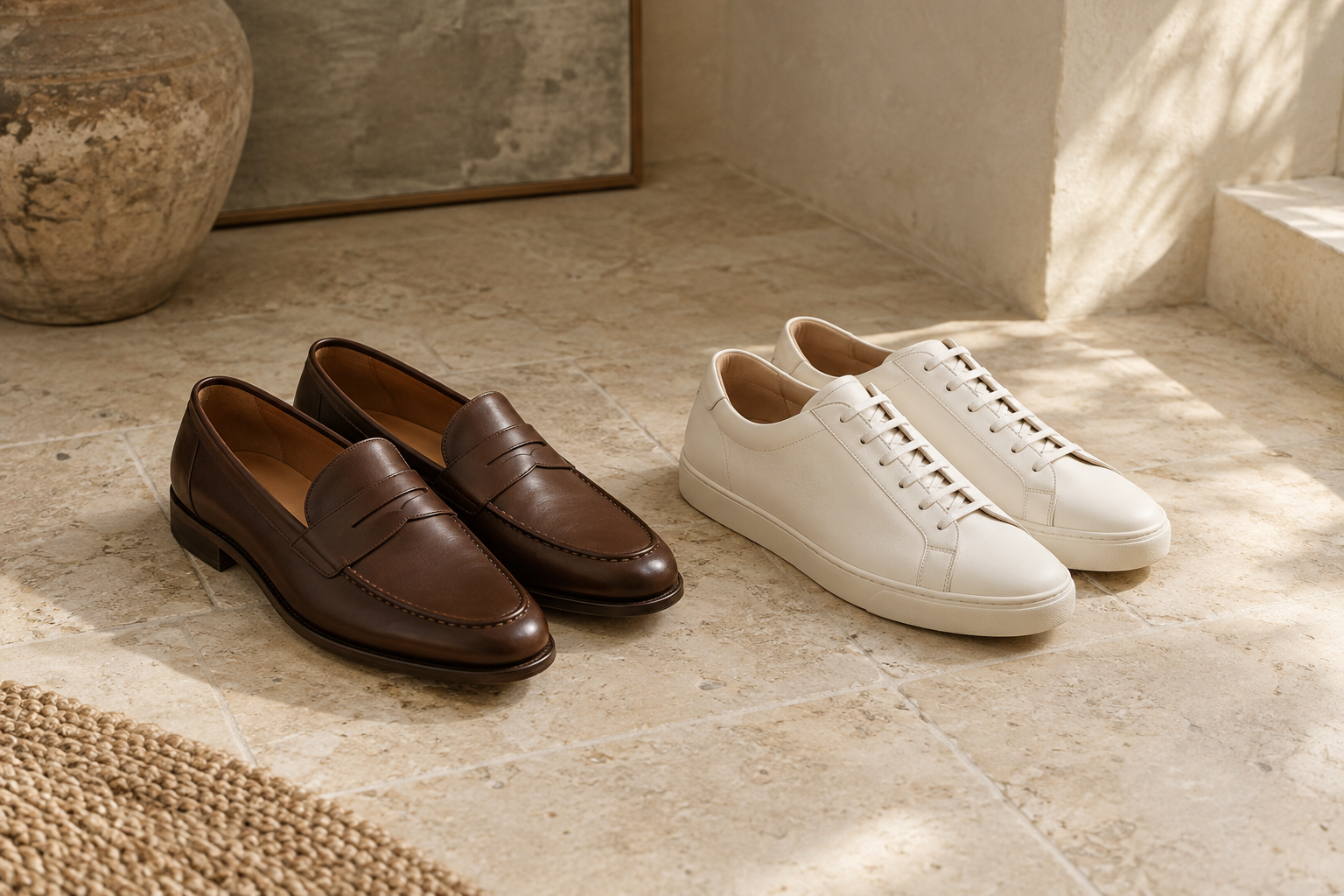
| Typical construction | Often a firmer sole and a more defined heel counter, with the upper stitched or glued to a lasted body — but soft, lightly made loafers exist, so inspect the pair. | Typically a low-cut opening with a soft upper and a thin sole; construction ranges from substantial, lined pairs to very light ones, so inspect before buying. |
|---|
| Fit and retention | The higher sides and back usually give the heel something to grip; check for gapping at the instep and slip at the heel when you walk. | Retention depends heavily on the individual cut — many pairs need sizing or padding to stop heel slip, and the wide opening can expose toe cleavage or gape when seated. |
|---|
| Formality read | The shape tends to read polished, and a leather pair passes easily in most offices and smart-casual dinners; suede and casual soles relax the read. | A structured leather pair can read dressy, and softer or unlined pairs read casual; the finish of the specific shoe carries more weight than the silhouette. |
|---|
| Weather tolerance | Covers more of the foot, so it suits cool and changeable days and takes a sock happily; most leathers need care in sustained rain. | The low-cut opening leaves the foot more exposed, which suits warm, dry days; thin soles can feel cold and damp on chill ground. |
|---|
| Comfort and support | Firm soles cushion hard pavement better, but flat soles in general offer limited arch support, and stiff new pairs may need breaking in. | Light from day one, but thin soles transmit more of the ground; some feet find them comfortable all day, others want more underfoot structure. |
|---|
| Socks and hosiery | Visible socks work in cooler months without losing the polished read; no-show socks exist but fit varies by brand and foot. | Hosiery or no-show liners are common choices; whichever you pick, check the low front line in a mirror — liner edges can show or slide. |
|---|
| Pairings | Straight-leg or wide-leg trousers, jeans and structured pieces like blazers; the shoe's weight balances heavier fabrics. | Dresses, skirts and cropped trousers where a lighter profile suits fluid fabrics; the pair still needs enough structure not to look floppy. |
|---|
| Care and repair | Standard leather care applies — conditioning and, on many pairs, resoling; ask the maker or a cobbler what the specific construction allows. | Repairability depends on construction: some pairs can be relined or have soles rebuilt, others are not economical to repair — ask a cobbler rather than assuming either way. |
|---|