Shoes
How to Wear Sneakers with Tailored Trousers
Pair sneakers with tailored trousers by checking the venue, then matching sneaker profile to trouser width and hem. Six profiles, three formulas and the checks that settle it.
Outfit inspiration
Ballet flats sit low on the foot with nothing above the ankle to structure the line, so the trouser hem and the shoe's fit have to do that work. These six looks pair the same flat with three trouser shapes and show the checks that settle each one.
Begin hereInspiration
Wear ballet flats with trousers by checking the hem while the flats are on, especially with wider legs — the fabric should not catch on the shoe or pool over it. Then walk a few steps to check that the heel stays secure and the toe box is comfortable. Cropped and full-length trousers can both work; choose the outline you prefer rather than assuming every wide pair must be shortened.
Ballet flats have no heel and no structure, so they only work with shortened or cropped trousers.
Ballet flats do have a heel — a low, covered one — and their structure varies a lot between makers: some have a firm heel counter and a sole you can resole, others are close to a slipper. The trouser hem still matters, but the right length is found by trying the hem with the flats on, not by a fixed formula that every wide leg supposedly needs.
| Trouser shape | Where the hem works | Check with the flats on |
|---|---|---|
| Full-length wide-leg | Around the ankle bone, so the shoe stays visible under the volume. | Pinch the front hem: it should clear the shoe, not rest on it. Walk — the fabric should not catch under the toe. |
| Tapered or straight | Can run longer because the narrow leg opening sits close to the shoe instead of collapsing over it. | Only the toe (or toe and a little more) shows; the hem grazes but does not grip the instep. |
| Cropped | Ends above the ankle so a band of skin separates hem from shoe and the flat becomes a deliberate choice. | The gap stays deliberate when you sit and cross your legs — check the hem does not ride unevenly. |
Hem decisions made barefoot or in socks are guesses. With the flats on, look for the trouser touching the shoe: a light graze is fine, fabric resting on or bunching over the toe is not.
The flat has no strap holding the heel, so the walk test is the real test. If your heel lifts and slaps, or the toe box pinches by the second lap, the pairing will not survive the day.
Wide hems ride up when you sit, which is often when the fabric starts catching on the shoe. What looked right standing can pool differently seated.
Structure the outfit can carry
Where the pairing strains
Reading the shoe itself — these are construction features, not price signals:
Decisions this page feeds
The hem-length question in full, with heels and other shoes in the picture.
If heel security is your recurring problem, the loafer is the obvious alternative.
The parent guide to every shoe decision on the site.
6 looks to explore
Navy wide-leg linen trousers hemmed so the fabric clears the shoe at the ankle, a white cotton tee half-tucked, and black leather ballet flats. With flats, a long wide leg pools over the shoe and hides it, so the hem is shortened until the shoe stays visible — how short is settled by trying it on, since your height and the trouser's drape move the answer.
Mid-blue wide-leg jeans, a grey marl sweatshirt, and tan leather ballet flats with a proper sole. Denim is stiff enough to hold its hem, so here the jeans sit just below the ankle with the toe showing. The tan leather carries enough visual weight to hold its own against the denim instead of disappearing under it.
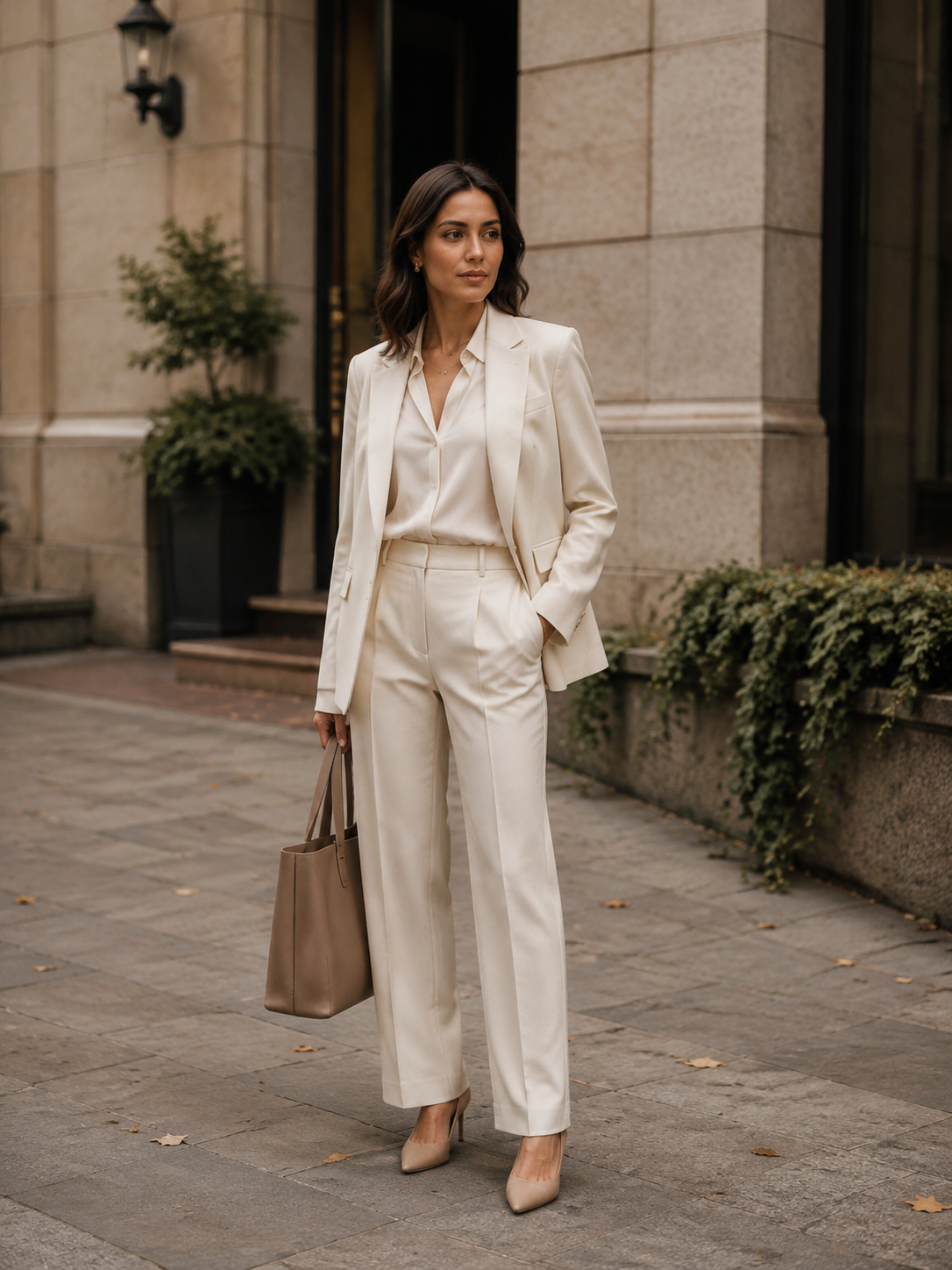
Charcoal tapered wool trousers, a fine-gauge navy crewneck, and black leather ballet flats. A tapered leg can run nearly full length because the narrowing leg opening sits close to the shoe rather than collapsing over it. The hem grazes the top of the foot and only the toe shows — the cleanest, most office-ready version of the pairing.
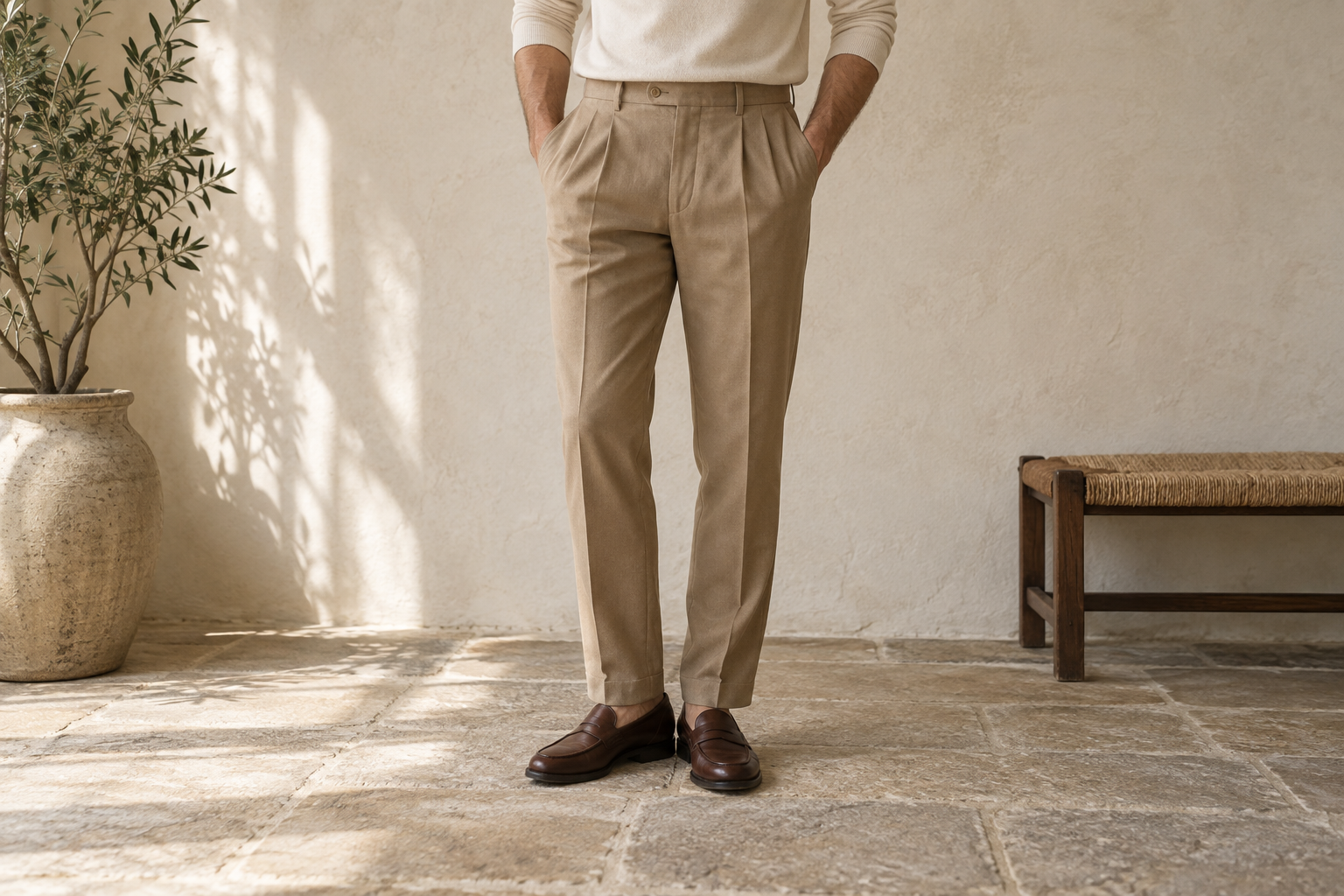
Stone pleated trousers with a gentle taper, an olive overshirt worn open, and dark brown ballet flats. With a longer hem that mostly covers the shoe, the flat works by staying quiet. Brown close in tone to the trouser reads as a neutral base, and the pleat's volume up top means the shoe should be the calmest thing in the outfit.
Cropped stone chinos ending a hand's width above the ankle, a striped breton top, and red leather ballet flats. The crop hands the shoe the starring role — a clear band of bare ankle separates hem from shoe and makes the flat a deliberate choice. With nothing to hide behind, a scuffed or misshapen flat is exposed here first.

Cropped black slim trousers, a silk-feel camisole in deep green, and black ballet flats with a slightly squared toe. Tonal black-on-black lengthens the line at the bare-ankle gap, and the squared toe keeps the shoe from reading too sweet against tailoring. A low heel is the more conventional evening choice; the flat works when the trousers are crisp and the hem sits high enough to keep the line deliberate.
Shoes
Pair sneakers with tailored trousers by checking the venue, then matching sneaker profile to trouser width and hem. Six profiles, three formulas and the checks that settle it.
Shoes
Compare loafers and ballet flats on fit, construction, weather and the outfits you actually wear — so either shoe can be the right one for the day.
Shoes
Six loafer-and-sock looks covering sock weight, cuff width and colour logic — when to show the sock, when to hide it, and how to keep the ankle line deliberate.