Trousers & Pants
Chinos vs Dress Pants: Choosing Smart Casual Trousers
How chinos and dress pants differ in fabric, sheen, crease and care, and how to tell which one a given smart casual setting actually calls for.
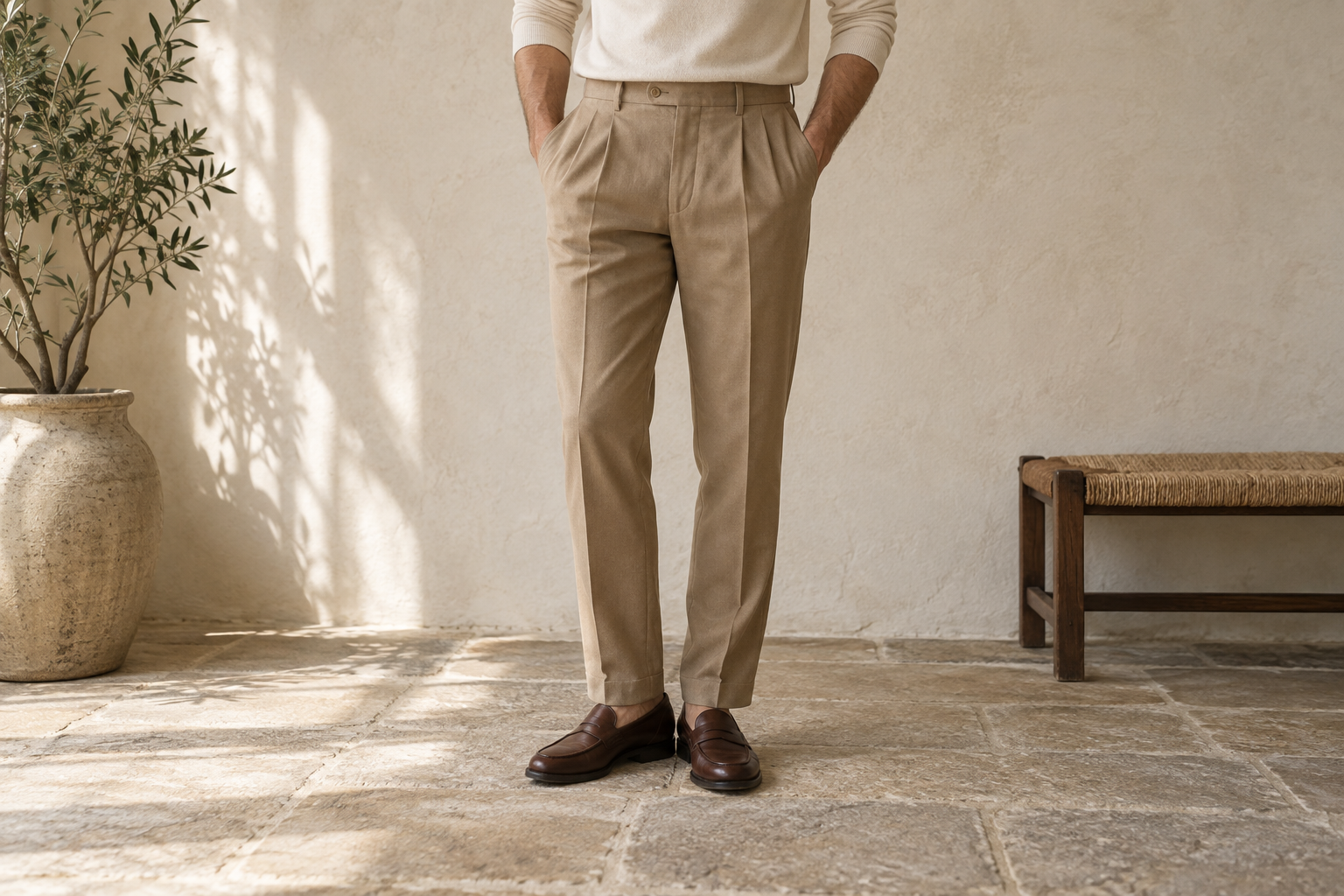
Outfit inspiration
A pleat gives a trouser room to move, and that room works in relaxed outfits as well as tailored ones. Build a look from a knit, t-shirt or overshirt you already own, then check how the pleats behave when you stand and sit.
Begin hereInspiration
Wear pleated trousers casually by pairing them with pieces you already use outside formal settings, such as a knit, T-shirt or overshirt. Check that the pleats can lie as intended when you stand and move. A tucked top shows the waistband, while an untucked option changes the outline; neither is compulsory.
A pleat is a fold of fabric stitched in at the waistband that releases extra width through the hip and thigh. That seat ease lets the leg hang from the body instead of gripping it, which is why pleated trousers feel relaxed the moment you put them on. The fold also gives the front a vertical line that flat-front trousers do not have.
What the pleat does not do is guarantee a comfortable fit on its own. If the waistband or seat is cut too small, no amount of pleat depth fixes it — the fabric still pulls from somewhere. Treat the pleat as part of the cut, not as adjustable room.
An open or flaring pleat is a fitting fault — if the fold will not stay closed, the trousers are too big.
Pleats are cut to open into a fold of drape when the body needs the room; a closed pleat is only how they hang on a hanger. The distinction that matters is drape versus tightness: fabric falling in a soft curve is the intended behaviour, while skin-tight pull across the hip with the pleat straining open points to a fit that is too small. Judge it standing and seated, not on a single glance.
Each formula below is a proposed combination rather than a tested uniform — swap colours and weights for what you own. Together they cover the settings a casual pleated trouser usually meets. Start with whichever matches a day you actually have this week.
Grey or oatmeal double-pleated trousers with a fine merino crewneck, a cardigan, or a rollneck when the air turns cool, finished with brown leather or suede loafers. A lighter shoe keeps the fuller leg from ending in a heavy block at the ankle. Alternative: white leather sneakers if your week runs more casual than the office car park.
Stone or navy pleats in a mid-weight cotton twill with a plain tee — cropped, or front-tucked if you want the waistband visible — and clean canvas or leather sneakers. This is the most relaxed of the three and suits weekend errands best. Alternative: a breton or striped tee when a plain one feels too plain against the pleat's front fold.
Black or charcoal pleats with a soft, wide leg, a plain tee underneath, and an unstructured wool or brushed-cotton overshirt worn open, grounded by dark chukka or lace-up boots. The boot sole carries the heavier layered top half so the outfit does not go light exactly where the fabric goes loose. Alternative: suede desert boots in warm months, when the wool overshirt comes off.
Both treatments work with pleats — they simply show different things. Choose by what you want visible, not by a rule about volume. Try your usual top both ways in front of a mirror before deciding.
Tucked (full or front)
Untucked
The difference between intended drape and a tight hip shows up in motion, so run this check before committing to a day in them. It takes two minutes. All you need is a mirror and a chair.
Stand, sit and walk in front of a full-length mirror:
Pleated trousers carry more fabric than flat-front pairs, so the same hem length meets each shoe differently. Use the pairings below as starting points, not as rules — your height, hem width and shoe collection all shift the answer. Adjust from what you see in the mirror, not from a table alone.
| Shoe | Hem that usually works | Why |
|---|---|---|
| Loafers | Little to no break — the hem just meets the shoe | A loafer's low profile disappears under pooled fabric, so a clean drop keeps the line readable |
| Sneakers | Quarter to half break, just kissing the shoe | Sneaker soles add a little height, and a slight fold hides the sock line without bunching |
| Boots | Sitting at or just past the boot's top line | The hem rests on the boot shaft instead of folding over it, which is where extra length ends up |
This page covers wearing pleats casually once you own them. Which construction to buy — pleated or flat-front, and how each fits different bodies — is its own comparison. The links below pick up both threads.
Where this decision goes next
The parent hub: fit, fabric and styling guides for every trouser shape.
If you are still deciding between the two constructions, this comparison owns the construction choice.
Rise decides where the waistband sits, which shapes how a tucked or front-tucked top meets the pleats.
6 looks to explore
Grey high-rise double-pleated trousers, a slate merino crewneck tucked in, and white leather sneakers. The tuck shows the waistband and the point where the pleats begin; leaving the knit untucked would soften the whole outline instead. Both readings work — this one simply keeps the front fold in view.
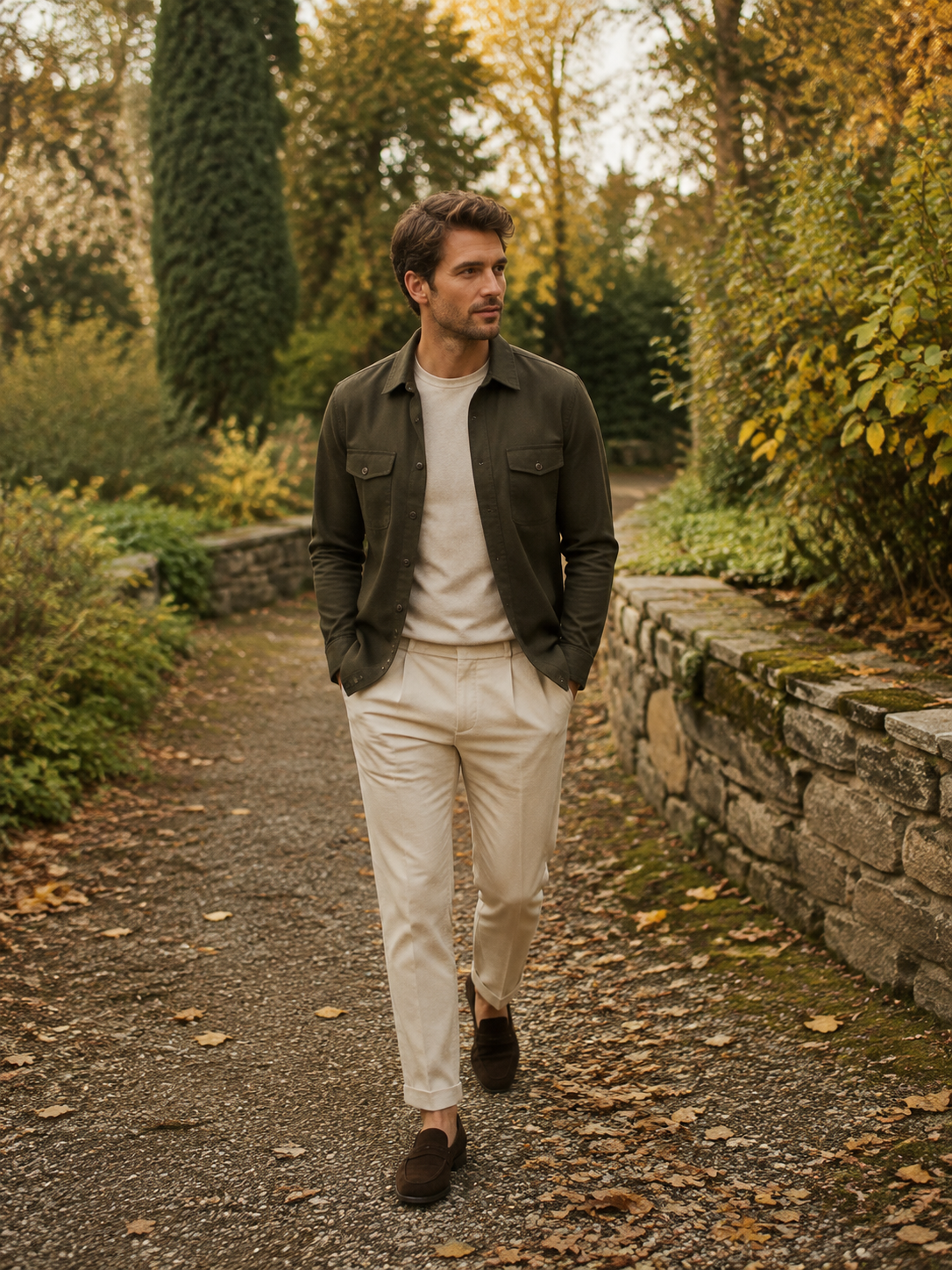
Oatmeal single-pleat linen-blend trousers, a cropped brown cardigan worn buttoned, and tan suede loafers. The shorter cardigan ends above the hip, so the pleat's drape starts from a visible point. Suede loosens the loafer enough for a weekend without losing the shoe's neat outline.
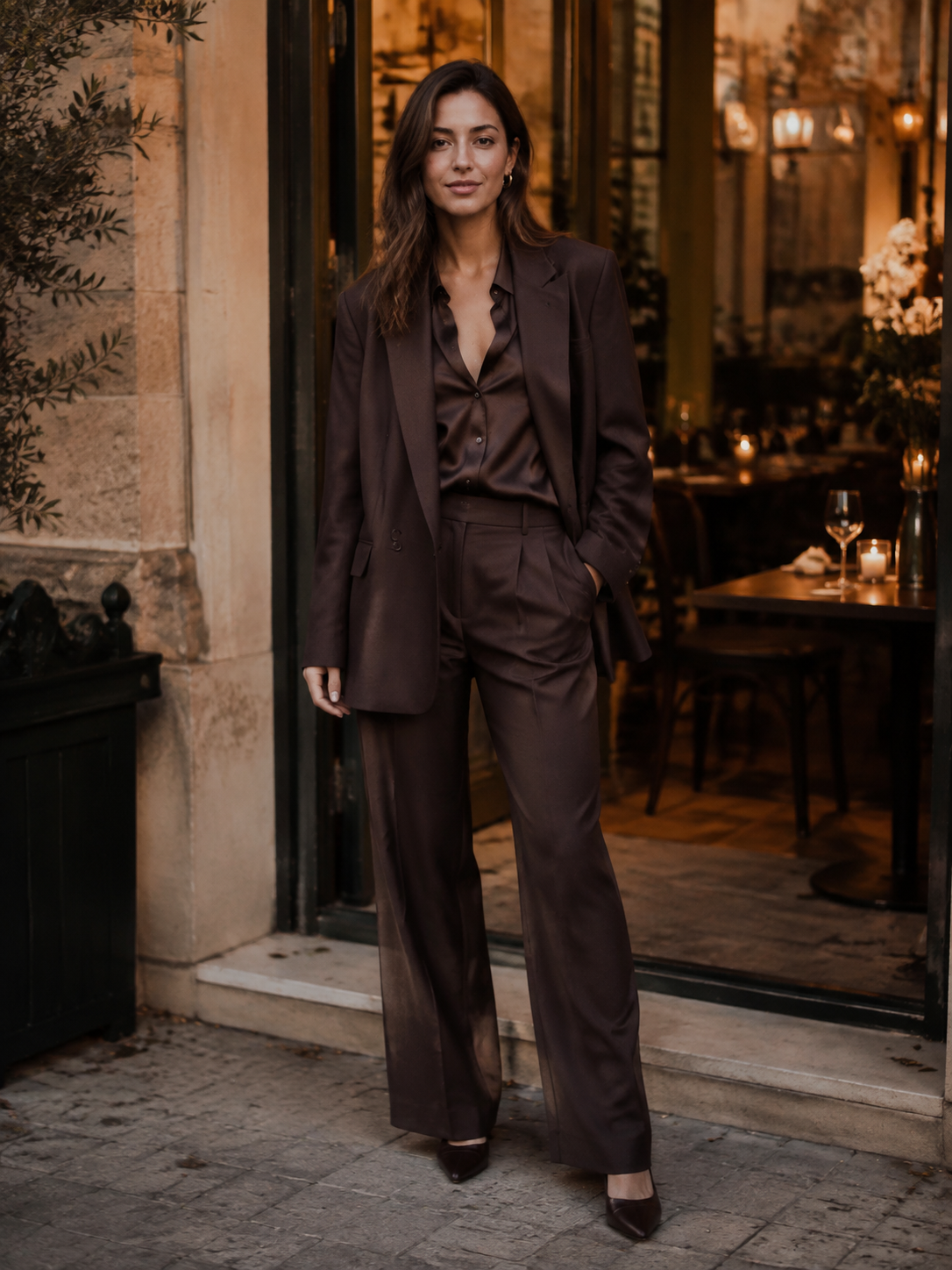
Charcoal double-pleated wool trousers, a fine navy rollneck worn straight, and dark leather loafers. The rollneck's narrow body keeps the upper half quiet while the pleats do the moving — an easy version of the trouser for a casual dinner. A full tuck or front tuck both work here if you want the waistband shown.
Stone cotton-twill pleated trousers, a plain white t-shirt in a boxy cropped cut, and canvas plimsolls. The cropped hem stops at the hip so the pleats read as drape rather than disappearing under the tee. Plimsolls keep the foot as light as the top half.
Navy high-rise single-pleat trousers, a breton-striped t-shirt French-tucked, and brown suede sneakers. The front tuck pins the pleat's starting point at the waistband while the untucked back keeps the ease casual. Suede sneakers sit between the plimsoll and the loafer on formality.
Black double-pleated trousers with a soft, wide leg, a white t-shirt, an unstructured charcoal wool overshirt worn open, and dark suede chukka boots. The boots carry the weight of the layered top half, so the outfit grounds itself at the ankle. Shorter overshirt hems keep the waistband's point findable under the layers.
Trousers & Pants
How chinos and dress pants differ in fabric, sheen, crease and care, and how to tell which one a given smart casual setting actually calls for.
Trousers & Pants
How pleated and flat-front trousers differ in construction, drape, room and formality, and how to compare the two fronts on an actual try-on.
Trousers & Pants
Choose shoes for wide-leg pants by checking the hem first: flats, trainers, loafers and heels each work, with the hem-to-shoe proportion explained.