Skip to content

Find your next good read.

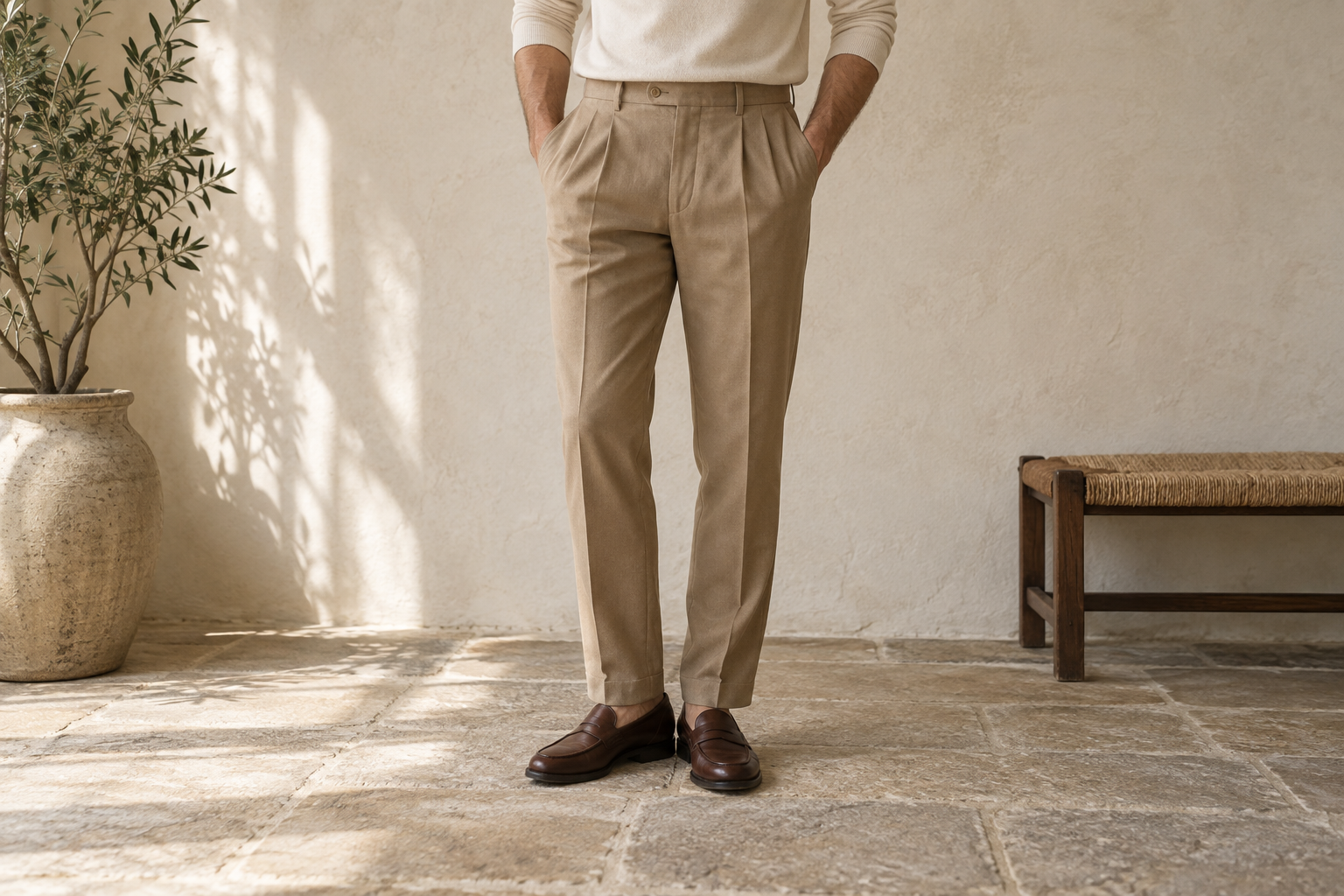
Tan pleated trousers worn with a cream knit top and brown loafers.

Trousers compared

Ponte Pants vs Leggings: What Actually Changes?

Ponte describes a fabric, while leggings describe a garment style, so the categories can overlap. Inspect the actual cut, coverage and dress policy instead of the name.

Begin here

Comparison

Ponte pants or leggings: what the difference means in practice

Ponte describes a fabric, while leggings describe a garment style, so the categories can overlap. To choose a pair for work or smart casual use, inspect the actual cut, coverage and dress policy. A ponte label does not guarantee opacity or a trouser-like appearance, and leggings can come in different fabrics, with pockets and varied construction.

Myth

Anything labelled ponte works like a trouser, and leggings are always thin single-knit tubes with no pockets.

Fact

Ponte is a fabric, not a garment type: it is used for structured pants and for legging-style cuts. Leggings vary too — thicker fabrics, pockets and flat seams exist. The label name is the start of the inspection, never the end of it.

THE SHORT ANSWER

Choose for the day ahead.

Neither category wins by name. Ponte is a fabric and leggings are a cut, so the categories can overlap, and what changes the answer is the actual garment: how much structure it holds, whether it stays opaque when you bend, and whether the waistband behaves like a trouser or an underlayer. A structured, opaque pair with a real waistband reads as trousers in most smart casual settings; a close-fitting stretch cut stays casual whatever the fabric, though its polish depends on the pair. Check the dress policy first, then the garment in your hands.

Side by side.

The differences that matter
Question to askStructured ponte trouserLegging-style cut
What is the fabric?Ponte di Roma is a double knit: two yarn layers knitted together into a denser cloth that holds its shape — though weight and quality vary by maker.Varies widely: single-knit jersey, nylon-elastane blends, and ponte itself. Read the label; the cut does not fix the cloth.
Does it hold its shape?Stretch it and let go — good ponte recovers without staying stretched or going thin-looking at the stress points.All-over stretch is the point of the cut; recovery depends on fabric quality and condition, not the silhouette.
Is it opaque in movement?The dense knit resists sheerness, but lighter colours and thinner fabric still deserve a bend test before you rely on it.Do not assume either way. Many pairs pass, some go sheer when stretched — a bent-knee check in private light is the honest standard.
What about the waistband?Typically a proper waistband — elastic, partly structured or fastened — that sits like a trouser waist.Usually a wide flat elastic band that grips; comfortable, but it reads more underlayer at the waistline.
Seams and pockets?Often trouser details: pockets, a fly, shaped seams — though some ponte pants skip them, so look.Varies by design: some pairs add pockets or flatlock seams, others stay a simple stretch tube. Check the actual garment.
How does it read?With structure and trouser details, most ponte pants sit within smart casual as knit trousers.The close fit reads casual in most settings; a thick, matte, opaque pair under longline layers can edge into relaxed-office territory.
Care?Most ponte is machine washable but can pill where it rubs; follow the label and wash cool.Usually machine washable and quick-drying; elastane blends dislike high heat. The label decides, not the category.

What should guide your choice?

  • What does the dress policy actually say? Policy first — a client-facing room calls for a trouser read no matter how good the legging's fabric is.
  • Does the fabric hold its shape when you pull it and let go, or does it stay stretched and thin-looking?
  • Does it pass the opacity check in movement, in daylight, without needing a long top to cover you?
  • Does the waistband structure the waist like a trouser, or grip it like an underlayer — and which does the setting accept?
  • Are there trouser details — pockets, shaped seams, a shaped leg — and do they matter for the outfit you have in mind?

The right choice depends on the setting.

A smart casual office

A structured ponte trouser with a proper waistband and pockets sits comfortably in most office codes, topped with a tunic-length knit or a shirt. A legging-style pair can work in the most relaxed offices if it is thick, matte, opaque and worn with a longline layer — but you are leaning on the top half to do the trouser's job.

Weekends, errands and travel

A legging-style cut wins on comfort and packing weight here, and the setting asks for nothing more. Ponte earns its place if you want one pair that survives the trip, resists wrinkling and still reads as a trouser at dinner — check the specific pair's recovery and care label rather than assuming.

A casual dinner or drinks

Either can work with the right support around it. Structured ponte pants with a dressy top, fine knitwear and low leather shoes read as a deliberate outfit. A legging-style pair manages it in a relaxed venue if it is thick, dark and matte, with structure added through footwear and outerwear.

A ponte legging — the overlap case

This is why the two axes matter: a legging cut sewn in ponte gives you the dense fabric and better recovery with the close, pull-on silhouette. It usually reads smarter than a jersey legging, but it is still a close-fitting cut — cover, waistband and dress policy still decide where it can go.

Keep exploring.

Trousers & Pants

How to Wear Linen Trousers for Smart Casual

How to wear linen trousers for smart casual: pair relaxed fabric with the right shirt weight and footwear, check pale pairs for opacity in daylight, and set a realistic crease expectation.