Weekend outfits in depth ↗
Complete smart casual weekend outfits you can copy or adapt, built around walking, brunch and plans that change.
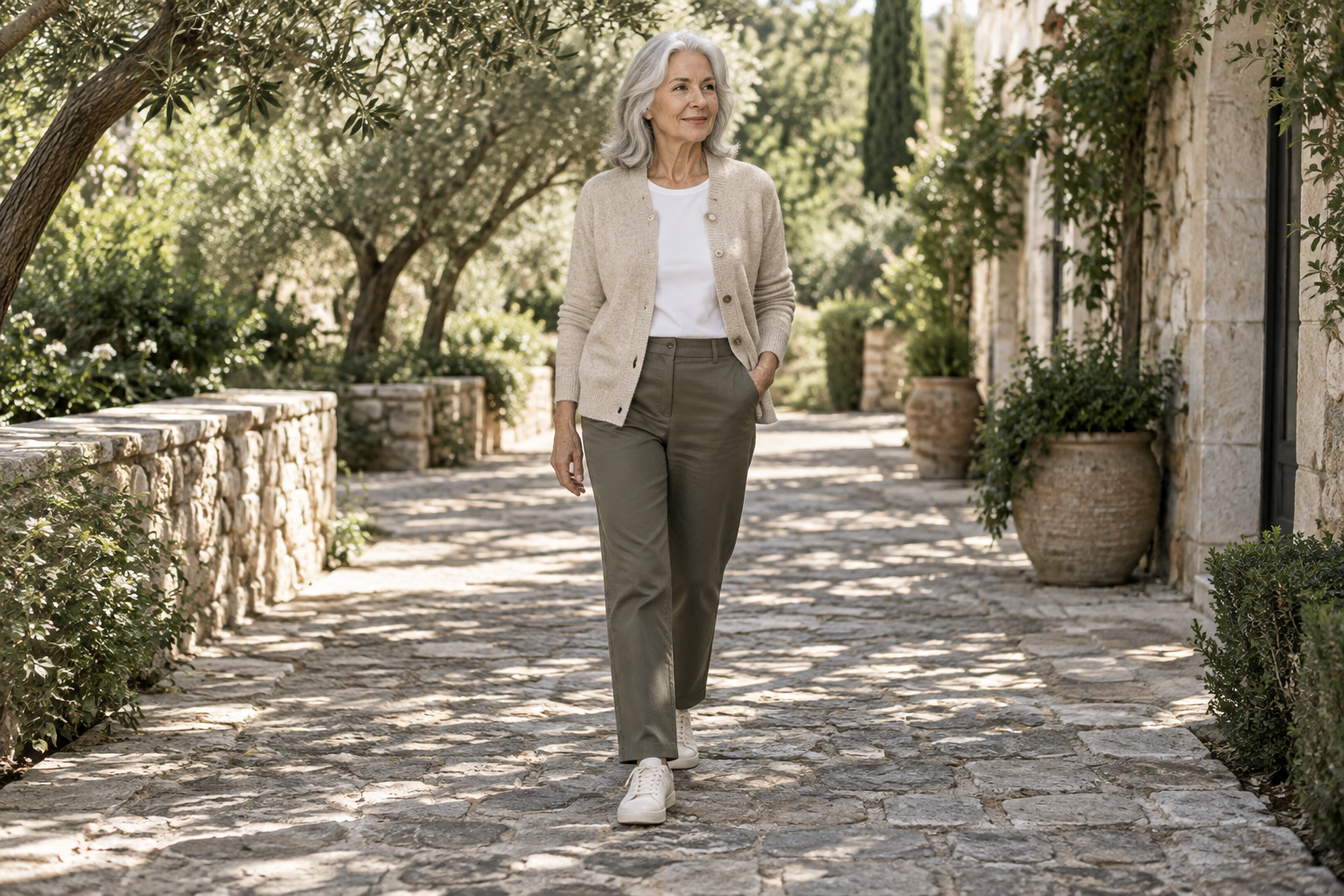
Occasion guide
For a smart casual weekend, choose clothes that suit the most demanding part of your plans. Comfortable trousers, a top and walking-friendly shoes can cover errands and lunch, while a later booking may need a change.
Explore the collectionFIND YOUR STARTING POINT
Weekends cover everything from errands to long walks to a booked lunch, and those plans make different demands on the same wardrobe. Start by naming the most demanding part of your day, build one comfortable base around it, and change only what the weather or the setting actually requires. You do not need a jacket in every outfit — use the setting and your own comfort to decide.
Smart casual weekend outfits work best when they are chosen from the plan outward. “Smart casual” on a Saturday is not one look; it is a comfortable base adjusted for how far you will walk, what the weather does and whether any part of the day has a stated expectation. This page shows how to read your own plans, build one adaptable base, and change it without turning Saturday into a production.
Errands, extended walking and a booked meal ask for different things from the same clothes. Most weekend outfits fail in one direction: dressed for the plan’s most casual part when the day ends somewhere smarter, or in shoes that looked right at the door and hurt by the second stop.
| Plan | Decides | Watch out for |
|---|---|---|
| Errands and short stops | Ease: slip-on shoes, pockets, a layer you can shed at the till | Nothing much — this is the easiest brief of the three |
| Extended walking | Footwear and fabric: broken-in shoes, no seams that rub, room to move | A outfit that only works standing still; distance punishes new shoes |
| A booked meal or venue | The venue’s stated expectation, if any — check the booking | Assuming every restaurant accepts trainers; some state restrictions |
If the day combines plans — errands, then a long walk, then dinner — the most demanding part governs. A dinner booking usually wins on appearance, but a six-mile walk wins on footwear, so dress the feet for the walk and lift the rest of the outfit for the table.
A base is the part of the outfit you could happily wear for the whole plan: trousers or a dress, a top, and shoes. Two routes cover most weekends, and both can be dressed up or down by what goes over them.
Trousers-and-knit route
Dress-and-cardigan route
Both routes share one rule: every piece should survive the plan’s most physical part. That is what makes the base “smart” rather than simply casual — clean, intact, considered — not a jacket or a heel.
A smart casual weekend outfit always needs one structured piece, like a blazer.
Structure is one way to lift an outfit, not a requirement. Clean lines, intact fabrics and deliberate shoes read as considered on their own; a blazer earns its place when a venue or mood calls for it, and many weekend plans never do.
Weather, not style, is what actually forces weekend outfit changes. The fix is a small set of pieces whose only job is adaptation, checked against the forecast before you leave.
Before walking out on a changeable day:
The most useful weekend skill is moving one base from a casual morning to a smarter evening without a full change — where the evening venue’s policy allows it. Three small moves carry almost any base.
Changing clean sneakers for loafers or a dressier pair resets the outfit more than any other single move.
A knit or structured cardigan over the same top shifts the mood from daytime to evening.
Read the confirmation for anything the venue has stated. No stated rule means no rule; a stated restriction overrides everything here.
A full change is the better call when the daytime base took real punishment — a muddy walk, a paint splatter, hours of rain. Restyling worn-out pieces around a smarter venue usually looks like exactly what it is.
A good weekend formula repeats, but it should run on pieces you already own. Name the role each item plays — moving bottom, clean simple top, walkable shoes, adaptive layer — and any piece that fills the role is a valid substitute.
Two questions tell you whether a favourite combination has tipped from formula into uniform. Do you reach for it on days it does not suit the plan? And would you struggle to build the same outfit from other pieces you own? If either answer is yes, rotate a substitute in for a few weekends.
For full worked examples — complete outfits built around walking, brunch and changing plans — see our weekend outfits collection, along with the deeper guides to jeans and sneakers in smart casual settings.
Complete smart casual weekend outfits you can copy or adapt, built around walking, brunch and plans that change.
How to judge a specific pair — and when a venue’s stated rules make the question moot.
Wash, fit and setting: the three things that decide whether jeans read considered or careless.
The tops that do the heavy lifting on casual days — how fabric, opacity and fit decide whether a shirt looks relaxed or unfinished.
Footwear that handles hours of walking and still looks deliberate — clean, simple options that suit most weekend outfits.
OUR APPROACH
Good style starts with understanding what works for you.
A LITTLE FURTHER READING