Smart casual weddings, in depth ↗
The detailed answer to what smart casual means on a wedding invitation, with outfit examples for different venues and seasons.
What to wear
A celebration outfit is chosen from the host's instructions first, then adapted to the venue, the weather and the length of the day. Plan one outfit that survives ceremony, travel, meal and dancing.
Explore the collectionFIND YOUR STARTING POINT
Choose a wedding or celebration outfit from the host's instructions first, then account for the venue, weather and length of the event. A garden ceremony may need shoes that work on grass; an indoor reception may need a removable layer. Neither setting cancels a dress requirement written on the invitation.
What to wear to a wedding or celebration starts with the invitation, not the venue photograph. The host's written instructions — the dress code, any colours to avoid, any ceremony-specific requests — come first, and the setting only shapes how you carry them out. This page walks through reading the invitation, planning one outfit across a long day, comparing three outfit routes and choosing shoes for the ground you will actually stand on.
Invitations carry three kinds of instruction, and they are worth separating. Requested formality is the phrase like “smart casual” or “black tie optional” that sets the overall register. Colour requests — anything from “no white” to a named palette — and ceremony-specific expectations, such as covered shoulders or head covering at a religious venue, are constraints that apply regardless of how dressed up or down the code is.
Venue photos and the time of day tell you more than the wording on the invitation.
The written instructions come first. A barn and a ballroom may both host a smart casual wedding, so the setting changes fabric, layers and shoes — but it does not override a formality, colour or ceremony requirement the hosts put in writing.
A celebration is rarely one sitting — it is a sequence, and each stage puts a different demand on the same clothes. Plan the outfit by walking the day in order and giving each stage one practical adjustment.
The most photographed, most formal stage: the base outfit complete, and any venue requirement (shoulders covered, head covering) ready to put on.
Coats, umbrellas or a shoe swap for the walk; a garment the creases badly may need to travel hanging rather than worn or folded.
Two to three hours seated — check waistbands and sleeves while sitting, and keep a layer handy for air-conditioned rooms.
Freedom of movement and shoes already proven for hours on your feet; flats in a bag are a fair fallback, not a failure.
If an adjustment only works by abandoning part of the outfit — heels carried all night, a jacket with nowhere to live — plan a home for it: a coat check, a seat back or a bag left with the couple's coordinators. An outfit you are not managing all evening is an outfit you can enjoy.
Most smart casual celebration outfits fall into one of three routes. All three can be right; the choice comes down to the stated code, the season and what you already own that fits well.
| Route | Why it works | Layer to plan | Check before you commit |
|---|---|---|---|
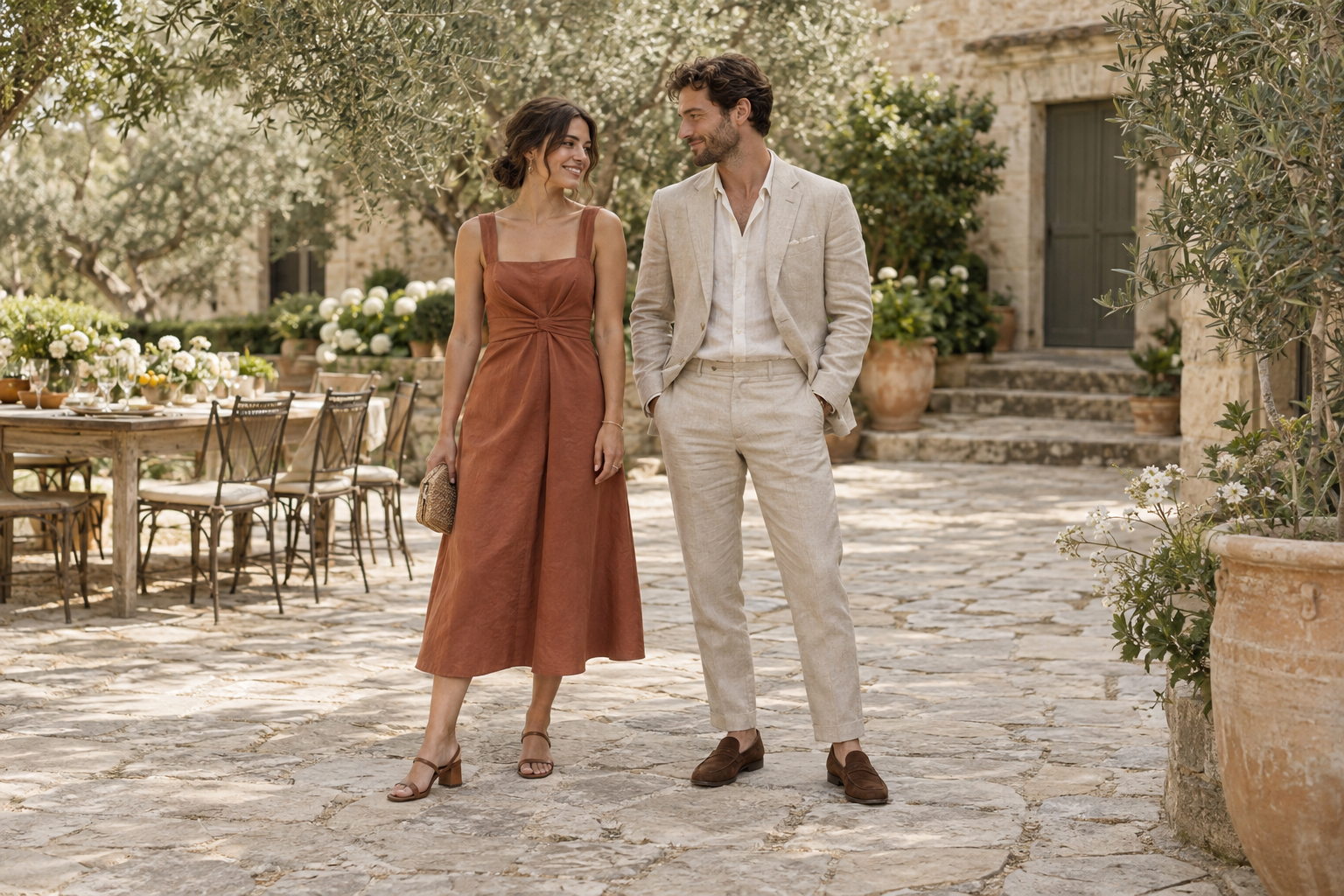
| Midi or knee-length dress | One piece carries the formality; nothing to coordinate. | Shawl, wrap or jacket for the evening. | Sitting, dancing and bust adjustments — not just how it looks standing. |
| Skirt and top | Separates fit independently and can be re-worn apart afterwards. | Cardigan or structured jacket that matches both pieces. | The waistband at sitting height and the top untucking when you move. |
| Suit or trouser combination | Polished, weather-proof and comfortable for long days on your feet. | The jacket itself, or a lighter layer if the suit stays on. | Trouser length with your actual event shoes on. |
Whichever route you choose, fabrics decide how the outfit photographs and lasts: heavier crepe and wool blends hold their shape, while light linens and silks suit hot-weather celebrations but crease. A midi skirt route can be worked out in detail with the guide to styling midi skirts for smart casual outfits.
Shoes are where celebration outfits most often fail, because the ground at the venue matters more than the shoe's looks. Grass, gravel and cobbles punish thin heels; marble dance floors punish worn soles. Match the footwear to the surface first, then to the outfit.
Stable on most surfaces
Think twice, or plan around
Heels are optional, not compulsory — plenty of guests wear flats or dressy sandals all day, and nobody worth impressing is checking. If heels are simply not for you, the guide to smart casual shoes without heels lists comfortable options that still read polished.
When the invitation leaves real room for doubt, the hosts almost always prefer a question to a guest who is visibly uncomfortable. Ask one specific question rather than a general “what should I wear?” — it is easier to answer and easier to act on.
“Looking forward to the day — could I check about dress? Would [a midi dress / a suit] fit what you have in mind, and are there any colours you'd rather guests avoided?”
For the full dress-code answer — what smart casual means at a wedding specifically, with worked examples for different settings — the smart casual wedding guide covers it in depth. Use that page for the code, and this one for the logistics around it.
The detailed answer to what smart casual means on a wedding invitation, with outfit examples for different venues and seasons.
Comfortable, event-appropriate footwear for guests who don't wear heels — flats, loafers and low blocks that still read dressed up.
How to build a celebration outfit around a midi skirt — pairings, fabrics and the details that make separates read formal enough.
Silhouettes, lengths and fabrics that land at smart casual — formal enough for the photos, comfortable enough for a long day.
OUR APPROACH
Good style starts with understanding what works for you.
A LITTLE FURTHER READING