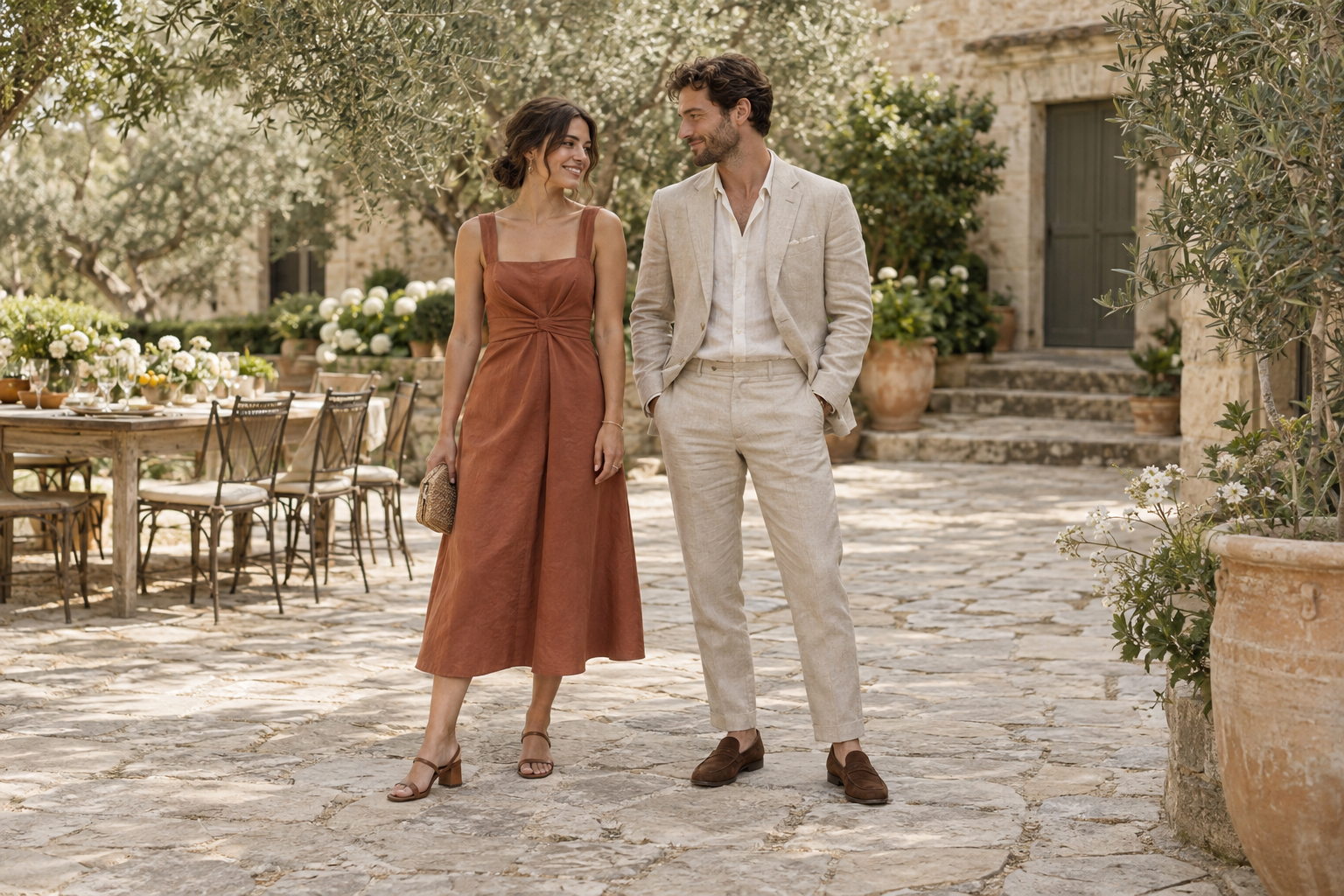
A garden wedding is smart casual with terrain. Plan the shoes for grass and gravel, the layers for sun and evening cooling, and let the invitation — not the lawn — set the formality.
For a smart casual garden wedding, follow the invitation and plan for the ground underfoot. Choose shoes you can use on grass or gravel, then add clothing suited to the forecast and ceremony. A garden setting changes practical needs, but it does not cancel the couple's stated dress expectations.
Follow the invitation first, then the ground
Read the invitation, the venue page and any ceremony-specific requests before you shop. Some garden weddings ask for lawn-friendly footwear outright; others specify marquee dining or a grass-free ceremony, which changes the answer. If the wording is ambiguous, a short message to the couple or organizer settles it faster than any guide.
Build the outfit in five decisions
Read the invitation and venue access
Note the stated dress code, the ceremony surface, gravel paths, slopes and any step-free routes. Confirm anything unclear with the organizer.
Choose footwear for the confirmed ground
Pick shoes with a base that stays stable on grass or gravel as described in the table below, and walk in them before the day.
Build two complete outfit options
Assemble a trouser option and a dress or skirt option, each with the same settled footwear, so a forecast change does not force new shoes.
Add layers for sun, breeze and indoors
Plan a sun covering for open lawns, a light layer for evening cooling, and something presentable if dinner moves inside.
Run a movement and seating check
Sit, stand, walk a few metres and raise your arms in the full outfit. Anything that rides, digs or needs constant adjustment goes back.
Shoes that survive grass, gravel and steps
No heel shape is safe on every garden surface — the right question is what the venue actually has underfoot. Flat soles and wider bases cope with more surfaces than thin heels, but a wet lawn defeats almost everything. Match the shoe to the confirmed ground, not to a general rule.
Footwear behaviour by garden surface (general tendencies, not guarantees for a specific venue)
Surface
Works reliably
Struggles
Check before the day
Dry lawn
Flats, loafers, wedges, block heels
Thin stilettos, smooth leather soles
Recent rain or watering
Gravel path
Flats, loafers, wedges
Stilettos, open-sole sandals
Path length between ceremony and drinks
Sloped ground
Flats with grip, low wedges
Any raised heel
Where you will actually walk, not just stand
Stone or deck
Most dress shoes and heels
Very thin heels on grates or gaps
Steps and step-free access
Myth
A garden setting automatically makes the dress code casual, so sandals and picnic clothes are fine.
Fact
The garden changes what is practical — shoes, fabrics, layers — but the stated code still applies. Pressed, deliberate clothes with stable footwear meet smart casual on grass exactly as they would indoors.
Layers for sun, breeze and an indoor backup
Garden weddings usually keep you outdoors for the ceremony, drinks and photographs, so plan for the forecast rather than the calendar. Lightweight fabrics such as linen, cotton and seersucker hold up better in warmth than heavy suiting and press out easily after travel.
Temperatures drop quickly once the sun goes, even on warm days. An unstructured blazer, fine knit or wrap carried or left in the car covers the evening without weighing down the afternoon. If the reception moves into a marquee or hall, that same layer doubles as the indoor answer to air conditioning or open doors.
Colour questions: ask the couple, not a rule of thumb
Guests commonly avoid white, ivory and near-cream outfits so they do not compete with the couple in photographs, and many couples appreciate the margin. Beyond that, acceptable colours vary by couple, culture and venue — some request specific palettes, others have none. Treat the couple's guidance as the standard, and when nothing is stated, a message asking about colour or cultural expectations is always welcome.
Final check and what to carry
Run through this the night before:
Invitation wording re-read and any requests confirmed with the couple or organizer.
Shoes walked in on a surface similar to the venue's, soles and heels inspected.
Full outfit tried on end to end, including sitting and walking.
Layer packed or staged for the evening temperature drop.
Small carry plan sorted: phone, tissues, sun covering and any spare shirt or hosiery.
Confirm what the ground actually is. Lawns, gravel paths, sloped garden and stone terraces ask different things of your shoes, and the venue or organizer can tell you which apply.
Garden weddings usually mean extended time outdoors: ceremony, drinks on the lawn and photographs all happen in the sun. A hat, sunglasses for the pre-ceremony hours, and a fabric that does not show sweat are worth planning for.
Light fabrics earn their place here. Linen, cotton, seersucker and unstructured wool keep their shape in warmth in a way heavy suiting does not, and they press out easily after travel.
The garden relaxes fabrics and footwear, not grooming or the code itself. Pressed clothes, clean shoes and considered colour are what separate a guest from someone who wandered in from a picnic.
Ask before assuming on colour and customs. Couples and cultures differ on what guests should wear, and a direct question beats a generic rule applied to the wrong wedding.
A useful outfit formula.
Trousers or bottoms: tailored trousers, a midi or maxi dress or skirt, or dark chinos — light-coloured linens and cottons work well; nothing that drags on the grass.
Shirt or top: a linen or cotton-blend collared shirt, or a breathable blouse or fine knit in a colour with enough depth to hold up in daylight.
Layer: an unstructured blazer in a lightweight weave, or a light shawl, wrap or tailored jacket — enough for a cool evening, easy to carry after sunset.
Shoes: flats, loafers, wedges or block heels matched to the confirmed surface — decide on socks or hosiery for the heat.
Finishing: sun covering for open lawns, a belt that matches the shoes, and pressed fabric throughout — gardens forgive terrain, not creases.
Two starting points.
Menswear garden look
Sand-coloured linen trousers, a mid-blue cotton shirt with the collar open, a sage-green unstructured blazer, and brown suede loafers. The flat loafer sole copes with lawn, gravel and stone, and the linen blend holds a press through the afternoon.
Womenswear garden look
A floral midi dress in a cotton blend on a green or dusty-rose base, wide block heels no higher than two inches, and a wrap for the evening. The block heel carries weight across soft ground, and the midi hem stays clear of dew.
The flat-shoe variant
Tailored stone chinos, a white-collar navy shirt worn without a tie, and tan leather loafers — or wide-leg trousers with a silk-blend camisole and dressy flats. Reads fully guest-ready while letting you forget about the ground.
Adjust for the day.
Direct midday sun
When the ceremony sits in open lawn at noon, sun coverage matters more than usual. A hat becomes genuinely functional rather than decorative, and mid-tone fabrics — sage, terracotta, navy — photograph more reliably than very pale ones in strong light.
Cool or overcast day
Garden temperatures drop fast once the sun goes. Keep the layer even if you skip it all afternoon: an unstructured blazer, a fine knit or a wrap turns an outfit sized for the afternoon into one that lasts through the speeches.
Gravel and lawn mixed
Many garden venues alternate lawn with gravel paths. Flats and loafers handle both without thought; if you wear heels, wedges or block heels with some surface area are the versions most likely to survive the walk between ceremony and drinks.
Evening reception outdoors
If the celebration continues under festoon lights, plan for a noticeable drop in temperature. A heavier layer left in the car, closed shoes instead of sandals, and a darker bottom half that hides grass and dew all make the second half of the day easier.
Leave these assumptions behind.
Wearing thin stilettos on grass. They sink with every step, and the resulting walk and posture follow you through every photograph after the ceremony.
Choosing white, ivory or near-cream outfits without checking with the couple. Many hosts mind the overlap with the bridal party, and the invitation or a quick message settles it.
Dressing for the afternoon and ignoring the evening. Garden weddings run long, and an outfit with no layer leaves you cold well before the last dance.
Treating the garden setting as permission for picnic clothes. Linen and flat shoes are the relaxation; wrinkled, unpressed casual pieces still read as underdressed for a wedding.
Smart casual beach wedding outfits: first confirm the ceremony surface, then choose secure shoes and layers for sand, wind and an indoor reception — without dropping the stated dress code.