Skip to content

Find your next good read.

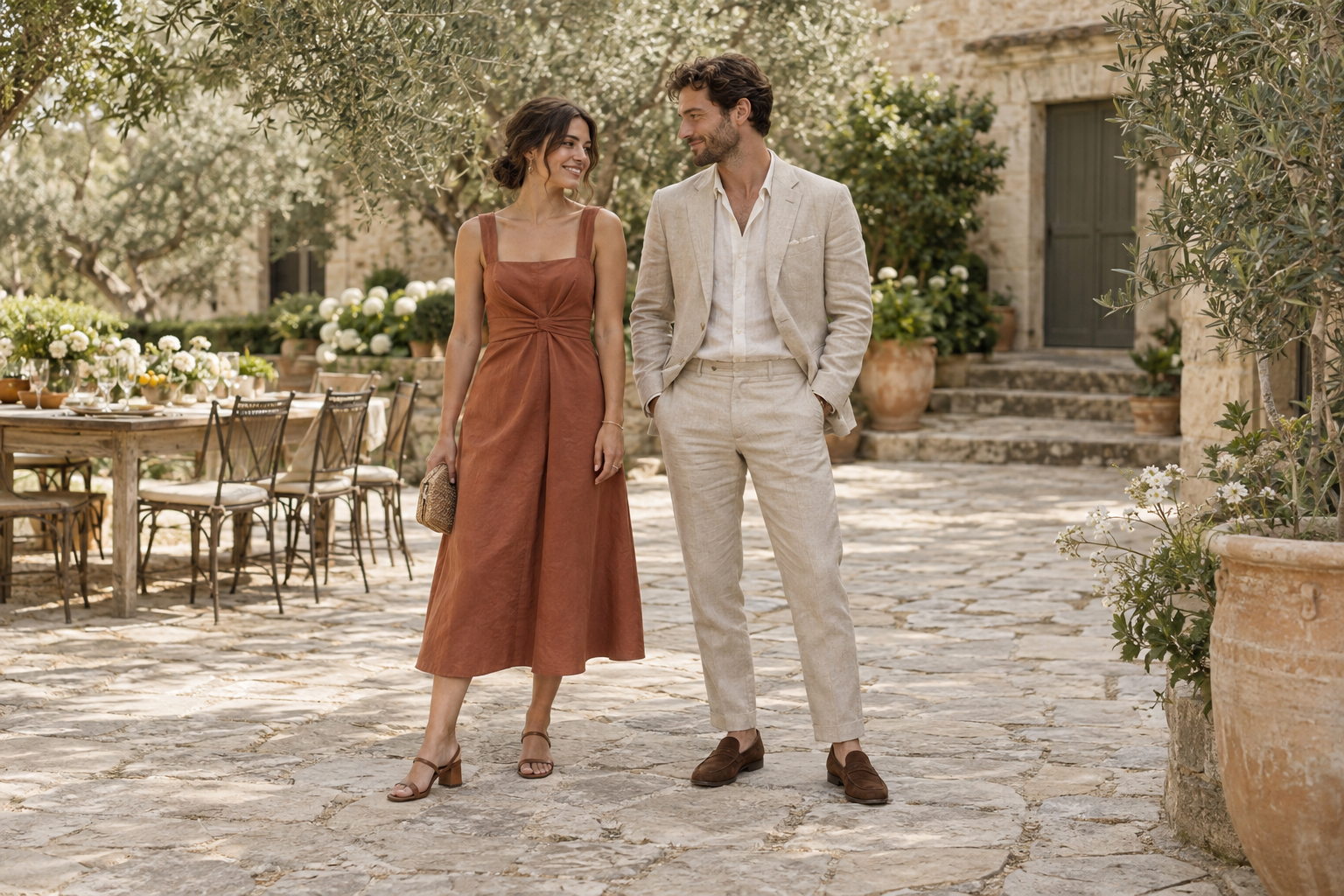
Two adults in a terracotta midi dress and pale linen suit stand in a leafy stone courtyard.

Occasion guide

What to Wear to a Smart Casual Wedding

For a smart casual wedding, follow the couple's instructions before using general outfit advice. Build the outfit from a jacket, a proper shirt or dress, and shoes chosen for the ground underfoot, with a layer for temperature changes.

Begin here

Occasion advice

Dressing for a smart casual wedding

For a smart casual wedding, follow the couple's instructions before using general outfit advice. A jacket with trousers, a dress or a skirt-and-top combination may all work, depending on the ceremony and setting. Plan shoes for the ground underfoot and a layer for temperature changes so the outfit works beyond the photographs.

Extract the brief before you open the wardrobe

Everything you need to pitch the outfit right is usually written down somewhere. Before choosing anything, collect four facts: the exact dress wording, any colour requests, any ceremony requirements, and the venue itself.

  • The dress wording: “smart casual” means what the couple mean by it, and a couple's website FAQ often spells out more than the invitation does.
  • Colour requests: some invitations ask guests to avoid white and near-white shades, others name a whole palette — either way, a written request settles the question.
  • Ceremony requirements: religious and cultural venues may ask for covered shoulders, head coverings or removal of shoes; these are facts about that ceremony, not etiquette guesses.
  • The venue and time: a barn or garden in the afternoon and a hotel ballroom in the evening pull the same code in different directions on fabric, layers and shoes.
Myth

Denim is always banned at a smart casual wedding, and heels are always required of women.

Fact

Neither is a universal rule. Some couples genuinely welcome dark, tailored denim at a relaxed venue, and many weddings are perfectly navigable in dressy flats. Where the invitation is silent, ask the couple rather than assuming either ban.

Three routes, compared

Almost every successful wedding guest outfit is one of three routes. Pick the route first, then tune fabric and colour to the season and venue; our midi skirt styling guide covers the third route in detail, and our guide to polished shoes without heels covers footwear for guests who skip heels. The weddings and celebrations hub surveys other celebration types.

Three outfit routes for a smart casual wedding
RouteWorks best forWatch out for
Blazer and tailored trousersMost venues and seasons; separates again afterwardsA heavy construction that overheats outdoors — choose unstructured makes in warm weather
A dressCeremony-to-reception days where one piece must do everythingFabric and length that suit the photos but not six hours of sitting, standing and dancing
Skirt and topDaytime and garden settings, and wardrobes that do not run to dressesLetting the combination drift casual — the skirt fabric and the shoes decide whether it reads wedding-level

BEFORE YOU CHOOSE

Read the room. And the invitation.

  • Read the invitation first: the stated code, any colour guidance and the venue name carry more information than anything else, and the couple's choice of venue usually tells you how formal the day really is.
  • Venue and time of day shape the outfit — a barn or garden in the afternoon tolerates lighter fabrics and open collars, while a hotel or historic building in the evening usually pulls towards a jacket and darker tones.
  • Season and weather matter more at weddings than most occasions, since parts of the day often happen outdoors; check the forecast close to the date and plan a layer you can hold or hang up.
  • Estimate the couple's likely formality from everything else they have planned — paper, website, what the bridal party will wear — and match within a step rather than guessing from the code alone.
  • If the invitation genuinely leaves you unsure, asking the couple or a groomsman is normal and welcome; one short question beats a day of feeling underdressed.

A useful outfit formula.

  1. Men: unstructured blazer in a mid tone + light shirt with an open collar + tailored trousers in a cotton or wool blend + dark leather loafers or derbies.
  2. Women: midi dress in a season-appropriate fabric + block heels, wedges or dressy flats + a light wrap or tailored jacket for the ceremony + simple jewellery.
  3. Men: fine-gauge crew or half-zip knit over a collared shirt + tailored chinos + suede loafers, for a warmer-day version that keeps the structure.
  4. Women: wide-leg tailored trousers + silk or satin blouse + heeled sandals or flats + a clutch, as the dress alternative that reads equally formal.
  5. Men: cotton suit separates in mismatched but harmonious tones + white or pale shirt + brown leather shoes, when a full blazer outfit feels heavy for the setting.
  6. Women: knee-length or midi skirt + fitted knit top + low heels or dressy flats + small crossbody or clutch, for daytime garden settings.
  7. Either: every route carries a removable layer — wrap, cardigan or jacket — because ceremony and evening temperatures rarely match.

Two starting points.

Two adults in a terracotta midi dress and pale linen suit stand in a leafy stone courtyard.

Garden ceremony: pale linen suit and a terracotta midi

For men, a pale linen suit worn with the collar open and brown leather shoes — the soft colour and breathable cloth sit comfortably at smart casual in daylight. For women, a terracotta midi dress with flat or low shoes suits grass and stone surfaces. The pairing works because both outfits photograph warmly against greenery while staying comfortable through an outdoor drinks reception. The image is an illustrated example of these combinations, not a photograph of a real wedding.

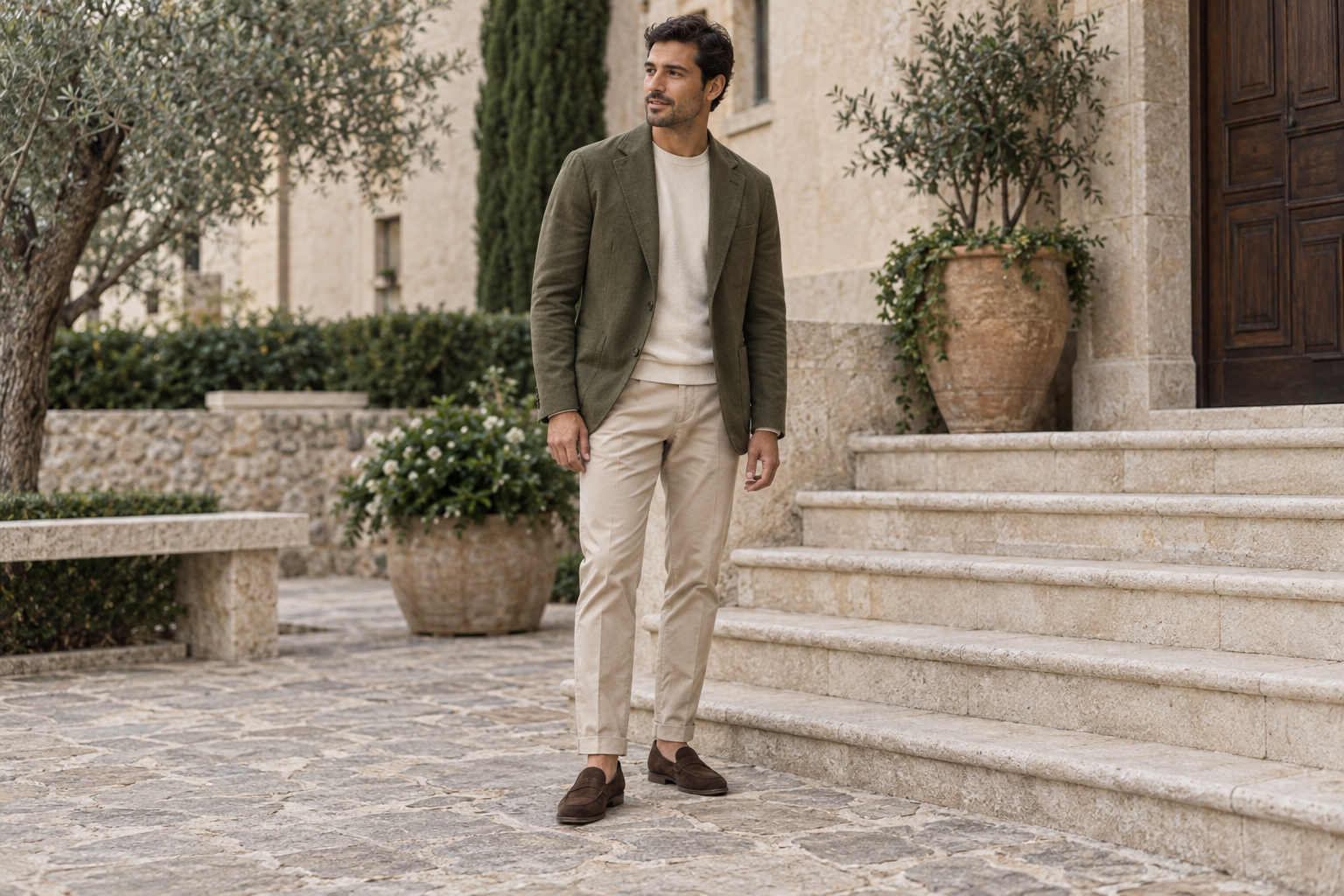
Man in an olive blazer, ivory knit, sand trousers and brown loafers beside stone steps.

Men: unstructured blazer over a fine knit

An olive unstructured blazer over an ivory fine-gauge knit, with sand tailored trousers and brown leather loafers. The soft shoulder and knit collar keep the outfit below jacket-and-tie formality, while the tailoring holds its own beside suits at the ceremony. The pieces separate afterwards, so the blazer works again with chinos and the trousers with a shirt. This image is an illustrated example, not evidence of fit or fabric behaviour.

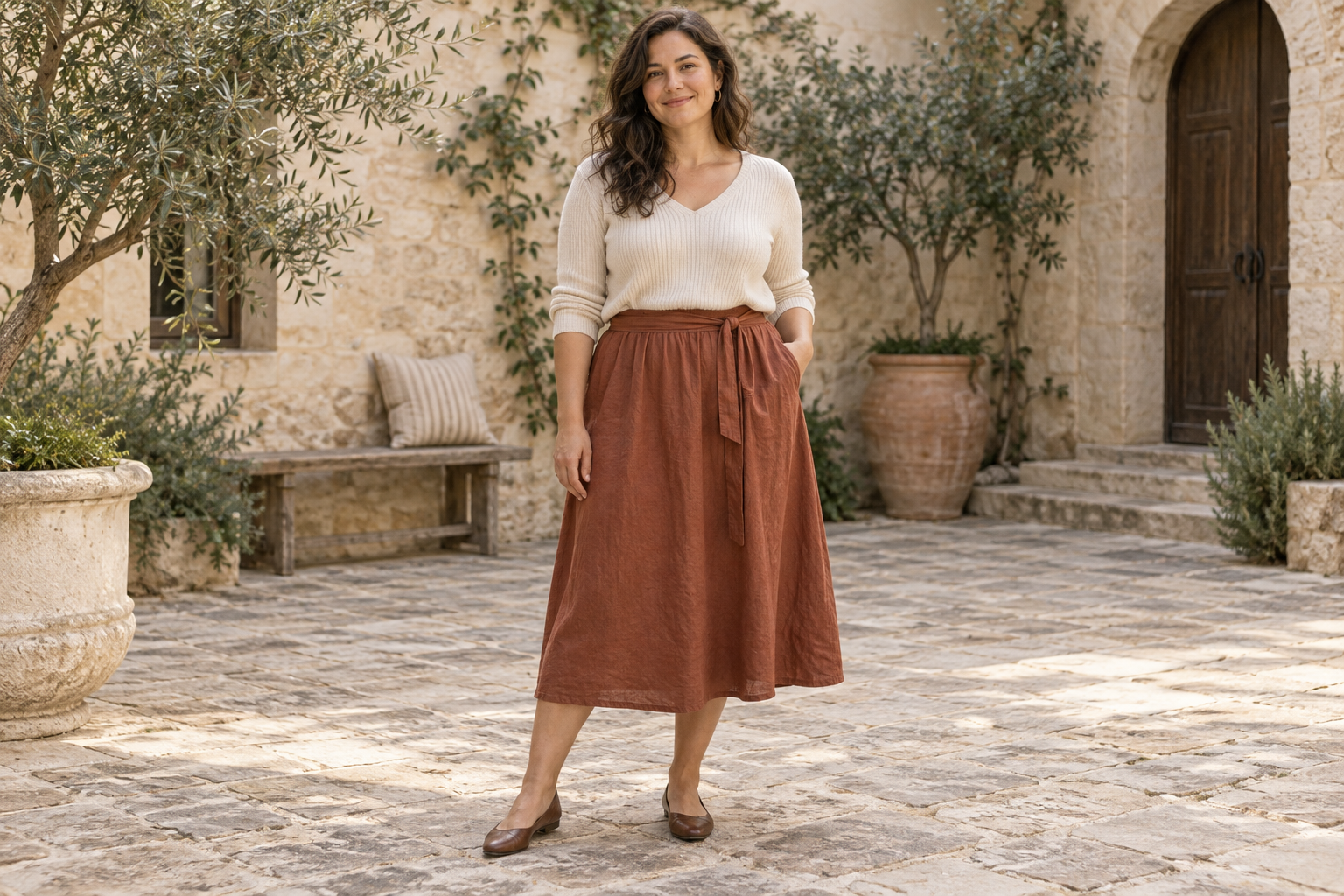
Woman in an ivory knit top, rust midi skirt and brown flats in a stone courtyard.

Women: skirt-and-top for a daytime courtyard setting

An ivory fitted knit top tucked into a rust midi skirt, with brown flat shoes and minimal jewellery. The knit keeps the top half compact so the skirt reads as shape rather than volume, and flats make courtyard cobbles and lawn equally manageable. It shows how a skirt-and-top route reaches wedding level through fabric and fit rather than a heel. As above, the image is an illustrated example of the combination.

Adjust for the day.

Beach or garden ceremony

Lean into lighter weights: linen-blend or cotton blazers, open-collar linen shirts, and loafers, dressy sandals or block heels that cope with grass — thin stilettos sink. Choose a midi or maxi dress in cotton-silk or a breathable blend, and expect to take shoes off on sand at some point, so pick a pair that still looks right in hand.

Winter wedding

Swap to heavier textures rather than darker everything: a flannel or tweed blazer with a fine rollneck or shirt underneath, wool trousers and leather-soled derbies or heeled ankle boots. A long wool coat over the outfit matters more than an extra layer under it, and darker mid tones — forest, charcoal, plum — photograph well against winter light.

Evening ceremony and reception

From late afternoon onwards, deepen the palette and sharpen the shoes: a dark blazer with black or oxblood leather loafers for men, or a satin or crepe midi with heels or dressy flats for women. Skip the summery open collar in favour of a shirt that holds a straight line under the jacket, since most of the day happens under artificial light.

If you run warm

Choose the jacket in an unstructured, half-lined or linen-blend make, wear a breathable cotton or merino shirt underneath rather than a synthetics-heavy blend, and plan the outfit to survive the jacket coming off — a good knit or crisp shirt keeps its shape without it. Women can pick a sleeveless or short-sleeve dress and carry the wrap instead of wearing it.

Leave these assumptions behind.

  • Dressing to the code alone instead of the venue and time of day, which is how a heavy three-piece ends up at a beach ceremony or linen arrives at a December hotel.
  • Assuming blanket bans the invitation never stated. Denim, flats and unconventional colours are each fine at some weddings and wrong at others — the couple's instructions, or a short question to them, settle it far better than a general rule.
  • Ignoring a written colour request, or assuming colour conventions apply universally. In many Western weddings white and near-white belong to the couple, but customs differ between cultures and families — follow what the invitation says and ask when a tradition is unfamiliar.
  • Wearing shoes you have not worn in, since wedding days involve hours of standing, lawn and dancing; break them in over a week or pick a pair you already trust.

Keep exploring.

What to Wear

Weddings & Celebrations

What to wear for weddings and celebrations: reading the host's instructions first, planning one outfit across the whole event, three outfit routes and footwear for the terrain.