Skip to content

Find your next good read.

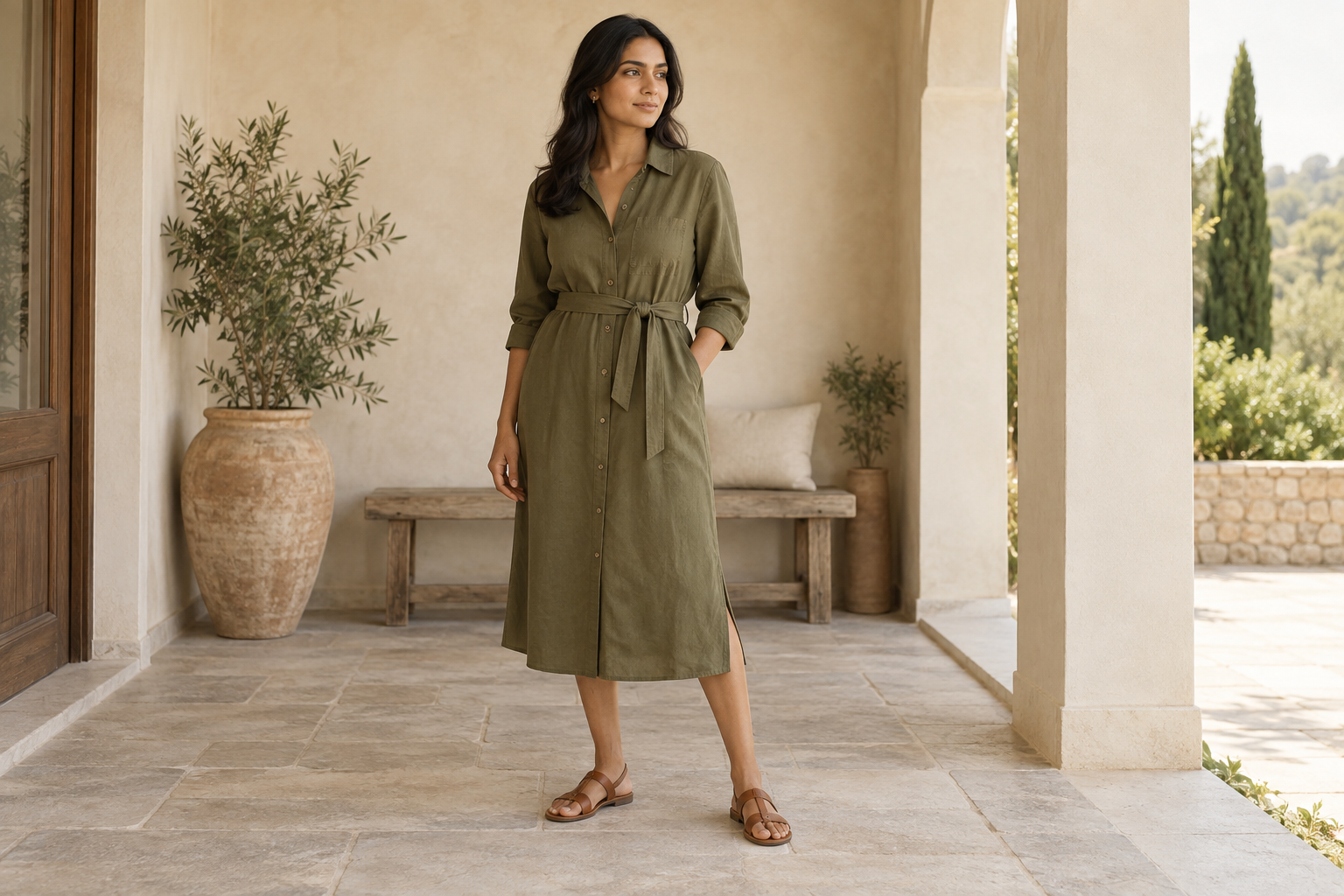
Woman wearing an olive belted shirt dress and tan sandals on a stone verandah.

Footwear question

Can Sandals Work with a Smart Casual Outfit?

Sandals can work for smart casual in some warm-weather settings — but the venue's rules and the rest of the outfit decide it, not the material alone.

Begin here

Definition / explainer

When a sandal counts as smart casual

Sandals can work for smart casual in some warm-weather settings, but check the venue's footwear rules first — some restaurants, workplaces and events require closed shoes outright. Choose a pair that fits securely and works with the rest of the outfit; leather is a common choice, not the only possible material. If closed shoes are required or simply more practical for the activity, flats, loafers or another enclosed alternative is the answer.

Myth

A leather sandal is automatically smart casual, and a slide can never be.

Fact

Material alone settles neither case. A scuffed leather sandal with a frayed strap fails a clean canvas one with firm straps and a shaped footbed. Slides can pass in genuinely relaxed settings when the rest of the outfit is deliberate and the venue allows open shoes — and they fail anywhere with a closed-shoe rule, whatever they are made of. Judge the whole sandal against the whole context.

Sandal types against the smart casual test
StyleWhat it does wellWhere it struggles
Fisherman / strapped sandalsStraps hold the foot and give the shoe a considered silhouette; the strongest all-round case.Can read heavy with short hemlines; buckles need to sit snug, not loose.
Two-strap and ankle-strap sandalsSecure on the foot; an ankle strap adds a line that pairs well with dresses and cropped trousers.Thin straps dig on long walks; check the fastening before a full day out.
Minimal slides with a shaped footbedWork in relaxed settings — a linen shirt and tailored trousers can carry them.Fail wherever secure fit matters: long walks, crowds, stairs, or any doubt about the dress code.
Flip-flopsBeach, pool, garden — contexts with their own dress logic.The toe post and flat foam sole read as swimwear context; almost no smart casual setting wants them.

Where sandals stop being an option: the venue and the activity

Sandals are the right call when

  • The setting is warm-weather relaxed — a garden dinner, a summer city evening, a resort occasion — and nothing in the invitation or venue rules says otherwise.
  • The sandal fastens securely and you have walked in it: stairs, pavement, a lawn.
  • The rest of the outfit is deliberate, so the open shoe reads as a choice rather than an afterthought.

Substitute an enclosed shoe when

  • The venue, workplace or activity requires closed or protective footwear — the rule governs regardless of style.
  • The day involves long walks, uneven ground, crowds or rain, where open feet are simply impractical.
  • You are unsure of the dress code and cannot check: flats or loafers never fail the test a sandal might.

Before wearing sandals out, run these checks:

  • Fasten and walk: straps should hold the foot without digging or gaping, and the shoe should stay put through a few minutes of real walking.
  • Check the ground you'll cross — pavement, gravel, grass, steps — and make sure the sole is up to it.
  • Look down: clean straps, an unscuffed footbed, and feet that are cared for. Sandals expose everything, and the shoe and foot are judged together.
  • Confirm the venue allows open shoes; if you cannot confirm it, carry or choose an enclosed alternative.

The plain meaning.

A sandal works for smart casual when the setting permits open footwear and the sandal itself is secure and in good condition: straps that hold the foot rather than a single toe post, a sole suited to the ground you'll cross, and a clean, unscuffed finish. Leather is a common and reliable choice, but the acceptance comes from the context and the whole outfit, not from the material alone. Flip-flops rarely pass because their formality signal comes from the beach or pool, and any sandal fails outright where a venue requires closed shoes.

What it can look like.

  • A linen shirt, tailored drawstring trousers in stone, and brown fisherman sandals with a woven belt — the strapped upper keeps the barefoot feel from tipping into beachwear.
  • A navy midi dress in viscose, a light denim jacket, and low-heel sandals with an ankle strap — the strap gives the shoe a line that matches the dress's definition.
  • An oxford shirt with rolled sleeves, dark shorts to just above the knee, and tan two-strap sandals — the tailoring above and the matte sandal below meet at the same level of formality.
  • A fine-knit polo, pleated cream trousers, and minimalist slide sandals with a shaped footbed and no branding — slides pass here because the setting is genuinely relaxed and the footbed holds the foot; they would not survive a long walk or a stricter room.
  • A wrap blouse in white cotton, wide-leg cropped jeans, and block-heel sandals — the heel lifts the sandal toward dressier territory while staying walkable on pavement or a garden lawn.

What it does not mean.

  • Rubber flip-flops with a linen suit — the toe post, the flat foam sole and the beach association outweigh every tailored piece above them.
  • Sport slides with socks and chinos — athletic branding and a moulded plastic strap read as gym kit, and the sock-on-sandal combination removes the last doubt.
  • Worn canvas straps with a frayed edge and a greyed footbed under a crisp shirt — damage at shoe level reads as neglect, not effort, and drags the whole outfit down with it.
  • Chunky hiking sandals with buckled webbing straps and a lug sole beside tailored trousers — the shoes signal trail, the trousers signal town, and neither yields.
  • Any sandal at a venue with a stated closed-shoe rule — the requirement is about the rule, not the styling, and no outfit above the ankle changes it.

The parts that matter.

Straps and security
Straps that cross or wrap the foot — fisherman styles, two-strap designs, ankle straps — hold the shoe to the foot and give it a silhouette. A single thin toe post with nothing else has no structure to speak of, which is a large part of what makes flip-flops read as beach kit even in expensive materials.
Material and finish
Leather and leather-look materials are the common smart casual choice, but firm woven straps or a clean matte canvas can pass in relaxed settings. Matte finishes in brown, tan, black or navy disappear into an outfit; glossy patent and plastic sheen pull attention to the foot, usually in the wrong direction.
Sole
A slim leather or low-profile rubber sole keeps the line of the shoe quiet under trousers. Thick moulded foam, visible air cushions or a deep lug tread announce a different context — sport or trail — and clash with tailored pieces. A slight heel or a shaped footbed adds polish without sacrificing summer comfort.
Condition and grooming
Sandals expose the whole foot, so the shoe and the foot are judged together. Scuffed straps, peeling lining or a stained footbed undermine an otherwise good outfit, and unkept feet do the same work in reverse. Conditioned leather and basic foot care are not vanity here — with sandals they are part of the garment.
Context
The setting has the final vote. A venue's dress code, the weather, and what the day involves — walking, standing, stairs — decide whether an open shoe is even in the running, before material or style enters the conversation.

Keep exploring.