The shoe decides whether a shirt dress reads as a finished outfit or as something grabbed off the hanger. Two things drive the choice: what the day asks of your feet, and where the hem ends on the leg.
Shirt dress and shoe pairings that survive a real day
Sandals, loafers, sneakers and boots can all work with a shirt dress, depending on the occasion and weather. Try the dress with the shoes before deciding, then walk and sit to check the hem and comfort. For a warm relaxed setting, a belted shirt dress with flat sandals is a simple option; enclosed shoes offer another route.
A shirt dress is a shirt with a hemline, which means the outfit's whole lower half is decided in one move: the shoe. Treat the choice as two separate questions — what the day demands, and what the hem is doing.
Four shoe families, compared by setting
Shoe families for shirt dresses, by where they work
Shoe family
Works hardest for
Watch for
Flat sandals
Warm, relaxed days — errands, holidays, casual weekends
Thin ankle straps can look busy against a belted waist; check they stay put when you walk
Loafers
Work, lunches, shoulder seasons — the most office-safe flat
With mid-calf hems, add a sock or choose a chunkier sole so the shoe does not vanish
Sneakers
Everyday wear, travel, walking-heavy days
Clean and plain, and define the waist with a belt or half-tuck or the whole look sags
Boots
Cooler weather; ankle boots for short-to-knee hems, knee-highs under long hems
Hem-to-shaft distance matters more than heel height — more on that below
Three complete outfits, decided end to end
A shoe choice only makes sense as part of a whole outfit, so these three are worked through completely. Each names the hem length, because that is what the shoe is balancing.
Shirt dress outfits by setting
Setting
The outfit
Why the shoe works
Warm relaxed day
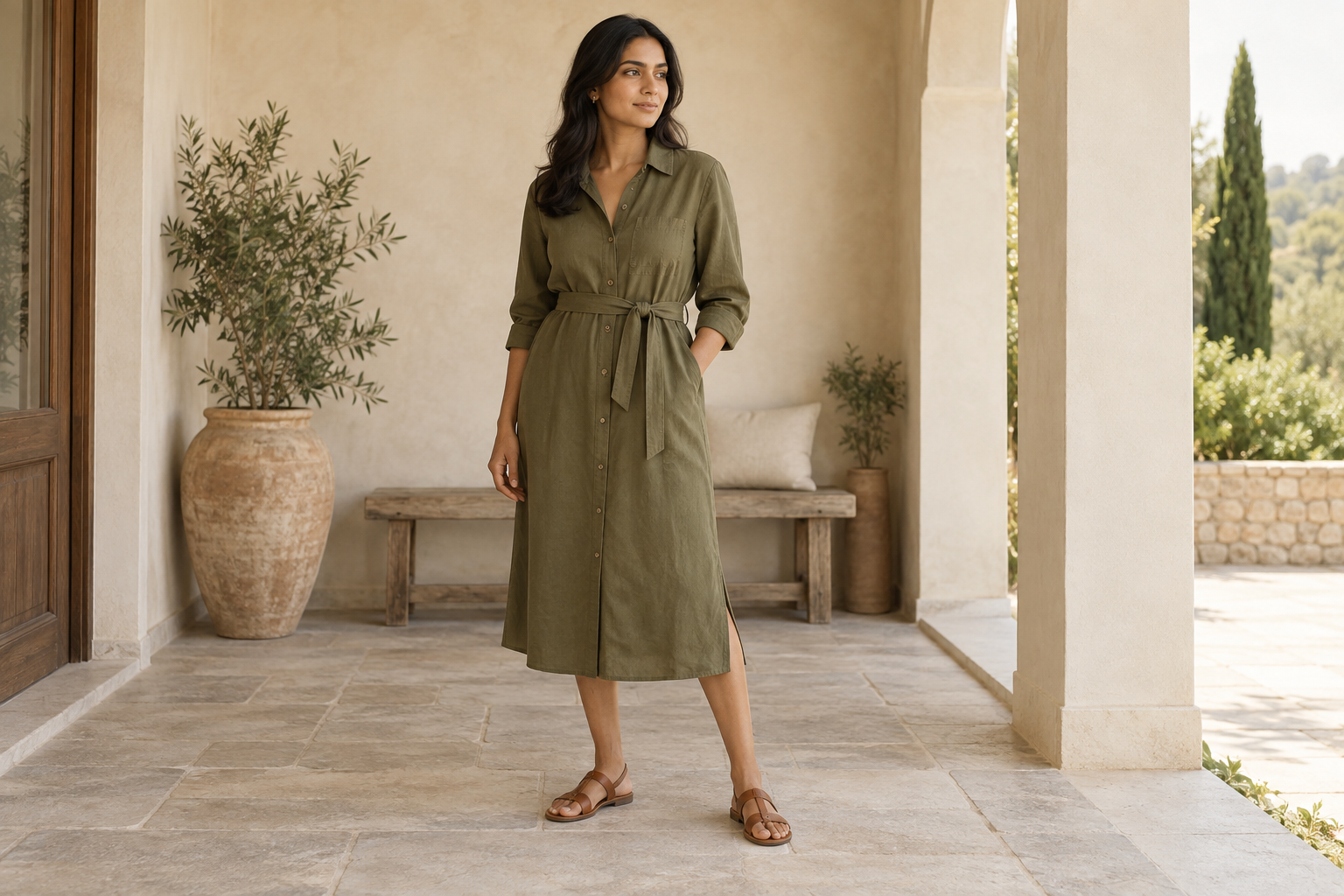
Belted cotton shirt dress ending above the knee, tan flat sandals, woven tote, sleeves rolled
The belted waist gives the shape and the flat sandal keeps the look light; the hem is short, so the shoe adds nothing heavy
Work
Navy shirting midi dress ending mid-calf, burgundy leather loafers, ribbed socks, structured shoulder bag
The loafer's leather matches the dress's shirting fabric, and the sock fills the hem-to-shoe gap so the mid-calf line does not cut the leg bare
Cooler weather
Olive flannel shirt dress just above the knee, brown ankle boots, opaque tights, wool coat
The tights close the gap between hem and boot top, so the short hem shows the shaft instead of swallowing it
Hems and boot shafts: what actually matters
The common rule says short hems always suit flats and long, heavy hems demand substantial shoes. It is a starting point, not a law — proportion is judged on the whole leg line in a mirror, not on hem length alone.
Myth
A short hem means flats will always look right, and a long hem means only a substantial shoe can carry it.
Fact
What matters is the gap the eye has to travel between hem and shoe, and the weight of the fabrics involved. A belt or half-tuck, a sock, tights or a chunkier sole all change that gap independently of hem length — which is why you try the combination on before ruling anything out.
With boots specifically, aim for a deliberate relationship between hem and shaft: shaft clearly visible below a shorter hem, or the hem meeting the shaft closely under a longer one. A stray few inches of bare leg between a long hem and a low ankle boot is the one combination that tends to look accidental. There is no required visible gap — treat it as something to adjust, not a rule to satisfy.
Shaft heights, hem lengths and tights choices for dresses generally, extending the boot logic above.
The walking check: strides, stairs and straps
Shirt dress hems move when you do, and a shoe that looked right standing still can fail on a staircase. Run this check in the shoes you actually plan to wear, on the day, before leaving the house.
Walk a normal stride
Ten paces on a hard floor. Watch whether the hem swings clear of the shoe or catches, and whether the sandals' straps or the boot shafts rub as you move.
Take the stairs
A full flight up and down. Stairs lift the hem higher than walking does and expose any gap you have to mind — a shoe you think about on stairs is the wrong shoe for a commuting day.
Sit and cross your legs
Check where the hem rides to seated, and whether the shoe still reads as part of the outfit from that position, not just standing.
Re-check in daylight
Mirror light flatters; daylight is what other people see. Look once more at the hem-to-shoe line before committing.
When sandals are out: enclosed substitutes
Cold snaps, rain and some venues — anywhere with a dress code or a no-open-footwear rule, which you should check with the venue itself — call for covered shoes. The substitution is easier than it looks, because the outfit's logic stays the same while only the shoe changes.
Switch to enclosed shoes when
The temperature or forecast makes bare feet impractical
The venue or dress code asks for closed footwear
The day involves gravel, grass or long walking that thin straps will not survive
Sandals stay the better call when
The day is hot and the dress is a breathable cotton or linen
The setting is relaxed and nothing in the plan punishes open shoes
The belted, airy look is the point — a heavy enclosed shoe can flatten it
Flat leather loafers or ballet flats — the closest swap for flat sandals, in a leather tone already in the outfit
Fastening choices that make the shoes easier to live in
If bending to buckle sandals or lace boots is difficult, the shoe will not get worn, however right it looks. Build the easy fastening into the choice from the start.
Slip-on loafers or sneakers with elastic laces, instead of tied laces
Sandals with a single wide strap or back entry, rather than several small buckles
Ankle or knee-high boots with an inside side zip, so the shaft goes on without lacing
When sandals clear a smart casual bar generally — the question behind the warm-day look above.
Which mood feels like your day?
Find a setting.
3 looks to explore
Belted shirt dress with flat tan sandals
An olive belted shirt dress with tan flat sandals, on a warm stone verandah. The belt marks the waist so the relaxed hem keeps its shape, and the flat sandal keeps the look easy — the warm-day option shown in the outfit table above.
Penny loafers for the work version
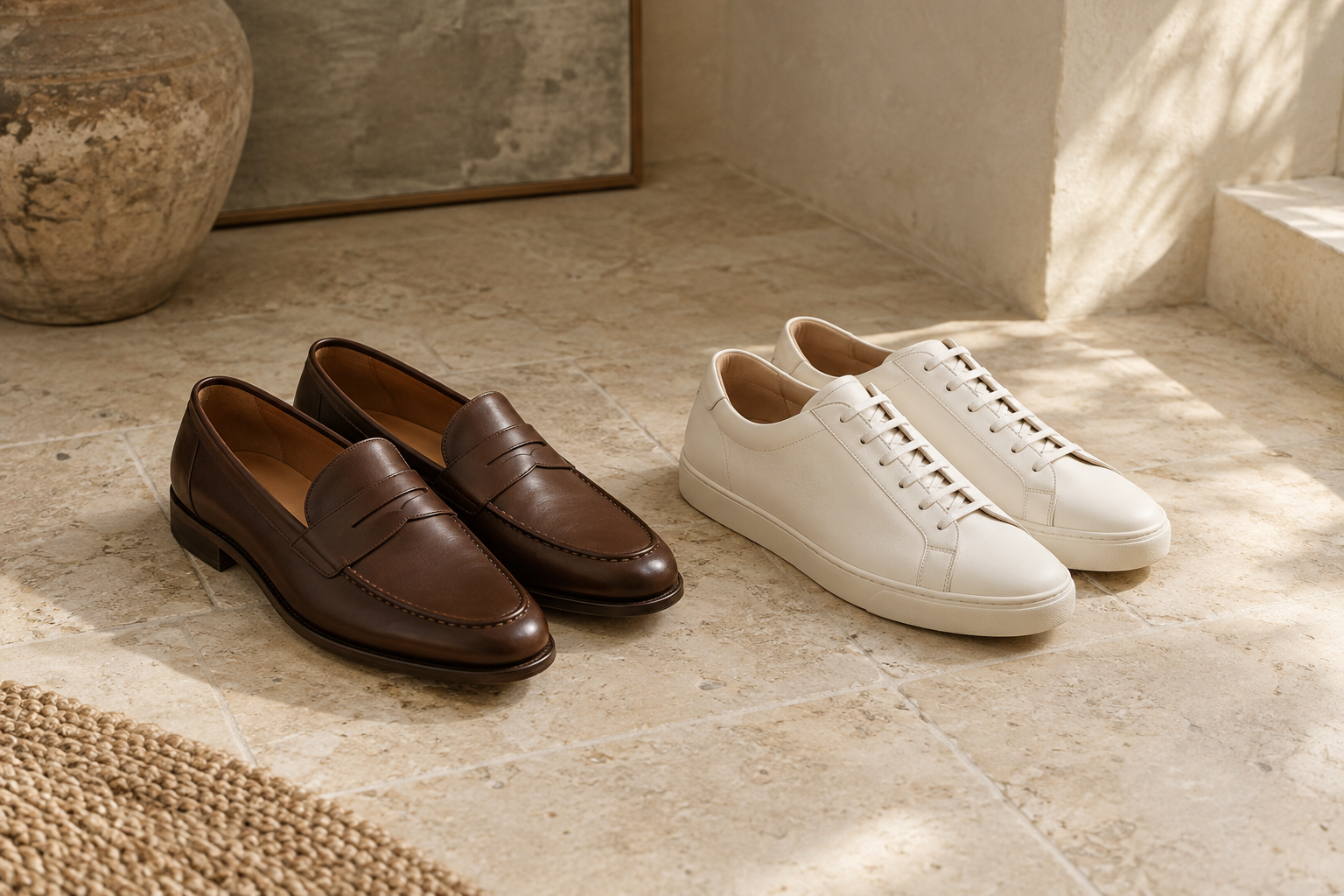
Brown penny loafers like these carry the navy-midi-and-loafers work outfit: real leather with enough weight to hold a mid-calf hem, and a ribbed sock fills the gap between hem and shoe. The still life shows the footwear, not the full styled look.
Clean sneakers for everyday wear
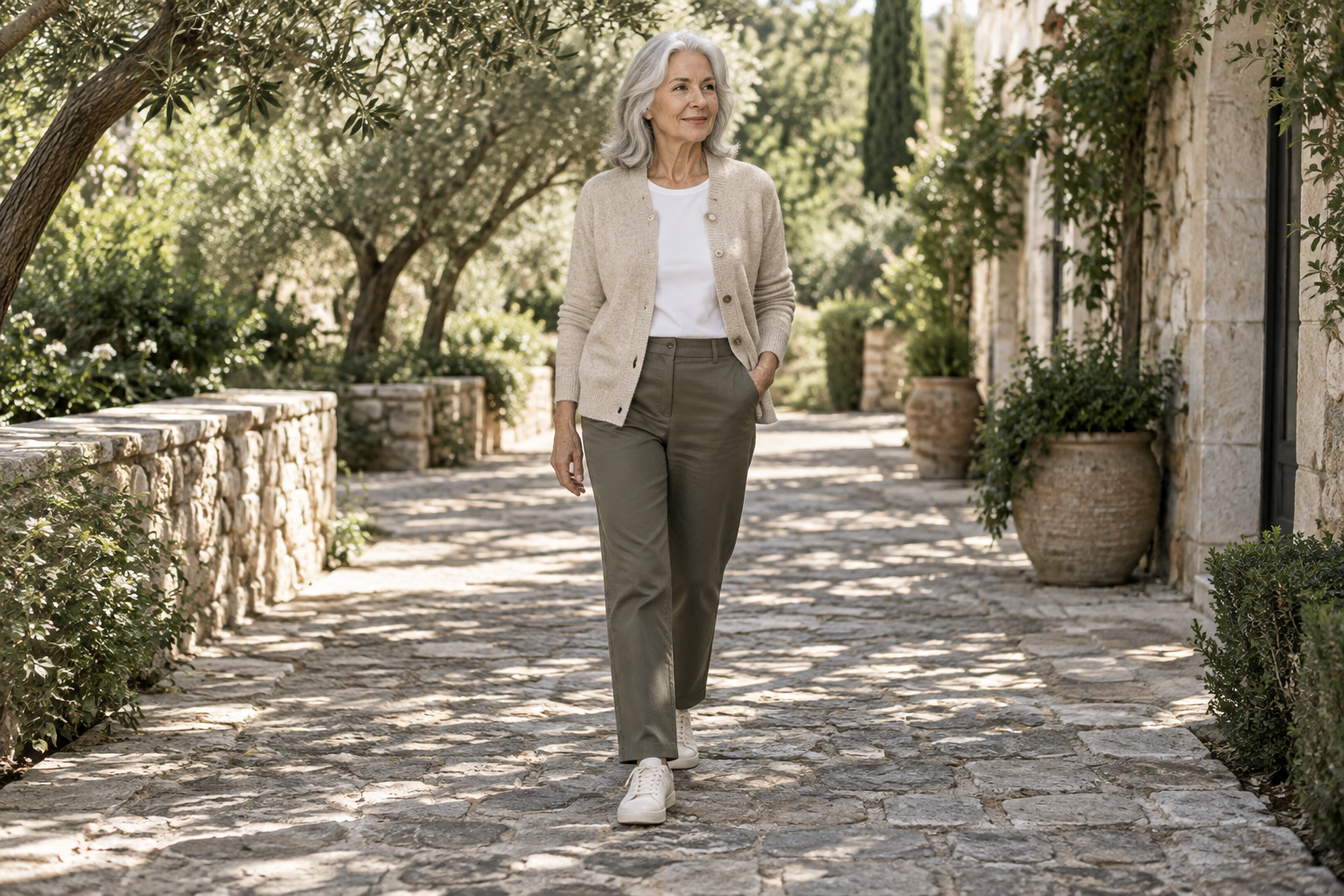
Cream leather sneakers on an everyday walk — the third family. With a knee-length denim shirt dress, half-tuck the front to define the waist; plain, clean sneakers keep the look deliberate rather than grabbed.
Make an idea your own.
Start with the belted-sandals look: any shirt dress that buttons to the waist, plus a belt in a tone drawn from the shoe.
Check the hem first — above the knee suits the light sandal treatment; mid-calf moves you to the loafer-and-sock version instead.
Mark the waist with the belt or a half-tuck before judging the shoe; the dress is a straight tube until the waist is defined, and no shoe fixes that.
Try the exact pair together, then run the walking check — strides, one flight of stairs, sitting — before leaving the house.
If the weather or the venue rules out sandals, substitute loafers or clean sneakers and keep everything else unchanged.
In cooler weather, switch to ankle boots with tights if the hem is short, or knee-high boots if it is long, and keep the waist definition either way.
How to style a shirt dress with or without a belt: the placket and movement checks to make first, how the belted and relaxed versions differ, and the shoe and layer pairings for each.
How to wear ankle boots with dresses: comparing shaft height against hem length, flat, heeled and with-tights formulas for shirt, knit and evening dresses, and a walking and sitting comfort check.