
Dresses & Skirts
How to Style a Midi Skirt for Smart Casual Outfits
How to style a midi skirt for smart casual settings: one worked knit-and-flats outfit, five more complete looks, and the waist and shoe choices that decide the tone.

Outfit inspiration
Choose tights by the coverage, feel and colour you want, then check them with the actual skirt or dress and shoes. These six looks show the choice being made — by denier, by colour, by texture — with the reasoning spelled out.
Begin hereInspiration
Choose tights by the coverage, feel and colour you want, then check them with the actual skirt or dress and shoes. Denier helps describe the yarn, but it does not guarantee opacity, warmth or durability on its own. Try sitting and walking before relying on a pair, especially if the waistband, toes or seams feel restrictive.
Tights decide whether a dress or skirt reads polished or pieced-together in cooler weather, and the choice is three decisions in order: coverage, colour, then finish. Each one is checked against the actual outfit, not against a number on the packet.
Denier is a unit of yarn weight: the mass in grams of 9,000 metres of yarn. Lower numbers mean finer, lighter yarn; higher numbers mean thicker, heavier yarn. Hosiery sellers and makers use it as a shorthand for where a pair sits between sheer and opaque.
Two limits matter when reading the number. First, denier measures yarn weight, not coverage directly — knit structure and fibre type change how opaque a pair actually looks. Second, denier has nothing to do with compression: graduated compression hosiery is rated in millimetres of mercury and is a different, medically fitted product that this page does not cover.
A higher denier guarantees opacity, warmth and durability — a 60-denier pair will outlast a 15-denier one and never show skin.
Higher denier tends toward more opaque, warmer and more snag-resistant, but it is a tendency, not a guarantee. Knit density and yarn composition matter at least as much: UK Tights notes weight and thickness are not the same thing, and that elastane blends resist ladders better than pure nylon regardless of denier. Judge the pair on your leg, not the packet.
| Family | Typical denier range | Effect on the outfit | Trade-off |
|---|---|---|---|
| Sheer | Around 5–20 | Keeps the leg visible so a skirt or dress reads lighter and dressier | Finer yarn snags more easily; treat as a shorter-wear, careful-handling choice |
| Semi-opaque | Around 30–40 | Shows colour with a hint of leg underneath; the everyday middle ground | Less dressy than sheer, less substantial than opaque; a compromise in both directions |
| Opaque | Around 50 and above | Reads as a solid block of colour that grounds a casual hem and suits cold days | Visually heavier; can dominate a light or floaty fabric |
| Patterned or textured | Varies by style | Adds interest at the ankle and knee without changing the rest of the outfit | One patterned element per outfit, or the tights compete with the clothes |
The six looks below cover sheer, opaque and textured choices in full. These three pairings show the decision being made end to end, each with shoes, because tights are never chosen alone.
Match the tights to the hem or shoe when
Choose a deliberate contrast when
Coverage means nothing if the pair is unwearable by lunchtime, and hosiery sellers consistently rank correct sizing as decisive — UK Tights calls sizing the only measurement more important than denier. Run this check with the actual skirt or dress and shoes on.
Before relying on a pair, check:
Tights are consumables, and no denier survives every full day. Follow the care label on the packet — washing guidance varies by fibre — and expect even opaque pairs to lose recovery at the knee and waistband over time.
Sources and where this decision leads
The parent hub for every dress and skirt guide on the site.
Extends the coverage decision above: shaft height against hem length, with tights as one way to close the gap.
Shoe pairings for the same dresses and skirts, with and without the sheer finishes shown here.
6 looks to explore
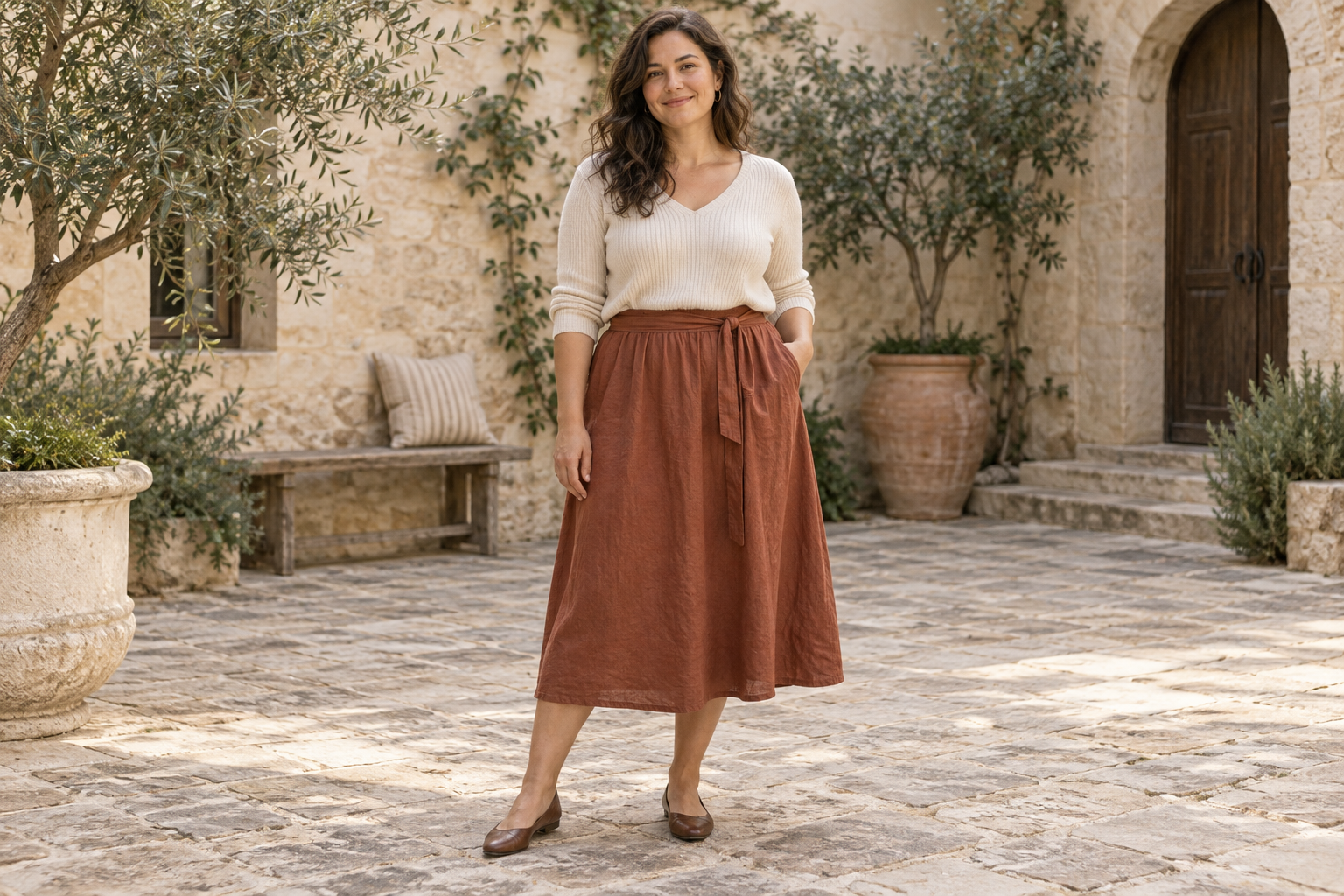
The formula to recreate: a navy wool-blend midi skirt with an ivory tucked blouse, 15-denier sheer-to-waist tights and dark loafers — the sheer finish keeps the leg visible so the skirt reads light, and the trade-off is fragility, making this a shorter-wear choice. The photo shows bare legs with an ivory knit top, a rust midi skirt and brown flats; it gives the hem-and-shoe frame, and the sheers are the layer you add on your own leg.
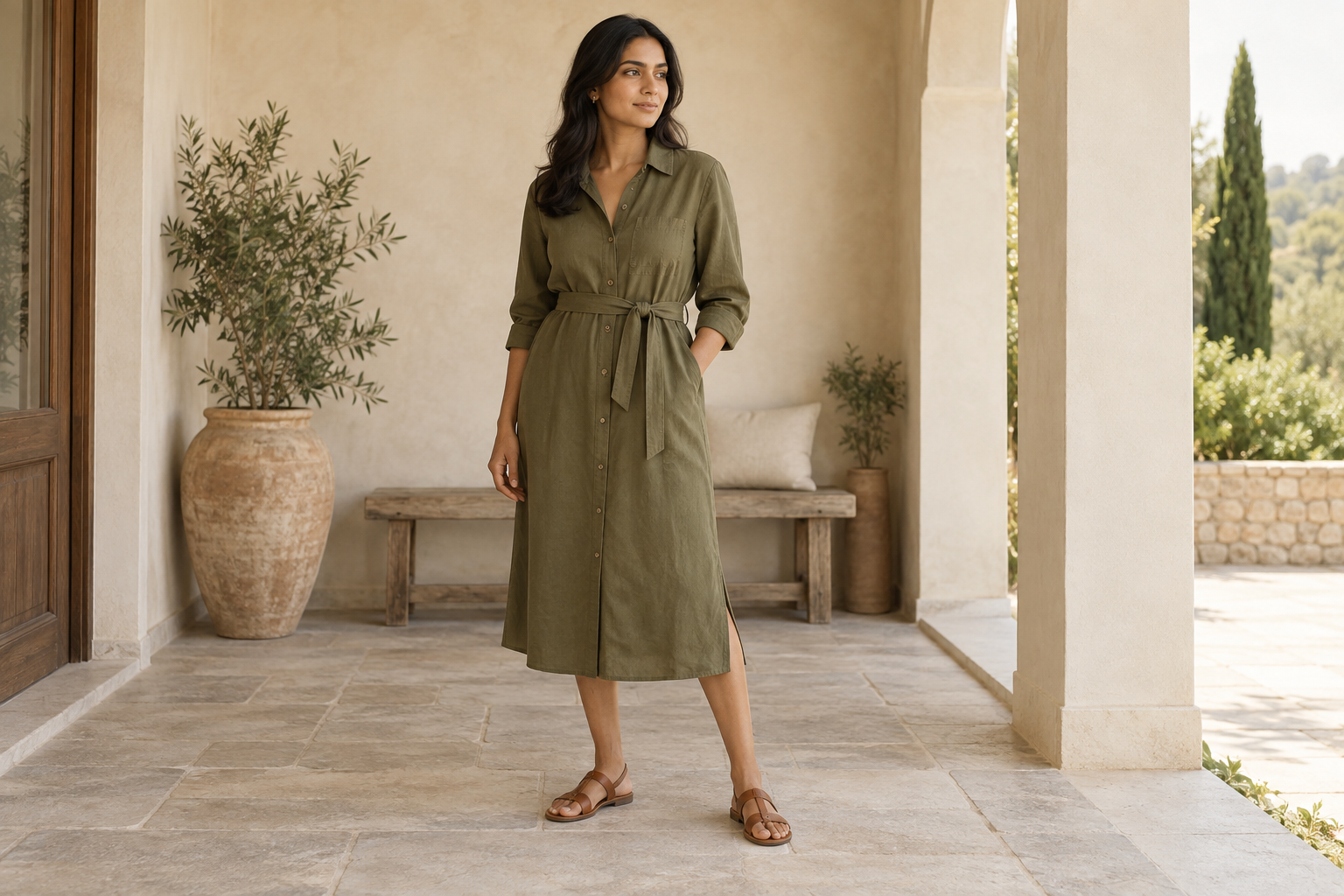
The formula to recreate: a grey jersey shirt dress cinched with a narrow leather belt, 20-denier black sheer tights and ankle boots — the slight step up from 15 denier buys a little resilience while still reading sheer, and black against the grey hem keeps the line long. The photo shows an olive belted shirt dress with tan sandals and bare legs; start from the belted shirting shape and swap the sandals for sheers and boots.
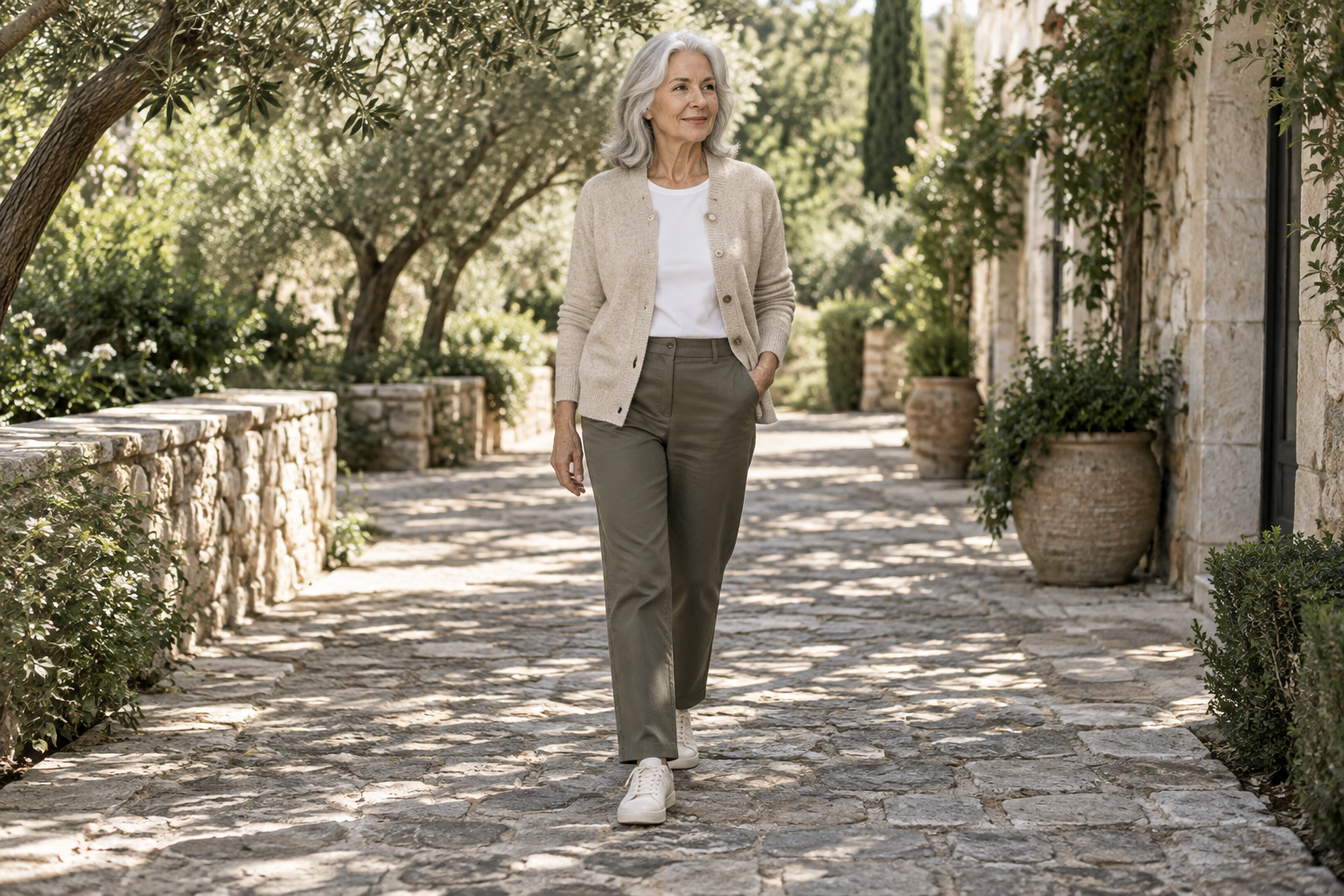
The formula to recreate: an A-line denim skirt with a marled crewneck jumper, 60-denier charcoal opaque tights and white sneakers — at 60 denier the leg reads as a solid block of colour, and the charcoal ties to the jumper so the lower half looks planned. The photo shows a cardigan, white top and olive trousers with sneakers; borrow the easy weekend layering, and the opaques under a skirt are the part to add.
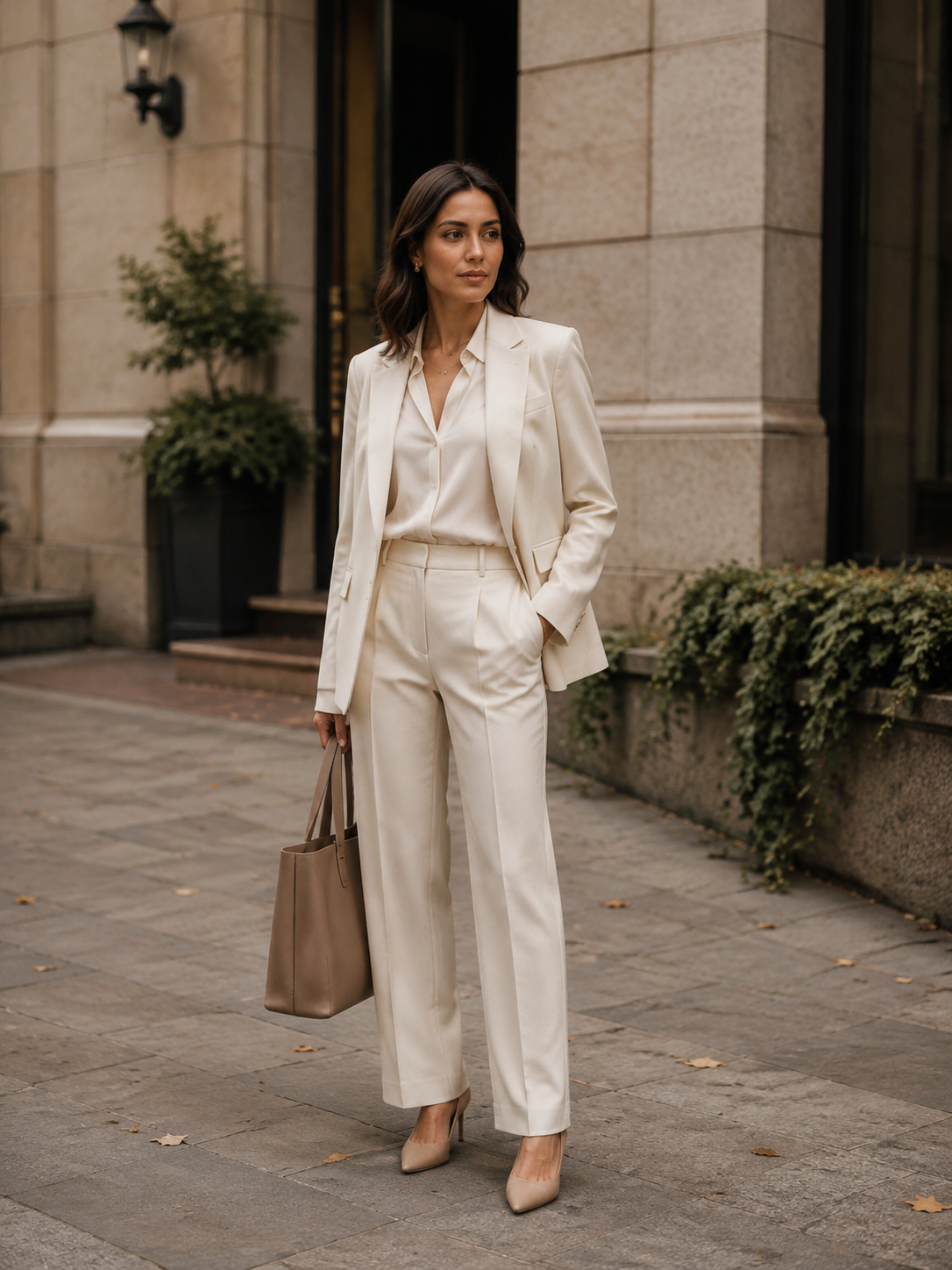
The formula to recreate: a burgundy knee-length wool-blend dress with a grey blazer, 80-denier black opaque tights and heeled ankle boots — the thickest denier here is also the most snag-resistant, and the black grounds the burgundy so the outfit reads office-appropriate even with boots. The photo shows a cream tailored trouser suit with a canvas tote; it sets the office register to match, and the tights decision happens underneath.
The formula to recreate: a deep green floral midi dress with a cropped cardigan, 40-denier tights with a fine back seam or subtle rib, and almond-toe flats — the small texture adds interest without competing, because one patterned element per outfit keeps the dress the subject. The photo shows a terracotta midi dress and a pale linen suit in a stone courtyard; it sets the celebration setting, and no tights are visible in it to copy.
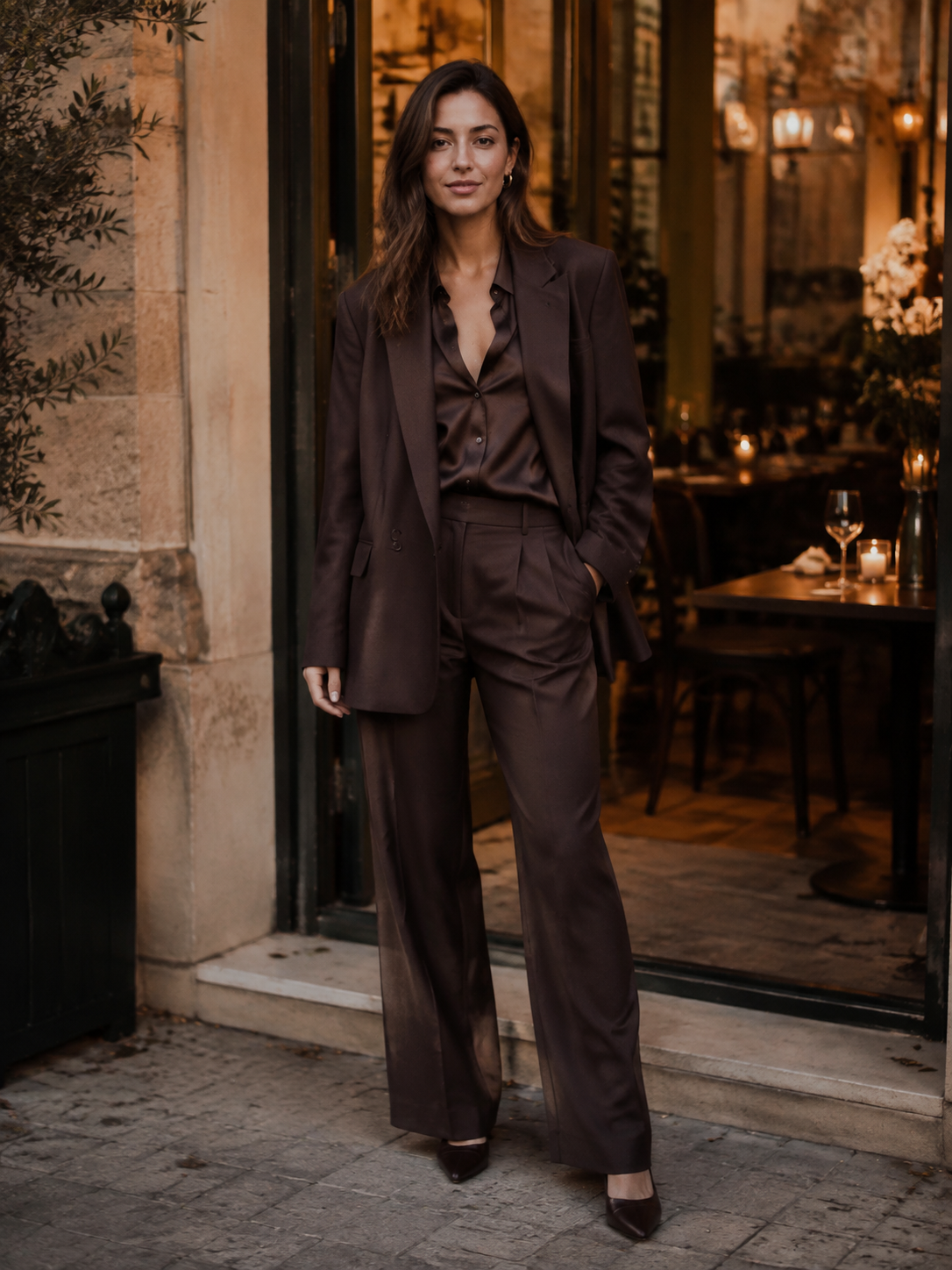
The formula to recreate: a black slip dress under a tailored coat with a fine fishnet-look tight around 30 denier and pointed flats — the open texture reads evening rather than everyday, and because open knits snag more easily, it is a look that expects replacements. The photo shows chocolate brown tailoring with a silk-style shirt in a warmly lit restaurant; borrow the dinner register, and the slip-dress-and-tights pairing is the part to recreate.
Dresses & Skirts
How to style a midi skirt for smart casual settings: one worked knit-and-flats outfit, five more complete looks, and the waist and shoe choices that decide the tone.
Dresses & Skirts
How to style a shirt dress with or without a belt: the placket and movement checks to make first, how the belted and relaxed versions differ, and the shoe and layer pairings for each.
Dresses & Skirts
Sandals, loafers, sneakers and boots compared for shirt dresses, with complete outfits for warm days, work and cooler weather, a walking check and enclosed-shoe substitutes.