A slip dress adjusts up or down through layers and footwear. Start from the dress you actually own, add the layer that suits the venue, and check the result seated as well as standing.
A slip dress can be styled for smart casual with a shirt, knit or jacket when that combination suits the venue. Check the dress's actual fabric and cut before layering, because some cling or twist more than others. Try the outfit seated as well as standing, and choose coverage for your own comfort and the stated expectations.
A slip dress earns its smart casual place through what surrounds it. The dress itself contributes fluidity and usually some shine; what it lacks is structure, coverage and weight. Every suggestion below is one deliberate addition that supplies what the dress does not have.
What a slip dress actually is — and what varies
Myth
Every slip dress is bias-cut satin with thin straps, and any version of one is too close to nightwear to take anywhere smart casual.
Fact
Slip-style features — a simple fluid silhouette, thin straps, no waist structure — appear in many fabrics and cuts. A heavier satin-crepe, a matte washed satin or a bias-cut midi in a weightier fabric reads far more like a dress than a slip. Judge the specific garment: fabric weight and finish change how much styling work the layers have to do.
Bias cut means the fabric is woven on the diagonal, so it drapes close to the body and moves with it — flattering, but also prone to cling. Finish matters as much as fibre: a matte, weighty fabric takes half the styling effort of a thin, shiny charmeuse. Start by looking at what you actually own, not at the category.
Three layered outfits, decided end to end
Slip dress outfits that reach smart casual, with shoes and checks
The layer
The outfit
Why it works
Movement and coverage check
Fine-knit over
Black midi slip dress with a cropped fine merino cardigan at the natural waist, black heeled ankle boots, small gold earrings
The knit covers the straps and gives a structured upper half — the look reads as a two-piece rather than a nightgown with shoes
Raise your arms: the knit should stay put over the straps; sit down and check the dress still covers comfortably
Shirt over, worn open
Navy slip dress under an oversized white cotton shirt buttoned to mid-chest and left untucked, flat loafers
Crisp cotton against fluid fabric is a deliberate contrast, and sleeves are the clearest signal the outfit is planned
Check the shirt hangs straight from behind — the dress's low back should not be fully bare when you walk
Rollneck under
Rust satin slip dress layered over a thin cream rollneck, dark opaque tights, low-heeled boots
The covered neckline pulls the dress firmly out of eveningwear, and satin over fine wool reads as a styled column — the coldest-weather answer
Feel for friction or static where satin sits over wool; walk a few paces to confirm the layers move together instead of climbing
A blazer is the fourth route and the most formal: a long charcoal wool blazer over a black midi slip, with black tights, pointed flats and a structured bag. The blazer contributes the tailoring the dress will never have. Keep it long enough to cover most of the straps from behind — a thin strap escaping a tailored jacket is where the nightwear read sneaks back in.
Extends the knit-over and rollneck-under options above to dresses generally.
Check the underlayer before you commit
Run these checks in daylight, standing and seated, before leaving the house:
Neckline against neckline: whatever sits underneath — t-shirt, rollneck, camisole — must sit clear of the dress's own neckline, not peek out at random.
Strap comfort: walk and reach; straps that need hitching all day will dominate the outfit however good it looks in the mirror.
Fabric friction: satin over wool or a textured knit can climb or spark static — run your hands down the layers and take a step to feel for cling.
Coverage you are comfortable with: if a layer comes off indoors, decide now whether what remains still passes your own bar for the venue.
The seated test: sit, cross your legs, lean forward — bias-cut fabric rides up more than it looks like it will standing up.
Open layer or fastened: there is no mandatory waist treatment
Wear the layer open when
The layer is the structure — a cropped knit or a tailored blazer that frames the dress
You want the dress's drape visible down the front
You may take the layer off, and what is underneath needs to stand on its own
Partly tuck or fasten the layer when
A long open cardigan or shirt is swallowing the outfit's shape
You want the waist read back without a belt
The fabric layers cling — a fastened front reduces the friction zone
Neither treatment is compulsory. The test is the same either way: does the outfit read as deliberately layered rather than improvised? Judge it from a few steps back, including from behind.
When the venue asks for a different dress
Some venues — certain weddings, formal restaurants, events with a stated dress code — sit above what even a well-layered slip dress can reach. No layer guarantees acceptance; if expectations are stated, check them with the venue rather than gambling on styling.
Length, proportion and fabric choices for the blazer route described above.
Which mood feels like your day?
Find a setting.
4 looks to explore
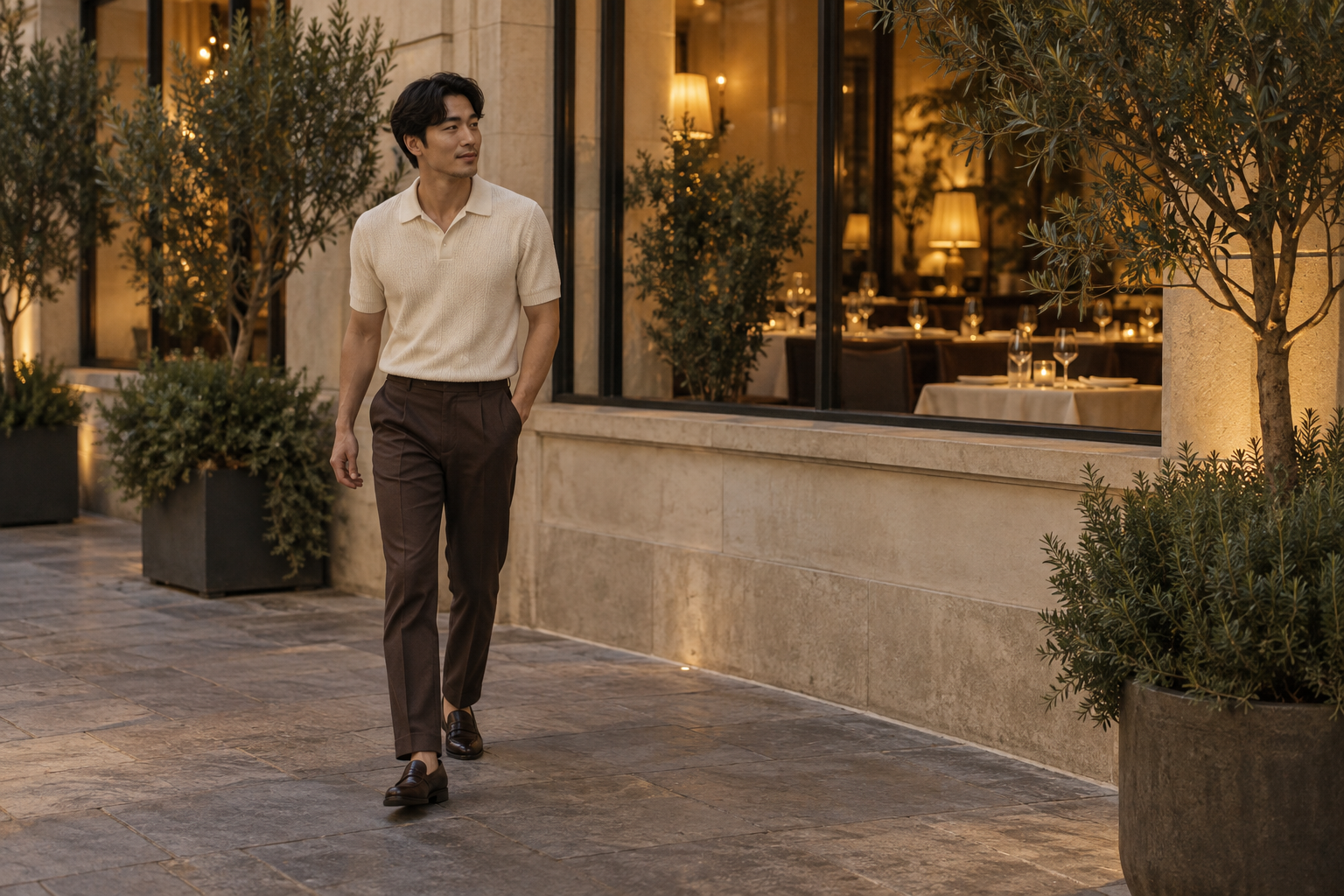
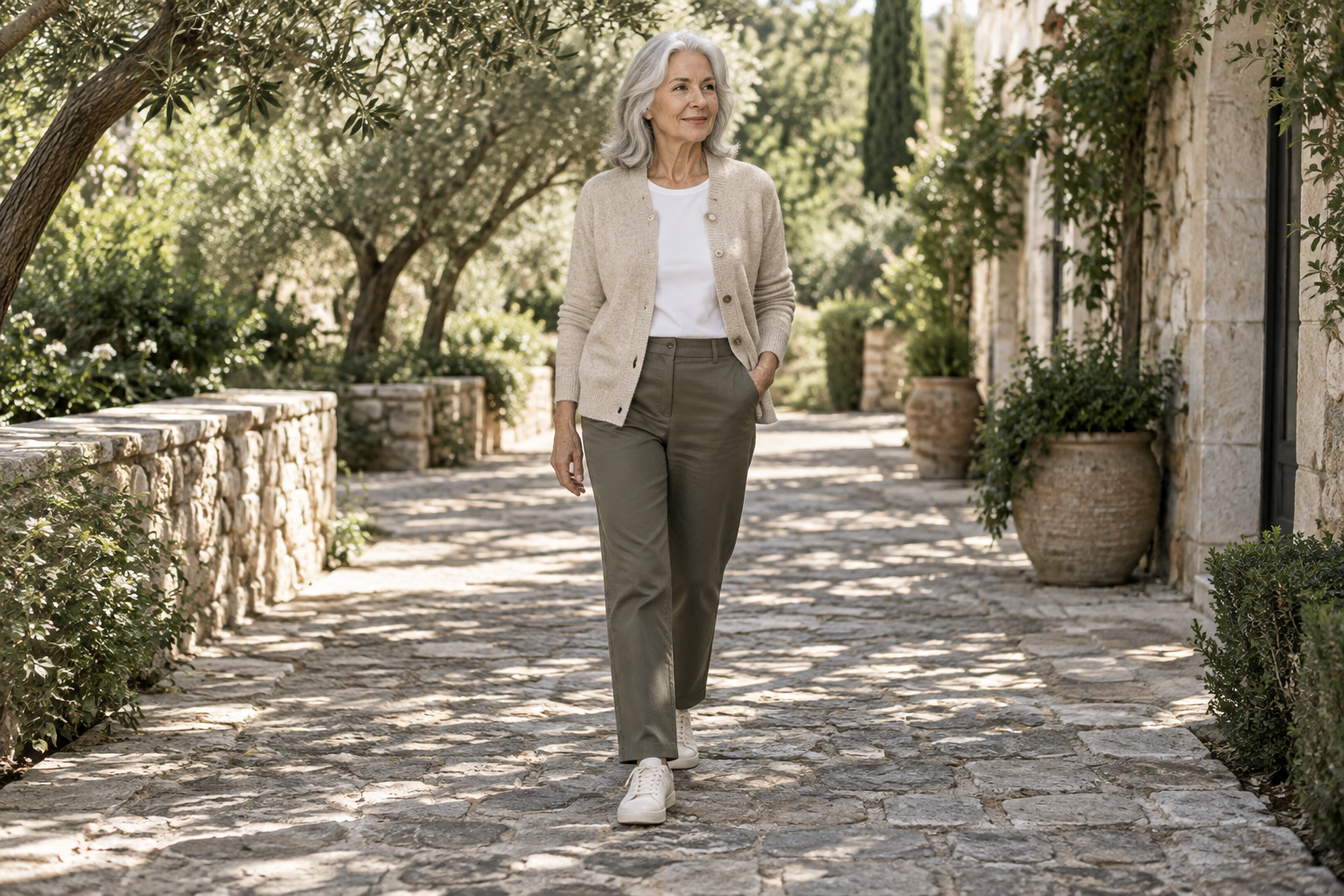
The knit-over logic, in a full look
A fine cardigan worn over a simple top, with flat shoes: the same move as the fine-knit-over-slip outfit — cover the straps, define the waist, keep shoes closed and quiet. The photo shows a trousers-and-cardigan look, not a slip dress; the layering decision is what transfers.
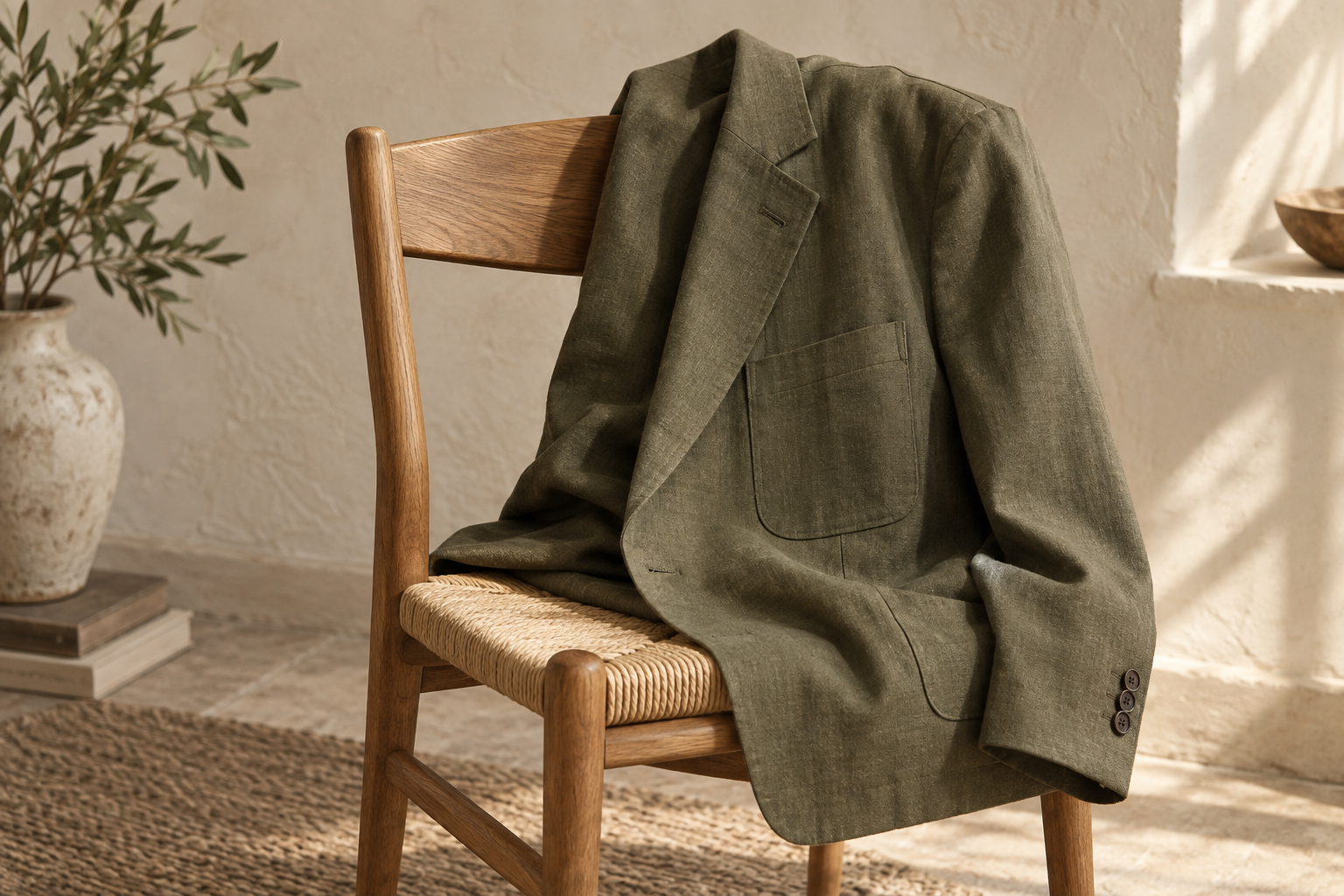
What a tailored layer contributes
An olive blazer showing lapel, sleeve and pocket structure. This is the substance a blazer lends a fluid slip dress: shoulders, buttons and a clean line from behind. The photo is a blazer detail study, not a styled slip-dress outfit.
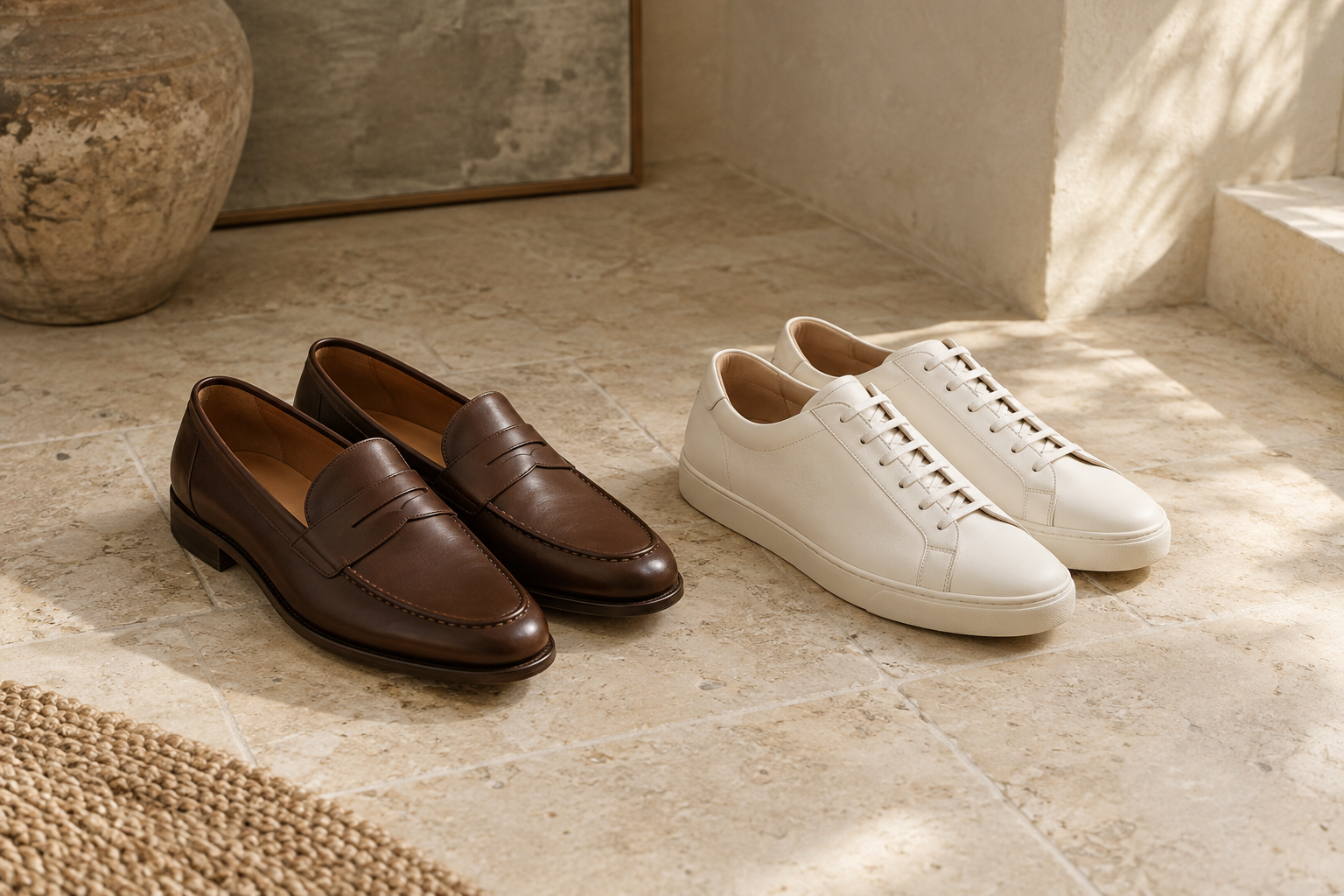
Closed shoes that shift the register
Brown penny loafers beside clean leather sneakers. For a slip dress, the loafers are the relevant one: closed, structured and leather, they move the outfit toward smart casual more reliably than a strappy sandal. A footwear still life, not a full look.
Choosing the underlayer fabric
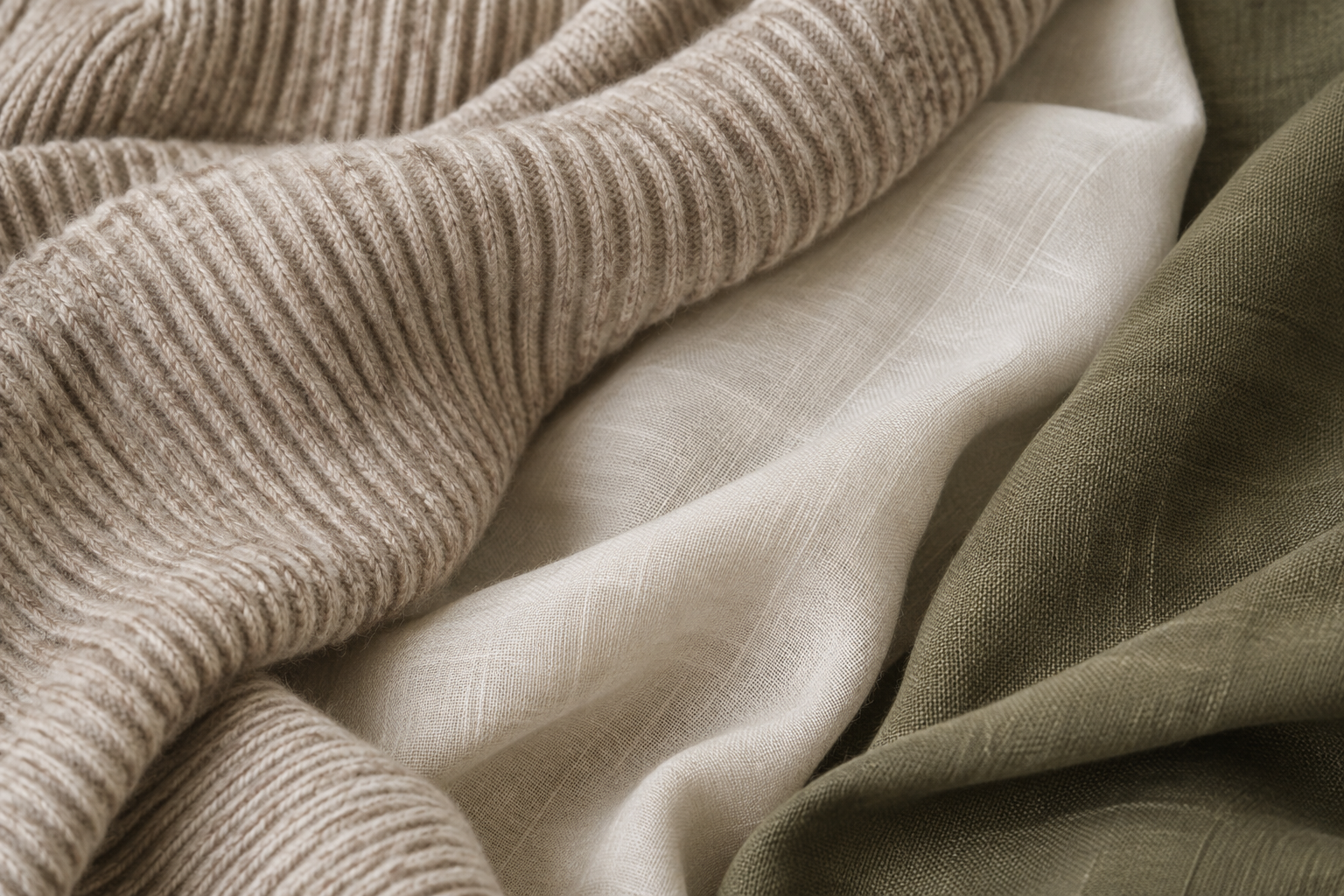
A fine ribbed knit beside smooth woven fabric. Under or over a satin slip, a smooth fine-gauge knit reduces cling and static where a coarse texture would grab. A close-up of fabric behaviour, not a styled outfit.
Make an idea your own.
Pick the dress in a heavier satin-crepe or matte fabric rather than a thin shiny charmeuse if you can — the weightier cloth already looks like a dress, which is half the styling done.
Choose midi over mini: a hem around mid-calf reads considered, while a short slip leaves the outfit with nothing to balance against.
Decide the layer position by weather: rollneck or t-shirt underneath for cold days; cardigan, shirt or blazer on top otherwise. One or the other — never neither.
Add a closed, structured shoe — loafers, ankle boots or pointed flats. Strappy sandals push the dress back toward evening, which defeats the purpose.
Swap a delicate slip-style bag for something structured; a structured leather bag reinforces the tailoring the outfit is borrowing from elsewhere.
Do a mirror check from behind before leaving: if the straps or low back are fully visible with no layer covering them, add one — that bare view is exactly where smart casual fails.
How to style a shirt dress with or without a belt: the placket and movement checks to make first, how the belted and relaxed versions differ, and the shoe and layer pairings for each.
How to style a wrap dress for smart casual: check the overlap and fastening first, then build work, celebration and weekend outfits with cardigan or blazer layers.
Sandals, loafers, sneakers and boots compared for shirt dresses, with complete outfits for warm days, work and cooler weather, a walking check and enclosed-shoe substitutes.