Check the sleeves and necklines together before styling anything
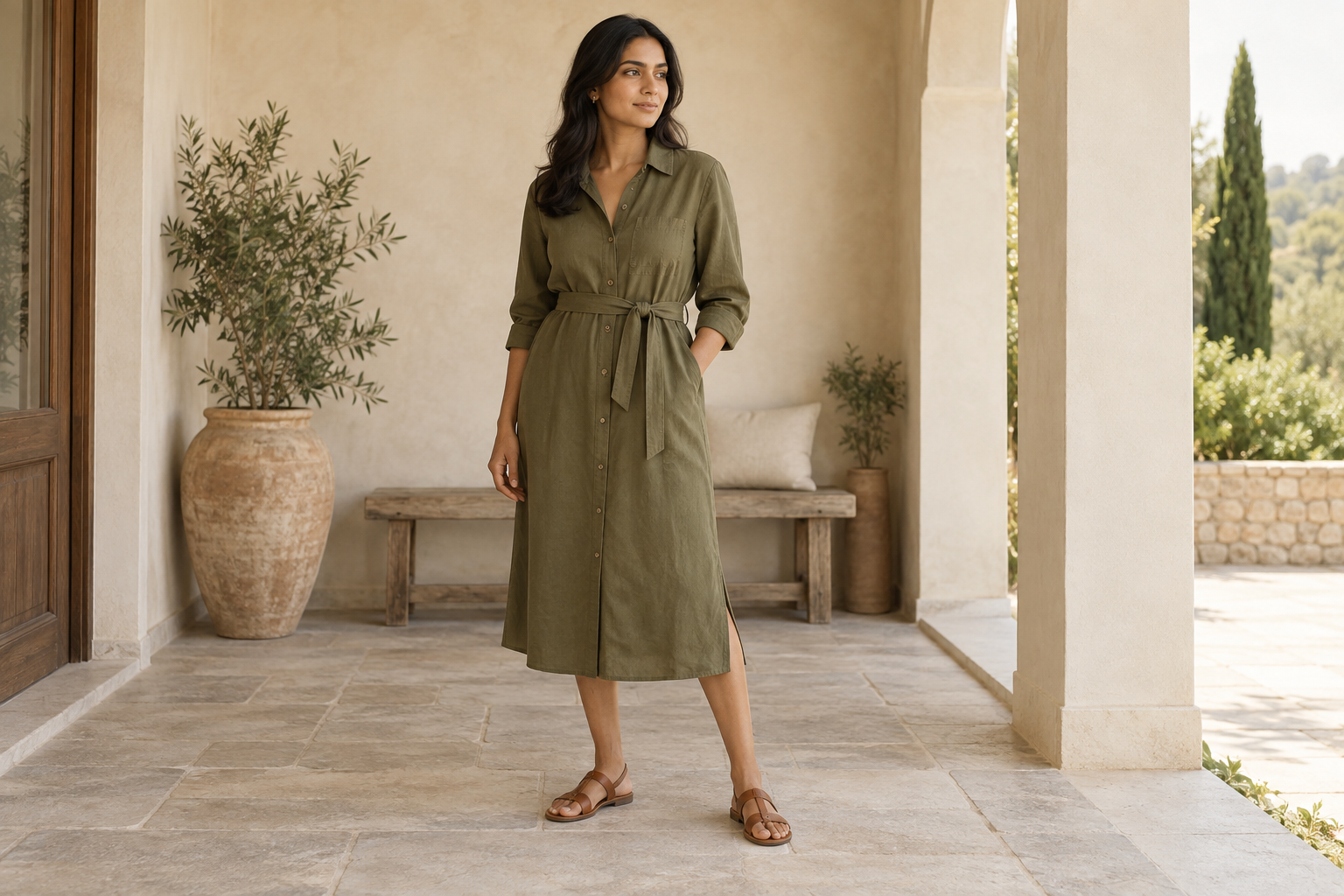
Put the sweater over the dress and look at two contact points. The necklines should sit deliberately — the dress collar outside the knit, or the dress neckline fully covered, not an edge drifting in and out. The sleeves should share the arm without bunching: push short dress sleeves up so they vanish, and tuck long or slippery dress cuffs up inside the sweater's cuff so both end at the wrist together.
Check: Lean forward and bend both arms fully. The dress neckline stays either covered or deliberately visible, and neither sleeve rolls into a thick ridge at the elbow.
Let the sweater hang naturally first
Before trying any tuck or belt, see what the unstyled version does. A fine knit over a waisted dress often finds its own line; over a column dress it reads as a long, easy layer. This gives you a baseline to compare against, and sometimes it is the answer on its own.
Check: You can describe what the loose version looks like from the side — where the sweater hem lands relative to the dress waist and hip.
Compare the silhouettes: loose, cropped, gently anchored
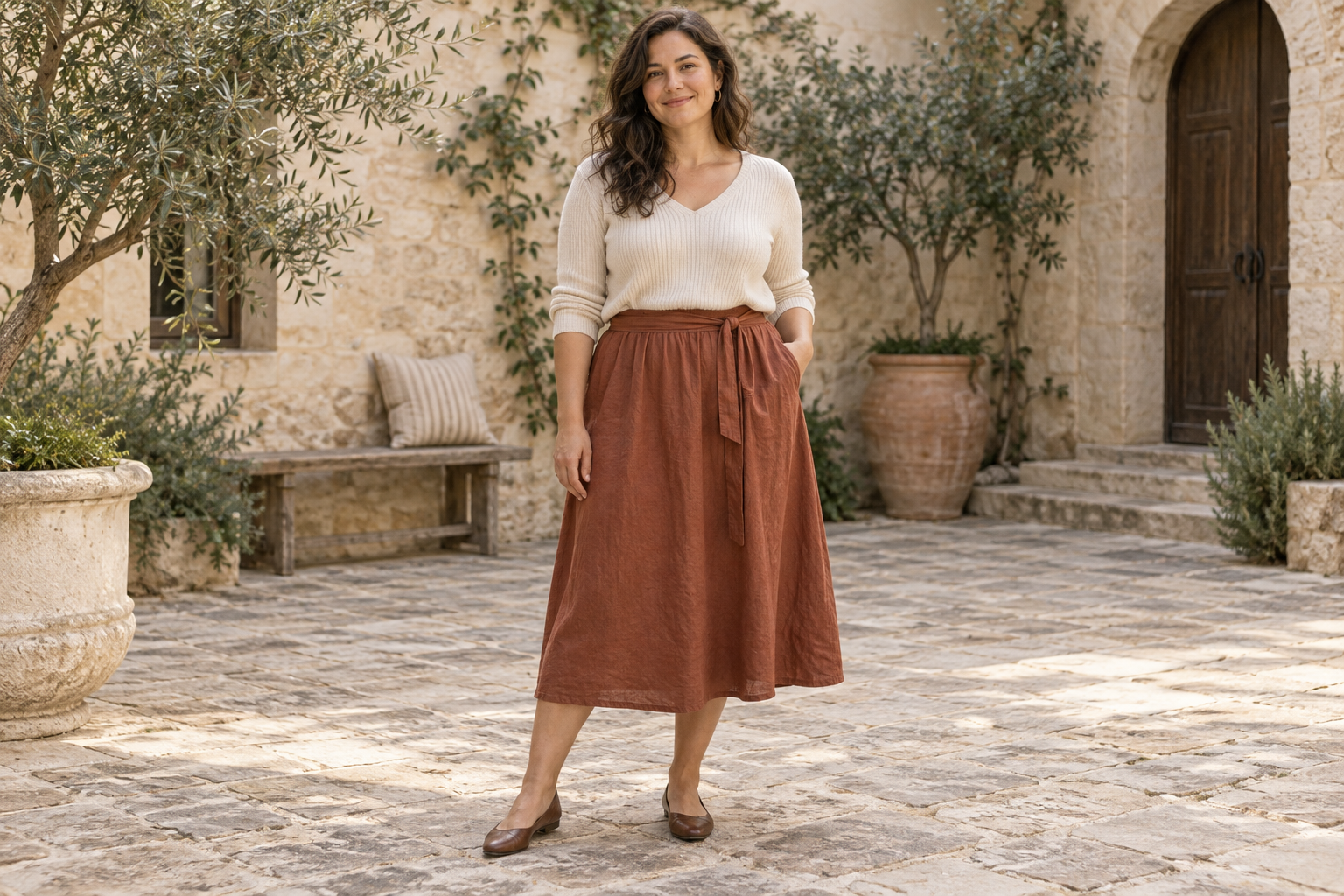
Three versions cover most dresses. Loose keeps the sweater untucked with the hem at hip bone, so the skirt still shows below. Cropped ends the sweater above the dress waist, which suits fuller skirts because the waist seam stays visible. Gently anchored — a soft front tuck into a waisted dress's waistband, or a narrow belt over the knit at the natural waist — restores a waistline without cinching. Try all three and pick by eye and comfort, not by rule.
Check: You have looked at all three in the mirror and chosen one because it looks better, not because a rule demanded it.
Manage bulk where the layers stack
Extra fabric shows where garments overlap: a gathered bodice, a waist seam or a bow prints through a fine knit, and elbow-length dress sleeves bunch under sweater sleeves. Smooth the dress bodice flat under the knit, and where the bulk remains, either accept a looser sweater that skims instead of tracing, or swap to a dress with a smoother front.
Check: With your arms down, the front of the sweater shows no ridges you did not choose — or a looser knit has been chosen deliberately instead.
Set the hem relationship between sweater and dress
Aim for the two hems to read as separate lines: the dress hem falling clearly below the sweater hem, with no near-equal landing, which looks accidental. If the gap is small, tuck or anchor the sweater to shorten it, or choose a longer dress to lengthen it.
Check: From the front and the side you can see two distinct horizontal lines — knit hem, then dress hem — without overlap.
Test the outfit sitting, walking and removing
Sit down twice, reach overhead and walk a few paces. Tucked and anchored sweaters pull up; loose ones ride back. Smooth the skirt under the sweater after sitting and see whether the hem returns on its own. Then take the sweater off and confirm the dress still works alone — heat indoors makes this a mid-day decision more often than you expect.
Check: After sitting and standing twice, the sweater hem returns to where it started without hand-adjusting, and the dress removed of the sweater is still a complete outfit.